Law

Insulate Britain are not martyrs

From our UK edition

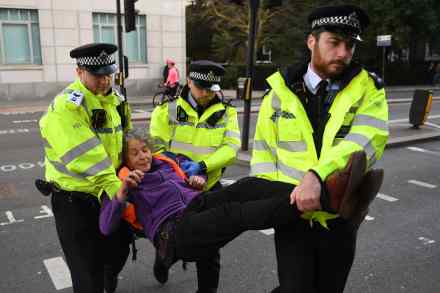
Throughout the Insulate Britain protests there was a suspicion that the group was deliberately trying to get its members behind bars during the COP26 conference — a suspicion that was enhanced when a spokesperson for the group told the Guardian on 24 October:  It’s fair to say that there is absolute disbelief and surprise that the campaign has lasted this long. We assumed that we would not be allowed to carry on disrupting the motorway network to the extent we have been. We thought that people would basically be in prison… if our actions are as dangerous and as disruptive as is being claimed, then I think the question has to be: why are we being allowed to continue day after day?
It’s time to take back control from our judges

From our UK edition

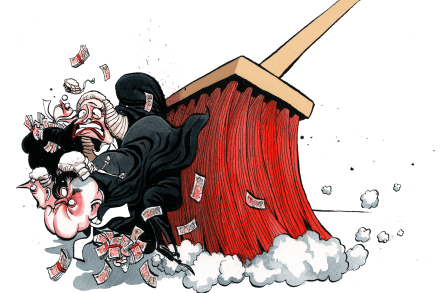
The Judicial Review and Courts Bill has its second reading today. Writing for the Guardian yesterday, David Davis MP denounced the government’s plans as ‘an obvious attempt to avoid accountability [and] to consolidate power’ which is ‘profoundly un-conservative’. He could not be more wrong. The Bill is a welcome first step in restoring the balance of our constitution, a balance put in doubt by a decades-long expansion of judicial power. If anything, parliament should go further and amend the Bill to make it a more effective means to restore the traditional constitution.

The alarming human rights ruling on freedom of speech

From our UK edition

‘You can’t libel the dead’ is burned into the consciousness of any serious journalist or writer. It provides much-needed comfort: however tactful you have to be about the living, once someone has died you can say what you like about them without getting sued. Or can you? Seven years ago the European Court of Human Rights dropped a worrying throwaway remark that this might be unacceptable because allowing untrammelled comment about a deceased person might infringe the human rights of his family. Last week, in a disconcerting decision that seems to have gone entirely unreported in the media (you can read the official report here), that same court built on its earlier suggestion and at a stroke gave publishers a whole new worry.

The EU’s rule of law crisis lets Britain change the Brexit deal

From our UK edition

Following Germany’s example, courts in Poland have rejected the supremacy of EU law. That is the principle that, if you join the EU, you give away part of your sovereignty to it and you have to do what the European Court says. I have written before about the precedent set in Germany. Both states now say that their constitution trumps EU law and the rulings of the EU courts. Legally speaking, this declaration is simply untrue – as should be known to anybody who read and signed the Lisbon Treaty, joining the EU. The United Kingdom always upheld this legal truth. If we wanted our sovereignty back, we had to leave the EU. That was a political choice and isn’t therefore something I write about. It is fair to also highlight that the EU is far from blameless.

How Raab plans to fix the law

From our UK edition

How do you solve a problem like Britain’s creaking criminal justice system? To the newly appointed Secretary of State, the answer involves ripping up the Human Rights Act, rolling out more electronic tags for convicts and pumping cash into preventative projects. At a Spectator event this morning, held at Tory Party Conference, Dominic Raab explained that rewriting the UK’s human rights laws was central to his reforming mission. He told editor Fraser Nelson: The Prime Minister was very clear when he appointed me deputy PM and Justice Secretary that he wanted this done… Overhauling the Human Rights Act is not just a good way of dealing with the foreign nationals that we can’t deport but also of ironing out our constitution.

The Supreme Court’s shameful statement on Hong Kong

From our UK edition

In a statement which will doubtless surprise the scores of lawyers, democratic politicians and human rights activists who are currently in jail awaiting show trials under Hong Kong’s National Security Law, the UK Supreme Court today made an announcement which is the best piece of free PR that Hong Kong’s Chief Executive Carrie Lam has had in years. The President of the Supreme Court, Lord Reed, has issued a statement saying that UK judges will be staying on Hong Kong’s Court of Final Appeal and that ‘the judiciary in Hong Kong continues to act largely independently of government and their decisions continue to be consistent with the rule of law.

Post-Brexit divorce is getting messy

From our UK edition

The City has resigned itself to being locked out of the EU. The hauliers are adjusting to all the extra paperwork. Now it looks as if the lawyers will have to get used to no deal as well — and while that won't do any serious long term damage to the profession's booming global status, it now looks as if a lot of divorcing families will be collateral damage.Over the last month, it has become clear the EU plans to block the UK from joining the Lugano Convention, which helps settle in which jurisdiction disputes should be resolved. The reason is no great mystery to anyone. Brussels wants to make it harder for London's firms to sell their services globally, and take some of that business for competitors in Paris, Amsterdam and Frankfurt.

Black Widow and the bungling of female superhero movies

C’mon, guys: you know how Natasha Romanoff feels about having red in her ledger. Marvel's long-awaited Black Widow movie finally arrived in theaters in July. But the excitement of the release has been sullied by bad blood — and bad debts. Scarlett Johansson, who gave 10 years of her life to the Marvel Cinematic Universe and the Avengers saga before getting a film of her own, sued Disney for breach of contract after they released Black Widow in the ‘Premier Access’ category on the Disney+ streaming service on the same day it hit theaters. According to Johansson and her reps, her Black Widow contract guaranteed an exclusive theatrical release.

black widow

Does a man have a right to pay for sex?

From our UK edition

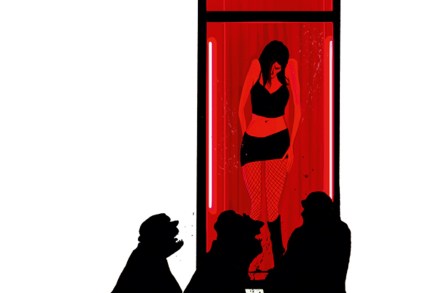
A case heard in the Court of Appeal today will decide whether or not carers should be expected to indulge in a spot of light pimping should their disabled client decide he requires the ‘services’ of a prostituted person. This April, Justice Hayden ruled that a care worker who assisted C, a learning-disabled man, to secure the ‘services’ of a prostitute had not committed a criminal offence under the Sexual Offences Act 2003. The Secretary of State for Justice was granted permission to appeal, and there was also an intervention in the case from the Centre for Women’s Justice (CWJ) as well as Women at the Well and the NIA Project, both of which are NGOs that work directly with girls and women who are, or who have been, involved in prostitution.

Brussels has launched a full federalist assault

From our UK edition

It’s not only in Northern Ireland that the EU has taken to acting like some imperial power. Last week, with international correspondents' eyes conveniently fixed on the G7, it quietly began a legal push to take over large areas of its remaining member states’ domestic affairs. On Tuesday, the Commission announced that it was suing no fewer than seven of them in the Court of Justice for breaking EU law. Czechia and Poland are accused of not allowing EU citizens generally to join national political parties, and Hungary of not accepting migrants according to Brussels’s plans. The Netherlands, Greece and Lithuania are charged with failing to have severe enough laws against hate speech and Holocaust denial.

CNN broadcasts BDSM

Did anyone else catch the sordid humiliation porn screened on CNN Thursday? The nine-minute clip featured a MILF-cum-dominatrix who works under the name Alisyn Camerota and a promising new adult star called Jeffrey Toobin (onlyfans.com/jeffreytoobin). It was Toobin's first appearance on the AVN-award-winning network since his eight-month stint in a dungeon. The little-pig-boy, 61, was locked up after one of his cam-shows went awry at his other employer, a top-shelf skin mag called the New Yorker. 'It's been a while,' Camerota begins. 'It has been a while indeed,' Toobin replies with a wry smile. Camerota then 'recaps' where Toobin has been for the last few months, as the two giggle to themselves. https://twitter.com/alisyncamerota/status/1403071356925775872?

jeffrey toobin

There was no Hillsborough ‘cover-up’

From our UK edition

Eight years ago, I was instructed as leading counsel for two South Yorkshire Police officers who had overseen the force’s evidence-gathering in response to the Hillsborough stadium disaster. They were accused of trying to minimise the blame placed on the police by amending witness statements. It has been the longest and most challenging assignment of my 27-year career, with the weight of public and media opinion pitted heavily against us. Finally, last week, the only one of my two clients to be criminally charged, 83-year-old retired chief superintendent Donald Denton, was cleared, alongside a 74-year-old retired detective chief inspector and the former police solicitor. It was a just outcome that demonstrated judicial integrity and independence at its best.

Stacey Abrams’s new novel is a love letter to lawyers

A politician publishing a novel is a bit like the lead singer of a rock band declaring that not only are they going to release a solo album but it is going to express their newfound interest in electronica. Expectations are low — or high depending on your appetite for other people’s failure. Still, for all the mean things you could say about Stacey Abrams’s new legal thriller While Justice Sleeps, you could say some kind things as well, the foremost being that it is not cynical. This is not some kind of botched cash-in. (For that, look forward to my editors asking me to review Hillary Clinton’s forthcoming novel State of Terror.) Abrams loves to write.

stacey abrams

In defence of lefty lawyers

From our UK edition

What have the Conservatives got against left-wing lawyers like me? Boris Johnson told the Commons recently that the government was 'protect[ing] veterans from vexatious litigation pursued by lefty lawyers'. It was far from the first time lawyers had been targeted.  The Home Office's most senior civil servant conceded last summer that officials should not have used the phrase 'activist lawyers' in a video blaming them for disrupting the asylum system. But it seemed that the Home Secretary didn't get the message.  A few weeks later, Priti Patel claimed that 'removals (of illegal migrants) continue to be frustrated by activist lawyers'.

Models of obedience: how to make people obey the law

From our UK edition

Protests are being staged against the proposed bill to change the laws on protest. But there is a bigger issue here. Obedience to the law is at the root of civil society, but what systems best achieve that end? The ancients provided three models that underpin western thinking on the subject. The Athenian model was that of radical democracy, the law to be made by the majority of citizens (males aged over 18) meeting weekly in assembly and then publicly posted. Further, all male citizens over 30 were available to sit as jurors in the courts. No judges or official legal authorities controlled their decisions.

The ancient Greek approach to mediation

From our UK edition

Divorcing couples are being given vouchers worth £500 to settle their problems by mediation rather than going to court. It was the ancient Greeks who produced the first examples of mediation in the West. Since the ancients had no police force or Crown Prosecution Service, all prosecutions were brought privately. There were no barristers or judges or witnesses — just the two litigants, giving a single speech of fixed length (with witness evidence read out), after which the jurors voted, with no further discussion. But since jurors (201, 401 or 501 depending on the case) were paid by the state, it was an expensive business. So every effort was made to settle matters out of court. Here serious public arbitration came into play, if it became necessary.

The truth about statues and the law

From our UK edition

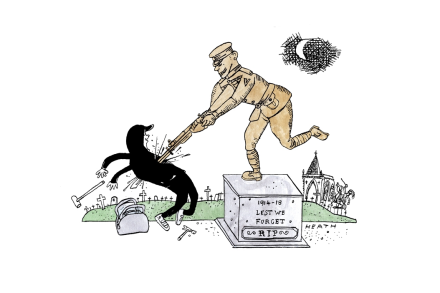
There is a proposal to change how we criminalise people who damage statues. This proposed change is set out in the Police, Crime, Sentencing and Court Bill and has received much criticism — it is the supposed cause of last night’s protests in Bristol, the first place in the UK to see a prominent statue being toppled last summer. But it is not for lawyers to tell the public what they can or should think — the law is the law, but any changes to it are political decisions. Lawyers can elucidate how our regulations currently work but it is for the public and their politicians to decide what those regulations are. So it is worth looking at how the law treats those who deface public monuments and that, perhaps, can inform whether we think the regulations need changing.

Who pays the price for Boris governing without scrutiny?

From our UK edition

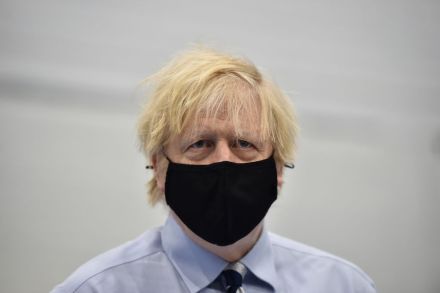
Bailiff-enforced evictions have been banned during the pandemic. But landlords eager to give tenants the boot are finding ways around this rule. Since the start of lockdown, there has been an extraordinary increase in the number of tenants facing applications from landlords to control the terms under which people live in their homes.  Sometimes the playing of loud music is given as the reason. Other times it's because the TV is left on when neighbours are trying to sleep. Perhaps they have had visitors who slammed the front door of their block. But while the circumstances are often mundane, the effect on those who find themselves kicked out can be devastating.

The EU is sliding into a United States of Europe

From our UK edition

When a proposed constitution for the EU was mooted in 2005, many in the UK and elsewhere in the bloc smelt a rat. This looked like a bid to shoehorn national governments into a nascent United States of Europe. The French and the Dutch agreed: and being constitutionally guaranteed a referendum on the matter, both took the obvious step and voted the scheme down. No matter. As we now know, the proposal was re-packaged in almost the same form as a consolidation measure called the Lisbon Treaty. It is now part of the EU treaty system. The Cassandras were, of course, absolutely right. The EU was indeed playing a long federalist game. The point is nicely made by a decision of the EU’s Court of Justice this week.

No, Hancock’s PPE contracts haven’t been ruled ‘unlawful’

From our UK edition

The High Court has said the government acted unlawfully. It is important that is understood, because ‘unlawful’ is a word that can easily mislead. Above all, no one should accidentally think the Court has said that any of the PPE contracts are unlawful. They are not. What the Court has said is that because, on average, the contracts were published on a website after 47 days, the Department of Health and Social Care was unlawful because it promises to publish within 30 days. The government promised 30 days and 47 days is more than 30: that is unlawful. PPE was needed because of the pandemic and, due to the global shortages, the Department of Health and Social Care made contracts to get PPE.