Language

Asexual

From our UK edition

There was a time when my husband, who often addresses the television, would habitually react to Edward Heath’s appearance on the screen with the greeting ‘Hello, sailor.’ Last week, though, the man who was Sir Edward’s principal private secretary during his time as prime minister, Robert Armstrong, now Lord Armstrong, commented on the posthumous accusations against him. ‘You usually detect some sense of sexuality when you are friends or work closely with them,’ he said of political colleagues. ‘I think he was completely asexual.’ Asexual is an anomalous word, combining a Greek prefix, signifying negation or privation, with an adjective derived from Latin.
Taleban

From our UK edition

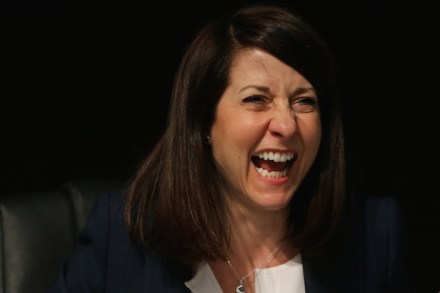
Toxic virus or Taleban: it’s funny how the mild-mannered Liz Kendall has attracted for her Blairite associations the most violently pejorative terms. Hardly had the Labour leadership contest begun before her allies were being called ‘Taleban New Labour’. No one thought New Labour was really much like the Taleban. That’s why the metaphor was effective: it suggested generalised maleficence. Many people presume that the Taleban is some immemorial movement within Islam, like the Hanbali school or the Wahhabi sect. But it dates back no more than 20 years, to the exiles who returned to Afghanistan having developed strict practices while students of Islamic law in Pakistan. Talib, more fully talib al-ilm, is a ‘seeker of knowledge’ in Arabic.

Old boys’ network

From our UK edition

Are you a man? Those of you who don’t fall into the category of ‘adult male’ will clearly answer no — but even those who do might not say yes. Do you apply the label ‘man’ to yourself? Are you happy using the phrase ‘I’m as [insert quality] as the next man’? You’re not? Me neither. At 43 I’ve spent a quarter of a century as a man in the eyes of the law, but still the word feels too grown-up for me to use it about myself. Several friends have admitted the same thing. Winston Churchill was a man. Floyd Mayweather is a man. We, on the other hand, are… well, what? Talking to a woman in her mid-twenties recently, I referred to one of her contemporaries as ‘a great girl’.

Big ask

From our UK edition

‘That’s unnecessarily crude,’ said my husband, turning momentarily from the television and improving the shining minute by setting the whisky glass chinking. (He takes ice in it.) ‘What? A “big ask”? That’s not crude,’ I replied. ‘Oh, ask,’ he said in a sort of liquid-hoarse whisky-throaty voice seldom remarked upon by phoneticians. He was watching sport, so the cliché came as no surprise to me. The sports pages are thick with it. Jeremain Lens, whoever he is, may be ‘an exciting player but proving it in the Premier League is a big ask’. For gee-gees, a big ask is graduating from winning a maiden to a good Group 2 race.

I love it that you…

From our UK edition

I had never heard the Country (Red Dirt) singer Wade Bowen before, although his latest album Hold my Beer (Vol 1) has already sold 14,000 copies. On an earlier album, he provided textbook examples of two constructions that I find increasingly annoying, and one that seems fine. ‘I love it that you’re my girl,’ sang Wade. ‘I love that I’m your man.’ I didn’t care for either of those declarations one bit. ‘I love it when you take my hand,’ he added. I didn’t mind that at all. This business of I love that… is on the rise.

Charon

From our UK edition

‘What about the moon Tracey?’ asked my husband facetiously when an astronomer on the wireless, talking of Pluto’s moon Charon, pronounced it ‘Sharon’. As usual, things turn out not to be so simple as my husband’s understanding of them. Everyone knows that Pluto was named in 1930 by an 11-year-old girl, Venetia Burney. Her mother, the sister of the quirky belletrist Geoffrey Madan, was the daughter of Falconer Madan, Bodley’s Librarian. Madan mentioned the discovery of the new planet to his granddaughter, who came up with the name Pluto, god of the underworld, which Falconer Madan mentioned to the Savilian Professor of Astronomy at Oxford, who cabled the Lowell Observatory in Arizona.

Matajudíos

From our UK edition

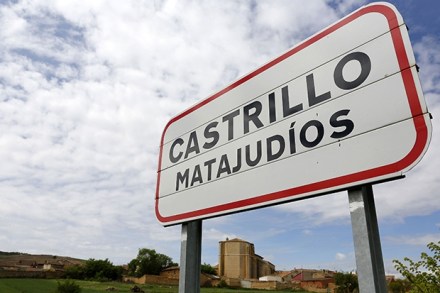
A village has changed its name because it seemed offensive. But I think the villagers were under a misapprehension. The village is in Spain: Castrillo Matajudíos. Of its population of 57, 29 voted to change the name to Castrillo Mota de Judíos because they did not like the idea of the former name meaning ‘Kill Jews’. Another settlement, in Extremadura, is called Valle de Matamoros, but its inhabitants are not planning to change it lest it be taken to urge the killing of Moors. The silly thing is that the Spanish place-name element mata does not mean ‘kill’ at all. It is quite common. There is a quiet little place in the Cantabrian region called Mataporquera. You might think it came from mata ‘kill’ and porquera, ‘piggy’.

Due diligence

From our UK edition

No doubt you, too, have had the feeling, upon glancing at an article in a paper picked up in a train or café, that it might mean something to someone, but it means nothing to you. I read this sentence in the Times the other day: ‘Not everyone builds an M&A machine on the back of stuff people throw away, such as till receipts and paper cups.’ A machine? On the back of stuff? And what are M&As — like M&Ms? But I persevered, and later in the piece a phrase appeared without which no indigestible article is complete: ‘Mr Roney’s due diligence on family firms is so painstaking that he typically waits for one of four issues: succession, financial crisis, health or divorce.

In defence of Gove’s grammar

From our UK edition

[audioplayer src="http://rss.acast.com/viewfrom22/angelamerkel-sburden/media.mp3" title="Toby Young and Oliver Kamm debate Gove's grammar" startat=1394] Listen [/audioplayer]Few things are more likely to provoke the disapproval of the bien-pensant left than criticising someone’s grammar. The very idea that one way of speaking is more ‘correct’ than another is anathema to them. Under the guise of being helpful, it asserts the supremacy of the white educated bourgeoisie and seeks to rob the working class and ethnic minorities of any pride in their own culture. It’s a form of ‘linguistic imperialism’.

On the cusp

From our UK edition

‘A stalker who dressed a pillow “mannequin” in his ex’s nurse’s uniform, then sent her a picture, has been told he is “on the cusp” of jail,’ reported the Scottish edition of the Daily Star. ‘Sheriff Alastair Carmichael told Mark Glass: “I don’t think you understand just how serious this is. You are on the cusp of a custodial sentence.” ’ He’s not the only one on the cusp. Idris Elba is ‘on the cusp of landing the Holy Grail of film-star roles, James Bond,’ reported the Daily Telegraph in a splendidly mixed metaphor, as though the Holy Grail were a kind of giant marlin to land, and a marlin with cusps to boot.

Flanders

From our UK edition

Usually, one of the first indications that you’ve entered a bilingual country is that the road signs are in two languages. At least this is the case in Ireland or Wales — but not in Belgium. In Flanders, the signs are written in Dutch. In Wallonia, they are all in French. French is spoken in Flanders, by the small local Francophone community, but more notably by the huge number of French people who descend on Brugge for the Christmas sales. The French registration plates and the gaggle of overly loud wanderers with cameras are giveaways, but don’t even think about trying French here yourself. It’s considered rude if it’s not your native language. You could, however, always make a stab at Dutch.

Barometer | 18 June 2015

From our UK edition

Dropping the Clangers The Clangers made a comeback on BBC television. Some Clanger facts: — The actors doing the voices worked from a script in English, even though they were playing seemingly unintelligible noises on the swanee whistle. It was a good job the young viewers didn’t understand Clanger-language, because the creatures were known to tell each other to ‘sod off’. — The last Clanger episode, made after a gap of two years, was made specially to be broadcast on the evening of 10 October 1974, polling day in the second general election of that year. It consisted of the Clangers being taught how to play party politics, but rejecting the concept. It was written by co-creator Oliver Postgate after he become angry about the miners’ strike.

Speak human

From our UK edition

The next Labour leader will have to be able to speak human, said a piece in the Observer. This, it argued, is because Ed Miliband was taunted for always speaking like a policy wonk. What short memories members of the commentariat have. In 2010 Ed Miliband was being praised by supporters on the grounds that he did ‘speak human’, unlike his technocratic brother. ‘Let us be clear: Ed M is not JFK,’ wrote Mehdi Hasan in the New Statesman in that year. ‘But he does have the all-important ability to connect with ordinary people.’ He quoted Neil Kinnock, of all people to prove it. Lord Kinnock said Ed had the ‘X factor’. Sure enough he is now the X-leader. To speak human is a strange sort of virtue to claim.

Trigger

From our UK edition

A notion is going about that, just as readers of film reviews receive spoiler alerts, so readers of anything should get a trigger warning. Otherwise something nasty in the woodshed might trigger post-traumatic stress disorder or worse. ‘I use the phrase trigger warning myself,’ wrote Kate Maltby in a Spectator blog the other day, ‘to warn Facebook friends that they may not wish to click on a link because it is likely to automatically “trigger” flashbacks for survivors of trauma.’ That’s kind, and luckily I am not triggered by split infinitives. But she and fellow admirers of the classics are shocked by a demand from four students at Columbia University for tutors to issue trigger warnings before asking for certain authors to be studied.

Brain fade

From our UK edition

‘Aa-aah,’ groaned my husband, ‘we fade to grey.’ He had never been much of a Young Romantic, even when Visage was vigorous. I had merely told him that Oxford Dictionaries have added to their online collection the phrase brain fade. In April, when David Cameron said that he supported West Ham, having previously assured the world he followed Aston Villa, he excused himself by saying: ‘I had what Natalie Bennett described as a brain fade.’ What Ms Bennett had said, after a grim radio interview in which she could not explain Green party policies, was: ‘One can have a mental brain fade on these things.

Eurovision-speak

From our UK edition

Like a reluctantly remembered nightmare, last week’s Eurovision Song Contest already seems very distant. But, in the manner of the Sand people in Star Wars, the nations of Eurovision will no doubt soon be back, and in greater numbers. Disappointingly, with scarcely an alien tongue displayed apart from Montenegrin, the chosen language was poor English. Since it is hard (for those not native speakers) to make out the sense of songs in English, the logic seemed to be to write them nonsensically from the outset. Sweden’s winning song had a thing about natural history, but showed a feeble grasp of fundamentals. ‘Go sing it like a hummingbird,’ it said, ‘The greatest anthem ever heard.’ Never mind that hummingbirds don’t sing (hence the name).

Progressive

From our UK edition

I was interested by the widespread annoyance at the use of progressive by the lefty parties before the election. Irritation is not the essence of a love of language (philology), but it is a symptom. The suspicion here was that socialism is so pejorative that a euphemism was being sought. It is true that when Milton wrote of ‘Their wandring course… Progressive, retrograde, or standing still,’ he wasn’t referring to the left, the right and the Lib Dems. He was taking about the apparent motion of the planets relative to the sun and other stars, a science more familiar to learned people of his day and before than today. A synonym for progressive was prograde.

Charlotte

From our UK edition

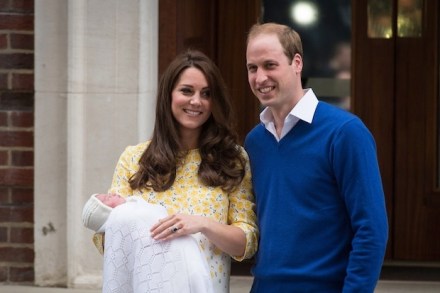
It could have been much worse. Someone had pointed out that among the new baby’s ancestors was Queen Violant of Hungary, which would make a splendid name. If that sounds unlikely for a possible queen of the United Kingdom, the wee princess might have been the victim of a suggested cross-cultural gesture by being given the name Fatima, since the present Queen and her heirs are descended from Mohammed through his daughter. Such descent is not unusual, though in this case there are obscurities in the early generations and in later Spanish genealogical connections.

Diary – 7 May 2015

From our UK edition

I am writing a play about Dr Johnson and his Dictionary. It will be performed in Scotland later this year. Five out of the great man’s six helpers were Scots (the only Englishman, V.J. Peyton, was considered a fool and a drunkard) and it’s timely to think of all those Scotsmen working away to consolidate the English language while their descendants try to define the general election. As a fully functioning Willie (‘Work in London, Live in Edinburgh’), I am startled by the zeal with which the SNP plans to take its revenge on Westminster after a decisive ‘no’ vote in the referendum.

Quarter

From our UK edition

‘No quarter given,’ yelled my husband as he stabbed at a cushion with his stick, spoiling the cavalier effect a little by catching his foot in the loose rug, about which I have told him twice (not the hundred times he likes to claim). He made his inadvertently slapstick attempt at humour because I had reported to him the appearance of a new commercial sign ‘Royal Quarter’ not far from the former Army & Navy Stores in Victoria. Apart from the presence of Buckingham Palace round the corner, there is very little royal about the area, which is identified by its proximity to Victoria station.