Language

Manchester University scraps the word ‘mother’

From our UK edition

Universities have traditionally played an important role in preparing young people for a life outside academia. These days, though, it appears that many institutions are more interested in lecturing their academics than teaching students – especially when it comes to using the right kind of language. That perhaps explains why the University of Manchester released on Wednesday a new ‘Guide to inclusive language’ for its staff, made by its ‘equality, diversity and inclusion team’.

The concrete truth about ‘Formica’

From our UK edition

If I ever again accompany my husband to a medical conference in Spain, and want to tell my hosts that I am embarrassed (as he often makes me), I should not say embarazada, for that word means ‘pregnant’, which at my age would be unusual. Such false friends can add to the gaiety of foreign travel. Among false friends, I must confess to assuming, all my adult life, that Formica, the kitchen laminate, had something to do with the ant, formica in Latin. It came as a shock last week to discover that the inventors in 1913 simply meant Formica as a substitute ‘for mica’. Mica was an electrical insulator — the original purpose of Formica. In my defence, it is true that Formica, fabric coated with resin, did use bakelite as a resin.

The New American Language

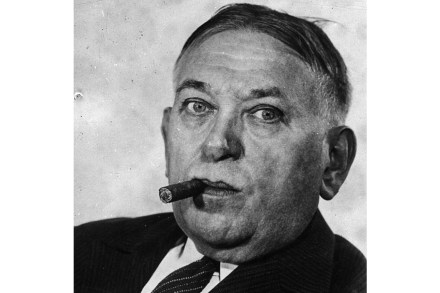
I suspect that were Mencken alive today having attained the respectable age of 140 years, he would be busy preparing The American Language: Fifth Edition and contemplating titling the book ‘The New American Language’ in recognition of the media-speak developed over the past couple of decades by news broadcasters and commentators, chiefly those belonging to the television industry. Each trade has its specialized lingo, due to the functional need for the terminology required to describe its unique operations. The electronic commentariat is no exception to this tendency of particular occupations to invent a vocabulary and idiom all their own. Where it does differ from a great many of them has to do with its reasons for doing so.

language

The economics of learning languages

From our UK edition

There is a kind of conversation which sounds intelligent, and which makes sense at first hearing, but which deeper thought reveals to be stupid. A classic example of this is the dinner party trope where some poncy polyglot belittles the British or Americans for being terrible at learning foreign languages. The raw facts seem to bear this out. But further consideration reveals a reason behind this discrepancy. Seen through the lens of time, it is much harder to learn a foreign language if your first language is English than if it isn’t. How so? Well let’s imagine how a Swede, say, might approach the issue: 1. ‘Do I need to learn another language?’ 2. ‘What language should I learn first?’ Easy answers. 1. ‘Yes’ and 2.

‘Espouse’ has become divorced from its meaning

From our UK edition

What do people think espouse means? It looks fairly plain, since spouses are to have and to hold, or indeed embrace. That applies to opinions, metaphorically. But King’s College, London, mounted a survey in 2019 and found that 26 per cent of students agreed or strongly agreed with the statement: ‘If someone is using hate speech or making racially charged comments, physical violence can be justified to prevent the person from espousing their hateful views.’ I read that in a letter to the Daily Telegraph from Professor Jonathan Grant. He said that 20 per cent of the general population agreed. But here espousing is used as though it meant ‘expounding’ or ‘preaching’.

Beware the linguistic Trojan horse

From our UK edition

It’s the bane of many an author these days: those newspaper-filler Q&As. One I recently filled out included the question: ‘What’s the book you’re never without?’ Of course, there’s no book I lug about with me everywhere, but inanity comes with this territory. I responded: ‘A tattered, duct-taped blue hardcover of my Webster’s Seventh New Collegiate Dictionary (based on Webster’s Third) published in 1969.’ Lame? Actually, no. Access to older analogue dictionaries has become politically invaluable. Pre-internet, august dictionaries such as Webster’s and the OED functioned as linguistic anchors.

From bread to Kate Bingham: the evolution of ‘nimble’

From our UK edition

‘I’ll stick to being Brazilian,’ said my husband. It was a family joke. Every time a politician on the radio says resilient, the first to shout out Brazilian wins. I haven’t yet discovered what the prize is, though we have been playing the game since 2014, when I wrote about resilience here. My husband may be resilient, even robust (another political watchword), but the newest favourite is nimble, and I don’t think he’s up to that. Ursula von der Leyen called Britain ‘a nimble speedboat’ in its vaccine provision. Actually, though she did say speedboat, I think nimble was supplied by the Sun.

My French lessons with Lord Nelson

From our UK edition

Every Friday afternoon the foreign correspondent and I attend a French lady’s home for our one-hour French lesson. The foreign correspondent has lived happily in France for about 20 years with only ‘hallo’, ‘yes’, ‘red wine, please’, ‘same again, chief’, ‘keep it coming’ and ‘cheerio’. His wife is smoothly fluent and has been urging him for years to set himself the feat of learning French. It was at the end of January, when the subject came up during a four-hour lunch, that he surprised us all by agreeing that it was indeed high time. His one condition was that I make it a joint enterprise. We have started from scratch as absolute beginners. So far we have had three lessons.

The rudeness of calling Jane Austen by her surname

From our UK edition

I agree with Charles Moore (The Spectator, 6 February) that it is a shame the Times is dropping its use of titles of courtesy — Mrs, Mr, Lord — at the second mention of anyone in a report. Now it’s Charles Moore first mention, and Moore after that. Even when I see Jane Austen referred to as ‘Austen’ I feel it a little rude. It makes her sound like a convict, or at best the cook below stairs in some historical drama. ‘Austen, there will be 14 to dinner and please ensure the duck is thoroughly done.’ This is partly a question of sex. I wouldn’t like to be called Wordsworth, noble name though it be, without the Mrs. My husband, even if stripped of Dr, is old enough to remember surnames used alone as a mark of friendship between men.

The dark roots of ‘grim’

From our UK edition

‘Thus I refute Bishop Berkeley,’ said my husband, multitasking by kicking the stone and slightly misquoting Samuel Johnson at the same time. It was his (my husband’s) notion of a little joke. Dr Johnson had demonstrated with his own kick the falsehood of thinking that all things are merely ideal, not material. The stone my husband kicked was a milestone outside the Royal Geographical Society in Kensington Gore. It said ‘To Hounslow 9 miles’ and ‘To London (Hyde Park Corner) 1 mile’. Helpfully, a manicule pointed out which way was which. I’m still unsure where Bishop Berkeley comes into this, but milestones have been everywhere recently, all of them grim.

What should you put at the end of an email?

From our UK edition

Suzanne Moore, the Telegraph columnist, found it ‘deeply annoying’ when perhaps five years ago she noticed people putting ‘Kind regards’ at the ends of emails. Her real gripe was with false claims to kindness. So what should you put at the end of an email? Yours sincerely is conventional in letters to people whom one knows. Sincerely in this context is first recorded by the beloved Oxford English Dictionary from the year 1702, in a letter to Samuel Pepys, in the last year of his life, from Arthur Charlett, the gossipy self-promoting Master of University College, Oxford, who had designed a bookplate for the diarist. He signed himself as ‘your most sincerely obedient Servant’.

Are we returning to ‘normalcy’ or ‘normality’?

From our UK edition

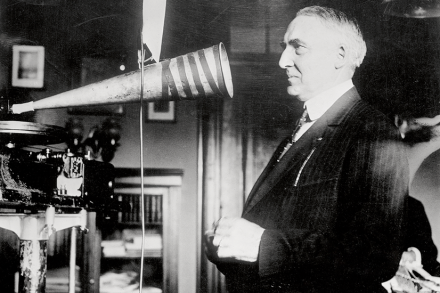
New normal Why have so many people started saying ‘normalcy’ rather than ‘normality’? — Normalcy has been traced back to 1857 when it was used in geometry to denote a state where lines were perpendicular to each other. It was rarely used outside mathematics until 1920, when the then US presidential candidate Warren Harding made a speech in Boston referring to a ‘return to normalcy’ following the Great War. He said: ‘America’s present need is not heroics, but healing; not nostrums, but normalcy.’ He was ridiculed for what was regarded by many as a malapropism. Although ‘normalcy’ is now in common use in the US, it was still the lesser-used word at the last count.

The small world of Polari

From our UK edition

In discussing the German low-life cant called Rotwelsch, Mark Glanville (Books, 9 January) referred in passing to Polari, ‘the language of gay English subculture’, being used ‘by members of a marginalised group to converse without being understood by outsiders’. I’ve never been convinced by this description of Polari. Undercover policemen in Soho before 1967 may not have been the sharpest knives in the drawer, but they did share the speech of those among whom they moved. Polari, or Parlyare, was a loosely coherent slang drawing on Italian, Yiddish, back slang, rhyming slang and perhaps Romany. This slang vocabulary was familiar to fairground people, publicans, criminals, theatre folk and the homosexuals among them.

The ancient belief in the power of words to protect us

From our UK edition

In his 37-book Natural History, Pliny the Elder (d. ad 79) wondered why we wished people ‘Happy new year’ (primum anni diem laetis precationibus faustum ominamur), or said ‘Bless you’ (sternuentes salutamus) when someone sneezed. Was this mere superstition, or something else? Pliny devoted a lot of time to denigrating all forms of superstition and magic, arguing that they were attempts to control the uncontrollable in human affairs, and citing Nero as an example of someone whose interest in magic was nothing but an ‘overwhelming desire to force the gods to do his will’, as if such a thing were ever possible.

Boris Johnson’s face can’t be ‘performative’

From our UK edition

Veronica brought me a hundred newspapers so that I could check on one word. Well, she didn’t bring a wheelbarrow, but she has at her office one of those online databases that bring up published articles. The word was performative, by which I had been annoyed on the wireless recently because a couple of speakers used it in a sense that I thought wrong. Of the 100 newspaper articles mentioning it, not one used performative correctly (to my mind). I must be the only person marching in step. Performative was invented by an Oxford philosopher, J. L. Austin, who used it in lectures in 1952, then in the William James lectures at Harvard in 1955. We make performative utterances, he said, as a kind of action.

Why oranges don’t have ‘segments’

From our UK edition

In the aisle of Tesco I stood like one thunderstruck. It was not the print of a man’s naked foot that took me aback, as it did Crusoe, but a tin of ‘Mandarin segments in juice’. These days we get our entertainment where we can, and I had toyed with buying tinned goods against the next disruption of trade, as Margaret Thatcher had stocked up with 20 tins of fruit in 1974 against inflation. But I had wondered that very morning what to call the shape made by cutting the top off a boiled egg. That is a spherical cap, I learnt. One thing led to another, and the next thing I knew was that a slice taken out of a spherical Christmas pudding (such that the straight sharp edge is the pud’s diameter) is called a spherical wedge. The flat sides of the slice are semidisks.

The word of the year (whether we like it or not)

From our UK edition

In 2015 smombie became the Youth Word of the Year in Germany. In January 2016 a survey found that 92 per cent of the young people asked did not know the meaning of smombie. Smombie is a portmanteau word composed from smartphone and zombie, used for those people who stumble about the street looking at their phones. Like many nonce formations it did not catch on. What, you may ask, was a putatively English word doing as the German youth choice? Certainly there is quite a bit of English vocabulary thrown lightly about by young people in Germany. The word of the year for 2020 is lost, but it was very nearly bastard, for which a humorous campaign was mounted till it was stamped on.

The unfortunate misuse of ‘fortuitous’

From our UK edition

‘Try the sports pages,’ said my husband, stirring in his armchair. I was looking for examples of fortuitous used as though it meant ‘fortunate’. You and I know that it means ‘produced by chance’, and it seems a pity to lose the distinction. The sports pages were indeed thronged with fortuitous. Football, it seems, is a game of chance. It didn’t take long to get a writer in the Daily Mail bang to rights. ‘Only occasionally will you get lucky. Arsenal did ride their luck to down Klopp’s team in London towards the end of last season but may have to wait a while to be so fortuitous again.’ There it must have been intended to mean ‘fortunate’.

The strange language of this year

From our UK edition

‘Forget coronavirus,’ said my husband, ‘the word of the year is strange.’ The strange thing is he’s right. This wasn’t determined by online polls or fixed by dictionaries. It emerged spontaneously and distinctly when the lockdowns got going. About lockdown I am still not quite happy. The word seems a little extreme for the episodes so far. But friends kept mentioning these strange times. The word fitted in more than one sense. When politicians’ repetition of unprecedented had become tiresome, strange still applied in the sense of ‘unfamiliar; not known or experienced before’. It also described the feeling of life as ‘abnormal’. Both meanings have been present in English since Chaucer’s time.

Do civil servants need to be ‘robust’ or ‘resilient’?

From our UK edition

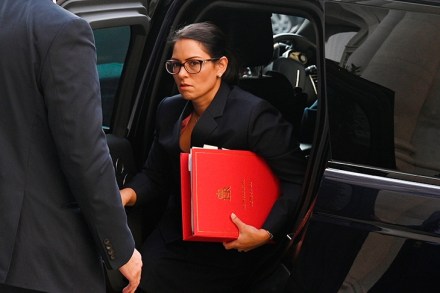
‘Why do they keep saying they need Brazilians?’ asked my husband, coming up for air from a hazy mixture of Radio 4 and whisky. ‘No, darling,’ I tried to explain, ‘not Brazilians. Resilience.’ They had been talking about civil servants sworn at by politicians, or at least being in the same room as swearing. Resilience seems the counterpart to robustness. Sir Alex Allan (who resigned after his report into the conduct of Priti Patel was not taken up wholeheartedly by Boris Johnson) had said that ‘senior civil servants should be expected to handle robust criticism but should not have to face behaviour that goes beyond that’.