Language

Why does everybody now have a playbook?

From our UK edition

Playbooks are proliferating like cookbooks. In the past fortnight or so I’ve come across: the counter-hybrid playbook, the wartime playbook, the Coldplay playbook, the preppy-meets-sporty playbook, Hitler’s playbook, the Ben Stokes playbook and the nepo-baby playbook. I used to think that the rather thumbed metaphor of playbook referred to a book of words containing the script or libretto. After all, book of words or book of the words has often been used figuratively to mean ‘the rules’. In Money in the Bank (1942), P.G. Wodehouse has Dolly Molloy exclaim: ‘There’s nothing in the book of the words to prevent Mrs Cork having the bozo pinched and stowed away in the cooler.’ In the medieval theatre the literal playbook was looked after by the garnement man, the props man.

Why can’t the Financial Times correctly name peers?

From our UK edition

The present Lord Howard de Walden’s first name is not Howard. It’s Peter, for the 11th Baron is the film-maker Peter Czernin. In 2004, the barony of Howard de Walden was called out of abeyance in favour of the 9th Baron’s eldest daughter, who married Joseph Czernin. All this spoils it for the Financial Times, which refers to peers according to this pattern: Lord Peter Mandelson. That is not English. Lord Peter Mandelson would be the son of a duke or marquess, like Lord Peter Wimsey, the younger son of the Duke of Denver. My husband has been driven to incoherent rage by wireless announcers talking of Lady Victoria Starmer, the wife of the former PM, and making things worse by referring to her as the First Lady. In America the First Lady is the wife of the head of state.

How whimsy took over

An intelligent reader is annoyed by whimsy. ‘Clothes, interiors, children’s birthdays… it’s everywhere!’ she exclaims. ‘What is whimsy anyway?’ It is indeed everywhere. ‘Whimsy has been institutionalised,’ wrote James Marriott in the Times, its symptoms including Larry the Downing Street Cat and the saintly Paddington Bear. This recognises a modern side to whimsy that is sentimental and twee. But to me its historical side acquires interest from a remark in the Oxford English Dictionary: ‘Whimsy may be related to whim-wham as flimsy to flim-flam.’ Flim-flam was only one such reduplication with a vowel variation expressive of contempt.

The dialect Spain forgot

From our UK edition

‘It made me sick to think of the work that must go into the making of such a thing,’ George Orwell declared in Homage to Catalonia when he came across ‘a kind of harrow that took one straight back to the later Stone Age. It was made of boards joined together, to about the size of a kitchen table; in the boards hundreds of holes were morticed, and into each hole was jammed a piece of flint.’ He’d got it wrong. It wasn’t a harrow but a threshing-sledge, to be pulled by oxen or mules, to separate wheat from chaff. It was easier than beating the corn with a flail. The threshing could thus be done by old people and children riding on the sledges. The sledges, now seen in museums, are called trillos in Spanish.

The internet is wrong about taxis

Error sticks to the word taxi like ants to an echidna’s tongue. Ten years ago I wrote here that I’d heard a cabby on the wireless explain that the word taxi came from its German inventor, whose name was Thurn und Taxis. This blunder swarms all over the internet. ‘At the end of the 18th century,’ goes one version, ‘the Thurn und Taxis family, who managed thousands of carriages and horses with which they distributed mail, decided to diversify their business, using their network and their vehicles also for passenger transport… Their name, Taxis, may have inspired the modern term taxi…’ But it didn’t. The Thurn und Taxis family did run international postal services under the Habsburgs. Their family names meant Tower and Badger, but they did not invent those either.

wood yoga

How corporate twaddle makes us less productive

Bandwidth is troubling, because it’s just one of many phrases that assume we are mere cogs in the machine Allow me to totter onto my rickety soapbox for a second, and say: business jargon has gone too far. Buzzwords have become so entrenched into working life that they have, in effect, become a second language. One that, like a much-needed laxative, we are forced to digest to keep daily operations running smoothly. If you don’t use (or at least nod energetically along with) phrases like “low-hanging fruit” or suggest that someone “circle back” so that you can “create synergy,” and instead choose to communicate like an unlobotomized person, you’ll find yourself a virtual pariah.

corporate
wood yoga

The art of crimping

From our UK edition

The Cornish pasty shop that I often walk past has not been the most enticing venue during the recent hot weather. ‘Crimped by hand,’ is the claim in the window. I wondered whether the thumbprints of the pasty-makers are discernible, but my curiosity was not great enough to make me buy one. The toothpaste-tube community is the other great area of interest in crimping. Toothpaste tubes are crimped shut at one end. People who are annoyed by the amount of toothpaste that resists removal from the tube are ready to invest small sums on devices to squeeze it out. These are often said to crimp the tube flat as the paste is used. Some are designed like the keys for rolling up the tops of sardine tins.

Who decides if a word is racist?

I swear Rod Liddle was smiling down on me last week, as I found myself tussling with an editor. I’d written a sentence containing the word “Chinamen.” She wanted me to remove it, because, she said, “Chinaman” is widely acknowledged to be a racial slur. In my view, words have no single intrinsic meaning. Within limits, they can mean a variety of things, differing according to context – not least the tone of voice in which they’re delivered. Even “Yes” can mean “No,” when said by an Englishman trained in the subtle art of oblique speech.

racist

What do changing emoji trends tell us about society?  

When did you, Spectator readers, last send an emoji in a text, DM or, gasp, email? I’ve just looked through the last messages I’ve sent and I sent a weeping smiley face to my wife last night while we were discussing Colin Firth’s singing in the film of Mamma Mia! (To be honest, anyone who has suffered through Firth murdering “My Last Summer” might use considerably stronger emojis than that.) Yet as a 44-year-old man, I can also concede that my own usage of emojis in my written communications is not as prevalent as that as my 10-year-old daughter Rose, who is an ardent user of them whenever she gets hold of my or her mother’s telephone.

emoji emojis

Does Yogi Bear have a connection to yoga?

‘Well, we all have areas of ignorance,’ said my husband with a little too much relish, I thought. He was responding to my admission that I had reached a ripe old age without realising that the words yoga and yoke had the same origin. Yoke has been used in English for more than 1,000 years and yoga only since about 1785, but it had been in use in Sanskrit since the first millennium bc. The meaning of yoga was held to be either the yoking and reining in of the senses, or the yoking and joining oneself to the Prana (life force), the Om (absolute) and the Universe.

wood yoga

Who decides if a word is racist?

I swear Rod Liddle was smiling down on me last week, as I found myself tussling with an editor. I’d written a sentence containing the word ‘Chinamen’. She wanted me to remove it, because, she said, ‘Chinaman’ is widely acknowledged to be a racial slur. In my view, words have no single intrinsic meaning. Within limits, they can mean a variety of things, differing according to context – not least the tone of voice in which they’re delivered. Even ‘Yes’ can mean ‘No’, when said by an Englishman trained in the subtle art of oblique speech.

Should you give a toss about ‘toss’?

From our UK edition

Modern Toss was invented in 2004 as the label for a series of cartoons by Jon Link and Mick Bunnage. Many use foul language and some are very funny. Under the category of Work, a man says to a person sitting at a desk: ‘I think I’ll go home. I’m a bit bored.’ As often in satire, reality has imitated art. I assume the title Modern Toss coincides in meaning with an entry in the Oxford English Dictionary from 2007 giving an ‘additional sense’ for toss. An illustrative quotation came from Viz for 7 December 1990: ‘See this book Tom… Yes, I’ve read it actually. Yeah. Me n’all. Right load of toss, isn’t it. But at 16 quid a throw, he must be coining it in.’ The dictionary, in suggesting an etymology, invokes a letter from 1915 by Lytton Strachey quoted in P.N.

wood yoga

Fantasticks, calash, noctivagation – the wonderful words of Anthony Wood

When the King visited Oxford in September 1687, there was a bit of a shambles in the Bodleian, where they had laid out a banquet for his breakfast. He ate some mutton and pheasant, but, not inviting others to eat, he alone ate. When he had finished, there was a scramble for the many dishes left over. The University had paid £160 for this banquet or ambigue, noted the antiquarian Anthony Wood (1632-95). Ambigue, borrowed from French ambigu, meant a meal where all the dishes were served at once.

wood yoga

My guide to thuggery

‘Don’t they speak English?’ asked my husband, tossing over a copy of the Daily Mail as though it were my fault. The headline read: ‘Missing in action’. It referred to Dan Jarvis disappearing from view in his new job as Defence Secretary. The headline writers should know that, militarily, those missing in action are presumed dead. The Mail meant Awol – absent without leave. I mentioned this ignorant error here in 2022. In 2024 I remarked how odd it was that Sir Keir Starmer, the Prime Minister, should say about mob violence outside a migrant hotel near Rotherham: ‘It is organised, violent thuggery.’ Now Hilary Benn, the Northern Ireland Secretary, is at it.

Grab bags are up for grabs

From our UK edition

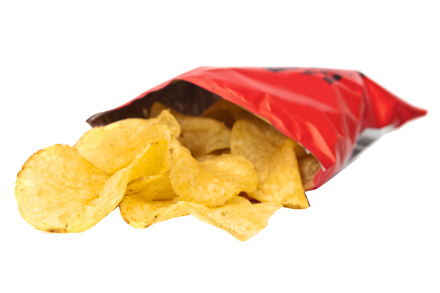
My husband’s task was a simple one: to buy a couple of bottles of water from the Morrisons opposite the station in case there was no buffet service on board (which would have made a waterless three-hour journey torture). If the train had left on time, he’d have missed it, but he came puffing up the steps full of talk about a ‘meal deal’ and proffering some Walkers crisps. Luckily for him he had also bought water, but what caught my eye was the labelling on the crisps: ‘Grab bag.’ I was aware of the term meaning an emergency bag containing food, water and first aid supplies, which would be kept near the door in emergency or war. A packet of crisps would hardly be a substitute.

Know your facepalm from your headslap 

‘That’s not a facepalm,’ said my husband. ‘It’s a headslap.’ He proved the point by making contact between the flat of his hand and his noble brow, producing a percussive sound. Then he covered his eyes with outstretched fingers and said: ‘That’s a facepalm.’ He was right to make a semantic distinction between these two non-verbal gestures. The headslap signifies usually comic frustration at another’s stupidity. The facepalm conveys embarrassment. The names are recent. Facepalm is not found earlier than 1996 in the Oxford English Dictionary. Those who like to employ emojis (which I do not) will find one for the job. The headslap has not yet been noticed by the OED.

strait

Italy’s doomed war on English

From our UK edition

‘Italians are not inventing any new words,’ the head of the Italian language academy told the Telegraph. ‘They’re not creating anything. They take everything from English.’ Professor Paolo D’Achille is the head of the Accademia della Crusca, founded in 1583. Crusca means ‘bran’, which is what the academy wants to keep out of the fine flour of Italian. English is of course bran. There was a big hoo-ha in Italy a decade ago when a recruiting poster appealed to young people: ‘Be cool and join the navy.’ I suppose there’d be a bigger hoo-ha in Britain if a recruiting poster was printed in German. These things have their degrees of unacceptability.

When does a drama become a psychodrama? 

When Labour blocked Andy Burnham from standing as its candidate last time around, Douglas Alexander, the Scottish Secretary, rejoiced at avoiding ‘three months of psychodrama – who’s up, who’s down, who’s getting on with who…’ But as Gareth Roberts remarked in The Spectator’s Coffee House, ‘I’m not quite sure what the difference is between psychodrama and good old-fashioned plain original-flavour drama.’ Indeed, Mr Alexander’s characterisation of psychodrama sounds like the essential lineaments of pure politics: ‘Who loses and who wins; who’s in, who’s out,’ as King Lear puts it. King Lear itself might be a classic psychodrama, if madness is the defining feature.

When did waiting lists become wait lists?

From our UK edition

‘Here you are. This is a funny one. It would suit you,’ said my husband unkindly, showing me online a picture of a tight-skinned model wearing an XS size barn-style ‘Balmoral’ cotton jacket made by Helsa, with faux-fur collar and cuffs and a cinched-in waist: £419. He found the idea of me with a cinched waist irresistibly funny. For another £80 I could have bought a Balmoral 1700mm Double Ended Roll Top Bath with White Claw & Ball Feet, reduced from £899. Balmoral seems to figure frequently in the nomenclature of sanitary ware, along with Sandringham, Windsor, Richmond, Clarence (butt of Malmsey), Carlton (Prince Regent) and Worsley (the late Duchess of Kent), as though past members of the royal family had sanctified them with their bottoms.

Why does everything now pivot?

‘As the door turneth upon his hinges,’ says the Book of Proverbs, ‘so doth the slothful upon his bed.’ But today nothing turns, neither the door, nor the slothful, nor his ox, nor his ass. It pivots. I read in the paper that Meg O’Neill, the new CEO of BP is ‘expected to double-down on the pivot back towards oil and gas’. Doubling down on a pivot must take some gymnastic skill. Saudi Arabia meanwhile is trying out a new snooker shot: ‘to pivot away from less lucrative projects’ – such as snooker. Here the writer might as well have said ‘turn away’, as in the Bible. Pivot has the restrictive extra sense of remaining in one place as you turn. We English borrowed the noun pivot from the French in the 14th century, and they used it to mean ‘hinge’.