Labour party

Labour would benefit from a stronger position on Europe, says former policy chief

From our UK edition

Jon Cruddas’ speech warning that Labour is lost in England has attracted plenty of attention for that line alone. But there was another section that is worth taking note of, given the former party policy chief is keen to play such a big role in rebuilding Labour after its febrile summer. Cruddas also spoke about Labour’s challenge on Europe, arguing most significantly that the party should support two categories of EU membership and take a stronger position on the renegotiation. He said: ‘We need to strengthen our pro-European politics with a clear position.

Who are Jeremy Corbyn’s outriders?

From our UK edition

Jeremy Corbyn may have a Shadow Cabinet and a full frontbench team, but the Labour leader doesn’t have many genuine outriders even amongst those he has given jobs to. Most frontbenchers seem rather refreshed by how happy he is for them to have open discussions at meetings: yesterday’s Shadow Cabinet meeting, for instance, was quite discursive and friendly, which was quite different to its atmosphere in the Miliband years. But most of those frontbenchers have agreed to serve because they believe it is the best thing for the Labour party, not because they want to help Corbyn.

Emily Thornberry risks another Twitter gaffe with pig jibe

From our UK edition

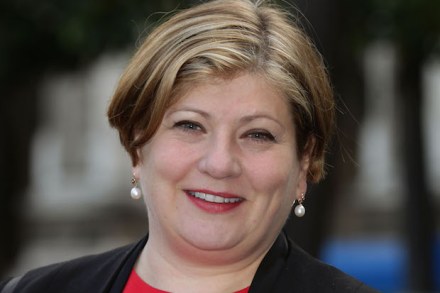
Emily Thornberry has only just made it back onto the frontbench after she had to resign from the shadow cabinet over a tweet she sent of a photo of a house covered with St George flags during the Rochester and Strood by-election. However, despite discovering the dangers of Twitter first hand, the Labour MP has not been put off using it to share her more risqué thoughts.

Coffee Shots: Labour press office taunts David Cameron with Percy Pigs

From our UK edition

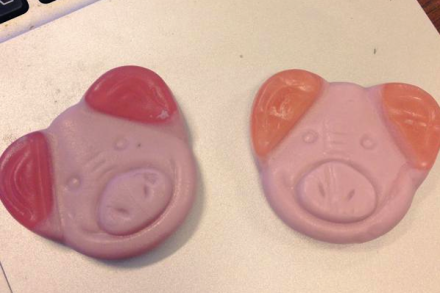
With the Downing Street press office declining to comment today on allegations from Lord Ashcroft involving the Prime Minister and a dead pig, Labour has also stayed quiet over the claims. However, members of the Labour press office were unable to resist ignoring the alleged incident completely, with press officers giving out sweets to hard-working lobby journalists. The choice of candy? Percy Pigs, of course.

Jeremy Corbyn should forget railways if he wants Labour to be a success

From our UK edition

Jeremy Corbyn’s first policy pronouncement as Labour leader hasn’t been all that surprising: he wants a ‘People’s Railway’ that will bring the railways back into public ownership line by line. He will have noticed the excited noises that party members made at hustings whenever he mentioned rail renationalisation - and the impatient sighs from the same audience when his rivals for the leadership were cool on the issue. But as Peter Kellner explains today, even though this individual measure is popular, unless Corbyn is able to deal with the public’s fundamental lack of trust in Labour over the economy, he could promise voters every single retail offer they’ve ever dreamed of and they still wouldn’t back his party.

Looking good by doing nothing: Corbyn and the slackactivist left

From our UK edition

The Save Darfur page on Facebook was one of the most heart-warming successes of the early years of social media. Between 2007 and 2010, more than a million people joined to protest against the world’s indifference to the genocide in Darfur. Concerned and compassionate, their virtue shone forth for all their friends to see. They had every reason to protest, and still do. When I was at refugee camp in Calais a few months, I did not meet any Syrians. By contrast, Sudanese, fleeing conscription by the militias in Darfur, and Eritreans fleeing a prison state, which is becoming Africa’s North Korea, were everywhere.

Twelve disagreements Charlie Falconer has with his party leadership

From our UK edition

Charlie Falconer is one of the few figures closely associated with Blairism serving in Jeremy Corbyn’s shadow cabinet, which isn’t surprising given the new leader's mandate. In an extraordinary interview on the Sunday Politics, the shadow justice secretary said he was serving under Corbyn because ‘I want to make the opposition as effective as possible in holding the government to account’ — while outlining a long list of policy areas he is at odds with the leadership on. As well as saying he would quit if Labour campaigns for a Brexit, Falconer has revealed no fewer than twelve other areas where he differs with Corbyn and John McDonnell. 1.

Jeremy Corbyn’s first week as Labour leader: a series of gaffes, u-turns and general chaos

From our UK edition

Harold Wilson’s remark that ‘a week is a long time in politics’ has never been more apt than at the beginning of Jeremy Corbyn’s leadership. The hopey-changey rhetoric that lead him to victory last Saturday has inevitably given way to a more traditional form of compromise politics. While Corbyn’s debut at the Dispatch Box was the high point of his first week as Labour leader, the rest of his time has been devoted to fighting fires — literally in one incident. Women in the shadow cabinet: Sky News’ Darren McCaffrey revealed how the first Corbyn shadow cabinet was put together last Sunday and how the Labour leader attempted to deal with a lack of women shadowing the Great Offices of State.

Jeremy Corbyn appoints convicted arsonist Mike Watson as his education spokesman

From our UK edition

Given that Jeremy Corbyn is a Hamas sympathiser with an IRA sympathiser as his Shadow Chancellor, I imagine he didn't think too much about promoting a little-known Scot named Mike Watson. He is a Labour peer, who now takes a place in Corbyn’s frontbench as education spokesman. He is also a convicted arsonist, who quit the Scottish Parliament in disgrace after being caught drunkenly setting fire to a set of curtains during the Scottish Politician of the Year ceremony 2004. He was sentenced to 20 months in prison, which he served in HMP Edinburgh. Watson's undeserved rehabilitation says much about how Corbyn is having to scrape the very bottom of the barrel for people willing to serve under him.

John McDonnell’s slick performance on Question Time was worthy of Tony Blair

From our UK edition

Hats off to John McDonnell. We've all been fretting about how the Corbyn gang would cope against the media slick Tories. We all think that, despite the appeal of conviction politics, a shadow chancellor such as McDonnell will be eaten alive by the Tory front bench. John McDonnell's performance on BBC Question Time last night suggested otherwise. Question Time is a good test for politicians: they have to look and sound passionate while saying nothing much at all. McDonnell did exactly that, and with gusto. He masterfully shrugged off his 'joke' about killing Margaret Thatcher. When asked about his support for the IRA, he managed almost simultaneously to apologise and to take credit for bringing peace to Northern Ireland.

Alistair Darling: there’s no ‘silver lining’ to Jeremy Corbyn’s leadership

From our UK edition

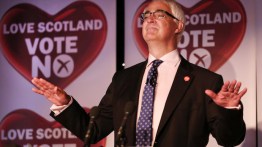
Today marks one year since the Scottish independence referendum and many of the key figures are reflecting on how politics has changed. Alistair Darling, the former Labour Chancellor and leader of the Better Together campaign, spoke on the Today programme about Scotland, but it was the remarks on his own party that were the most striking. He said Jeremy Corbyn was elected leader thanks to the ‘disillusionment’ of people who are ‘fed up with the established order’. But Darling said ‘I honestly don’t know’ whether John McDonnell will ever become Chancellor: ‘Just at the moment, it seems to me to be difficult [to judge] but I’m willing to be surprised.

Barometer | 17 September 2015

From our UK edition

It’s their party Jeremy Corbyn won the Labour leadership contest with 60% of the vote among four candidates in the first round. Which leader has the largest mandate from their party? — David Cameron was elected in 2005 with 28% of the vote out of four candidates in the first round (held among MPs only). He won 68% of the party vote in the run-off with David Davis. — Tim Farron won 57% of the Lib Dem vote this year. Only two candidates stood. — Nicola Sturgeon was appointed as SNP leader unopposed last November. — Nigel Farage was elected Ukip leader in 2006 with 45% of the vote (among four candidates) in a first-past-the-post system. — Natalie Bennett was elected Green leader in 2012 with 59% in the final round of voting.

Diary – 17 September 2015

From our UK edition

With four days to go until the result of Labour’s leadership election, a call from the Sunday Times. Would I like to write a piece, along the lines of the opening chapter of my 1980s novel A Very British Coup, about the first 100 days of a Corbyn government? Anything up to 3,000 words, he says. I am sceptical that the sense of humour of the censors at Murdoch HQ will stretch to the prospect of a Corbyn government, however fanciful. Especially since any such government is likely to be interested in breaking up the concentration of media ownership. What they are really looking for, I suspect, is tale of chaos, mayhem and a breakdown of the social order. Nevertheless he is bursting with enthusiasm. After nailing down terms I decide to give it a go.

Twitter speak

From our UK edition

‘Tweeting’s like text messaging, isn’t it?’ said my husband confidently, though not, as usual, from any knowledge of the matter. I find the register of language in tweets interesting. The tweeter in his own right must assume an easy tone, quite different from that of the niggling troll. As far as style goes, I was impressed by Jamie Reed, the Labour MP who made public his resignation from the shadow cabinet when Jeremy Corbyn had hardly finished his acceptance speech. Mr Reed is fond of tweeting, and quite good at it. The little picture (tweeters it call an avatar) with his account shows Larry Sanders, the fictional chatshow host. Having resigned, Mr Reed later tweeted: ‘Forgot to put the bones in my shirt collars and now my train has broken down.

The Spectator’s notes | 17 September 2015

From our UK edition

When the Labour party began, its purpose was the representation of labour (i.e. workers) in the House of Commons. Indeed, its name was the Labour Representation Committee. Its goal was gradually achieved, and then, from the 1980s, gradually annihilated. With the victory of Jeremy Corbyn, the Labour leader is supported by only 10 per cent of the party’s MPs, and yet it is imagined, at least by his backers, that he will eventually be able to get into government with them. It is an impossible situation. What is needed today is the opposite of how it all started — a Parliamentary Representation Committee in the Labour party. When the history of Corbynism comes to be written, many will assume that his form of leftism arose as a protest against the Thatcher era. This is not so.

The relative experience of consuls and Corbyn

From our UK edition

One of the justifications of the House of Lords is that it embodies ‘collective experience’. That is not a quality which the eternal rebel Jeremy Corbyn can cite on his CV. Over many years, Romans developed a political system such that anyone who wanted to reach the top of the greasy pole and become consul had to have under his belt a considerable experience of government. The cursus honorum (‘race for honours’) consisted of a series of age-related hurdles that, at least in theory, had to be leapt before the winning of the ultimate prize. To start with, it was taken for granted that a candidate would have serious military experience. Then the first hurdle was that of quaestor, at about age 30.

LISTEN: John McDonnell apologises for IRA comments

From our UK edition

Appointing John McDonnell as his Shadow Chancellor made Jeremy Corbyn's first few days as Labour leader much harder than they needed to be. This was mainly because the Hayes and Harlington MP made some deeply distasteful comments about the 'bravery' of the IRA. In 2003, McDonnell told a gathering to commemorate IRA hunger striker Bobby Sands: ‘It’s about time we started honouring those people involved in the armed struggle. ‘It was the bombs and bullets and sacrifice made by the likes of Bobby Sands that brought Britain to the negotiating table.’ The most serious part of this week's PMQs was when the DUP's Nigel Dodds raised the comments, and David Cameron branded them as 'shameful'.

Jon Cruddas sets up new group to save Labour

From our UK edition

How does Labour solve the greatest crisis in its history? In this week’s Spectator, I interview party thinker and former Miliband policy chief Jon Cruddas about where his party goes next. Cruddas doesn’t think Jeremy Corbyn is Labour’s problem: he’s just the symptom of an identity crisis that the party would have suffered from whoever got elected leader. The Dagenham MP’s response to this crisis is not, like some of his colleagues, to join the frontbench, but to set up a new group that he hopes will be the crucible for a new Labour ideas that win it the 2020 election, in the same way as Labour recovered from the 1992 election to win in 1997 as New Labour.

Jess Phillips: Why I told Diane Abbott to f— off

From our UK edition

Jeremy Corbyn's first PLP meeting as the leader of the Labour party got off to a shaky start as MPs failed to applaud him. Happily, the attention was soon taken away from him, as a row erupted between his shadow international development minister and a Labour backbencher. Diane Abbott attempted to scold the newbie Labour MP Jess Phillips for asking a 'sanctimonious' question about why all the top four shadow cabinet jobs had gone to men. With Phillips telling Abbott to 'f--- off', Corbyn has since been criticised for not stepping in to stop the argument. Today's Times suggests that Corbyn's romantic fling with Abbott back in the 70s could have played a factor in his decision.