Labour party

In the name of the father | 20 February 2010

From our UK edition

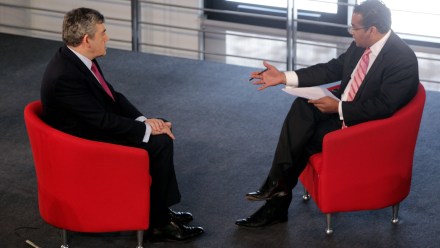
“I’m not perfect” Gordon Brown said in his speech today – knowing that, in a couple of hours, we’ll hear details of the many ways he is not perfect, when the first extracts of Andrew Rawnsley’s book are published. He has got his defence in early on Channel Four news. Here is a transcript: Q: You know tomorrow there are going to be a whole slew of new allegations being made by Andrew Rawnsley, so let's hear about you at work. Do you get angry at your staff? Do you swear at them? Do you throw things? GORDON BROWN: If I get angry, I get angry with myself. Q: Do you throw things? GORDON BROWN: No, I throw the newspapers on the floor or something like that, but please… Q: Have you ever hit anyone? GORDON BROWN: I have never hit anybody in my life.

No surprises – and much Tory-bashing – in Brown’s Big Speech

From our UK edition

Move along, now – there's nothing to see here.  Or rather, reading Gordon Brown's Big Speech, there's nothing that you hadn't already seen in the papers, or that you wouldn't have expected to see anyway.  The four election themes got a mention.  Labour's record in government was pushed and promoted to the point of absurdity.  Words like "new", "fair" and "change" were flung around like so much confetti.  And no election date was given.  No alarms, no surprises. More than anything, Brown set about attacking the Tories on every conceivable level.  He caricatured Cameron & Co. as a party of privilege and wealth, who are more concerned about fox-hunting than reform, and who are still peddling the "same old Conservative economics of the 1980s".

Welcome to The Future Fair

From our UK edition

So now we know.  Labour's election slogan is A future fair for all.  And – as various folk, including Alex, have pointed out – it's kinda screwy.  As in, "we're all going to The Future Fair" kinda screwy.  So don't expect it to catch on.  Unless, of course, there really are bright lights, big wheels and rollercoasters on offer. The slogan kickstarts a feverish weekend of activity.  Brown is going to set out the main themes of Labour's campaign.  The Tories might try to sabotage it all.  And we may, possibly, perhaps, find out what the election date is.  Stay tuned, so to speak. P.S. I wouldn't be too surprised to see that slogan tweaked slightly – A fairer future for all, perhaps.

A Future Fair for All

From our UK edition

Yup, that's what the whizz kids and the marketing gurus at Labour HQ have come up with for Labour's election campaign slogan*. A Future Fair for All. Try that one on for size. Note too the now traditional absence of punctuation that further obscures the meaning. As one wag put it, the Tory response might be A Fête Worse than Death. More than anything else, however, it reminded me of Wolcott Gibbs's classic profile of Henry Luce. Published** by the New Yorker in 1939 it remains a hoot today and a devastating parody of Luce's bombast and the special, magnificently empty prose style he favoured at Time. Timespeak, however, seems to inspire our political parties.

Brown goes shopping for votes

From our UK edition

There’s an interview with Gordon Brown today in the Mirror about his relationship with his mother. As you might expect given the subject, it is hardly an interrogation. Indeed, it manages to make Piers Morgan’s questions to him resemble the final part of the Frost Nixon interview. But what caught my eye was this note at the end, “This article appears in Tesco magazine, published by Cedar Communications Ltd. The magazine is available in store from March 1.” Tesco magazine isn’t small beer. Its circulation is more than five and a half million and data shows that more women read it than any other magazine. To Brown, the attraction of this kind of interview is that it is a no lose situation for him.

Labour’s spin machine needs a service

From our UK edition

Has Alastair Campbell lost his touch? In his heyday, Labour’s spin was mesmeric, with the godlike Campbell blowing smoke and manipulating mirrors. Now their tactics are as obvious as Britney Spears. Having prepared the ground with Piers Morgan last weekend, Brown will attempt to divert attention from the dreadful state of the economy; his government’s collusion in torture; the steady increase of casualties in Afghanistan; the Labour party having a slanging match before the Chilcot Inquiry; Argentine posturing; James Purnell’s awkwardly timed resignation; and indeed the spectacle of Brown himself doing a Derek and Clive skit in the nude, which, if you want to make eating Sunday breakfast impossible, will be splashed across the Observer.

Purnell leaves parliament but not politics

From our UK edition

The news that James Purnell is to stand down is a shock. It is clear that Purnell was disenchanted with Brown’s continued leadership and with the direction in which the Labour party was heading. Purnell was marginalised in parliament and his much vaunted alliance with John Cruddas came to nothing. Plainly, he believes that he can exert more influence outside the parliamentary Labour party than within it. The Tories stole the limelight this week with their commitment to public sector co-operatives; Purnell’s response fell flat, caught in the contradictory statist language that even the most uber-Blairites cannot escape.

Sunny side up?

From our UK edition

Earlier this week I asked what Obama's experience could teach a Cameron government. At the same time, there has been a well-argued debate in The Times about whether the Tories should go negative or not. There is one point where the two issues converge - and that is in how a newly-elected government should deal with the country's economic legacy. Once in power, a Tory government will be tempted to be optimistic, to point to the sunny uplands. General Colin Powell said "positive thinking is a force multiplier" and the Cameron team come across as natural adherents to this viewpoint. There is also the fact that the modern Tory agenda - of decentralisation and trust in people - is at heart a positive philosophy of government, not a mistrustful statist one.

The numbers spoil Labour’s narrative

From our UK edition

Labour have certainly come out of the traps snarling and gnashing this morning.  For one, they're making the most of two letters in the FT, signed by 60 economists, which ostensibly support their position on the public finances.  And then there's Gordon Brown's speech to European leaders, in which he implores them to tackle the "hatred" of "the right".  Naturally, by "the right", he means "David Cameron". It's those letters which really grab the attention, though.  Not really because of what they say, or who has signed them, but because they're suggestive of how the debate over the public finances is going to go.  Yep, the Tories get 20 economists to write a letter in support of their deficit-reduction plans, so Labour respond with 60 economists of their own.

If Brown-Morgan can’t move the polls, what about the TV debates?

From our UK edition

Brace yourselves.  There's going to be poll after poll after poll in the weeks leading to the election.  And the onslaught starts in the Sun today, with the first of their YouGov daily tracker polls.  It is also the first to be conducted in the aftermath of the Brown and Morgan interview. So what's the story?  Well, Labour's vote is more or less unmoved - suggesting, in turn, that the public were more or less unmoved by Brown's interview with Piers Morgan.  They're on 30 percent (down 1), with the Tories on 39 percent (up 1), and the Lib Dems on 18 (down 1).  That's a 9 point lead for the Tories. Of course, you could say that this is because the public didn't like what they saw on the Brown interview.

Vote for the party of Frank Gallagher<br />

From our UK edition

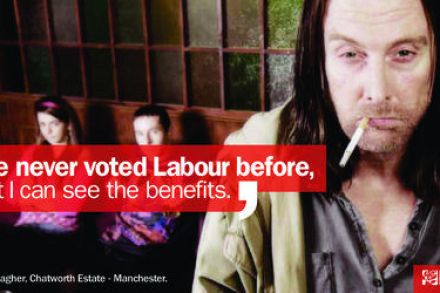
Following the success of the ‘I’ve never voted Tory’ spoofs, Tim Montgomerie has launched My Labour Poster and welcomes your contributions. I imagine it'll receive po-faced censure from CCHQ, but Cameron&Co will be privately thrilled if activists get it up and running.

The Tory wobble is over, for the moment

From our UK edition

The media are obsessed with a Tory crisis. And why not? It’s a good story. The Telegraph is cheerleading the circus. It gave exhaustive coverage to the absurd hen-fight in Westminster North; on Monday it reported on more ‘rumblings and grumblings’ in the shires; yesterday, their subject was David Cameron’s heavy handed response to the ‘backwoodsmen’; and today Simon Heffer collates these events into the conclusion that ‘even if  Mr Cameron doesn’t see how disenchanted the public is by its lack of lack of choice and his lack of definition, many of his MPs do. The ride is about to get rocky.’ By accident or design, the Telegraph’s analysis is consistent. If there is such a thing as ‘Cameronism’ it is conflicted.

The Tories needed to be negative

From our UK edition

There is only one way the Tories can lose the election and that is if it becomes a referendum on them rather than a choice between them and the government. We are in such an anti-politics moment that the electorate is unlikely to give a positive endorsement to any politician or political party. This—not the poor choice of photo—was the real problem with the Tories’ opening ad of the year: it invited voters to judge Cameron in isolation. Cameron is the biggest asset the Tories have but he is their biggest asset when contrasted with Gordon Brown. This is why I think Daniel Finkelstein is wrong to argue that the Tories should eschew negative campaigning. They need to remind voters what the alternative to them is. Danny is critical of the Tory death tax campaign.

Purnell’s ‘empowerment’ pledge falls flat

From our UK edition

James Purnell envisages a society of ‘empowered’ voters left to make decisions for themselves. It is an attractive concept – individual responsibility displacing state directives will save money and, providing those running the institutions are competent, improve public services. Writing in the Times, Purnell acknowledges that these concepts can become lost in the abstract terms in which they are expressed. What a pity he didn’t take his own advice - his article is an extended abstract noun. Not that it’s all bad. What power is there for parents who can’t afford to move close to a good school, he asks.

Much to do if Britain is to manufacture its way out of trouble

From our UK edition

The City had hoped that Britain would export its way out of trouble. Dream on City Boys: Britain’s trade deficit is £7.3bn. It is perverse that the Thatcher government is blamed for manufacturing’s decline. Certainly, deficits were a feature of the Thatcher years but Labour came to power with a £1.8bn trade surplus and the gap has widened every year thereafter; Britain was £56bn in the red by 2006. With a possible inflation crisis louring in the distance, precipitated in part by weak sterling and a dependency on imports, British manufacturing needs to be stimulated. John Redwood has a typically incisive post:       ‘It is quite possible to make things in Britain, make them well and make a profit.

MPs, porkies, pigs and scum

From our UK edition

The headline might almost be word association, but when it comes to Twitter the devil makes work for idle thumbs. Guido points out that tweets cannot be edited once posted. Labour whip David Wright has previous with labelling the Tories ‘scum’, and he maintains that on each occasion he has fallen victim to a would be Lisbeth Salander, who uses their genius to post inane political slurs in no more than 147 characters. Either that or he’s artless at deceit.     CCHQ scent blood and Eric Pickles is gunning for Wright’s head. He has written a letter arguing that Wright has breached the ministerial code. I can see this row running on and on, as there is a lot of bad blood between the two parties.

Cutting it with the Fink

From our UK edition

I couldn't let today pass without a response to Danny Finkelstein. We do agree on the ends, but not the means. And, as he says, this debate mirrors one about the methods of reform. So, let¹s go through his points. 1. 'I am afraid I think Fraser overestimates (a lot) how politically difficult this is all going to be. And how personally painful for a lot of people. And how technically difficult.' Painful, yes, but necessary ­ and it will be resented if Cameron is not straight about the cuts he will have to make. But how painful? Gordon Brown¹s great intellectual victory is to persuade the Tories that 'cuts' can only mean frontline services cut ­ so (as Brown once said) 10% cuts 'mean schools close and hospitals close.

Does George Osborne finally have a big idea?

From our UK edition

Listening to George Osborne on Today (and stripping away the visceral prejudice I always feel at his sneering patrician tone) I have to recognise that he was saying something very interesting. The idea of throwing open the public sector to worker-control is very, very intriguing. Co-operatives are the future of Britain: this is not something I ever thought I would hear from the mouth of a Conservative politician. I don't know if George Osborne has any experience of living or working in a co-op (it strikes me he is not the type). They can be a mixed bag, but the principle is great one.

Now Gordon Brown has to live with himself

From our UK edition

It's not hard to see why the Prime Minister opted for a soft interview with Piers Morgan as his latest attempt to relaunch himself with the British public. Forget that he said he wasn't the kind of politician who used his family as political props (always a daft thing for someone in public life to say). The Life Stories show is perfect format for the purposes of the celebrity-politician, designed to reveal only that which the guest carefully intends to share with the public. It is anti-journalism.  All the pre-briefing and carefully-managed reaction was designed to leave all control in the hands of the invitee. This is particularly true of the moment of supposed loss of control - "the weep". The whole package is demeaning to everyone concerned.