Labour party

Home insulation is the latest net zero farce

From our UK edition

Zoe Godrich of Swansea might best be described as collateral damage in Britain’s glorious march towards net zero. Three years ago, she had her three-bedroom home fitted with cavity-wall insulation – which the government is out to encourage through its Great British Insulation Scheme. Sadly for her, it has not worked out quite as intended. With Labour now promising billions more to retrofit homes with this kind of stuff, what could possibly go wrong? Within weeks of having it fitted, Godrich says her walls started to run with water, and black mould started to form on her walls. She can no longer use two of her bedrooms, and she and her children now have to slum it on mattresses in the one remaining habitable room.

Starmer’s safety-first campaign is backfiring

From our UK edition

The problem with spending an election campaign saying as little new as possible is that it does leave a big gap that can easily be filled with rows over process and mistakes. Labour has a safety-first approach to its campaign, wanting to reassure voters that it has changed rather than being too exciting, but this makes the row over Diane Abbott all the more pronounced because there is little else to talk about. Yesterday, the party wanted to talk about its pledges on the NHS, but none of them were particularly new or striking. Instead, its frontbenchers were all asked repeatedly about the way the party has handled Abbott’s case. It was very clear few of them were happy about it.

Starmer purges the Corbynites

From our UK edition

One of the first thing Keir Starmer and his team decided to focus on after winning the Labour leadership was candidate selection. The Labour leader’s senior aide Morgan McSweeney takes the view that a Labour rosette needs to mean something – and in recent years that has appeared to be in doubt. In the 2017 and 2019 snap elections a series of Labour candidates were picked with little vetting, or with factional reasons winning the day. This included Jared O’Mara who was selected for Sheffield Hallam for Labour when Jeremy Corbyn was leader and elected in 2017. In 2023, he was jailed over a £52,000 fraud. So, Starmer’s team have over the past year or so set about selecting Starmtroopers – candidates they trust to have a low risk of scandal or rebellion.

Could Jeremy Corbyn become a left-wing Nigel Farage?

From our UK edition

Why can’t Jeremy Corbyn be a left-wing Farage? Why can’t he threaten Labour as Ukip and its successor parties threatened and continue to threaten the Tories? There is a gap in the market for a party to the left of Labour, and Corbyn seems just the man to fill it.  Those of us who intensely disliked his leadership of the Labour party disliked most of all the gormless personality cult which surrounded him and did so much to destroy the left’s claim to possess a sceptical intelligence. But there is no doubt that, if you want to build a new movement, having tens of thousands, and in all likelihood hundreds of thousands, of devotees is a great place to start. I live in Islington and the Labour candidate Praful Nargund is not well known.

Why Rishi Sunak wants to introduce national service

From our UK edition

The first big new policy announcement of the election campaign is in from the Tories, and it’s likely to be a talker. Where Keir Starmer appears to be opting for a ‘Ming vase’ strategy – trying not to rock the boat ahead of polling day – the Tories are leaning towards the opposite. At 20 points behind in the polls, aides believe they need headline-grabbing, bold policies in order to get the public’s attention. The first of which is the return of mandatory national service.

What’s behind the Tory exodus?

From our UK edition

11 min listen

It's day four of the election campaign, and Michael Gove has joined the growing Tory exodus and announced he's standing down at the election. What's behind his decision, and how will it affect Rishi Sunak? Megan McElroy speaks to Fraser Nelson and Katy Balls.  Produced by Megan McElroy.

The smoking ban won’t go away

From our UK edition

Has Rishi Sunak’s surprise summer election spared Britain some nanny state interventions? At first glance it seemed so, as it was revealed yesterday that the Prime Minister’s legacy legislation – the Tobacco and Vapes Bill – did not make it into the pile of ‘wash-up’ legislation that Parliament will try to pass before its dissolution next week. The Tories abandoned the defence of liberty a long time ago Speaking to the BBC yesterday, Sunak expressed his ‘disappointment’ that he was ‘not able to get that through by the end of the session’ but still cited his crackdown on flavoured vapes and a proposed ban on tobacco sales for anyone born after January 2009 as ‘evidence of the bold action’ he is willing to take as prime minister.

Is the Labour lead as big as it seems?

From our UK edition

13 min listen

Both major party leaders are hitting the road today and campaigning in Scotland, which will be a major battleground in the coming election. Labour looks comfortably in the lead, but is that number accurate to what's happening on the ground? Cindy Yu and Katy Balls talk to Focaldata's James Kanagasooriam about their latest analysis. Produced by Cindy Yu.

Why has the election been called now?

From our UK edition

15 min listen

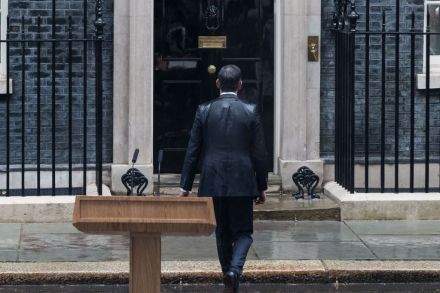
Less than 24 hours after Rishi Sunak's surprise election announcement, we look ahead to the parties' campaigns. What has been the fall out? How have Labour responded to the shock news? And why didn't Rishi have an umbrella? James Heale is joined by Isabel Hardman and former Labour adviser John McTernan to discuss.  Produced by Patrick Gibbons.

special relationship

How the Special Relationship could be renewed after US-UK elections

A record number of countries will hold elections this, including Britain on July 4 and the United States on November 5. These two great powers — each with a veto at the UN — have enjoyed a bond that has survived for so long, is it known on both sides of the Atlantic as “the Special Relationship.” There have been stand-offs: Britain refused to join the war in Vietnam, and when Argentina seized the Falkland Islands in 1982, the US did not intervene. But Ronald Reagan and Margaret Thatcher worked in tandem to bring down the Berlin Wall. And if the view on Ukraine and Gaza is not always the same, there is a shared commitment to the sovereignty of Russia’s neighbors and to a peace in the Middle East that secures the rights of Jews and Palestinians alike.

Is there finally good news for the government?

From our UK edition

11 min listen

The IMF has upgraded the 2024 economic forecast for the UK. What does this mean for the Government and could more good news follow this week? And, with speeches on tax, benefit crackdowns and tackling anti-semitism, what should we make of all this political activity? Will we see the return of 'the hot lectern guy'? Kate Andrews and James Heale join Katy Balls to discuss.

The whips’ office and their woes

From our UK edition

18 min listen

There have been two recent defections from the Conservatives to Labour. There's lots of chatter in parliament about a potential third defector. In this Saturday edition of Coffee House Shots, Katy Balls and James Heale hear from Gyles Brandreth, former MP and broadcaster. He takes us back to what it was like working in the whips' office in the 1990s, and ask if he thinks there are more defections to come.  You can read Gyles' diary here. Produced by Megan McElroy.

Can Hunt answer the Reagan question?

From our UK edition

11 min listen

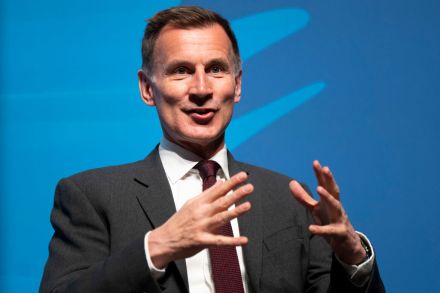
Ronald Reagan famously asked voters: 'are you better off than you were four years ago?' At the next election, the Tories face a public thinking over the last fourteen years. Chancellor Jeremy Hunt gave a speech today defending the UK's record tax levels and attacking Labour's economic plans. But who should we trust more on tax? Fraser Nelson and James Heale join Katy Balls to discuss. Produced by Megan McElroy and Patrick Gibbons.

Has Starmer scaled down his pledges?

From our UK edition

13 min listen

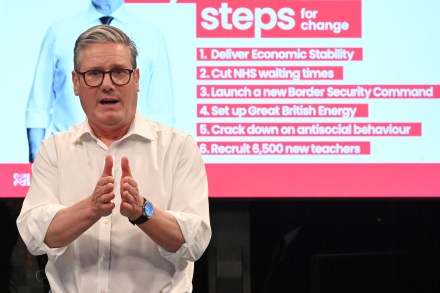
Keir Starmer has unveiled his six election pledges. In a nod to Tony Blair's 1997 election card, the Labour leader has announced key promises to the public should they win the election. How are the commitments being received, and what will the impact of his speech be?  James Heale speaks to Katy Balls and Stephen Bush, Associate Editor at the Financial Times.

The Shabana Mahmood Edition

From our UK edition

45 min listen

Shabana Mahmood is the shadow secretary of state for justice. She was born in Birmingham to migrant parents. After studying Law at Lincoln College, Oxford, where Rishi Sunak was a contemporary, she qualified as a barrister and lived and worked in London. First elected to Parliament in 2010, representing Birmingham Ladywood, she was one of the UK’s first female Muslim MPs. On the episode, Katy Balls talks to Shabana about her upbringing in the UK and in Saudi Arabia; how her faith is central to who she is as a person; and her approach to the tricky issues of abortion and assisted dying. Produced by Oscar Edmondson and Cindy Yu.

Can Lammy charm Trump?

From our UK edition

14 min listen

This week, shadow foreign secretary David Lammy is stateside, meeting with senior advisors to Donald Trump and hoping to charm them. Meanwhile, David Cameron gives his first set-piece policy speech. Who is the more credible statesman? Cindy Yu talks to James Heale and Charles Grant, director of the Centre for European Reform. Produced by Cindy Yu.

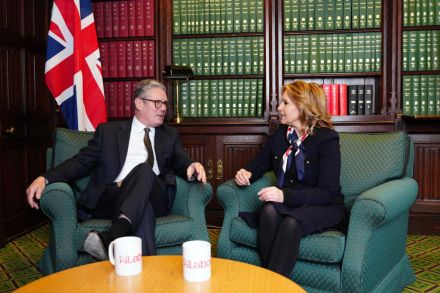
Why does Labour want Natalie Elphicke?

From our UK edition

12 min listen

The MP for Dover, Natalie Elphicke, has shocked MPs and pundits across the political spectrum by defecting to the Labour party today. In her resignation letter, she accused the Conservative party for having 'abandoned' the 'centre ground'. But for someone who has vocally criticised Labour in the past, how helpful is Elphicke's defection? Oscar Edmondson talks to Katy Balls and Isabel Hardman. Produced by Oscar Edmondson and Cindy Yu.

Keir Starmer is ashamed of his party

From our UK edition

Questions from backbenchers dominated PMQs. Sir Edward Leigh is keen to end unfettered immigration and he announced a way to stop the boats that might actually stop the boats. ‘Detain all those who land illegally on our shores and offshore them immediately,’ he said. His specific goal was to prevent children from being shoved onto leaky inflatables crewed by emaciated refugees who paddle across channel at the dead of night. ‘End this callous trade,’ he said, citing the risks to innocent kids. No one could quibble with that. The PM agreed.  Sir Keir Starmer has quietly rebranded the Labour movement as ‘the changed Labour party’ ‘He’s right,’ said Rishi. He then announced a different stop the boats policy that will never stop the boats.

What does Andy Street’s defeat mean for Rishi Sunak?

From our UK edition

The local elections results are in, and the Conservatives have lost more than 450 council seats. After a full recount, Labour’s Richard Parker beat Andy Street to become West Midlands mayor, with only around 1500 votes in it. What does his loss mean for Rishi Sunak, and where do the overall results leave him? Katy Balls and James Heale speak to Megan McElroy. Produced by Megan McElroy.

Wes Streeting should be ashamed of his white supremacist Tory jibe

From our UK edition

Over the past few years Wes Streeting has established himself as one of the more open-minded and reasonable members of the shadow cabinet. Rather than nodding along with his party’s traditional worship of the NHS, and utilising the usual, false campaigning tool of trying to claim that the Tories have some secret plan to privatise the health service, he has been frank about its weaknesses. A tweet put out by Streeting yesterday afternoon, however, points in a rather different direction: blatant opportunism. He wrote: ‘A win for Susan Hall and the Conservatives is a win for racists, white supremacists and Islamophobes the world over. Susan Hall’s campaign has been fought from the gutter with dangerous and divisive politics.