Labour party

Miliband is not yet the man to build the ‘good society’

From our UK edition

Neal Lawson¹s Comment is Free blog-post/essay/manifesto on the 'good society' is causing a flurry of interest in Labour circles. The head of Labour leftish pressure group Compass has been banging on about this for four years now. Borrowed ultimately from Aristotle, this re-heated utopianism is a tempting route for post-socialists tired of the compromises of the Blair years. Neal Lawson is a passionate man, who can claim with some justification to have been developing Labour¹s version of the 'big society' for some time. Here is Neal at his emotional, tub-thumping best: 'To take back some semblance of control, we can't start from a position of trying to humanise a turbo-consumer society whose every premise, process and principle is about not being human.

Balls strikes at delicate Clegg

From our UK edition

Ed Balls has been biding his time on Control Orders, but now he has struck. Writing on his blog, he appealed for consensus on this ‘sensitive issue’. ‘I have told Theresa May that, wherever possible, I will support her over the counter-terrorism measures that must be taken in the national interest – and we will play our part in building a new consensus for the future… that’s what a responsible Opposition should do.’ Balls knows that May favours retaining Control Orders, so perhaps this is a subtle endorsement of her position against the Lib Dems. He continues, conceding that he does not possess the facts. (The Home Secretary, of course, does).

Unpicking Miliband’s deceits

From our UK edition

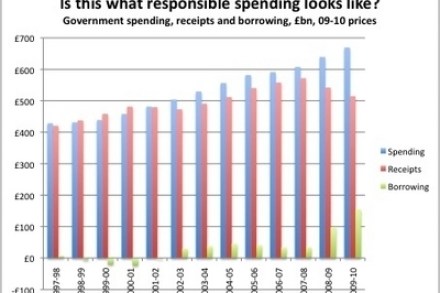
Ed Miliband has penned a combative but incredible piece in today’s Times (£). He makes two substantial points. First, that the coalition is deceiving people: Labour was not to blame for the deficit. And second, the coalition’s cuts package (in its entirety) is unnecessary. Oh what a tangled web he's weaved. His argument is a maze of conceits, sleights of hand and subterfuge, and he interchanges between debt and deficit at his convenience. But, occasionally, his position is exposed. As this Coffee House graph recalls, Labour built a substantial structural deficit prior to the economic collapse.

All to play for in Oldham East

From our UK edition

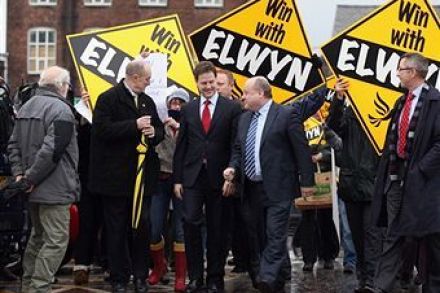
The Oldham East and Saddleworth by-election is fast shaping up to be the event that will set the tone for the first quarter of the political year. The unique circumstances in which the vote was called makes it particularly hard to predict, no one is quite sure whether there’ll be a backlash against Woolas or one against the Lib Dems for going to court to overturn the result. As I say in the magazine tomorrow, if the Lib Dems were to win, it would give Clegg the breathing space he so needs at the moment. Lib Dem worries about what the coalition is doing to them politically would subside, temporarily at least, and Ed Miliband would find himself under pressure.

Khan to Miliband: What life experience do you have?

From our UK edition

Ok, not quite. But this snippet from GQ's interview with Shadow Justice Secretary Sadiq Khan is almost a description of Ed Miliband's rise to the Labour leadership: "One of my criticisms of a lot of politicians of all parties is that they're career politicians. Since they were 11 years old they dreamed of being an MP, being the Prime Minister, and so they'll do A-Level Politics, Politics degree, get a job with an MP, work for a think tank, become an MP, Prime Minister. And my criticism is what life experiences do you have? The reason most MPs aren't popular is that people can see through that." He makes up for it later, though, saying of Miliband that "I believe in him, I really do, he's a mate.

Clegg and Cameron decouple

From our UK edition

Cameron and Clegg are putting on a show for the in-laws. After mounting disquiet from the fringes of their respective parties, the two leaders are journeying to Oldham East to quash rumours of a merger and reaffirm that theirs is a marriage of necessity. David Cameron will travel north in due course. God knows what he will say? Presumably that he no longer wishes his partners well – get out there and biff ‘em, or words to that effect. On the other hand, Nick Clegg will declaim his lines today. His script is hyperbolic, replete with wishful fantasy about a ‘two-horse race between Labour and the Liberal Democrats’.

Osborne and Johnson battle over the new tax divide

From our UK edition

Now here's a thing: a radio appearance by Alan Johnson that actually clarified some details about Labour's economic policy in the Miliband era. Sure, the shadow chancellor spent most of his time on the Today Programme setting about the coalition's VAT hike, with all the usual arguments about jobs and growth. But there was also confirmation that Labour's deficit reduction plan would split 60-40 between tax rises and spending cuts, and that they would raise national insurance levels rather than VAT. It repositions the argument some way beyond the simple Do/Don't divide that was developing around VAT. Now there are two choices for voters to make. Do they prefer a deficit reduction plan which, for the first time, emphasises tax hikes over spending cuts?

Miliband on the trail

From our UK edition

If you talk to Tory MPs privately and ask them which of the coalition’s budgetary decisions they are most uncomfortable with, they’ll generally indentify the VAT rise and the police cuts (the reductions in the defence and prisons budget are also often mentioned). So it is clever politics for Ed MIliband to be emphasising the VAT rise and the police cuts so heavily in Oldham East and Saddleworth. It enables him to oppose key bits of the deficit reduction programme without sounding like an out of touch left-winger. If Labour do hold the seat, it will be a boost to Ed Miliband. It will add to the sense that he is establishing himself as Labour leader.

Miliband’s first hundred days in five points

From our UK edition

Ok, so Ed Miliband's one hundred day anniversary actually falls on Tuesday – but what's a couple of days between bloggers? Besides, even with two days to go, it's safe to say that his will be a peculiar century. By some scientific measures, Labour are doing alright; sucking up Lib Dem voters to push ahead of the Tories in opinion polls. But that belies what has been an unconvincing start from their new leader. Here's my quick five-point guide to his bitter honeymoon: 1) What's the economy, stupid? One of Miliband's boldest moves to date was his appointment of Alan Johnson as shadow chancellor.

Ed by numbers

From our UK edition

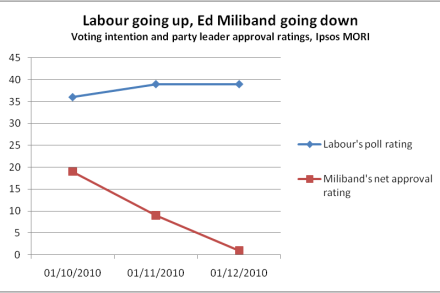
Ed Miliband’s leadership trundles on past the hundred day milestone tomorrow – so more on that, erm, then. But, in the meantime, here’s a quick graph transcribed from Ipsos MORI’s latest research. It depicts what, for want of a proper policy prospectus, is one of the most striking features of the Miliband era so far: that Labour’s support has risen while their leader’s personal ratings have slumped, reaching what today’s Mail describes as the “lowest of any new party leader at the same stage since former Tory leader Iain Duncan Smith,” and lower even than his biggest fan, Neil Kinnock. Here it is:   To be fair, that still puts Miliband ahead of Nick Clegg.

Cameron and Miliband’s New Year message: 2011 will be like 2010 

From our UK edition

If you want to know what British politics will sound like in 2011, then just read David Cameron’s and Ed Miliband’s New Year messages one after the other. They share a lot of the same words, but bounce along to different, if familiar, drumbeats. According to Cameron, next year will be “very difficult,” due to the effort of “putting our economy ... on the right path”. According to Miliband, next year will be more difficult than it needs to be, due to “the decision taken to reduce the deficit at what I believe to be an irresponsible pace and scale.” In other words, cuts versus fewer cuts. Just like 2010 all over again.

The momentum shifts

From our UK edition

Yesterday’s announcement that 114 Labour MPs, including 5 shadow cabinet ministers, will be voting ‘No’ in next year’s Alternative Vote referendum isn’t exactly a ‘game changer’. But it has certainly shifted the terms of debate within the Labour party. Over the past few weeks a perception had been developing that adoption of the AV system, whilst not generating unparalleled excitement and passion within Labour ranks, was at least becoming the line to take. That perception has now changed. Labour’s internal stance on the issue is important. Labour supporters effectively represent the referendum’s ‘floating voters’.

Ed Miliband’s party reforms are purely presentational

From our UK edition

Ed Miliband’s proposal to cap party donations at £500 – thereby restraining the huge one-off union payments that sustain Labour – certainly looks radical enough. But, as any fule kno, surface appearances can be deceptive. As Jim Pickard explains in an insightful post over at the FT, the result would be a system that affects the other parties far more than it does Labour and their union support. The trick is crystallised by this passage from the original Independent report: “One reform option would be to treat Labour’s income from union members who pay the political levy as individual donations. This helps to fund the party’s day-to-day spending.

David Miliband’s options

From our UK edition

Downing Street may  have dismissed as “complete nonsense” a newspaper report that the coalition was considering inviting David Miliband to become British ambassador to Washington. But the former foreign secretary is one of a few younger British politicians with international standing and while it would be odd to appoint him to a government job – and stranger still for him to accept -- the coalition should consider putting him forward for a number of international assignments. Potential jobs include the international community’s “high representative” in Bosnia; as a UN envoy to Yemen; or as the representative of the Friends of Democratic Pakistan.

Government by signature

From our UK edition

Remember this petition to have Gordon Brown resign as Prime Minister? It secured 72,222 signatures in the end: not quite enough to have it debated in Parliament under the coalition’s new plans, but enough to make you think. I mean, will we see parliamentary debates about whether Dave and Nick should step down at the public’s request? Not going to happen, I’d say. But these latest ideas for involving voters in the legislative process could certainly provoke one or two embarrassments for our political class. Take the obvious example of withdrawing from the EU: that petition could probably attract any number of votes, but is unlikely to be met positively by Parliament. Ditto an entire spectrum of political matters, from MPs’ pay to immigration.

Labour’s first manifesto commitment for 2015

From our UK edition

Courtesy of Alan Johnson's interview in the Independent today: "Both [Ed Miliband and Johnson] have accepted that it is 'inconceivable' that the 50p tax rate won't be needed at the time of the next election." Or, in other words, Johnson and Miliband have reached compromise over their divergent positions on the 50p rate.

Oldham East will determine whether Clegg or Miliband is the leader under pressure

From our UK edition

A few weeks ago Ed Miliband was the leader under pressure. There was, absurdly, talk of leadership challenges if things did not improve. But now all the pressure is on Nick Clegg, he’s the one facing stories about whether he can cope. Whether the unforgiving media spotlight stays on Clegg or not will be determined by the re-run of the election in Oldham East and Saddleworth. The result of this contest will frame the first quarter of the political year. If the Lib Dems take the seat from Labour, then Miliband will again be the leader under pressure. Clegg will have won the time and the space that he needs. The nerves of his party will be calmed and Clegg’s authority within it enhanced.

Going for growth in 2011

From our UK edition

Just as at the turn of 2010, economic growth is going to be big news in 2011. Back then, the question was when we would return to any growth at all. Now, it's more about how fast our recovery can be. So just how fast can it be? If you notice, Labour have fallen very quiet about the possibility of a double dip recession. But they'll still leap clamourously upon any sign that coalition policies are stalling growth and jobs. In this, they might even be joined by those on the right who are sceptical of the coming VAT hike. To put some sort of perspective on proceedings – albeit an incomplete one – I thought CoffeeHousers might appreciate a couple of graphs (see UPDATE below for larger versions).

Labour step onto the front foot

From our UK edition

Talk about a Christmas miracle: Ed Miliband has set about the task of Opposition with ruthless efficiency today. As both Guido and Nicholas Watt have noted, the Labour leader is all across the broadcast news this afternoon, after upping the heat on Vince Cable and the coalition. His party's attack comes in the form of a letter sent by the shadow business secretary, John Denham, to the Cabinet Secretary, Gus O'Donnell. It asks, mischieveously, whether Vince Cable has broken the ministerial code by promising to wage war against Rupert Murdoch, and whether Jeremy Hunt is impartial enough to step into the breach. And while nothing is likely to come of these exhortations, they have already done their work in terms of grabbing Labour, and Miliband, some rare attention.

The political year in ten videos

From our UK edition

With Westminster winding down for Christmas, and Coffee House with it, it's probably time to start looking back on the year in politics. In which case, here's an opener: a chronological selection of ten videos that capture the some of the glories, iniquities and embarrassments of 2010. If CoffeeHousers have any alternative suggestions, then just shout out in the comments section, and we can add them to the bottom of this post. Here goes: 1.Terror on Downing St: The Movie A Taiwanese news report about the bullying allegations made against Brown in Andrew Rawnsley's book. The computer animations are astonishing, to say the least: 2. Gordon Brown calls the election (and the sound fails him) 3.