Labour party

Blair is still a believer

To an extent, British politics is still determined by whether or not you agree with Tony Blair. For more than a year, the coalition and the opposition have been debating whether to continue Blair’s public service reforms; this is a testament to his failure as Prime Minister as much as it to his success. Today, has given an interview to the Times (£), coinciding with the release of his memoirs in paperback. He uses it to question the Labour party’s current journey back into “nostalgia”. He says: “The attraction of a concept like Blue Labour is it allows you to say that there’s a group of voters out there we

Cameron’s easy ride

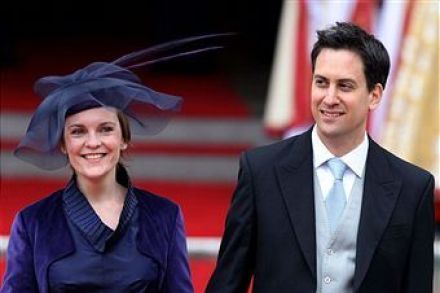
Having u-turned on two more policies in the last two days, one would have expected David Cameron to have a hard time today at PMQs. But he didn’t. Ed Miliband never got going, turning in one of his worst PMQs’ performances. Cameron pithily summed up Miliband’s performance when he joked that ‘the best thing that can be said about his performance is he wasn’t thinking about politics on his honeymoon.’ Miliband’s performance today will add to the low-level grumbling about him among some Labour MPs and members of the shadow Cabinet. Miliband has a big speech coming up on Monday and he needs it to deliver a rationale for his

Cameron stamps on Clarke

Ken Clarke was summoned to Downing Street yesterday, the BBC reports. He spoke to David Cameron for half an hour, after which the controversial sentencing review was dropped: there will not be a per cent fifty discount in plea bargaining and Clarke will have to find £130m of savings from elsewhere in his department. Clarke has paid for last month’s rape victim fiasco, which so incensed the party leadership. The government is adamant that this is not a u-turn; rather, it argues, it has consulted on extending plea bargaining from the current level of 30 per cent and decided against such a move. It points to a report issued by

Paxman trips up Balls

Ed Balls walked into two traps on Newsnight yesterday evening. First, he seemed stumped when Jeremy Paxman asked him if he was praying that George Osborne was right. Paxman’s ‘gotcha point’ was that if Osborne isn’t right the country is in deep trouble and Balls wouldn’t want that. But Balls’ more serious slip was to say, “My view, though, is that the central outcome isn’t that we see a resumption of growth.” This, as coalition sources have been pointing out today, allows them to present any growth as a vindication of their strategy. For all the talk about the NHS today, the economy still remains the central battleground in politics.

Accentuate the differences

This is an age of ideas, not of ideology. That is the thesis of Amol Rajan’s enthralling overview of the intellectual trends in contemporary British politics, published in today’s Independent. As part of the piece, Rajan has interviewed Maurice Glasman, who gives a far clearer account of ‘Blue Labour’ than he did during his recent comments to the Italian press. Communities must be organised to resist the caprices of capital and the dead-hand of the state. Resist is probably the wrong word because the aim appears to be, in Philip Blond’s celebrated phrase, the ‘recapitalisation of the poor’, which implies some form of empowerment. Rajan notes that Glasman holds a

The return of the signature parade

Oh dear, we’re back to letter-writing again. 52 academic sorts — including the Labour advisor Richard Grayson and Blue Labour proponent Stuart White — have a letter in today’s Observer urging George Osborne towards a ‘Plan B’ for the economy. They even sketch out, in less than 150 words, what that Plan B might look like. And, strangely enough, it has more than a tinge of Ed Miliband about it, including — and I quote — a green new deal; a focus on targeted industrial policy; the empowerment of workers; “unsqueezing” the incomes of the majority, and so on. I say we’re back to letter-writing again, because it’s all so

Ed Balls opens a new front in the same old way

There are plenty of pressing issues at the moment, but two in particular stand out: the cost of living and youth unemployment. Ed Balls lost no time in latching onto the first issue. On becoming shadow chancellor, he immediately attacked the government’s VAT rise and benefits changes, which he judged to be the main contributors to rising inflation. It has been a  successful tactic, sustained by rising inflation and determined political pressure. Now Balls seems to be turning his full gaze at youth unemployment. In article for the News of the World, Balls launches his campaign to save “Britain Lost Talent”. At the root of this is a plan to

Glasman sings the blues

Maurice Glasman, a favoured thinker of Ed Miliband’s, has given an interview to someone called Filippo Sensi who writes for an Italian magazine called Europa. I sound a firm note of caution here because there is a distinct possibility that it’s a spoof. Take Glasman on the etymology of Blue Labour: “There is a sense of bravery and tragedy in our position and that is one meaning of the word blue, that links Miles Davis with Picasso and Aristotle. It is not mentally ill or depressed to feel triste and out of that understanding can flow a deeper understanding of the world and a more durable courage in resisting it than

The green consensus in action

A couple of days ago, I wrote about the deleterious effects of political consensus on energy policy. A good example of this has emerged today. According to Politics Home, Luciana Berger and Caroline Lucas are seeking an amendment to the Green Deal to impose a target for domestic carbon reduction. A number of salient points emerge from this. First, it’s a fine instance of the obsession with targets; itself an indication that this area of policy is largely a top down initiative – driven by targets, taxes and penalties. The Green Deal, as it currently stands, is one of the few areas that put incentive before directive. The idea was

Labour’s malfunctioning front bench

The old adage that it’s hard to make an impact in Opposition is ringing true. Dan Hodges has denigrated Labour’s opposition thus far in the New Statesman’s political column today. He charts the party’s competing interests to create the sense that Miliband’s lack of direction, which is marketed as consensual politics, is the prime cause for Labour’s passivity. A listening exercise and numerous policy reviews are under way, but Labour is still stuck at Robert Frost’s fork in the road. Sooner or later, Miliband will have to act. Without firm leadership, shadow ministers are being left to their own devices; which perhaps allows the coalition to escape misfortune because often

The Tory euro-wars make a brief return

The Europhilic ghost of Ted Heath is stalking the House of Lords, upsetting the passage of the European Union Bill, the bill containing the coalition’s EU referendum lock. Lord Armstrong of Illminster, who was PPS to Edward Heath between 1970 and 1975, is trying to introduce a ‘sunset clause’ to ensure that the bill lapses at the end of this parliament. (He is working with Labour whip Lord Liddle, although Labour insists that this is not party policy.) Another amendment has been tabled to guarantee that referenda are binding only if turnout exceeds 40 per cent. This could mean that Britain succumbs to legislative creep from Brussels because only major

Where next on social care?

There is, as Paul Goodman notes, a grim tide of stories about the vulnerable — and their maltreatment — in the papers today. Perhaps the most disgraceful is the case highlighted by last night’s Panorama, of the abuse suffered by adults with learning disabilities at a specialist hospital in Bristol, which has led to four arrests. But there is also the slow financial collapse of Southern Cross, the country’s largest care home operator. The FT’s Jim Pickard has a useful summary of the situation here. But the basic point is that if Southern Cross shatters, then over 30,000 elderly people will be relying on other groups, landlords and councils to

Clarke’s crimes

One of the Conservative leadership’s worries at the moment is that the party is losing its reputation for being tough on crime. So it won’t welcome today’s Daily Mail splash about how a prisoner was granted permission by Ken Clarke to father a child by artificial insemination.   Now, we don’t know the precise details of the case, meaning that it is hard to come to a firm judgement. But I understand that when he was justice secretary Jack Straw rejected these kind of applications. He was, one familiar with the issue tells me, of the view that prisoners should not be allowed to benefit from non-medically necessary NHS services.

Testing the health of the coalition

Listening is seriously damaging the coalition’s health. The Sunday Mirror carries a report that chimes with a week of rumours in Westminster: the NHS reforms are going to be significantly diluted to appease warring Liberal Democrats. The Mirror adds that Lansley is likely to quit in protest. Matt d’Ancona argues, in his essential column this morning, that this is not a listening exercise but a ‘full blown carefully orchestrated retreat’. It is, if you will, a political version of the battle of Arnhem: the NHS reforms were a reform too far in this parliament, so tactical withdrawal is now imperative. Clegg and Cameron’s signatures are on the original White Paper.

Less listening, more talking

There was an exchange on Question Time last night that may go some way to explaining why the government’s health plans are so mired. One panellist, media lawyer Charlotte Harris, said that she was very worried by the substantial cuts being made to the NHS’ budget. Large sections of audience greeted this with rapture. (From 44 mins.) Immediately, Tory Louise Bagshawe and Lib Dem Jeremy Browne tried to grab David Dimbleby’s attention. It fell to Bagshawe to correct Harris, pointing out that the government has increased spending on the NHS when Labour would cut. The audience responded with boos – more in disbelief than disagreement, incredulous that the Tories would

Stop Gordon Brown

Gordon Brown’s friends have launched a shameless effort to compel the government into nominating him for the IMF post. The government would be mad if they did. Mad. This is not about petty score-settling, as yesterday’s Evening Standard would have it. This is about qualifications to lead, and the former Prime Minister, despite his intellect, does not have those skills. He led the country to ruin and remains in denial about it: he saved the world, don’t cha know. The UK should be smarter about using talent from across the House, but there are limits. And it is a bit rich for the ex-PM’s friends to argue that David Cameron

Why Miliband needs to be more specific — and quick

Ed Miliband owes Coffee House contributor Ed Howker a drink. In his speech today, the Labour leader borrows the central idea — and the title — of the stunningly insightful book that Ed wrote with Shiv Malik last year, Jilted Generation: How Britain Bankrupted its Youth. It is, basically speaking, the idea that the current generation of twenty-somethings is, in many respects, disadvantaged in comparison their baby-boomer forbears. From the burden of dealing with debt, both personal and national, to the fluctuations of the housing and labour markets, young people are up against it. And it may get worse. As Miliband puts it, “I am worried — and every parent

Conservative support to collapse at 6pm

This evening, an event will occur that will make all the controversies and scandals of the last week seem somewhat irrelevant — at least according to American evangelical Harold Camping. He says that 6pm today is the time of the Rapture, as foretold in Thessalonians 4:17: all those “true believers” who accept Jesus Christ as their one true saviour will be taken up to heaven. For those of us left, we might wonder who will lead us through the “chaos and awful suffering” following both the loss of 40 per cent of the UK population and the earthquakes that will accompany it. Our Prime Minister — with his “sort of

Miliband’s “national mission” lacks a mission plan

I didn’t expect to be overwhelmed by Ed Miliband’s speech to the Progress Annual Conference today, but neither did I expect to be quite so underwhelmed. This was meant to be his Great Exposition of how, as he put it his introductory remarks, Labour “will win the next election”. But what we got was a straighforward list of some of the major themes of his leadership so far: the “squeezed middle,” the prospects for young people, community breakdown, and so on and so forth. These are all worthwhile areas for debate, but Miliband has dwelt on them before now, and more persuasively — such as in his speech to the

Cable’s latest warnings and provocations

My favourite part of the Guardian’s interview with Vince Cable today? When the business secretary says that his sermonic prescriptions from during the crash are of “enduring relevance” now. But there’s more to the article than self-aggrandisement, not least Cable’s gloomy overview of the British economy. It’s not quite the same as Alastair Darling’s Guardian interview in August 2008, but there is a touch of that here. “I think it is not understood that the British economy has declined by 6 or 7 per cent — it is now 10 per cent below trend,” says Cable, “Britain is no longer one of the world’s price setters. It is painful. It