Labour party

Portrait of the week: Budget leaks, prisoners released and Israel kills Hamas leader

From our UK edition

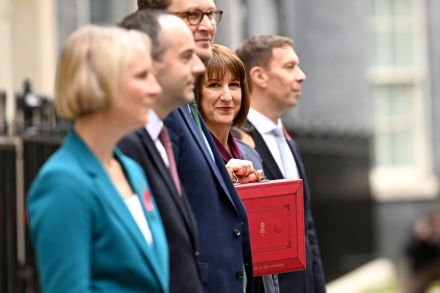
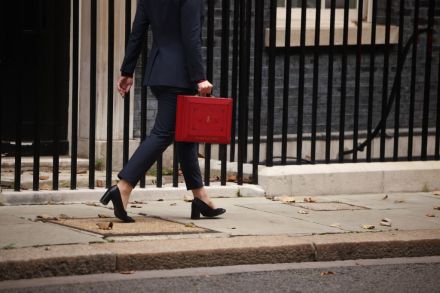
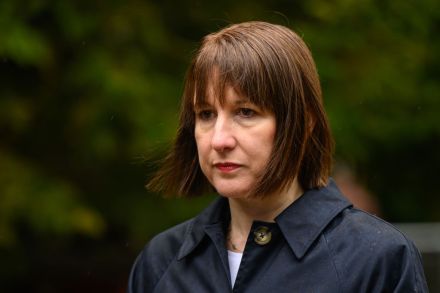
Home Rachel Reeves, the Chancellor of the Exchequer, was expected to freeze tax thresholds in the Budget on 30 October, to swell government income as more working people were brought into higher tax bands. Before Labour formed a government, she had said that the Conservatives, by freezing tax thresholds, were ‘picking the pockets of working people’. Weeks of speculation on the Budget were encouraged by leaks and by constant questioning of ministers about how Labour would keep to its manifesto undertaking not to raise taxes on ‘working people’ by increasing income tax, national insurance or VAT. The International Monetary Fund raised its growth forecast for the United Kingdom to 1.1 per cent this year, compared with the 0.7 per cent it forecast three months ago.

Is Labour interfering in the US election?

From our UK edition

16 min listen

Keir Starmer can’t even fly to Samoa without another international British embarrassment breaking out. The latest is an angry accusation from Donald Trump’s campaign that Labour is committing the crime of ‘election interference’ in the United States. ‘The British are coming!’ screamed a typically camp Trump-Vance official press release last night. The campaign denounced Britain’s ‘far-left’ governing party for attempting to subvert democracy by sending almost 100 of its activists across the pond to sway American voters. But are the British actually coming? Freddy Gray speaks to James Heale, The Spectator's political correspondent.  Produced by Oscar Edmondson.

Trump’s crusade against Labour

From our UK edition

16 min listen

Donald Trump has made the extraordinary move to file an official complaint against the British Labour party for their volunteers campaigning for the Democrats. On this episode, James Heale talks to Katy Balls and the Financial Times's Stephen Bush about what's behind the Labour tradition of sending volunteers to other democracies, and why a second Trump presidency might be the defining theme of this Labour government. Produced by Oscar Edmondson and Cindy Yu.

Michael Gove on prisons: Starmer is in the position of Bane

From our UK edition

14 min listen

Another 1100 prisoners have been released today through the early-release scheme. How has this measure landed? With the news that former Conservative minister David Gauke will lead a review of prison sentencing, new Spectator editor Michael Gove joins Natasha Feroze and Katy Balls to discuss Labour's long term strategy. Can Labour learn lessons from America? Produced by Megan McElroy and Patrick Gibbons. Join The Spectator's Deputy Editor Freddy Gray for a special live recording of Americano on Thursday 24 October. You can buy tickets at spectator.com/electionspecial.

Does Streeting’s NHS plan amount to anything?

From our UK edition

13 min listen

This morning, Health Secretary Wes Streeting launched the ‘biggest consultation in NHS history’ in a bid to get public input into how to save the UK’s flailing health service. The British public and clinicians are being asked to share their experiences and ideas to help 'fix our NHS'. After years of discussion and reviews, how likely is it that Labour delivers the urgent reform that the NHS needs?  Elsewhere, there have been more signs of what might be in the budget at the end of the month. Who might the big winners and losers be? James Heale discusses with Katy Balls and Isabel Hardman.  Join Freddy Gray a special live recording of Americano on Thursday 24 October. You can buy tickets at spectator.com/electionspecial.

Does Wes Streeting’s ten-year NHS plan amount to anything?

From our UK edition

The Health Secretary is making a big fanfare about a cash boost in the Budget and a new plan to reform the NHS so that it becomes a more community-based, prevention-focused service. But at the moment, his plan for the health service is very much in nascent form: the government is nowhere near close to publishing it and is instead going to start asking for ideas from the public and healthcare workers.  Wes Streeting’s ministerial colleague Stephen Kinnock sketched out how this consultation would run when he spoke at The Spectator’s health fringe at Labour conference. He told us that there would be a lengthy ‘national conversation’ about what people wanted from their health service which would feed directly into the spending review.

Labour budget: are we heading for austerity?

From our UK edition

23 min listen

Labour’s first Budget in 14 years will be delivered at the end of the month. The Prime Minister and Chancellor have already been warning that the public isn’t going to like what’s in it. But how will the Budget affect people? Will Labour break its manifesto commitment not to tax working people? And is it really true that things have to get worse before they get better? Kate Andrews is joined by Paul Mason, journalist at The New European. Join Freddy Gray a special live recording of Americano on Thursday 24 October. You can buy tickets at spectator.com/electionspecial.

Did Labour make its own Budget trap?

From our UK edition

15 min listen

A scoop from Bloomberg has revealed that a number of Cabinet ministers have written formally to the Prime Minister to complain about the budgetary decisions they are being asked to make in their respective departments. Rachel Reeves seems to have an impossible task ahead of the Budget – but was this a trap of Labour's own making? Oscar Edmondson talks to Katy Balls and Kate Andrews. Produced by Oscar Edmondson and Cindy Yu.

Reeves’s gambit, a debate on assisted dying & queer life in postwar Britain

From our UK edition

52 min listen

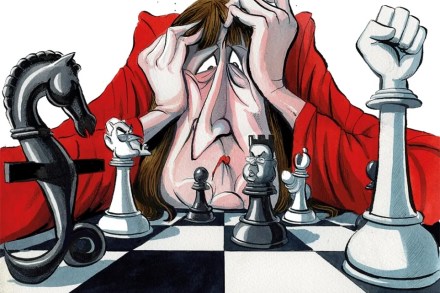
This week: the Chancellor’s Budget dilemma. ‘As a former championship chess player, Rachel Reeves must know that the first few moves can be some of the most important of the game,’ writes Rupert Harrison – former chief of staff to George Osborne – for the cover of the magazine this week. But, he says, the truth is that she has played herself into a corner ahead of this month's Budget, with her room for manoeuvre dramatically limited by a series of rash decisions. Her biggest problem is that she has repeatedly ruled out increases in income tax, national insurance and VAT. So which taxes will rise, given that the easy options have been ruled out? The answers appear to be evolving rapidly when ministers are confronted with the OBR’s harsh reality.

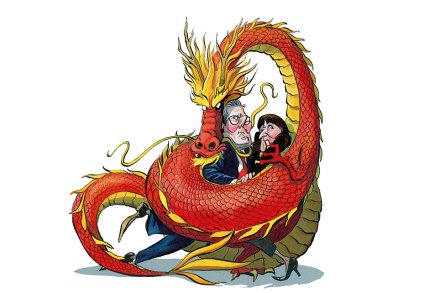
Starmer denies being soft on China

From our UK edition

13 min listen

Starmer and Sunak debated Labour's position on China at today's PMQs, with Starmer denying going soft on the Asian superpower. Did Sunak draw inspiration from Katy Balls's cover article in last week's Spectator? Katy and Isabel Hardman speak to Oscar Edmondson about the party dynamics behind the debate; how much pressure is each party under from their own China hawks?  Isabel also gives an overview of the debate around the Assisted Dying Bill, which was introduced to Parliament today. Produced by Patrick Gibbons and Oscar Edmondson.

National Insurance: Starmer’s first big U-turn?

From our UK edition

14 min listen

The Budget is not due for a fortnight, yet with every day that passes its contents seem to become clearer. This morning Keir Starmer gave an interview to the BBC where he twice refused to rule out a rise in employer’s national insurance contributions in the Budget. Instead, he repeatedly stressed that Labour’s manifesto promise was specifically that it would 'not raise taxes on working people'. Can Rachel Reeves afford a national insurance hike?  Oscar Edmondson speaks to Katy Balls and Michael Gove.  Produced by Oscar Edmondson.

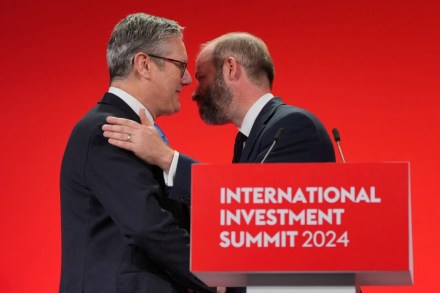
Is Labour’s investment summit back on track?

From our UK edition

13 min listen

This morning is the government's big investment summit. They pledged to have the summit within their first 100 days in an attempt to hit the ground running and show the UK as a sensible place to do business. The timing – two weeks before the budget – is interesting, and so is the U-turn from P&O, who will attend the summit despite comments last week by Transport Secretary Louise Haigh (she described the ferry company as a ‘rogue operator’). P&O's reported £1 billion worth of investment is back up for grabs. Is it time to invest in Britain? What is Labour's big pitch to business? Also on the podcast, over the weekend we had the sad news that former First Minister of Scotland Alex Salmond passed away. What will be his legacy?

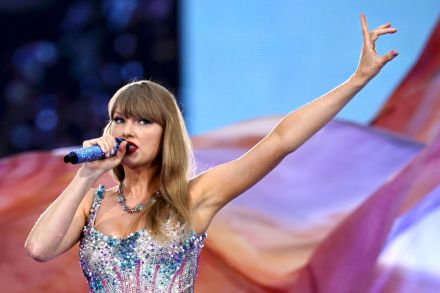
Labour were right to protect Taylor Swift

From our UK edition

Still making headlines, it seems, is one of the more trivial scandals to have dogged the Labour government in its first 100 days in office: to wit, the police protection given to the pop singer Taylor Swift. File firmly under circuses, you might think, rather than bread. For those who need catching up, the American pop star was given a VVIP police escort around London during the UK leg of her Eras tour – a swishy blue-light motorcade of the sort usually reserved for members of the royal family and foreign heads of state, and the reassuring knowledge that should some loon seek to lob a brick at her, or worse, Tay-Tay could rely on London’s finest to pile in with their side-handled batons and/or firearms.

100 Days of Starmer: the verdict

From our UK edition

25 min listen

Today marks Labour’s 100th day in office. But they are unlikely to be popping champagne corks in Downing Street – even if Lord Alli offered to pay for the Dom Pérignon. This has been a disheartening time for the government and those who wished it well. The promise of dramatic change has been overshadowed by a series of errors, misjudgments and scandals that one would associate more with an administration in its dying days than a government enjoying a fresh mandate, a massive majority and an absent opposition. Former shadow culture secretary Thangam Debbonaire and former deputy prime minister Thérèse Coffey join The Spectator's Katy Balls to discuss what went wrong and – if we think hard enough – what went right?  Produced by Natasha Feroze and Oscar Edmondson.

Starmer’s first 100 days: the commentariat turns

From our UK edition

Oh dear. Keir Starmer today marks his first 100 days in 10 Downing Street, but he has little cause for celebration amid tanking poll ratings and reports of staff unease over his grip on the government. When Starmer first entered 10 Downing Street, there were predictions across the commentariat that his arrival would herald a more stable period and mean the adults were back in the room. So, how do the pundits see it now? The papers are stocked with long reads and analysis on how Starmer is doing. In short, he's not doing great. Mr S has rounded up the highlights – or perhaps more accurately the lowlights – below: The New Yorker: 'Keir Starmer’s Bafflingly Bad Start as the U.K.’s Prime Minister'The good news: Starmer is being noticed across the pond.

Is Keir Starmer the new Harold Wilson?

From our UK edition

19 min listen

It's another busy few days for the Prime Minister as he chairs the inaugural meeting of the Council of Nations and Regions today, marks 100 days in office, and hosts an investment summit on Monday. With the absence of Sue Gray looming large, James Heale unpicks the politics behind these milestones with Katy Balls and the Financial Times's Stephen Bush. They share some lessons from history and the welcome, or perhaps unwelcome, comparison with former Labour Prime Minister Harold Wilson. Also on the podcast, they discuss the merits and pitfalls of potential Conservative Party rule changes. Could their era of rapid defenestration soon come to an end? Produced by Patrick Gibbons.
The Tracy-Ann Oberman Edition

From our UK edition

31 min listen

Actress and writer Tracy-Ann Oberman is well known for her roles across theatre, radio and television, including Dr Who, Friday Night Dinner, It’s a Sin and, of course, EastEnders. Most recently, she has taken on one of the most famous, and problematic, Shakespearean roles: as Shylock in The Merchant of Venice. Inspired by her great-grandmother, she has reimagined the role as a Jewish matriarch, and the play returns to London’s West End this December.On the podcast, Katy Balls talks to Tracy about her obsession with the Roman Empire, what it was like spending a term in Moscow towards the end of perestroika, and her  career from soap to Shakespeare, hero to villain.

Can Morgan McSweeney reboot the government machine?

From our UK edition

The Queen is dead: long live the King. This week brought an end to Downing Street’s unhappy experiment in dyarchy. Out goes Sue Gray, banished to the regions. In her place stands the Irishman who won the No. 10 power struggle: Morgan McSweeney, Keir Starmer’s first chief of staff in opposition, is back on top. McSweeney’s allies believe that the new government will flourish into maturity after a troubled start. ‘We’re back to being political,’ one crows. As another minister prefers to put it: ‘He needs to go around and crack some heads – and quick’ The new chief’s strengths are threefold. First, he is familiar with how the PM thinks. Unlike Gray – who knew little of Starmer before her appointment – McSweeney has been intimately involved in his rise to power.

In defence of Rosie Duffield

From our UK edition

Rosie Duffield’s magnificently rancorous resignation of the Labour whip has reduced the number of MPs on the government side who are able accurately to identify what a ‘woman’ is by about 30 per cent. This is, then, a grave loss to Sir Keir Starmer, who could have wheeled Rosie out every time he was asked the tricky question and told his interlocutors: ‘Ask her, she seems to know. I haven’t a clue. I have been shown diagrams, of course, many of them in full colour. But a proper definition still eludes me because, for me and the vast majority of my colleagues on the left, such things as diagrams and scientific facts are easily trumped by the post-truth wish--fulfilment pleading of shrill lunatics.

Keir Starmer’s dysfunctional Downing Street 

From our UK edition

By rights, the Conservative party conference in Birmingham ought to have been a funereal affair. It was the first time the party had gathered after its worst-ever election defeat and the number of former MPs rivalled the number of current ones. And yet the mood was surprisingly upbeat. ‘Opposition is so freeing,’ said one MP at the bar in the early hours. ‘It’s like being drunk at the wake after the funeral,’ remarked one Tory strategist. It’s not that the party conference revealed a breakout star in the leadership contest (‘We’ll be doing this again in two years,’ predicts one unimpressed MP). Instead, Tories are looking at Labour’s misfortunes.