Labour party

Labour minister sacked for vile WhatsApps

From our UK edition

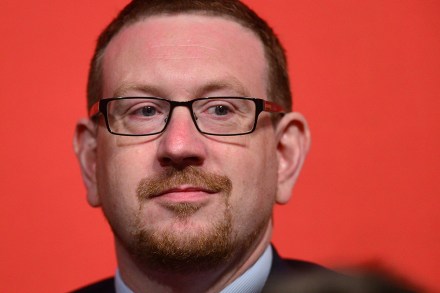
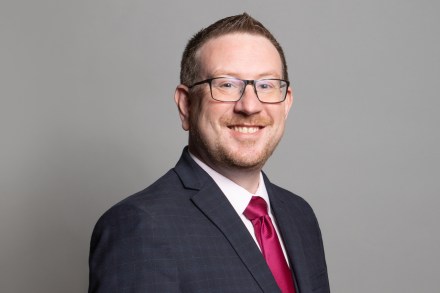
Congratulations to Andrew Gwynne who wins the ministerial sack race of 2025. The Labour MP for Gorton & Denton was tonight sacked as a health minister after the Mail on Sunday revealed his vile WhatsApps. After a 72-year-old local resident got in touch with Gwynne’s constituency party to complain about her bin collection, the MP wrote a suggested response: ‘Dear resident, Fuck your bins. I’m re-elected and without your vote. Screw you. PS: Hopefully you’ll have croaked it by the all-outs.’ Charming. The messages were exchanged in a group called ‘Trigger Me Timbers’, which Gwynne shares with more than a dozen Labour councillors, party officials and at least one other MP, all based on the outskirts of Manchester.

The inside story of Labour under Starmer

From our UK edition

23 min listen

This week saw the publication of Patrick Maguire and Gabriel Pogrund’s new book Get In: The Inside Story of Labour Under Starmer. It’s the second in their tell-all series of books on the Labour Party’s ups and downs and has caused quite a stir in Westminster. From the revelations about Keir Starmer’s voice coach causing a fresh lockdown row to Michael Gove’s secret dinner with Morgan McSweeney, there is a high-density of scoops and disclosures. Can Labour blame the failures of their first 100 days on Sue Gray? And is there such a thing as ‘Starmerism’? Patrick and Gabriel sat down with Katy Balls and Michael Gove to discuss. Produced by Megan McElroy and Oscar Edmondson.

Labour’s Irish insurgent, Germany’s ‘firewall’ falls & finding joy in obituaries

From our UK edition

48 min listen

As a man with the instincts of an insurgent, Morgan McSweeney, Keir Starmer’s chief of staff, has found Labour’s first six months in office a frustrating time, writes The Spectator’s editor Michael Gove. ‘Many of his insights – those that made Labour electable – appeared to have been overlooked by the very ministers he propelled into power.’ McSweeney is trying to wrench the government away from complacent incumbency: there is a new emphasis on growth, a tougher line on borders, an impatience with establishment excuses for inertia. Will McSweeney win his battle? And what does this mean for figures in Starmer’s government, like Richard Hermer and Ed Miliband? Michael joined the podcast alongside Starmer’s biographer Tom Baldwin. (1:04) Next: can the AfD be stopped?

The trouble with criminalising ‘Islamophobia’

From our UK edition

When I first heard that Angela Rayner had been tasked with creating an advisory council that will draw up an official definition of ‘Islamophobia’, I assumed it was another poisoned chalice handed to her by No. 10, particularly as Dominic Grieve has been suggested as the chair. Is that the same Dominic Grieve who was leader of the awkward squad in the Commons and spent three years doing everything in his power to thwart Brexit? He’s bound to make the Deputy Prime Minister’s life just as miserable as he made Theresa May’s. If I wanted to see Rayner off as a leadership challenger, this is precisely the kind of crap I’d dump in her lap. But I suspect that is wishful thinking.

Morgan McSweeney is urging Keir Starmer to go for the kill

From our UK edition

Morgan McSweeney, the Prime Minister’s Chief of Staff, does not immediately display the demeanour of a disruptor. He speaks softly, picks his phrases with care, and cultivates an unassuming image. But underneath the sober blue suit are the scars of a streetfighter. As a young man, McSweeney came to political maturity fighting the hard left in Lambeth and the far right in Dagenham, winning back working-class voters to a Labour party that had forgotten its roots. He went on to secure last year’s landslide, gifting Keir Starmer a majority large enough to remake Britain. His style as an insurgent owes something to his background. He grew up in Ireland with parents who were activists in Fine Gael, the party that venerates the IRA mastermind Michael Collins as its founder.

Was Peter Mandelson the right pick for ambassador to the US?

From our UK edition

22 min listen

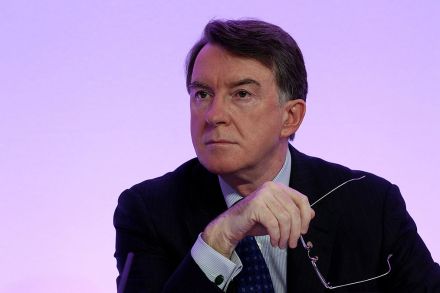
‘An absolute moron’ – those were the words used by Chris LaCivita, a senior campaign advisor to Trump, to describe Peter Mandelson. Lord Mandelson is Keir Starmer’s choice for the next ambassador to the US, but Trump may yet refuse his letters of credentials. How wise is this appointment at the dawn of an uncertain era of US-UK relations? Cindy Yu talks to James Heale and Sophia Gaston, UK foreign policy lead at the security think tank ASPI. Produced by Cindy Yu.

John Prescott’s legacy, plus Labour & the Tories grapple with migration

From our UK edition

15 min listen

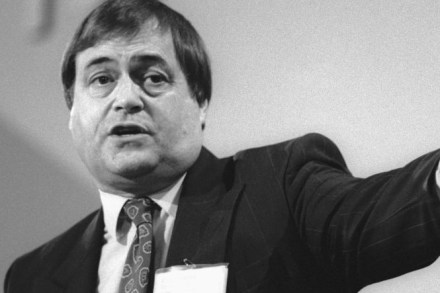
Labour heavyweight John Prescott's funeral took place yesterday with former Prime Ministers Tony Blair and Gordon Brown leading the tributes. What is Prescott's legacy? And does the current Labour Party have politicians that emulate his appeal? Lucy Dunn speaks to James Heale and former Blair adviser John McTernan about how Prescott was the glue that held Labour together during the Blair-Brown years. Also on the podcast, they discuss the borders and migration bill which Labour published this week. The bill sees the government adopt many measures that they voted against when in opposition. Does this show that Labour have what it takes to tackle immigration?

Labour’s Richard Hermer problem

From our UK edition

13 min listen

Richard Hermer was one of the surprise announcements from Keir Starmer’s first Cabinet, and one of the most controversial since. Starmer’s old pal came with some notable baggage: his former clients include Sri Lankan refugees to the Chagos Islands and ex-Sinn Féin leader Gerry Adams, as well as British-Bangladeshi Isis bride Shamima Begum. In government, Hermer has played a key role in several contentious decisions, such as the government’s withdrawal of the UK’s objections to the International Criminal Court’s arrest warrant for Benjamin Netanyahu, and his involvement in the Chagos Islands deal. And today he admitted that he has had to recuse himself ‘from certain matters’ due to potential conflicts of interest. Is the government hamstrung by Hermer?

Is Donald Trump warming to Keir Starmer?

From our UK edition

16 min listen

Starmer and Trump have finally spoken, with a 45 minute phone call taking place between the two leaders. The pair reportedly discussed the ceasefire in Gaza, and trade and the economy, with Starmer attempting to find common ground by talking up his plans for deregulation. Cindy Yu speaks to Katy Balls and Kate Andrews about their relationship. Do these early signs suggest it will be wholly positive, or are there thornier issues to come?  Also on the podcast, Rachel Reeves is set to deliver a speech this week outlining her plans for growth - just how important is this week for her? Produced by Patrick Gibbons and Cindy Yu.

The Rachael Maskell Edition

From our UK edition

37 min listen

Rachael Maskell has been the MP for York Central since 2015. With over two decades experience working in the NHS, and as a trade unionist, she has championed causes on the left from improving healthcare to combating climate change. Yet, she has not been afraid to take what she says is an ‘evidenced approach’ to political issues, even when it has put her in opposition to the position of the Labour leadership. Most recently, she was a leading voice against the assisted dying bill as Chair of the Dying Well parliamentary group. On the podcast, Rachael talks to Katy Balls about the influence of politics around the dinner table and the miners’ strikes, how we could improve the NHS, and why she served under Jeremy Corbyn.

Industry tragedy, Trump vs the Pope & the depressing reality of sex parties

From our UK edition

42 min listen

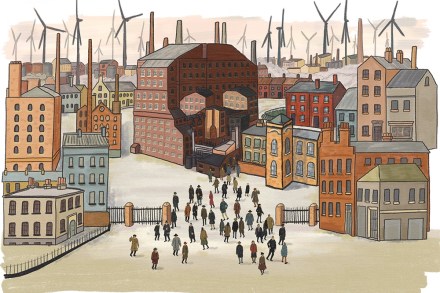
This week: the death of British industryIn the cover piece for the magazine, Matthew Lynn argues that Britain is in danger of entering a ‘zero-industrial society’. The country that gave the world the Industrial Revolution has presided over a steep decline in British manufacturing. He argues there are serious consequences: foreign ownership, poorer societies, a lack of innovation, and even national security concerns. Why has this happened? Who is to blame? And could Labour turn it around? Matthew joined the podcast, alongside the head of the Trades Union Congress (TUC), Paul Nowak. (1:05) Next: the Pope takes on President TrumpThe Pope has nominated Cardinal Robert McElroy to be the new Archbishop of Washington.

Reeves vs Miliband

From our UK edition

10 min listen

After last week’s bond market jitters, the Chancellor pledged to go ‘further and faster’ to improve the UK’s anaemic economic growth. It looks as though Rachel Reeves’ hunt for growth could come at the expense of Labour’s green agenda. Reeves is poised to make a series of announcements over the next month, starting with a softened stance on non-doms and approval for Heathrow’s third runway – as well as expansions at Gatwick and Luton airports. The move indicates a shift in priorities, with economic growth taking precedence over climate targets. Ed Miliband, the Energy Secretary, is believed to be privately opposed to the airport expansion scheme. What happened to the ‘green Chancellor’?

Letters: Were we deceived by Labour?

From our UK edition

Forced Labour Sir: Matthew Parris wonders ‘Why was everyone fooled by Rachel Reeves?’(18 January) and goes on to include Sir Keir Starmer in this question. The former he concludes is ‘an empty vessel’ and the latter ‘bereft of ideas’. By ‘everyone’ he chiefly means the commentariat, although he claims he was not himself misled. They and many others were fed up with the failure of successive Conservative governments, and wanted so badly to believe in Labour’s ability to form an effective administration that they never seriously applied due diligence by questioning its credibility or competences. At no stage were any stones lifted to determine what ‘nasties’ lay underneath.

Labour’s Richard Hermer problem

From our UK edition

Keir Starmer surprised his colleagues during his first week in power when he appointed his old friend Richard Hermer KC as Attorney General. Emily Thornberry, the holder of the role in opposition, was banished to the backbenches. Senior Labour figures had sensed something was afoot. ‘Sue [Gray] was keeping those transition talks under lock and key,’ recalls one Labour bigwig. The idea was that Starmer would have a trusted, authoritative voice to turn to on legal matters. The pair are old pals; Starmer even gave a toast when Hermer took silk in 2009. His appointment, however, has come with baggage. Hermer’s former clients include Sri Lankan refugees to the Chagos Islands and ex-Sinn Fein leader Gerry Adams.

Could Trump 2.0 derail the Starmer project?

From our UK edition

13 min listen

The parties - and protests - have already kicked off, as Trump's inauguration gets underway in Washington D.C. today. Katy Balls speaks to Michael Gove and Republicans Overseas UK's Sarah Elliott about what we can expect from the first week of Trump's second presidency, and how Keir Starmer will attempt to navigate the 'special relationship'. Sarah updates us on the mood in the US capital; which UK politicians have been spotted joining in on the fun? Produced by Patrick Gibbons.

Why was everyone fooled by Rachel Reeves?

From our UK edition

It is some time since I could claim any close acquaintance with the daily skirmishes of workaday Westminster. From risers and fallers on the stock exchange of parliamentary esteem I stand somewhat aside these days: no longer a war correspondent sending back dispatches from the battles between tribes in the febrile atmosphere and smelly carpets of that suffocating fake-gothic palace. Such warfare needs to be reported, but in this I yield to colleagues better placed to report.

What Bridget Phillipson has in common with Plato

From our UK edition

One does not like to disagree with one’s editor, but while the image of Rome salting the earth of its bitter rival Carthage is a striking way of describing Labour’s plan to wreck our current system of education, Rome was not in the habit of destroying the advantages that its conquests produced. The salting story is a 19th-century invention, endorsed by no less an authority than the Cambridge Ancient History (1930), but now rescinded. As Mr Gove made clear in last week’s magazine, the universal imposition of a national curriculum, among other measures, will remove the freedom and choice – the two words you will find nowhere in discussion of Labour education policy – which played such a crucial part in improving educational attainment.

Labour is starting to panic about Reform

From our UK edition

‘We’ve had enough of living in two-tier Britain,’ bellows Nigel Farage to cheers from an 800-strong crowd at Chester’s Crowne Plaza Hotel, where he is holding court. ‘There is not a single person on that Labour frontbench who’s ever worked in private business,’ the Reform leader declares. ‘So, is it any wonder they’re making such a Horlicks of it?’ Chester is the sixth stop on Farage’s new year tour, which was initially intended to sound a steady drumbeat in the lead-up to May’s local elections. Since those plans were made, however, Labour has announced a devolution shake-up that could allow various councils to delay their elections by a year. ‘It’s pretty full on,’ Farage says, when we meet on the sidelines of the event.

Why hasn’t Tulip Siddiq been sacked yet?

From our UK edition

18 min listen

It’s rare that a world leader knows the name of a junior minister in the British government – let alone calls for them to be sacked. Yet that is the feat achieved by Tulip Siddiq, No. 4 in Rachel Reeves’s Treasury team. The anti-corruption minister is now facing calls to resign from the leader of Bangladesh, who condemned the use of properties gifted to her and her family by its former regime. Elsewhere, Tory leader Kemi Badenoch joined the chorus of people calling for Siddiq to resign over the weekend, warning of a diplomatic crisis. On the Sunday media round, even Science Minister Peter Kyle refused to say that the government has full confidence in Siddiq, stating only that he has full confidence in the ongoing investigation by the Prime Minister’s ethics watchdog.

When will Tulip Siddiq be sacked?

From our UK edition

It’s rare that a world leader knows the name of a junior minister in the British government – let alone is calling for them to be sacked. Yet that is the feat achieved by Tulip Siddiq, No. 4 in Rachel Reeves’ Treasury team. The anti-corruption minister is now facing calls to resign from an unlikely source after the leader of Bangladesh condemned the use of properties gifted to her and her family by its former regime. Muhammad Yunus told the Sunday Times today that the London properties used by Siddiq should be investigated and returned if she is found to have benefited from ‘plain robbery’. Yunus has some authority here: he, after all, is the Nobel peace-prize winning economist who has led the interim government of Bangladesh since last year.