Labour party

The Labour leadership checklist

From our UK edition

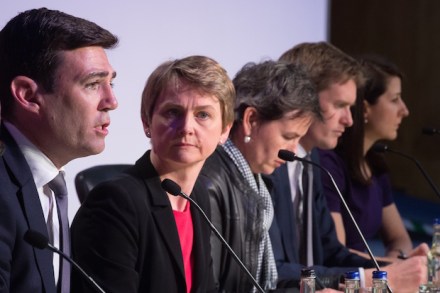
There seems to be a checklist for Labour leadership hopefuls which all of them are very keen to tick off. When launching a campaign, a candidate must say that their party has just suffered a terrible defeat from which a number of profound lessons must be learned. These lessons all seem to be rather similar, and have led the candidates to say the following things: ‘We didn’t speak enough to aspirational voters’ Mary Creagh: ‘People felt that Labour didn't understand their aspiration to earn money and provide a better life for their family.’ Chuka Umunna (when he was standing): ‘We need to… focus on what is the new agenda that is going to get a Labour government elected in 2020.

Don’t Labour tax advisers pop up in the funniest places?

From our UK edition

Remember Jolyon Maugham, the QC who had fifteen minutes of fame during the General Election campaign when he 'advised Labour on its non-dom tax crackdown'? As the Telegraph reported at the time: 'Ed Balls, the shadow chancellor, cited Jolyon Maugham as an independent expert who had backed the policy and had forecast that it would raise £1billion. The Telegraph has established that Mr Maugham, a Labour supporter, has been in discussions with Labour about the policy for six weeks and played a role in designing it.' Well next month Jolyon is off on a jolly to that well-known bastion of progressive taxation: Geneva. He has just been unveiled as a star speaker at the Transcontinental Trusts 2015 conference in Switzerland.

Dan Jarvis backs Andy Burnham in Labour leadership contest

From our UK edition

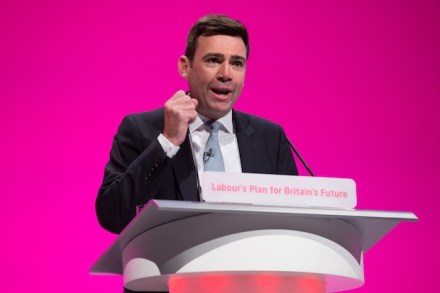
As far as endorsements go, Andy Burnham is winning the Labour leadership contest hands down. He has managed to recruit Dan Jarvis - someone who has gained huge respect and admiration despite the fact no-one knows very much about him - as his latest backer. Jarvis tells the Mirror that Burnham ‘has the strength, experience and character needed to bring our party together and restore Labour’s connection with the British people’. Now, firstly this is a bit of a clue as to where Jarvis’s own politics lie: he’s a little more left wing than someone people who are caught up in his compelling back story may have noted.

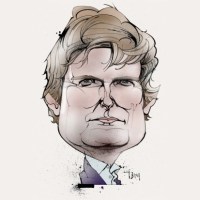
Can Tristram Hunt persuade enough MPs to back him for Labour leader?

From our UK edition

The Labour leadership candidates are starting to release lists of names supporting them, with more announcements on the way. So far Yvette Cooper and Andy Burnham, who reckon they have 100 names between them, have been the most vocal about the levels of support, and there is some concern in the party that between them they will make it impossible for a ‘modernising’ candidate like Liz Kendall to accrue the 35 names needed to stand for leader. Other MPs are still considering their position, including Tristram Hunt and Jamie Reed. Hunt is, I understand, still trying to ensure he has enough names.

Hormone ‘halves risk of premature birth,’ says the Mail. But its report is wildly inaccurate

From our UK edition

As a gynaecologist, I was appalled to read this story about a supposedly 'groundbreaking' treatment to stop premature births in the Mail (I read it on the online Mail site but in fact the culprit is The Mail on Sunday). Let me quote from it before telling you what it gets utterly wrong. Note my emphases in bold: A hormone treatment that can help prevent premature births could be made more widely available to thousands of at-risk mothers-to-be. The groundbreaking treatment, not yet widely available on the NHS, sees women given a daily dose of progesterone. This is dubbed the ‘pregnancy hormone’ by doctors, and levels naturally rise during pregnancy to help prevent the cervix from opening too early.

Labour must understand that Unite is its enemy

From our UK edition

Imagine you are a Labour MP or a trade union official surveying Britain this week. The following points will strike you: Labour has just lost an election it could have won, in part because Unite helped impose a useless leader on it in Ed Miliband and an equally incoherent programme, which failed to convince millions of voters to rid themselves of a mediocre Tory government. Poverty and inequality are everywhere growing in part because of the shocking failure of the trade union movement to come to the aid of the new working class. In the care, hospitality and private security industries and in the shopping, leisure and call centres that dot modern Britain trade unionism is barely a folk memory. Only 14 per cent of private sector workers are trade union members - and they are dying off.

Harriet Harman: Labour needs to let the public in

From our UK edition

How does the Labour party recover? Harriet Harman set out how it will try to come back from its latest election defeat in a speech this morning which told the party to listen to the customer because the customer is always right. Her basic pitch was that just like a product or a shop or a magazine, it’s more important to work out what people want to buy, rather than what you want to sell or write because your own tastes might not be particularly representative of the market that’s out there. To that end, she told the audience that ‘as we conduct this debate, as we elect our leader and deputy leader, we must have the public in the forefront of our minds. We must let the public in.

Len McCluskey and the trade unions need Labour as much as the party needs them

From our UK edition

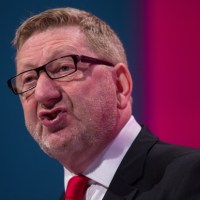
Can Labour's links with trade unions survive the leadership contest? This morning, Harriet Harman will outline in a speech at Labour HQ how the new party leader will be elected — and she will say the unions won't be deciding who it is: ‘We will have strict rules to ensure there is a level playing field for each one of the candidates. Last time the unions communicated directly with many of their members, sending them ballot papers with accompanying material only mentioning one candidate. There will be none of that this time. The Electoral Reform Society will send out individual ballot papers to each member of the electorate.’ ‘The winner of this election is not going to be the choice of the unions or any single section or faction of the Labour Party.

The next Labour leader should remember the ‘politics of envy’ never work

From our UK edition

Andy Burnham may be the trade unions’ favourite candidate for Labour leader but he is already distancing himself from some of Ed Miliband’s worst populist nonsense. This is what he said in today’s Observer: 'We have got to get away from things that look like symbolism. I am going to put the mansion tax in that category. I am not saying it was necessarily completely the wrong thing to do, but in its name I think it spoke to something that the public don’t particularly like, which is the politics of envy.' In a 1911 article entitled An Unenvious People, The Spectator paid tribute to the nature of Englishmen. The festivities of the Coronation would have set an edge upon envy in England if anything could.

Jim Murphy resigns as Scottish Labour leader and condemns Len McCluskey

From our UK edition

Jim Murphy is quitting Scottish Labour. After only narrowly surviving a vote of no confidence from the party's executive this morning, Murphy announced that after a ‘terrible election defeat’, he will still tender his resignation in a month’s time. As well as acknowledging Scottish Labour’s terrible performance in the general election, Murphy opened both barrels at Len McCluskey and Unite the Union, who he blames for some of the party's troubles in Scotland: ‘I know in the past few days, I’ve been at the centre of a campaign by the London leadership of Unite the Union and they’re blaming myself for myself and the Scottish Labour party for the defeat of the UK Labour party in the general election.

The simple test Labour’s next leader must pass

From our UK edition

With Chuka Umunna out, the choice for Labour party members is simple. If they want to win the next election they will choose Liz Kendall as their next leader. There is a very simple test for suitability for the job: their reply to the question ‘did the last Labour government spend too much money?’ Kendall is the only one who has passed. On yesterday’s Newsnight she was straightforward: yes, Labour did spend too much. Yvette Cooper, by contrast, said on Radio 4 this morning: 'I think there were things that we were spending wrongly on, there were issues that we would have been spending money, too much money on – for example there were things that went wrong with the NHS computer system, with all sorts of things like that – but the deficit at the time was 0.

Chuka Umunna will no longer be the ‘English Obama’

From our UK edition

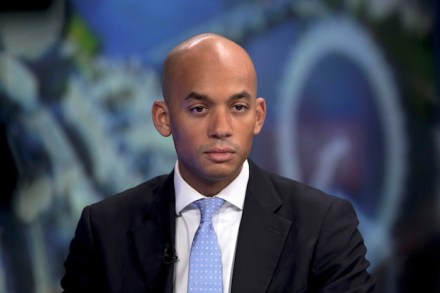
Chuka Umunna has surprised many today with the news that he has withdrawn from the race for the Labour leadership. Explaining his decision he said that the 'added level of pressure' had not been a 'comfortable experience'. Mr S can already hear the sighs from the many Chuka supporters who had seen him as the man to make Labour a pro-business party once more. Earlier this week the business entrepreneur James Caan, who is Chairman of the UK Government's Start Up Loans Scheme, had confided to Mr S at the Quercus Biasi Foundation Spring Gala at Claridges, that he would support Chuka. He went on to say that he could be the 'English Obama': 'I think he's an outstanding candidate.

Why I still have a deep attachment to the BBC

From our UK edition

After I failed my O-levels and decided to leave school, my father suggested I go to Israel to work on a kibbutz. I’m not sure why he thought this would cure me of my self-righteous adolescent narcissism, but it worked. I returned to England determined to go back to school and make something of myself. I very nearly didn’t come back. The first kibbutz I went to was on the Israeli-Lebanese border and about a week after I arrived it was targeted by a group of Palestinian rebels. Katyusha rockets rained down from all sides and the other guest workers and I were ushered into a special air-raid shelter reserved for ‘volunteers’. It was a particularly dank and mouldy affair, with no mod cons save for an ancient, battery-operated radio.

Goulash and whiplash

From our UK edition

Ed is a plank. He was always a plank — and now he is in Ibiza being a plank. Plankety--plankety-plank: goodbye to our most recent terrible leader — and who will be the next? I, meanwhile, am in the Gay Hussar, choking on my own grief, hearing ‘Crying in the Rain’, weirdly, in my head, trying to forget the images that flicker mercilessly across my eyes, disrupting my view of a book that says, in capital letters, for emphasis — tony blair (now that’s a leader, eh!) — Clegg, dry-eyed with realisation at the breadth of his failure, Ed Balls hauled down like an -Easter Island statue, Samantha Cameron’s victory dress, which was a bullet-proof vest on the front and a high-vis jacket at the back. Well, it was a long -campaign.

Podcast: the end of Miliband and the Tories’ one nation challenge

From our UK edition

Ed Milband and his team were not ready for their major defeat on election night. On this week's View from 22 podcast, Dan Hodges discusses the final days of Miliband's leadership with Andrew Harrop of the Fabian Society. What were the majority mistakes of the Labour campaign? Was vital polling information about his seat kept from Ed Balls? Will Labour be able to regenerate into a party ready to govern within five years? Isabel Hardman and James Forsyth also discuss the first week of the new Conservative government and the challenges facing David Cameron. Few in the Tory party were expecting a majority, so how will the ideological vacuum be filled? And what does the new Cabinet show about the Prime Minister's strategy to manage his party?

The three groups of voters that Labour needs to win back

From our UK edition

Labour is in a more difficult position now than it was after its defeat in 1992. In ’92, the electorate had sent Labour a clear message: move to the centre, don’t say you’ll put up taxes and get a better leader. But this time round, the message Labour has been sent is more complicated. There are three groups of voters that Labour failed with at this election, I argue in the magazine this week. Aspirational voters who went Tory, the left behind working class who went Ukip in England and SNP in Scotland and Nationalist-minded ones north of the border. What the Labour leadership candidates have to explain is how they would win these voters over.

If I were prime minister, by Ian Fleming

From our UK edition

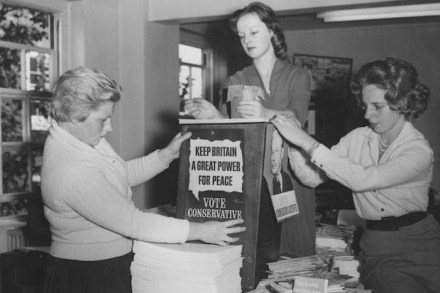
This article was first published in The Spectator on 9 October, 1959. I am a totally non-political animal. I prefer the name of the Liberal Party to the name of any other and I vote Conservative rather than Labour, mainly because the Conservatives have bigger bottoms and I believe that big bottoms make for better government than scrawny ones. I only once attended a debate in the House of Commons. It was, I think, towards the end of 1938 when we were unattractively trying to cajole Mussolini away from Hitler. I found the hollowness and futility of the speeches degrading and infantile and the well-fed, deep-throated ‘hear, hears’ for each mendacious platitude verging on the obscene.

Pandering to animal rights extremists will get MPs rejected, not elected

From our UK edition

The reasons why England and Wales voted so convincingly for a Conservative Government on Thursday will be debated forever, but one of the most obvious is the complete rejection of both Labour and Liberal Democrats in any constituency that has a hint of the countryside about it. This is graphically illustrated by the post-election constituency map. Actually, suggesting that the voters rejected those parties is probably the wrong way round. The truth is that those parties have rejected rural voters.