Labour party

Yvette Cooper makes coded attack on Liz Kendall for ‘swallowing’ the Tory manifesto

From our UK edition

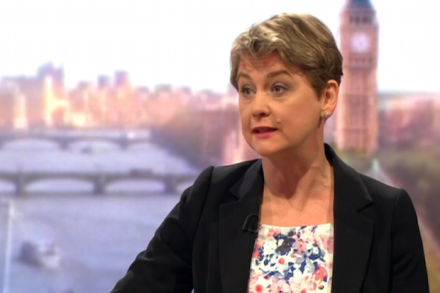
Yvette Cooper may lack some of Andy Burnham and Liz Kendall's momentum but she remains a formidable opponent in the Labour leadership contest. On the Andrew Marr Show this morning, Cooper was quizzed on how enthusiastic she is for the job, given her late entry to the contest: ‘I want to make sure that Labour leads and wins again and I think I’m the right person to do that because I think I can be the strongest in terms of taking on David Cameron. I also think I will set out ideas for the future that don’t just involve swallowing the Tory manifesto and set out a Labour vision for the future.

Andy Burnham’s barmy online army

From our UK edition

Andy Burnham's campaign has ensured he remains the current favourite to be the next Labour leader. Part of his nascent leadership campaign is an online army of fans who are promoting his cause and attacking his opponents. Twitter and Facebook are going to be key battlegrounds for each of the contenders — offering an easy way to spread a message without the filter of the media. Naturally, Burnham’s campaign has an official Twitter account: @Andy4Leader. As far as I can see, this is the only official account associated with Burnham’s campaign. The account has 1,421 and mostly retweets favourable news from others about Burnham. On May 13, it posted this video of Burnham announcing he was running: https://twitter.

Labour could U-turn on the benefit cap

From our UK edition

The most striking aspect of Labour’s response to the Queen’s Speech yesterday was that it is ‘sympathetic’ to the Tory plan to lower the £26,000 benefit cap for workless households to £23,000. This is a policy position that Harriet Harman developed after some discussion with the rest of the party as she prepared to respond to the Speech. The party is well aware that it struggled to respond well to the introduction of that cap in 2010, and that given it ended up being one of the most popular policies pollsters have ever touched, it can’t make the same mistake again. But what’s interesting is that not all leadership candidates agree with this.

Peter Mandelson’s ‘but I am a celebrity’ moment

From our UK edition

When GQ editor Dylan Jones hired Peter Mandelson as a columnist for the men's magazine in 2001, he was accused of trying to head off criticism that the publication, which was adorned with racy celebrity shoots at the time, was going downmarket. However, little did Jones know that his highbrow hire was actually a... celebrity! Speaking at a News Academy event at Hay, Jones revealed that he discovered only after signing Mandelson how big the Labour politician's ego really was: 'I remember learning something when we hired Peter Mandelson to write a column for us. I think he'd just been fired by the government for the second time, I courted him for a while and then he started writing a column for us.

Tony Blair has long been an irrelevance in the Middle East peace process

From our UK edition

Following months of speculation, Tony Blair has finally announced he is standing down as the Quartet Representative to the Middle East after eight years in the post. It is tempting to ask whether anyone will notice. His time in the job has been marked by a stagnation of the Peace Process, a hardening of the position of increasingly belligerent Israeli governments and a growing distrust among the Palestinians. Tony Blair himself had long become an irrelevance in negotiations. The truth is that Blair was hamstrung from the moment he took the job (immediately after he stood down as Prime Minister in 2007). He was never a 'Peace Envoy', although there was hope in some circles that he would bring the lessons of Northern Ireland to the Israel-Palestine conflict.

Len the loser

From our UK edition

It is not only Russian oligarchs and multinational corporations who run to the ‘capitalist courts’ — as we used to call them on the left. Have an argument with Len McCluskey and you find that the leader of Unite is prepared to spend his money, or more likely his members’ hard-earned dues, on hiring the libel lawyers of Carter-Ruck at £550 an hour (plus expenses, of course). Carter-Ruck can charge a little more than the minimum wage because its many wealthy clients know that its lawyers will push as hard as they possibly can to defend clients’ interests, as our spat with McCluskey showed. Last week I published a brisk blogpost on The Spectator’s site in which I said that the Labour party should recognise that Unite was its enemy.

Tony Blair to step down as Middle East peace envoy

From our UK edition

Reports are coming in that Tony Blair is set to stand down as a peace envoy to the Middle East. AP is reporting that the former Prime Minister has tendered his resignation to the Quartet on the Middle East — consisting of representatives from the US, EU, Russia and the UN — and will leave in June. Blair has worked for the Quartet for several years, joining on a wave of publicity and hope in 2007. But with the collapse of the US-led peace talks last year, as well as continual questions about his business links, his efforts to bring peace to the region have been doomed. Given that Blair’s foreign policy reputation is already toxic both here and abroad, his failure to make a breakthrough with the Quartet will only damage his legacy further.

Yvette Cooper snaps up six more MP supporters for her leadership campaign

From our UK edition

Six more Labour MPs have endorsed Yvette Cooper as leader: Coffee House has the names exclusively. Emily Thornberry Ian Austin Jim Cunningham Karen Buck Lyn Brown Steve McCabe They’re an interesting mix, ranging from Londoners like Karen Buck, Lyn Brown and Emily Thornberry to those with seats in the Midlands, such as Ian Austin, Jim Cunningham and Steve McCabe, and helps the Cooper campaign’s claim to have nationwide support, rather than backing from MPs in certain parts of the country. It is also interesting that Buck, who served as Ed Miliband’s PPS towards the end of the last Parliament, has backed Cooper, along with Austin, who was exposed as one of the MPs who had tried to complain about Miliband’s leadership.

Chris Bryant interview: Labour has to speak to voters ‘at the end of the line’

From our UK edition

Chris Bryant is haunted by Labour’s general election defeat. He has taken his former colleague Douglas Alexander’s office, and Commons staff have been appearing to collect the former Shadow Foreign Secretary’s computers. ‘They were referring to the computers as “the defeated computers”,’ he says. ‘Politics is quite brutal.’ The defeated computers are a sad symbol of Labour’s loss: Alexander was one of Labour’s many election chiefs, but is now just an ex-MP. But Bryant, who says he did feel in his gut that Labour was going to lose, still seems rather chipper.

David Miliband doesn’t rule out running in future Labour leadership contest

From our UK edition

Is David Miliband Labour's prince across the water? The elder Miliband brother appears to be watching the leadership contest closely avidly from afar, without backing any particular candidate. Speaking to his friend Fareed Zakaria on CNN this weekend, he was keen to stress that he has no plans to return to British politics in the immediate future: 'We don't have a presidential system as you know well and I am leading the International Rescue Committee in New York. Already three candidates have declared in the UK and it's obviously vital that Labour is able to provide the kind of modern progressive alternative that is essential in democratic politics. As in his post-election interview, Miliband Sr could not resist a pop at his brother.

Chuka Umunna endorses Liz Kendall for Labour leader

From our UK edition

After pulling out of the Labour leadership contest himself, Chuka Umunna has given his star-studded endorsement to Liz Kendall, along with his leadership team of Emma Reynolds, Stephen Twigg and Jonathan Reynolds. In an article for the New Statesman, Umunna writes: ‘For us, our next leader must get this vision right. On all these big subjects, Liz Kendall has asked the tough questions and started to chart a course to the answers. She has been courageous in challenging conventional wisdom. She has no compunction in moving Labour beyond our comfort zone and is determined to build a team ready to chart a route forward. This is exactly what our party needs and that is why we are nominating her to be the next leader of the Labour Party.

Kezia Dugdale running for leader of Scottish Labour

From our UK edition

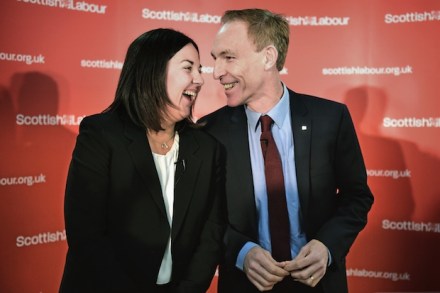
Kezia Dugdale, the deputy leader of the Scottish Labour party, has announced that she’s running for the leadership of the Scottish party following Jim Murphy’s resignation. With Murphy not being an MSP, it has fallen to Dugdale to take on Nicola Sturgeon at First Minister’s Questions. She is generally thought to have done a good job at it, highlighting the SNP’s poor record on education. But in the current political climate in Scotland, it is highly unlikely that Labour will be able to deny the SNP a majority at next year’s Holyrood elections. So, the risk that Dugdale—who is only 33—is taking in running is relying on the Scottish Labour party not to immediately jettison its leader post-defeat in 2016.

Kendall is a hard act to follow for Cooper and Burnham

From our UK edition

Liz Kendall is the great unknown Labour leadership candidate. She is the only one who hasn’t been in government or Shadow Cabinet, and as I blogged earlier, she needs to show that she has got qualities that make up for this lack of experience. She made a pretty good start on this at the press gallery lunch today, as the first candidate to speak to, and take questions from, journalists. Yvette Cooper and Andy Burnham will presumably agree to the same event at some stage - and they now have a hard act to follow. In her opening speech, Kendall painted a rather brutal picture of where her party had ended up and why it had lost. She said: ‘This defeat was epic. We lost by a magnitude few predicted or imagined. The election demands a new era for the Labour party.

Podcast: Gove’s battle for justice, the perils of a small majority and the Labour leadership contest

From our UK edition

Repealing the Human Rights Act is one of the most difficult tasks the government faces. On this week’s View from 22 podcast, the Conservative MEP Daniel Hannan and barrister Greg Callus discuss how and why Michael Gove intends to break Britain’s link with the European Court of Human Rights. Is it a purely symbolic gesture to repeal the HRA or should ordinary people care about this? Is the legal community generally supportive or against the move? And how does Gove’s personality help this battle? James Forsyth and Isabel Hardman also discuss the perils of a small majority government and how the Tory rebels intend to make life difficult for David Cameron.

Labour should now define itself as in favour of both a referendum and the EU

From our UK edition

The three main Labour leadership candidates have now all said that they want a referendum on Britain’s relationship with the EU. But the party’s ‘official’ position - that is, the policy it went into the last election with that everyone seems quite keen to disown - is that there should not be a referendum. The party will not have chosen its leader by the time of next week’s Queen’s Speech, even if MPs seem to be making their minds up pretty quickly, and so when the EU referendum bill is published in that speech, the party will need to respond. It would perhaps make sense if that response wasn’t a repeat of the old Miliband policy, given all the candidates likely to succeed him want a referendum.

Tristram Hunt bows out of Labour leadership race and backs Liz Kendall

From our UK edition

Tristram Hunt is not standing as Labour leader and will instead back Liz Kendall, he finally confirmed at the end of a long speech this morning. The party’s Shadow Education Secretary had some fun forcing hacks to listen to his assessment of Labour’s failure, which took a while, before he announced this, saying: ‘It is clear to me that I do not have sufficient support to be certain that I could run for the leadership myself.. there is a real risk that I might help restrict the choice for the party and that is not a risk that I am prepared to accept.' He complained that other candidates had been working on their campaigns for longer, saying they had 'longer, more established ambitions'.

The Labour leadership checklist

From our UK edition

There seems to be a checklist for Labour leadership hopefuls which all of them are very keen to tick off. When launching a campaign, a candidate must say that their party has just suffered a terrible defeat from which a number of profound lessons must be learned. These lessons all seem to be rather similar, and have led the candidates to say the following things: ‘We didn’t speak enough to aspirational voters’ Mary Creagh: ‘People felt that Labour didn't understand their aspiration to earn money and provide a better life for their family.’ Chuka Umunna (when he was standing): ‘We need to… focus on what is the new agenda that is going to get a Labour government elected in 2020.

Don’t Labour tax advisers pop up in the funniest places?

From our UK edition

Remember Jolyon Maugham, the QC who had fifteen minutes of fame during the General Election campaign when he 'advised Labour on its non-dom tax crackdown'? As the Telegraph reported at the time: 'Ed Balls, the shadow chancellor, cited Jolyon Maugham as an independent expert who had backed the policy and had forecast that it would raise £1billion. The Telegraph has established that Mr Maugham, a Labour supporter, has been in discussions with Labour about the policy for six weeks and played a role in designing it.' Well next month Jolyon is off on a jolly to that well-known bastion of progressive taxation: Geneva. He has just been unveiled as a star speaker at the Transcontinental Trusts 2015 conference in Switzerland.