Labour party

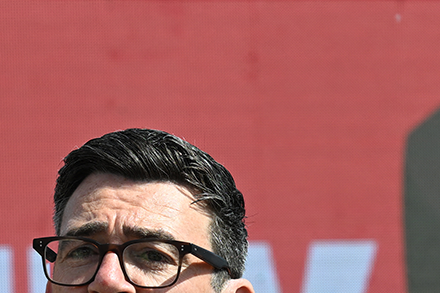
Andy Burnham’s centrist act isn’t fooling anyone

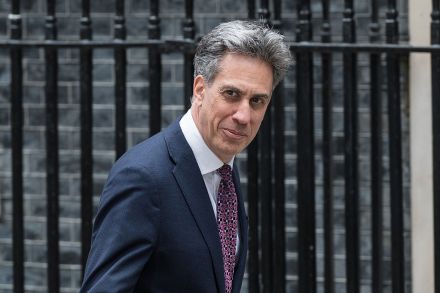
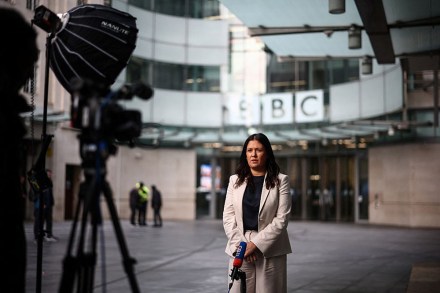
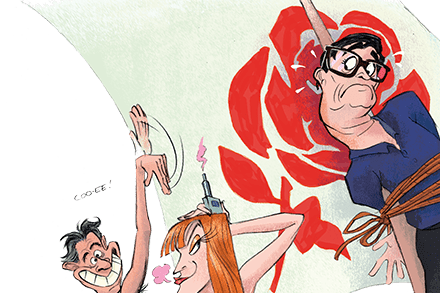
When Ed Miliband and Shabana Mahmood arrived in Downing Street on July 20, the image of political rivals arm in arm symbolized a new government of differing views taking shape. It might have been more awkward. As they neared the door of No. 10 and the waiting television cameras, Miliband turned to Mahmood and asked: “Should we turn around for a photo together?” Mahmood gave the idea short shrift: “We’re not getting married, Ed!” But in a sense, Labour is seeking a new relationship with the British public – and everyone around Andy Burnham is alive to the importance of images, symbols and vibes. As Wes Streeting, the new Defense Secretary, put it in cabinet the next day: “We have a second chance to make a first impression with the voters.

burnham

Is Ed Miliband preparing to take on Donald Trump?

Just one day after Ed Miliband was made UK Foreign Secretary we heard in the Telegraph that the White House is upset about the appointment, and even warned against it. Donald Trump is apparently unimpressed by Miliband’s role in blocking North Sea oil drilling. Miliband has also railed against Trump in the past, calling him a “racist, misogynistic self-confessed groper” on the BBC’s World at One in 2016, as an example – but in fairness his predecessor David Lammy called Trump “beneath contempt” before he became foreign secretary. Trump can forgive and forget – so long as his interlocutor is willing to forget their own pride. Miliband could bend the knee, but there is also some appetite to confront Trump.

ed miliband

Andy Burnham can’t afford to please everyone

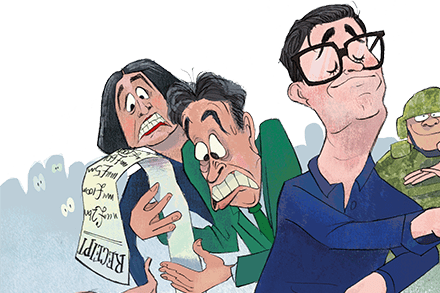
Andy Burnham thinks his critics need a new joke about him. The old one about a Blairite, a Brownite and a Corbynite walking into a bar (‘Hello, Mr Burnham,’ says the barman) is about to be eclipsed. On Monday, it won’t be a barman offering good wishes – it will be the Cabinet Secretary, Antonia Romeo, when Burnham walks into No. 10 as Britain’s 59th prime minister. Before that, on Friday, Burnham will accept the leadership of the Labour party, unopposed, at the headquarters of the Trades Union Congress. The speech he will give is still being worked on, but Burnham is ‘holding the pen himself’, aides say.

Andy Burnham is Britain’s Biden

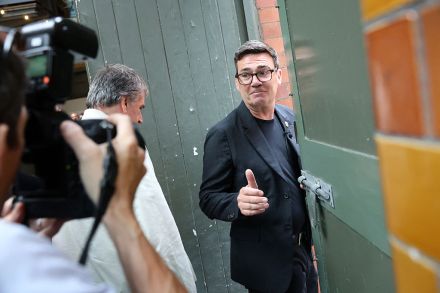
Watching Andy Burnham in Manchester, dressed in his T-shirt and jacket and pronouncing the return of a more old-fashioned, pro-worker left, I had a sense of déjà vu. I had seen this movie before, but with different accents. For the politician Burnham obviously resembles is not British at all – it is Joe Biden. Just like Biden, Andy Burnham’s self-image is based on the idea that those on the left are the tribunes of ordinary working people, not progressive elites. Like Joe Biden, Andy Burnham is a provincial throwback to an earlier time, just from the North West, not the Midwest. Just like Biden, Burnham rails against the "neoliberal" changes of the 1980s, which he blames for the economic problems of today.

andy burnham

Inside Labour’s plot to sideline alternative media

Labour came to power in 2024 with five stated missions: to improve economic growth, the NHS, street safety, clean energy and the distribution of opportunity. If Keir Starmer had been honest about his plans, he would have pledged just one – restricting access to social media. This is the goal the government has pursued obsessively. Starmer turned to it as his premiership collapsed around him, imposing a social media ban for under-16s. As Andy Burnham seizes the reins, he will have to grapple with divisions in his party over defence and welfare – but his MPs remain united in their crusade against so-called online harms.

Can Burnham resist the siren call of the left?

Power, when it is gained and lost, is transferred in stages: the actual, the visual and the constitutional. The latter took place on Tuesday evening when the prime minister presumptive sent a letter to Antonia Romeo, the Cabinet Secretary, requesting that she commence access talks with his team. Keir Starmer had already given permission for them to proceed, but the propriety and ethics team in the Cabinet Office had told Romeo she could not initiate proceedings. Andy Burnham had to ask first. To all intents and purposes, he is already the vessel from which power flows. At the same time, it became clear that James Purnell, the former Blairite cabinet minister, will lead the transition team and stay on to become chief of staff in 10 Downing Street.

Coffee House live: What Makerfield means for Britain

The results are in and Andy Burnham is on his way to Westminster having won the Makerfield by-election. But what does that mean for Keir Starmer? What does it mean for Reform? And – most importantly – what does it mean for Britain? Tim Shipman unpacks the results on Spectator TV with former No.10 head of comms James Lyons, pollster Luke Tryl, The Times' Gabriel Pogrund and Michael Simmons. Join the discussion live in the chat and send your questions for the panel.

Was Brexit worth it – and can Burnham save Britain?

Was Brexit worth it – and can Burnham save Britain?

55 min listen

For this week’s Edition, William Moore is joined by the Spectator’s assistant editor Isabel Hardman and the editor of The New Statesman Tom McTague. Plus, in a special episode this week, the Spectator’s economics editor Michael Simmons joins for the first half of the episode, before political editor Tim Shipman jumps in later on. This week: was Brexit worth it? As we approach the tenth anniversary of the vote to leave the European Union, the Spectator’s editor – and former prominent Vote Leave campaigner – Michael Gove makes the case that not only was Britain right to leave, but it has benefitted from leaving. The past decade however has been marked by domestic political chaos, so to what extent was Brexit a symptom or a cause of Britain’s structural problems?

Why Trump’s Iran deal won’t save Starmer

13 min listen

Donald Trump has announced a deal to end the war between Iran and the US, but in Westminster, the relief comes with serious questions. What does the deal actually contain? Will the Strait of Hormuz reopen quickly enough to bring down oil prices? And could any economic boost come too late to save Keir Starmer? Elsewhere, Keir Starmer has announced under-16s will be banned from social media by spring 2027. The policy may be popular with parents, but the details remain sketchy: how would it be enforced, would it require facial recognition or digital ID, and could teenagers simply get around it with VPNs? Tim Shipman and Michael Simmons discuss with Megan McElroy.

Revealed: Andy Burnham’s reassuringly bland Cambridge years

There appears to be a missing chapter in the story of Andy Burnham. Depending on the whims of voters in Makerfield, Britain could soon have its first prime minister with a degree in English literature and its first Cambridge-educated premier since Stanley Baldwin. And while we have been treated to countless long reads on the so-called King of the North – his political philosophy, his years in Manchester and his apprenticeship in New Labour – his undergraduate years have barely been scrutinised. Burnham is tight-lipped about his Cambridge days (1988-1991). His comments over the years have been mostly limited to saying he had ‘imposter syndrome’ as he struggled to fit in at a university that was dominated, he felt, by private school students.

The battle for Makerfield

9 min listen

James Heale is in Makerfield ahead of one of the most consequential by-elections of all time, where Andy Burnham is hoping to return to Westminster and stop Reform’s Robert Kenyon – the local plumber backed by Nigel Farage. On the ground, James hears from voters split between Labour and Reform, with some hoping Burnham can hold the line and others asking what he has really done for the area. He also sits down with Nigel Farage to discuss Reform’s chances, the party’s NHS policy, Rupert Lowe’s Restore Britain challenge, and why Farage thinks Burnham would be even worse than Starmer in No. 10.

Who won the Makerfield Question Time?

12 min listen

Last night, candidates from the five main parties in Makerfield came together for a special episode of Question Time. With four non-politicians taking on Andy Burnham, who came out on top? Tim Shipman, James Heale and Noa Hoffman digest the debate, assess Burnham’s performance, and discuss the main newsline – one that sent less than enormous shockwaves through Westminster: Burnham confirming that he would run in a Labour leadership contest.

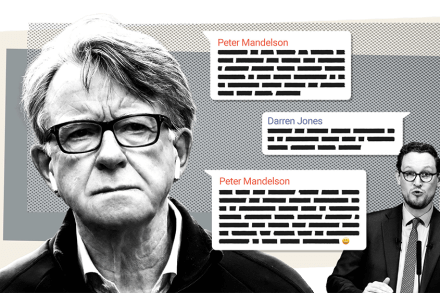
Revealed: the missing Mandelson messages

Darren Jones has become the UK government’s Walter Model, the general known during World War Two as "the Führer’s fireman" for his deployment to shore up any position which appeared lost. In that capacity, Britain’s first Chief Secretary to the Prime Minister had the thankless task of presenting the government’s case to the House of Commons on Monday following the publication of 1,500 pages of documents relating to Peter Mandelson. Jones himself was spared direct embarrassment because none of his exchanges with the disgraced peer came to light in the trawl of memos, emails and WhatsApp exchanges.

mandelson
Darren Jones & the missing Mandelson messages

Darren Jones & the missing Mandelson messages

16 min listen

The second tranche of messages related to the vetting of Peter Mandelson to be UK ambassador to the US were released on Monday – the gift that keeps on giving. Tim Shipman joins Patrick Gibbons to discuss his political column, which reveals some of the messages from Darren Jones MP which should have been included... yet they weren't – why? Tim talks to Patrick about how embarrassing the latest messages are for Labour, what they reveal about Keir Starmer's government and what he thinks more broadly about 'government by WhatsApp'. Produced by Patrick Gibbons.

Is Andy Burnham up to the job of prime minister?

When the Labour party football team played a group of journalists at Loftus Road two years ago the hacks won 4-1. The politicians’ solitary goal came from a late penalty. When the referee pointed to the spot, the center-forward stepped up, elbowing well-known politicians such as Ed Balls, David Miliband and Sadiq Khan out of the way in his bid for glory. There was a notable absence that day. “Keir [Starmer] had been due to play, but he didn’t turn up,” a witness recalls. “If he had been there, he’d probably have grabbed the ball and there might have been a tussle.” Instead, Andy Burnham said: “This is mine,” and calmly slotted it into the corner. “It was a perfect penalty,” says the witness.

Andy Burnham

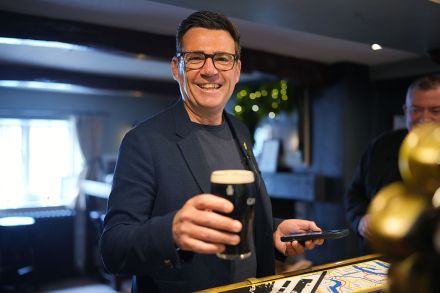
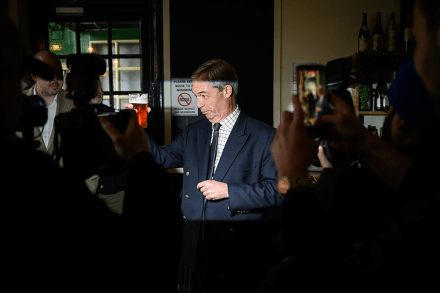
The £10 pint explains the rise of Reform

I bought my first pint of bitter, in a pub in Slough, in 1972. It cost 12 pence. The Bank of England inflation calculator tells me that is the equivalent of £1.45 today. Yet a pint now sells for £10 in London. What went wrong? Many factors, of which the first was Britain’s entry into the EEC on January 1, 1973. We were eventually made to "harmonize" our alcohol duties with our partners, leading to a drop in the duty on wine and a rise in that on beer, to reflect French cultural preferences. The most recent shock has been Rachel Reeves’s attack on small businesses with employer NI rises, punitive workers’ rights, ever-higher minimum wage etc. In the 1970s, the price of a pint, like the cost of a packet of cigarettes, was a major issue of concern in each year’s Budget.

pint
psychodrama

When does a drama become a psychodrama?

When Labour blocked Andy Burnham from standing as its candidate last time around, Douglas Alexander, the Scottish Secretary, rejoiced at avoiding "three months of psychodrama – who’s up, who’s down, who’s getting on with who…" But as Gareth Roberts remarked in The Spectator’s Coffee House, "I’m not quite sure what the difference is between psychodrama and good old-fashioned plain original-flavor drama." Indeed, Mr. Alexander’s characterization of psychodrama sounds like the essential lineaments of pure politics: "Who loses and who wins; who’s in, who’s out," as King Lear puts it. King Lear itself might be a classic psychodrama, if madness is the defining feature.

Can Andy Burnham really do it?

30 min listen

Andy Burnham is the man on everyone’s lips in Westminster. As he campaigns to return to parliament in the Makerfield by-election, Tim and James bring you the definitive guide to Burnham – and what could happen next. They’re joined by Joshi Herrmann, founder and editor of Mill Media, whose profile of Burnham had Westminster buzzing over the weekend. He shares his view of the Greater Manchester mayor’s ‘unusual gifts and glaring weaknesses’, whether ‘Burnhamism’ really exists, and if Burnham’s emotional style of politics could survive the brutality of No. 10.

Why Labour’s fate will be decided in the Strait of Hormuz

36 min listen

For this week’s Edition, Lara Prendergast is joined by The Spectator's John Power, feminist campaigner Julie Bindel and former adviser to Boris Johnson – and co-host of the In The Room podcast, Cleo Watson. They explore the idea that the Strait of Hormuz, not Makerfield, will determine the fate of the current Labour government. Starmer may be facing a challenge to his authority from mayoral shapeshifter Andy Burnham, but neither the PM or the wannabe MP will be rewarded if grocery and energy prices continue to soar. How much can be done to insulate Britain from future pain? And do they trust Labour to do so? Also this week: is Wes Streeting a better option than Burnham?

The calm before Labour’s next storm

15 min listen

After a turbulent few weeks, Westminster is in limbo. Keir Starmer appears safe – for now – after Wes Streeting’s underwhelming resignation speech, and all eyes are turning to the Makerfield by-election on 18 June. Until then, the drama seems to have temporarily gone out of Labour’s leadership turmoil. Isabel Hardman and Noa Hoffman join Megan McElroy to discuss Starmer’s ‘pompous’ tone at PMQs, what is really going on with Wes Streeting, and the Essex icon causing a storm on Twitter and inside the Department for Education.