Kgb

The botched coup that presaged the end of the Soviet Union

From our UK edition

The best thing about the Soviet Union – arguably the only good thing – was the manner of its going. Though it lost its European empire when the Berlin Wall came down in 1989, almost nobody predicted that the USSR itself would fall apart so quickly. Most historians, Moscow-based journalists and the world’s espionage agencies thought it would limp on for decades, like the Ottoman empire. Yet the world’s second most powerful state withered away, and not in the classical Marxist sense: it just ceased to exist. As Robert Service shows, the Soviet people destroyed the Soviet Union, not outsiders, and without any significant violence.

The history of Moscow was one of extreme violence from the start

From our UK edition

‘Moscow is hard to love,’ Simon Morrison writes at the beginning of this engaging book, ‘but I love it.’ He deliberately sets out unconstrained by academic pieties, despite holding the post of Professor of Music and Slavic Languages and Literatures at Princeton University. He says he wrote A Kingdom and a Village ‘out of nostalgia for pre-oligarch decrepitude, when the world looked at Moscow with pity’. The Orthodox Church and the security services have been conjoined from the 16th century to the present The book is tripartite. The first part begins in 1147, when a prince named Yuri built a fort on a hill above a river. (When the authorities unveiled a monument to Yuri in 1954, Morrison reveals, a Muscovite yelled: ‘Doesn’t look like him.

The reluctant spy: The Predicament, by William Boyd, reviewed

From our UK edition

According to the literary critic Harold Bloom, male writers have daddy issues. So keenly do they feel the oppressive influence of their forefathers that when they take up the pen it is to use it as a sword. To produce something new, they must engage their predecessors in a writerly duel to the death. Bloom’s examples are all very highbrow – Blake vs Milton, Keats vs Shakespeare – but the theory applies across the literary spectrum. When William Boyd sits down to write a new spy novel and, removing his pen from its sheath, looks up to assess the field, it is (among others) the faces of Ian Fleming and John le Carré who stare back. What better way to deal with the anxiety of their influence than to create a spy who is not only reluctant but practically monogamous too.

Why you need Big Balls

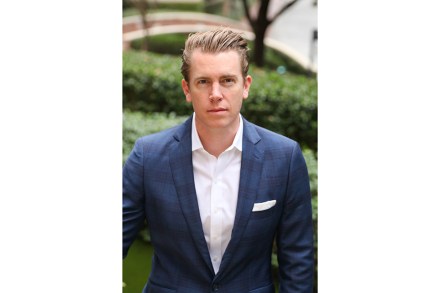
Big nicknames come with big responsibilities. And the owner of one of the mightiest monikers – Big Balls – feels the weight of his own obligations keenly. In a rare interview, Edward Coristine spoke about how his family fled to America from Russia after his grandfather was executed for spying for the US. Valery Martynov was a KGB officer who was recruited by the FBI in the early 1980s. He passed Soviet secrets to his American handlers until he was exposed by Aldrich Ames and Robert Hanssen, two of the most notorious traitors in US history.  Recalled to Moscow under false pretenses, Martynov was arrested and executed in 1987. His widow and children eventually sought refuge in America.

Big Balls

The Russian spies hiding in plain sight

From our UK edition

In June 2022, Vladimir Putin tipped up at a party at the headquarters of Russia’s foreign intelligence service, the SVR. This was to mark, of all things, the centenary of the country’s programme of deep-cover spies, who live for years abroad under elaborate false identities while passing secrets back to their masters at home. The weirdness of that espionage hoopla, just four months after the invasion of Ukraine, leaves one wondering what other bizarre birthday events Putin might have in his diary. The 85th anniversary of the assassination of Leon Trotsky, perhaps? Ah, you can imagine the banter. The cracker hats. The roll-out noisemakers.

Inside the Unholy See: the infiltration of the Vatican by foreign powers

From our UK edition

Since it became independent in 1929, Vatican City has been the world’s smallest state. Every evening the gates close, leaving behind only 500 permanent residents. I once spent a week behind the walls as a guest in the Santa Marta hostel where the Pope lives; at night the deserted courtyards are thrillingly spooky. But it’s during the day that they echo with the footsteps of secret agents. The Vatican has been teeming with spies since popes started living on this 100-acre plot of land west of the Tiber when they returned from Avignon in 1377. In the 20th century it entered a new era of espionage when the papacy was targeted by Nazi Germany, Soviet Russia and the United States. By definition, secret agents are supposed to be difficult to identify.

Espionage dominates the best recent crime fiction

From our UK edition

The best espionage novels cater to our fantasies while still persuading us of the authenticity of their worlds. Of the titles published this year, two stand out in the field, and each author understands that, in fiction, veracity is not the same as authenticity. In Hemingway’s words: ‘All good novels have one thing in common. They are truer than if they had really happened.’ An extended chase, beginning in Siberia, is a kind of Russian version of The Thirty-Nine Steps White Fox (Bantam, £18.99) is the concluding volume of a trilogy of thrillers by Owen Matthews, one of the best of many western writers on Russia. It can happily be read on its own, though it is sufficiently gripping to send readers back to the earlier two books.

The imperfect spy

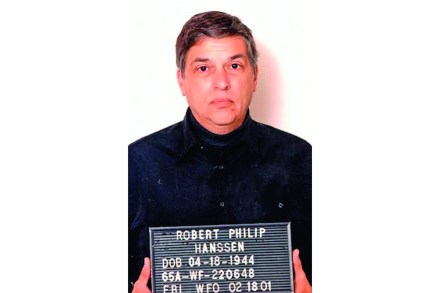
On one level, Lis Wiehl’s enthralling and grimly astonishing A Spy in Plain Sight is simply the story of Robert Hanssen, an FBI agent whose espionage activities were described by the Department of Justice as “possibly the worst intelligence disaster in US history,” a crowded field even at the time of his arrest in February 2001. “Over twenty-two years,” explained the DOJ in a 2002 report, Hanssen had “given the Soviet Union and Russia vast quantities of documents and computer diskettes filled with national security information of incalculable value.” And his betrayals had cost lives.

spy

Vladimir Putin, deep statist

Vladimir Putin's brutality in Ukraine is only going to get worse. The Ukrainians have fought valiantly, far better than anyone expected, but then that only means the Russians will have to up the slaughter in the coming days. As for Putin, he's reportedly fuming over his army's setbacks, threatening reprisals, while hunkering down in — I'm not making this up — his "mountain lair" deep in the Urals. If that makes Putin sound like a Bond villain, then that's just one of the many images of him that's emerged in recent days (the most popular is Putin as Hitler). The seemingly insane nature of his Ukraine invasion has left observers grasping for a reference point. Is Putin addled by cabin fever? Under the sway of extremists? Mentally ill? Who is this Vladimir Putin anyway?

The best Cold War thriller I’ve seen that I fully understand: The Courier reviewed

From our UK edition

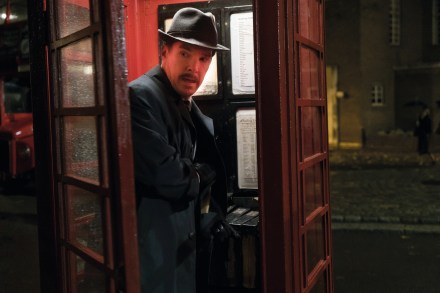
The Courier is a Cold War spy thriller and the prospect of a Cold War spy thriller always makes my heart sink. There will be agents. There will be double agents and triple agents and maybe even quadruple agents. Is he working for our side while pretending to work for the Soviets as someone pretending to be working for us? After any Le Carré adaptation, for example, I also need debriefing in a wood-panelled room filled with cigarette smoke and there is still no saying I’ll emerge any the wiser. But The Courier isn’t like that. This is a damn good, explosively tense story that focuses on the friendship that develops between two men on opposite sides. And it is plainly wonderful.