Kenya

A £50 million search for love

From our UK edition

 Laikipia When I first knew Michael Cunningham-Reid he was such a strict teetotaller that he would not eat trifle for pudding in case there was sherry in it. For years, not drinking was his leitmotif, along with big cigars and a thirst for gambling, racehorses and catching marlin with just two lines out on the Indian Ocean. At Michael’s funeral at his Lake Naivasha farm, my wife Claire was the first to reveal she had secretly given him a glass of wine. Julian then confessed he had done the same and said over the microphone, ‘Own up, who else?’ Mourners under the fever trees wriggled on their hay-bale seats and the giggles rose to a roar of laughter.
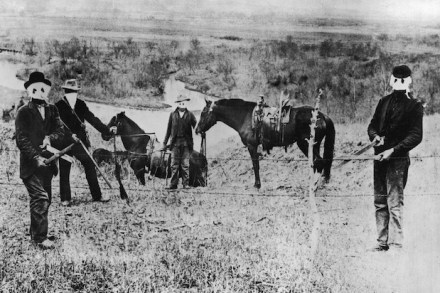
Aidan Hartley: If Santa Claus tried to make a delivery, he’d be shot before he reached the chimney

From our UK edition

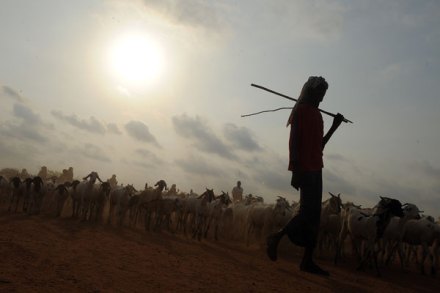
Laikipia In the cattle rustlers’ camp, I know as I write this that the warriors are sharpening their blades, staring down the dirty barrels of their rifles, and loading their clips with bullets. Before full moon on the 17th of this month they will set out in their war paint, glistening with rancid butter and ochre. There will be four of them, young men not much more than teenagers. One will carry a bucket of sheep’s fat, and on this disgusting ration they will survive while lurking in the thorn scrub for days, never making a fire, leaving no tracks, sleeping cold on the rocks — and watching us. They will watch us as we go about our daily routines.

How al-Shabaab is keeping the black-market African ivory trade alive

From our UK edition

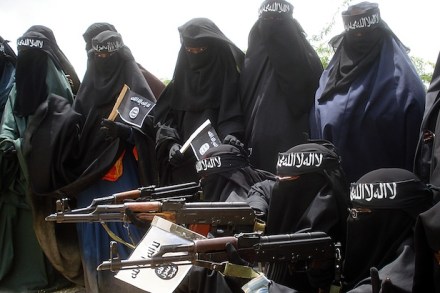
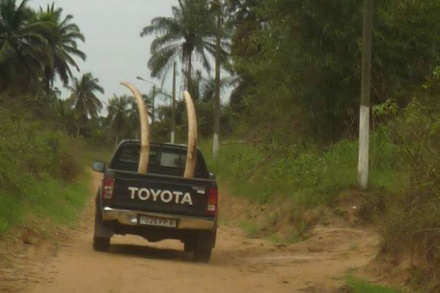
It has taken a while, but finally the world appears to be taking the illegal trade in ivory seriously. Why now? Reports of a ‘terror trail’ that links al-Shabaab and black-market ivory. The Elephant Action League investigated the ivory trail into Somalia, and found that ivory, or ‘white gold’, is ‘one of the lifelines of al-Shabaab’. EAL found that according to sources within the militant group, ‘between one to three tons of ivory, fetching a price of roughly $200 per kilo, pass through the ports in southern Somalia every month’. Al-Shabaab’s monthly income from ivory is - according to EAL - between $200,000 and $600,000.

Aidan Hartley: Kenya is special like no other African nation

From our UK edition

As I write this, my hands are seared and bruised from holding a hot iron after branding our cattle. We have castrated our steers and piled up the testicles on fence posts to fry later. We fought the cattle to the ground. We pulled their tails and they bellowed. I feel so happy. The cattle brand sizzles into the flesh with a hiss and a cloud of smoke as it burns in the brand KH9, which has been the Hartley mark here in Kenya since 1936. Finally we might have a stud herd that can make a difference. This has all been going on in my absence, but I have come home to the farm after covering dozens of wars and crises for 25 years and I will do it no more. Cattle rustlers and bandits will still shoot at me but I am going to be a farmer for the rest of my life.

Letters to the Editor | 24 October 2013

From our UK edition

Ridley’s wrong Sir: In last week’s issue the former Northern Rock chairman rejoiced in the ‘good news’ that climate change would not start to damage our planet for another 57 years (‘Carry on warming’, 19 October). I am not a scientist. As a minister, I rely on the opinion of experts including the government chief scientist, the Meteorological Office and the International Panel on Climate Change (IPCC). They do not share Lord Ridley’s views. The latest IPCC scientific analysis from 259 climate experts in 39 countries, reviewed by another 659 experts who dealt with 53,000 individual comments, is clear about the very real threat that dangerous man-made climate change poses to humankind.

Al-Qa’eda targeted Kenya not because it’s a banana republic, but because it’s a symbol of African success

From our UK edition

If Al-Shabaab was behind the terrorist attack in Nairobi, then the group has come a long way since its foundation in a derelict shampoo factory called Ifka Halane — ‘Clean and Shiny’ — in Mogadishu in 2006. I know a little about the group because I am the only westerner to have met its founder, Aden Hashi Ayro, before he was killed in a US air strike. In those days Al-Shabaab was a small militia providing muscle for the Islamic courts in Mogadishu. For a brief spell the courts did a good job of bringing a degree of law and order. Then Washington foolishly backed an Ethiopian invasion of the country. For Al-Shabaab, this was a godsend. Afghan-trained Salafists don’t enjoy fixing drains or street lights. Insurgency is much more worthwhile.

How we survived terror at Nairobi’s Westgate mall

From our UK edition

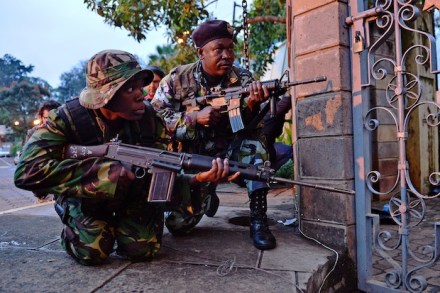
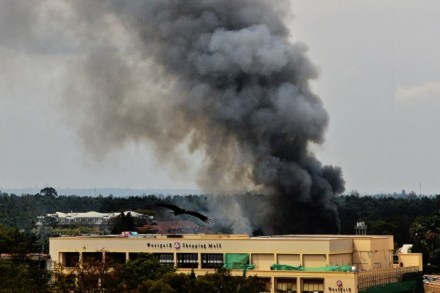
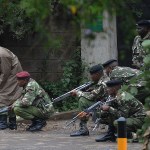
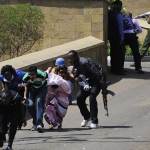
 Nairobi Kenya is one of those places where everybody knows everybody — and each one of us seems to have friends or relatives caught up in the Westgate shopping mall terrorist attack. My friends Simon and Amanda Belcher were on their way to lunch at the mall before catching a film at the cinema. They had parked their car on the top floor and walked past a marquee where a children’s ‘super chef’ cookery competition was about to start when gunfire erupted inside. Simon at first thought ‘firecrackers’. Then they heard shots from the ramp up to the car park. Walking towards them were two slim young men carrying AK-47s with their faces swathed in Arab scarves.

Ignoring Islamic terrorism didn’t make it go away

From our UK edition

Not so long ago politicians were hailing the end of al-Qaeda and the global jihad movement. By the middle of 2011, key ideologues like Osama bin Laden and Anwar al-Awlaki were dead. Arab Street also appeared to have embraced peaceful protest, with popular uprisings unseating seemingly entrenched regimes in Tunisia and Egypt. A new dawn, we were told, was breaking. The weekend’s events have brought that hopeless optimism into sharp relief. The terrorist siege of the Westgate shopping mall in Kenya continues, with around 70 people dead so far. Elsewhere, at least 80 Christians were killed in a suicide attack outside a church in the Pakistani city of Peshawar yesterday.

No, Mr Cameron. The Kenyan massacre is all about Islamism

From our UK edition

Here we go again. A group of Islamist terrorists armed with guns and grenades head into a shopping mall in Kenya. They separate out the Muslims from the non-Muslims, let the former go free and massacre the latter. Cue the usual responses. The British Prime Minister, David Cameron, says: ‘These appalling terrorist attacks that take place where the perpetrators claim they do it in the name of a religion – they don’t.  They do it in the name of terror, violence and extremism and their warped view of the world. They don't represent Islam or Muslims in Britain or anywhere else in the world.’  I don’t think any sensible person would argue that the perpetrators represent all Muslims.

Why does David Cameron refuse to admit that the terrorist attack in Nairobi is linked to Islam?

From our UK edition

Do you know the name of Muhammed’s mother? No, me neither. I can manage the names of two of his wives and his Christian concubine, plus his daughter, but not his mother. The matter was, however, of more than academic interest when gunmen took over the Westgate shopping centre in Nairobi. According to witnesses, members of the public were lined up and then gunned down if they failed to name the mother of the founder of Islam or recite verses from the Koran. Those lucky enough to be able to speak Arabic — possibly passages from the Koran — were let go. The rest were fair game. Now, whatever else you can say about these individuals, I think we can agree, can’t we, that religion looms quite large in their world view?

The Ghosts of Happy Valley, by Juliet Barnes – review

From our UK edition

Rift Valley, Kenya The other day when I told the headmaster of a top British public school that I came from Kenya, he quipped, ‘Ah, still living in Happy Valley?’ We will never shake it off, this idea of a Happy Valley in the equatorial highlands where aristocrats supposedly indulged in orgies and drugs — what Cyril Connolly dubbed the three As: Altitude, Alcohol and Adultery. It culminated in Joss Erroll’s 1941 murder. ‘Perhaps Africa was to blame,’ Connolly wrote. ‘It insinuates violence.’ It is 30 years ago that James Fox, inspired by Connolly, resurrected these tawdry events in his book White Mischief. It has never been out of print since.

A binge on alcohol and meat, plus hired sex and lodging — all for £1.50

From our UK edition

 Kenya Home is beyond the perimeter of modern Kenya and way off the grid. When the ancient generator goes off in the evening we are left with a sky of untarnished constellations reflecting down on the star-spotted nightjars. Until morning we burn hurricane lamps of the Dietz ‘old reliable’ type. These run on kerosene. When we ran out of this I asked one of the young shepherds called Captain to cycle to the nearest village, which is about 15 kilometres away, on an urgent mission to buy more. ‘Please buy ten litres of paraffin,’ I said. I gave him 1,000 bob, about £7, and asked him to bring change and a receipt.

Wild life | 21 March 2013

From our UK edition

Rift Valley ‘We’re on the frontline,’ I said. ‘And however many guns we had, it wouldn’t be enough against the cattle rustlers.’ ‘Yes,’ replied my friend Jamie, a shareholder in our farm. ‘You’re low-hanging fruit.’ I showed him the bullet holes riddling my Land Cruiser, and told him again about the ambush, the raids, how farm manager Celestina was having a nervous collapse, how the police never came to our rescue. ‘Jamie, we might have to give up the cattle,’ I said. ‘It will break my heart — this is what I had instead of a mistress to get me through middle age.’ ‘Aidan,’ he said, ‘they’re cows.

Hasty exit strategy

From our UK edition

For years after the rug was pulled from under it, the British Empire — with a quarter of the globe, the largest the world has known — seemed an unfashionable subject for historians. Did they fear political incorrectness, or was it simply that they had to wait for sufficient archival material to emerge? Whichever, there is now some very welcome sprouting in this part of the historical garden, already well-watered by the Cambridge historian Ronald Hyam, and few shoots could be more welcome than Calder Walton’s important contribution. Walton draws on recently released MI5 files to reveal the role of intelligence in the transitions from colony to independent state.

Cocktail Hour Under the Tree of Forgetfulness by Alexandra Fuller

From our UK edition

There is always a special risk, says Alexandra Fuller, when putting real-life people into books. Not all those who recognised themselves in her terrific memoir of 1960s and 1970s white-ruled Africa, Don’t Let’s Go to the Dogs Tonight, had appreciated their transformation. The author’s own mother, Nicola Fuller, was disquieted to find herself as a character in that ‘awful book’ (as she refers to it today). Was she really that flaky and drunk? Or was that how others perceived her? Most writers make life more interesting than it is; I suspect that Alexandra Fuller is among them. In Cocktail Hour Under the Tree of Forgetfulness she returns to the Africa of her childhood and to her eccentric farmer family.