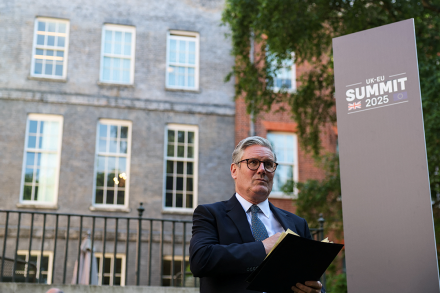
Keir starmer

Reform and the problem with the Overton window

From our UK edition

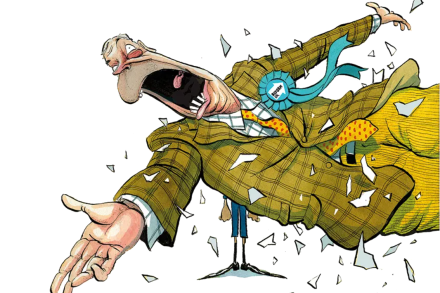
In the space of about one month a further 9 per cent of the electorate has decided that the views of Reform UK accord with their own take on the world, putting Nigel Farage’s party well ahead of the government in the polls and leaving the Conservatives trailing Ed Davey’s cavalcade of grinning village idiots. The Greens are not that far behind the Tories, either, on 10 per cent. This means that policies which were once considered extreme, such as the immediate joyous jettisoning of all that diversity, equality and inclusion rubbish and drastic action taken against asylum seekers, are now considered acceptable by almost a third of the electorate. Good.

The rise of the liberal Caesars

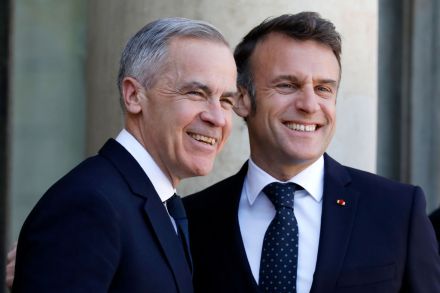
The triumph of Mark Carney in the Canadian election has turned what seemed like a series of local flukes into a global trend. The political mainstream has begun to despair of its own leaders, and now feels compelled to parachute in stately ex-mandarins of a slick, personalist style – figures who seem to stand above the factions. Call them "liberal Caesars." Carney is only the latest example.

liberal caesar

Kemi Badenoch now leads the ‘Tinkerbell Tories’

From our UK edition

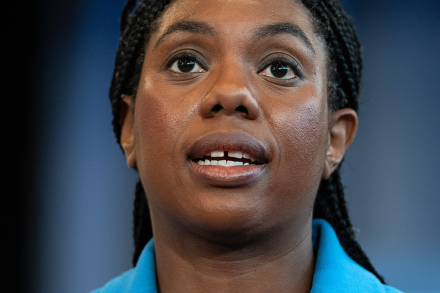
Market choice has long been an article of faith in the Conservative party. But the Tories are less keen on competition when it comes to their own fate. Traditionally, the party’s historic market share ensured that, after some time in opposition, the pendulum eventually swung back their way. That rule no longer holds true. This month’s local elections offered a painful case study in consumer choice. With five serious parties on offer, just 15 per cent of voters chose to back the Conservatives. Polls suggest that, in a general election, the onetime ‘natural party of government’ would be reduced to barely two dozen seats. ‘Existential’ is the word favoured by many Tories to describe their party’s plight. Inevitably, some want to ‘sack the management’.

Is Badenoch getting better, or is Starmer getting worse?

From our UK edition

12 min listen

Prime Minister’s Questions today, and there was lots on the agenda. It is often a fool’s game to guess what the leader of the opposition will lead on, but today she had a wide choice of ammunition – from unemployment to welfare to the government’s new stance on migration to the war in Gaza. Kemi Badenoch looked assured when holding Keir Starmer to account on the Chancellor’s ‘jobs tax’ and on funding for children’s hospices. But can we attribute her performance to growing confidence in the role – or is the news just getting worse for Keir Starmer?

The changing face of Nigel Farage

From our UK edition

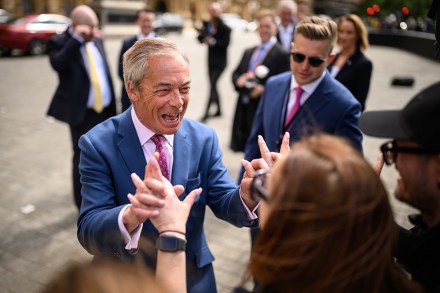
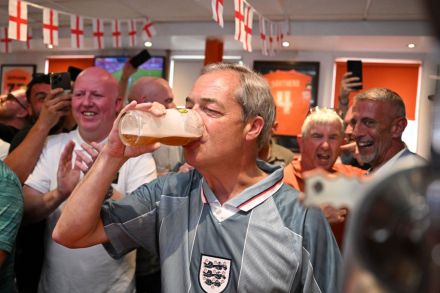
On Monday night, a hundred Reform staff and donors met at a Marylebone pub to toast the local election results. A jubilant Nigel Farage addressed his troops, who ran up a five-figure bill. They had good reason to celebrate. With 30 per cent of the vote, Reform crushed Labour (20 per cent) and the Tories (15 per cent). They won 677 wards, ten councils and a fifth MP in the Runcorn by-election. Certain results were particularly satisfying: in Ed Miliband’s Doncaster North, Reform won more seats than any other party. Three speeches defined Reform’s campaign. First, there was the Birmingham rally at the end of March. Farage arrived on a JCB digger, presenting himself as a ‘Mr Fixit’ for the woes of ‘Broken Britain’.

St George’s Day: who is the most patriotic leader?

From our UK edition

15 min listen

Happy St George’s Day! To celebrate, we thought we would discuss who is the most patriotic political leader — and why some struggle to communicate their love of country. Keir Starmer declared in an interview with the Mirror this morning that Labour is ‘the patriotic party’. This follows a more concerted effort from those within the party to become more comfortable with the flag. But is Keir Starmer actually a patriot? How will the ‘battle of the Union Jack’ play out at the local elections? And does Reform have a point to prove when it comes to patriotism? Oscar Edmondson speaks to James Heale and Claire Ainsley, former executive director of policy for the Labour party, now at the Progressive Policy Institute. Produced by Oscar Edmondson.

The Deborah Mattinson Edition

From our UK edition

29 min listen

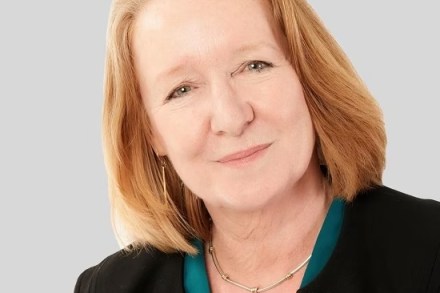
Deborah Mattinson joined the House of Lords as a Labour peer in February. Her involvement in politics began when she worked alongside Peter Mandelson and Philip Gould to create Labour’s Shadow Communications Agency for Neil Kinnock. In 1992 she co-founded Opinion Leader Research, and she went on to advise Tony Blair ahead of the 1997 election and later became Gordon Brown’s chief pollster. In 2021 she was appointed Director of Strategy for Keir Starmer, a position she held until stepping down following last year’s landslide victory. On the podcast, Deborah tells Katy Balls about growing up as a Labour supporter with a father active in local Tory politics, the work hard/play hard culture of advertising in the 1980s and how to decipher what voters really think during focus groups.

Reform vs Labour: who’ll win the battle for the north?

From our UK edition

When MPs and peers were recalled to parliament for an emergency debate on renationalising British Steel, one man was the talk of the terrace: Nigel Farage. Out by the river, a Labour peer congratulated the Reform leader for ‘leading on everything’. After all, Farage had been in Scunthorpe days earlier calling for steel nationalisation.  Since I started covering British politics for The Spectator ten years and six prime ministers ago, there have been plenty of times when an insurgent party appeared to be on the rise. In 2015, the ascent of Ukip contributed to David Cameron’s decision to call a referendum on EU membership. Then in 2019, the success of the Brexit party in the European elections spurred many Tories into backing Boris Johnson for leader.

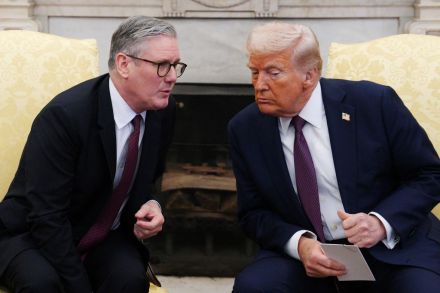
How Starmer plans to weather Trump’s storm

From our UK edition

Since Donald Trump returned to the White House, Keir Starmer has struggled to set the agenda. The latest attempt came with the Spring Statement, but events soon overtook that when the US President announced his mass tariffs, which could derail Rachel Reeves’s spending plans. It is not yet 100 days into Trump’s secondterm, and ministers have already had to adjust rapidly to the new normal. Even without the unpredictability of decisions from the White House, government communications have proved challenging. The long-standing No. 10 director of communications, Matthew Doyle, recently stepped down. At a recent away day, his successor James Lyons spoke on the importance of moving to digital platforms such as social media and podcasts as well as traditional outlets.

What could a US-UK trade deal look like?

From our UK edition

13 min listen

Trump’s levies have kicked in today: including an astonishing 102 per cent tariff on China – after it missed the deadline to withdraw its retaliatory tariffs – and 20 per cent on the European Union. The combination of these explosive tariffs has sent markets sliding once again. This follows a slight recovery in the markets yesterday after suggestions by some in the Trump administration that they may be willing to negotiate the tariffs down. In the UK, the economic uncertainty has ‘turbocharged’ plans which have been whispered around Westminster for some time, including nationalising the British steel industry. Attention has also turned towards a trade deal with the US, and the complexion that might take in a post-tariff landscape and in the context of the EU reset.

What happened at the Liaison Committee?

From our UK edition

16 min listen

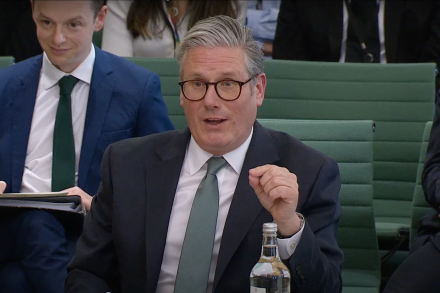
Parliament is about to go into recess for the Easter holiday and so – as is customary – Keir Starmer sat in front of the Liaison Committee this afternoon, where he was grilled on topics including tariffs, defence and welfare. This comes on the day when there has been a momentary reprieve in the markets, which experienced a modest bounce – most likely as a result of suggestions from Trump that he is willing to negotiate with China. Markets seem to have priced in that these tariffs could be negotiated down, but that is of course a big 'if'. The question remains for Keir Starmer: what more can he do to protect the UK against economic meltdown? And will he have to break his fiscal rules to do so? Oscar Edmondson speaks to Isabel Hardman and Michael Simmons.

Five years on, who is Keir Starmer?

From our UK edition

13 min listen

Today marks five years since Keir Starmer became leader of the Labour party. In that time, he has gradually purged Labour of its leftist wing and wrestled the party back to the centre, winning a historic majority in 2024. But, five years on, the question remains: what does Keir Starmer stand for? He came in as the acceptable face of Corbynism but looks more and more like a Conservative with each passing domestic policy announcement (take your pick: winter fuel, waging war with the size of the state, welfare cuts etc.). Internationally, it is a different story. Despite saying little on foreign policy in the build-up to the general election, he has been widely praised for his foreign policy and his steady hand when dealing with Trump.

Cruel Labour, the decline of sacred spaces & Clandon Park’s controversial restoration

From our UK edition

51 min listen

This week: Starmerism’s moral vacuum‘Governments need a mission, or they descend into reactive incoherence’ writes Michael Gove in this week’s cover piece. A Labour government, he argues, ‘cannot survive’ without a sense of purpose. The ‘failure of this government to make social justice its mission’ has led to a Spring Statement ‘that was at once hurried, incoherent and cruel – a fiscal drive-by shooting’.  Michael writes that Starmer wishes to emulate his hero – the post-war Prime Minister Clement Atlee, who founded the NHS and supported a fledgling NATO alliance. Yet, with policy driven by Treasury mandarins, the Labour project is in danger of drifting, as John Major’s premiership did.

Trump’s tariffs explained

From our UK edition

12 min listen

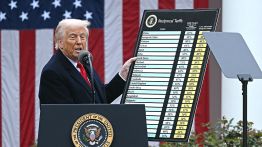
It's the day after America 'reclaimed it's destiny', or so Donald Trump says. The President announced a raft of 'reciprocal' new tariffs from the White House rose garden, including a 10% levy on the UK which – before it comes into effect on 5th April – the government hope to negotiate down.  Other countries have come off much worse. China, for example, will experience a 34 per cent ‘discounted reciprocal tariffs’, compared to the 67 per cent Trump claims China puts on US goods. The European Union will experience 20 per cent levies, compared to the 39 per cent Trump also says is put on US goods. ‘We’re a very kind people, we’re very kind,’ the President said of Americans. But ‘not so kind when you get ripped off’.

Labour needs a sense of social justice

From our UK edition

Clement Attlee, in the words of Winston Churchill, was a modest man with much to be modest about. Labour’s postwar premier has been invoked as a role model by Keir Starmer recently, in the context of Attlee’s support for Nato and robustness on defence. Starmer’s allies also argue that, like Attlee, he is an unshowy middle-England moderate who prefers quiet efficiency to ideological flamboyance. His biographer, the always perceptive Tom Baldwin, has declared: ‘There is no such thing as Starmerism.’ Nor, we are told, will there ever be. Which is exactly how, why and where this government is going wrong. A Tory government benefits from a sense of purpose; a Labour one cannot survive without one Movements – and Labour is nothing if not a movement – need direction.

Keir Starmer must look beyond adolescent politics

From our UK edition

An industry poll by the British Film Institute in 2000 to find Britain’s best television programme put Fawlty Towers first and Cathy Come Home second. The latter, Ken Loach’s bleak 1966 play about a woman’s downward descent through unemployment, homelessness and poverty, is about as far from John Cleese’s inimitable farce as can be conceived. Yet both made lasting impressions on viewers of very different kinds. Adolescence’s popularity is down to telling liberal England what it wants to hear, never mind its basis in reality Watched by a quarter of the population at the time, Cathy Come Home took an uncompromising approach to its subject and provoked wide reaction. Passers-by stopped its star Carol White in the street to hand her money, assuming she really was destitute.

The shape-shifting Labour party

From our UK edition

It is difficult to gauge who is the more discombobulated by the Labour government’s recent Damascene conversion to a political viewpoint roughly approximating to common sense – the Labour left, Reform or the Tory right. It is equally difficult to believe that the current administration is the same one which took office on 4 July last year, so wildly different is its apparent ideological viewpoint. You will remember Keir Starmer’s first 100 days without much affection, I suspect.

Is Keir Starmer a Tory?

From our UK edition

19 min listen

Slashing the winter fuel allowance, maintaining the two child benefit cap, cutting international aid, cutting the civil service, axing NHS bureaucracy, possibly slashing welfare expenditure... you'd be forgiven for thinking the Conservatives were in power. But no, these are all policies pursued by the current Labour government. So on today's Saturday Shots Cindy Yu asks Michael Gove and James Heale, is Keir Starmer a Tory? While Michael admits to giving Starmer a 'painful' two cheers, he does say there is historic precedent for Labour governments enacting right-leaning measures: from Jim Callaghan's migration policies to the economic ones of Ramsay MacDonald. How has Starmer got away with it? And what does his premiership of pragmatism tell us about the future direction of Labour?

‘I had two jobs: to run the country and to survive’: an interview with President Trump

From the moment you enter Donald J. Trump’s Oval Office, you are surrounded, not by staff or Secret Service, but by presidents. In his second term, he has chosen to envelop himself in Americana to an unprecedented degree. He faces Franklin D. Roosevelt whenever he sits at his desk. Looking back are Teddy Roosevelt, Lincoln, McKinley, Polk, Jackson, Jefferson, and alone among them as a non-president, Franklin. Ronald Reagan looks over his shoulder for every decision he makes. “We took them out of the vaults. We have incredible vaults of things,” he tells me. “They have 3,900 paintings.” It’s a roster of the greatest American leaders assembled in an oval around him in their most sterling depictions. They serve as motivation.

Starmer’s next target: his MPs

From our UK edition

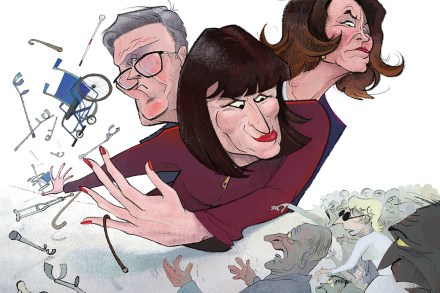
Labour MPs these days are experiencing whiplash. When in opposition, the party attacked the Tories’ proposed benefits cuts for ‘effectively turning on the poorest in our society’. Now, Keir Starmer plans to drive through £6 billion in welfare cuts of his own. Labour ministers previously spent much of their time scolding the government for showing insufficient respect towards civil servants. Now, Pat McFadden, Chancellor of the Duchy of Lancaster, has launched a crackdown on poor performers. Since the start of Starmer’s premiership, ministers have announced 27 new quangos – yet this week the Prime Minister scrapped one in a signal of intent, telling his cabinet they cannot do what the Tories did and hide behind regulators to avoid hard decisions.