Keir starmer

Keir Starmer has one card left to play

As calls for Sir Keir Starmer’s head grow ever louder among Labour MPs, the British Prime Minister is digging his heels in. He has one more card left to play: divide and conquer. While scores of backbenchers are desperate for change at the top, they are completely split on the question of who should take over. Those on the Labour right who have deserted Sir Keir are rallying behind Wes Streeting. The soft left are desperate for the return of Andy Burnham but, short of that, could support bids from Angela Rayner or Ed Miliband. This lack of any consensus works to Starmer’s advantage.

starmer

Starmer says put up or shut up

From our UK edition

13 min listen

The Prime Minister is digging his heels in. Keir Starmer has told his cabinet that he is not going anywhere, despite a growing list of MPs calling for him to go. At 9.30 a.m., Starmer was greeted by his senior ministers, many of whom now believe the game is up. So is this his ‘put up or shut up’ moment? Will anyone move today – and if they do, what happens next? Tim Shipman and James Heale join Noa Hoffman to assess Starmer’s fight for survival, the mood inside Labour, and where we go from here.

18 ways to save your political career

From our UK edition

Dear wannabe leaders of Britain. What a lot of you there are! I’ve been writing about leadership and the craft of politics for 25 years and I’m sick of watching the same mistakes repeated. I’m keen to help. So listen up Nigel, Kemi, Zack, Ed, Ed, Andy, Angela and Wes – and you Keir, it’s never too late to learn. 1) TL;DR: If you have no time for impertinent journalists, here’s the executive summary. You need a plan, plus strategy and tactics to deliver it. You need a narrative to explain it to voters. You need the charisma and application to take your party, the civil service and the country with you. And you need to build a team to do the bits that you cannot accomplish alone.

Is Britain ready for Chancellor Ed Miliband?

When Morgan McSweeney concluded his evidence to the Foreign Affairs Select Committee about the Peter Mandelson affair, a senior Labour figure remarked: “What really did we learn from all this? That Keir made a bad decision, wants someone else to blame and didn’t really know what was going on in his own government. Fancy that!” The fact that 14 Labour MPs voted to refer the Prime Minister to the Privileges Committee (the body which forced Boris Johnson from the political stage) – and a total of 53 recorded no vote in his defense – is far from a ringing endorsement of his leadership. But the significance of the Mandelson hearings has been misunderstood.

ed miliband

Is the country ready for Chancellor Ed Miliband?

When Morgan McSweeney concluded his evidence on Tuesday to the Foreign Affairs Select Committee about the Mandelson affair, a senior Labour figure remarked: ‘What really did we learn from all this? That Keir made a bad decision, wants someone else to blame and didn’t really know what was going on in his own government. Fancy that!’ The fact that 14 Labour MPs voted to refer the Prime Minister to the Privileges Committee (the body which forced Boris Johnson from the political stage) – and a total of 53 recorded no vote in his defence – is far from a ringing endorsement of his leadership. But the significance of the Mandelson hearings has been misunderstood.

Portrait of the week: Starmer avoids ethics inquiry, Birmingham’s bin strikes end and Trump is targeted

From our UK edition

Home The House of Commons voted 335 to 223 against a Conservative-led motion to refer Sir Keir Starmer, the Prime Minister, to the Privileges Committee over his claims about the vetting of Lord Mandelson; 14 Labour MPs voted for the motion. Morgan McSweeney, the Prime Minister’s former chief of staff, who had recommended the appointment of Lord Mandelson, told the Foreign Affairs Committee that No. 10 had wanted Lord Mandelson in post ‘quickly’ but that officials were never asked to ‘skip steps’. Sir Philip Barton, the former permanent under-secretary at the Foreign Office, told the committee he was ‘presented with a decision’ made by the PM and ‘told to get on with it’.

‘It’s worse than during the worst of Boris’: how the civil service turned against Starmer

From our UK edition

Somewhere in the vast array of documents the Cabinet Office has gathered on the appointment of Peter Mandelson as the UK’s ambassador in Washington, there is a text message which Keir Starmer sent the night before he made the announcement. ‘You’ll be brilliant in challenging circumstances,’ he told Mandelson. ‘And after many years of our discussions, we get to work together side by side. I really look forward to that.’ The message was leaked after one of Starmer’s most difficult weeks in charge, a week which senior civil servants believe proves, once and for all, that the Prime Minister himself will never be brilliant in challenging circumstances.

Portrait of the week: Olly Robbins is sacked, inflation rises and the Strait of Hormuz is (briefly) opened 

From our UK edition

Home Sir Keir Starmer tried to explain himself to parliament after Sir Olly Robbins was sacked as permanent under-secretary of state at the Foreign Office, its chief civil servant. Sir Keir complained that as Prime Minister he had not been told that Lord Mandelson had failed to satisfy UK Security Vetting when he took up his post as ambassador to Washington. Sir Keir said that he had not been told before 14 April. In the Commons he said: ‘I did not mislead the House.’ Even before Lord Mandelson’s appointment, the Cabinet Office had compiled a due diligence report, given to the Prime Minister, which cited concerns about the peer’s ties to China and Russia. Zarah Sultana, the Your Party MP, had to leave the Commons chamber after saying: ‘The Prime Minister is a bare-faced liar.

Why Trump hasn’t stuck the knife into Starmer

As public messages of support go, it scored pretty low on the conviction-o-meter. “Prime Minister Keir Starmer of the United Kingdom acknowledged that he ‘exercised wrong judgment’ when he chose his Ambassador to Washington,” said President Donald Trump on Truth Social last night. “I agree, he was a really bad pick. Plenty of time to recover, however! President DJT.” Uh oh. None of the trademark capitalization, which suggests Donald’s heart isn’t really in it. Some aide must have just spoken to him about Keir Starmer’s Peter Mandelson crisis, or perhaps a news story came to his attention.

starmer

Starmer squirms on Mandelson debacle

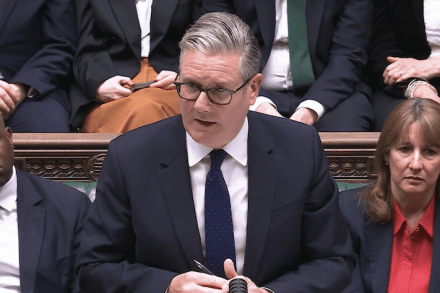
Keir Starmer is enduring perhaps his most uncomfortable afternoon in the House Commons since being elected Britain's Prime Minister. He promised in his opening remarks that he would set out the full timeline of Peter Mandelson’s appointment as US ambassador, which ended in Olly Robbins’s dismissal last Thursday. Carefully worded and legally precise, his statement contained another revelation: Chris Wormald, the ex-cabinet secretary, was not told Mandelson had failed the UK Security Vetting interview (UKSV), despite leading an official review. Starmer’s tone was one of scorned hurt and anger. He remarked repeatedly how various facts of the case were "staggering.

keir starmer

Britain’s ‘drone gap’ makes it vulnerable

When John Healey was asked, onstage at the London Defence Conference, whether the armed forces were “ready” for war, the Defence Secretary replied: “Yes.” One of those present says: “That was greeted with near incredulity in the room.” Another attendee compared Healey’s plight to someone “playing French cricket,” with critics from all sides hurling balls at his ankles while he tried to bat them away. “You can’t score any runs in French cricket.” George Robertson, Healey’s most respected Labour predecessor and a former secretary general of NATO, was not present; he was in Scotland celebrating his 80th birthday. But he returned to give a withering interview to the FT and a speech.

britain drone
Mandelson latest: can we trust Starmer's ignorance?

Mandelson latest: can we trust Starmer’s ignorance?

From our UK edition

20 min listen

The Peter Mandelson scandal just got more scandalous. Last night the story broke that Mandeslon actually failed his enhanced vetting before being made US Ambassador. Number 10 are pleading ignorance. Their defence sits on the suggestion that the Foreign Office’s most senior official unilaterally decided to ignore the findings and – what’s more – that he told no one. It’s a stretch and, as Tim Shipman says MPs' 'fury is overwhelming'. There are a number of outstanding questions, including: what could possibly be in it for the FCDO to withhold this key information? Now Sir Olly Robbins has been sacked, will he go public? Did Starmer knowingly mislead parliament when he said that the vetting process was followed?

What’s Britain’s place in the post-Iran world order?

From our UK edition

Midway through James Joyce’s Ulysses, the character J.J. O’Molloytips his hat to ‘Our watchful friend, the Skibbereen Eagle’, a playful reference to an obscure provincial newspaper in the west of Ireland. Under an ambitious new editor, the Skibbereen Eagle had risen fleetingly to prominence in 1898 for its robust response to Tsar Nicholas II’s attempts to gain a warm-water port for the Russian navy by encroaching on China’s Yellow Sea. As its editorial warned in a chiding tone, the Eagle would ‘keep its eye on the Emperor of Russia and all such despotic enemies – whether at home or abroad – of human progression and man’s natural rights’.

Is Kanye West the David Bowie of his age? 

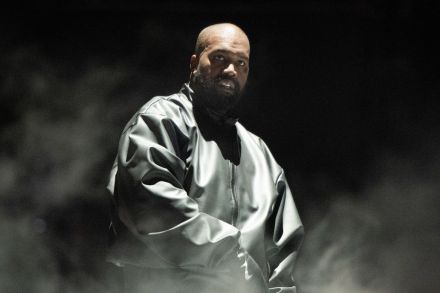
Kanye "Ye" West has been barred from appearing at London’s Wireless Festival by dint of having his temporary visa withdrawn. The move has generally been met with approval, save by those disappointed fans of his music whose pre-ordered tickets will now be refunded. “Kanye West should never have been invited to headline Wireless," said Prime Minister Keir Starmer. "This government stands firmly with the Jewish community, and we will not stop in our fight to confront and defeat the poison of antisemitism." Fair enough, many might say. Last year Ye released a single entitled "HH" (Heil Hitler) and declared himself a Nazi on social media. Ye has now made a series of groveling public apologies.

kanye west

Hero voters: who should Labour target? with Chris Curtis MP & Deborah Mattinson

From our UK edition

30 min listen

Labour won the 2024 general election in part by focusing on ‘hero voters’ – so called because they may have voted Labour in the past but felt the party had abandoned them. Now they risk losing them again – so how does Labour maintain their support? Chris Curtis, Labour MP for Milton Keynes North and former pollster, and Deborah Mattinson, Labour peer and polling guru, join Tim Shipman to talk about how to appeal to this set of voters. Research suggests that voters from this group that are socially liberal are switching to the Greens, while the socially conservative voters are switching to Reform. What binds both groups though is a sense of economic insecurity, and both Chris and Deborah talk how Labour can build a strategy around appealing to their sense of fairness.

Hero voters: who should Labour target? with Chris Curtis MP & Deborah Mattinson

How bad could the energy price crisis get in Britain?

The energy price surge caused by war in the Middle East has sent shockwaves through Westminster. It has pushed up inflation and the cost of borrowing, causing panic in the cabinet and the recognition that government intervention could be needed on a vast scale to support the cost of living. The UK Prime Minister told a private audience: "The assumption that the growth of the developed countries can proceed steadily on the basis of cheap energy has been shattered almost overnight." He further observed: "The problem is not simply one of inflation. It is the whole structure of the economy." In the Treasury there is something approaching a siege mentality. The Chancellor has "to spend [her] time firefighting.

energy crisis

Anas Sarwar: why I said Starmer should go – and what I told Wes Streeting

From our UK edition

50 min listen

One month on from calling for Keir Starmer's resignation, Anas Sarwar – the leader of Scottish Labour – joins Michael Gove to reflect on British politics ahead of the May elections. Does he stand by his call for the Prime Minister to go? And, having spoken to Wes Streeting the weekend before, what advice did his close ally give? The May local and regional elections promise to be the 'fiercest battle' for Scotland's future. Yet after over two decades in power, what does he make of polling that suggests the SNP will win – again? Is Reform posing a threat to Labour? And how can Scottish Labour offer a realistic alternative? Plus: which Westminster cabinet minister would he like to see campaign in Scotland – and who are his political heroes?

Iran’s strike exposes the danger of the Chagos handover

In a sharp escalation, Iran attempted to strike the joint UK-US base Diego Garcia with two intermediate-range ballistic missiles. Both failed: one broke apart in flight and the other was targeted by an SM-3 interceptor from an American warship. The base was left untouched. The significance, however, lies less in the failure than in the fact that the attempt was made at all, which has expanded the scope of the existing conflict zone beyond all expectations. Diego Garcia forms part of the Chagos Archipelago – sovereign British territory – and is one of the most critical platforms for American power projection anywhere on earth.

Britain’s Miliband supremacy

Labour MPs who want Wes Streeting to be their leader have, apparently, one great fear. If their man triggers a contest, they are terrified it will lead to Ed Miliband entering the race to stop the Health Secretary – and coming out on top. A Miliband premiership would, they worry, be the death of Labour. I’ve got news for them: we are already governed by Ed Miliband. This is now his administration. And they, and the rest of us, had better get used to it. Keir Starmer is no longer really in charge of this government – if he ever really was. He is Prime Minister in name only. His foreign policy, at this time of war, is Ed Miliband’s. His economic policy, Ed Miliband’s. His Chancellor, his political positioning, his very quest for meaning. All. Ed. Miliband.

miliband

Is ‘international law’ practical?

The acceleration of history and the increasingly rapid advancement of the postmodern project, aimed at the transcendence of humanity by itself, makes consideration of the fundamentals of the progressive project necessary, but also inevitable. Among them is its dedication to the hectic search for hitherto unsuspected “human rights” and their instant realization in the name of “natural law,” a subject the French historian and political philosopher Pierre Manent has studied in depth and brilliantly illuminated in a number of works, most recently Natural Law and Human Rights: Toward a Recovery of Practical Reason.