Julian assange

PMQs sketch: Cameron’s new tactic to steal Corbyn’s mascot

From our UK edition

Housing is Jeremy Corbyn’s second favourite subject (after drainage lids). Back in the 1970s the grateful proletariat hailed his long years of service as Commissar For Council Accommodation in the People’s Republic of Haringey. At his retirement, chanting school-girls tied garlands of lilies around his brows and presented him with a commemorative Rent Book in a frame. Marching bands played. Fireworks fizzed and thundered. Private landlords were burned in effigy. What Corbyn learned from his housing career was to grind his enemies into submission with tedious blasts of numbers. But Cameron likes a good statistic himself and when Corbyn accused the government of building one new council house for every eight sold the PM quoted Labour’s record.

Today in audio: Julian Assange vs Philip Hammond

From our UK edition

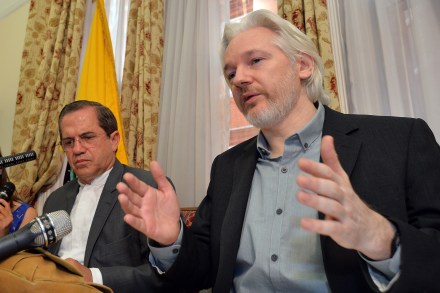
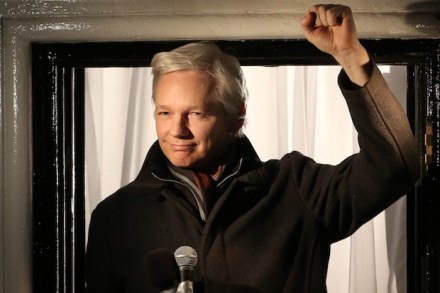
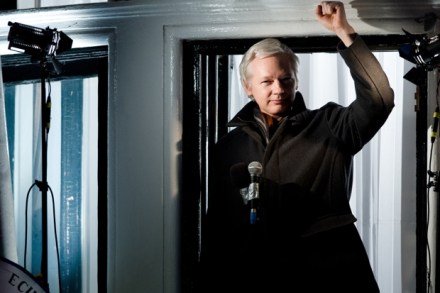
Haven’t had a chance to follow the day’s political events and interviews? Then don’t worry: here, The Spectator, brings you the best of today’s audio clips in one place for you to listen to. Philip Hammond hit out at the UN after a panel ruled that Wikileaks founder Julian Assange was being 'arbitrarily detained' and should get compensation. The Foreign Secretary said Assange is a 'fugitive' and he called the UN verdict 'flawed': Julian Assange hit back at a press conference saying that Hammond's comments were 'ridiculous'. He also warned the UK there would be 'consequences' to ignoring the UN panel verdict: David Cameron has been on a charm offensive in Europe as he attempts to persuade fellow leaders to deliver on his draft deal.

Does the UN not realise that Julian Assange has detained himself?

From our UK edition

Even by the high standards of the UN, its report on Julian Assange is ridiculous bordering on comic. The BBC is reporting that the UN Working Group on Arbitrary Detention will find that he has been ‘unlawfully detained’. This is patently absurd as the only person detaining Assange is Assange himself. He is free to leave the Ecuadorian embassy at any time. Now, if he did so, he would be arrested. But staying in hiding to avoid arrest is completely different from being detained by the state. But the UN panel seems to have missed this. The Assange spin machine has been in full operation today, with the BBC blasting out that he would accept arrest if the UN report found against him.

Curiosities for Christmas

From our UK edition

There is not, sadly, a dedicated Trivia Books section in your local Waterstones, although at this time of year there really should be. But what would we call it? Trivia sounds too trivial. Loo Books sounds too lavatorial. Books for the Man or Woman who Has Everything, Except this Book is probably closest, but might need editing. Whatever we decide to call them, there is an unusually fine crop this year, and several are historically inclined. Gimson’s Kings and Queens (Square Peg, £10.99) is subtitled Brief Lives of the Monarchs since 1066, and gives us exactly that, in Andrew Gimson’s characteristically elegant and entertaining prose. ‘There are many admirable biographies of individual monarchs.

Portrait of the week | 15 October 2015

From our UK edition

Home Two groups were launched, one in favour of remaining in the European Union and the other in favour of leaving. Vote Leave drew support from Conservatives for Britain, from Labour Leave and from Business for Britain. Lord Rose, chairman of the new group Britain Stronger in Europe, said: ‘To claim that the patriotic course for Britain is to retreat, withdraw and become inward-looking is to misunderstand who we are as a nation.’ The Metropolitan Police withdrew officers stationed outside the Ecuadorean embassy in London where Julian Assange sought refuge in 2012, a watch that had cost £12.6 million. Marlon James from Jamaica won the Man Booker Prize for A Brief History of Seven Killings, based on an attempt to assassinate Bob Marley in the 1970s.

A rollicking satire on the way we live now

From our UK edition

Jonathan Franzen’s latest novel, Purity, comes with great expectations. Its author’s awareness of this fact is signalled by a series of lampoons of writers expected to produce ‘big books’, writers named Jonathan and an assortment of other self-referential gags, but also the fact that its eponymous heroine, Purity Tyler, is nicknamed Pip. This Pip’s expectations are played off against those of Franzen’s readers: she won’t get what she expects, of course, any more than Dickens’s original Pip did. But to a great extent, our expectations will be met: this is a ‘big book’, a rollicking, sharply observed contemporary satire of family life and cultural politics.

The end of secrecy

From our UK edition

Gordon Corera, best known as the security correspondent for BBC News, somehow finds time to write authoritative, well-researched and readable books on intelligence. Here he explores the evolution of computers from what used to be called signals intelligence to their transforming role in today’s intelligence world. The result is an informative, balanced and revealing survey of the field in which, I suspect, most experts will find something new. He starts with an event that took place 101 years ago next month, when the British dredger Alert set off from Dover in the early hours to cut the German undersea telegraph cables.

Snowden now faces the traitor’s fate – worship from hipsters and Hollywood

From our UK edition

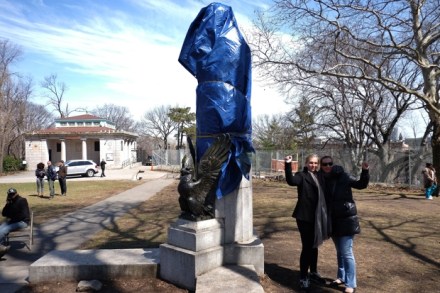
New York Brooklyn is the hipster heaven of New York, which is perhaps why it was there that a bust of Edward Snowden was unveiled yesterday.  Not that it stayed long.  The bust of the former National Security Agency contractor was put on a pedestal sometime on Monday with the word ‘Snowden’ glued on the base at the Prison Ship Martyrs' Monument at Fort Greene Park.  It was taken down a few hours later by parks and recreation employees. I don’t want to read too much into this, but the brief deification and bringing down of Snowden’s image does seem apposite.

It’s not up to Theresa May to define ‘British values’

From our UK edition

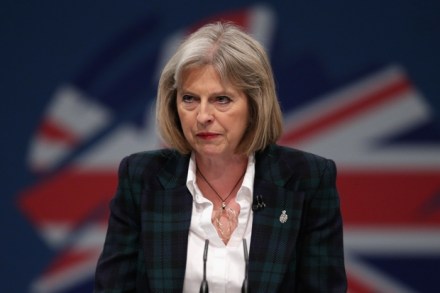
A month after the Magna-Carta-mangling Counter-Terrorism and Security Bill crept onto the statue book, leaked documents seen by the Daily Telegraph over the weekend reveal Home Office proposals which are likely to have significant, if apparently unintended, consequences for free speech in this country. I haven’t seen the full strategy papers myself, and nor will you. They have been deemed too ‘sensitive’ ever to face public scrutiny, and only a two-page executive summary is due to be published. At this stage, it is worth considering the few choice quotes the Telegraph have dutifully passed on.

Let’s all become Japanese for a while

From our UK edition

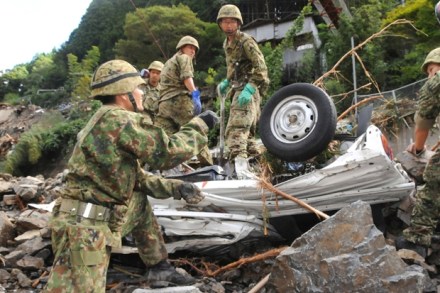
This is a good time to write about a nation’s resilience in the face of calamity. I am referring to the stoic discipline with which the Japanese bore hardship and the death of 15,000 people in March 2011 following a nine-magnitude earthquake, the strongest ever known to have hit Japan. I can remember the TV coverage as if it were yesterday. Very young and very old Japanese formed a long orderly line for disaster supplies. There was no looting whatsoever as there had been in Los Angeles or in Mexico City, no weeping on camera so that the world would send more funds, just plucky resolve (gaman in Japanese) and ganbaru (to endure with pride). As anyone who is familiar with Japan knows, tenacity is highly celebrated both as an individual and a collective trait.

Dame Vivienne Westwood and model Alice Dellal told to frack off by Guido Fawkes gang

From our UK edition

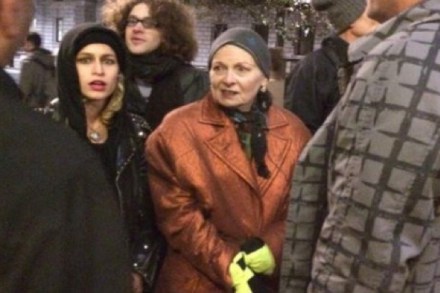
Mr S was in one of Westminster's finest watering holes last night to toast Guy Fawkes. And who better to do it with than his old muckers from Guido Fawkes, who had whacked a hefty wodge of cash behind the bar in honour of their patron saint. The guest list was terribly exclusive: Jo Johnson, Buzzfeed’s Jim Waterson, and various libertarians from the Adam Smith Institute made the cut, but Dame Vivienne Westwood and the heiress model Alice Dellal were turned away. The pair disappeared off into the night to join the gaggle of Anonymous protesters getting their hemp knickers in a twist about fracking/Julian Assange/capitalism.

Julian Assange is a narcissist and a nut — and if America comes for him we should take his side

From our UK edition

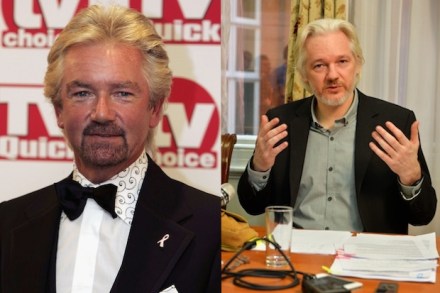
Poor Julian Assange. Call me a contrarian but I’m genuinely starting to feel sorry for the guy. He’s just made such a mess of his life, hasn’t he? And with such promise. Only a few short years ago he was the world’s most prominent anti-everything activist, with hair like an indie guitarist, feted and worshipped wherever you might find hot Scandinavian revolutionaries, smug old men who work for ‘theguardian’ and Jemima Khan. Now he’s a hermit with hair like Noel Edmonds who lives in a cupboard. It’s a hell of a fall. Most crushingly, he’s become a figure of fun. Perhaps you noticed him holding a press conference last week, to announce that he might soon leave the Ecuadorian embassy but probably wouldn’t, or something.

Julian Assange is a narcissist and a nut. But if America comes for him we should take his side

From our UK edition

This is an extract from Hugo Rifkind's column in this week's Spectator, out on Thursday Poor Julian Assange. Call me a contrarian but I’m genuinely starting to feel sorry for the guy. He’s just made such a mess of his life, hasn’t he? And with such promise. Only a few short years ago he was the world’s most prominent anti-everything activist, with hair like an indie guitarist, feted and worshipped wherever you might find hot Scandinavian revolutionaries, smug old men who work for ‘theguardian’ and Jemima Khan. Now he’s a hermit with hair like Noel Edmonds who lives in a cupboard. It’s a hell of a fall. Most crushingly, he’s become a figure of fun.

Dick-swinging filmmakers like Ken Loach constantly write real women and our struggles out of history

From our UK edition

I hadn’t seen a Ken Loach film in years because I got sick of his schmaltzy sexism but yesterday decided to give him another try and popped along to see his latest, Jimmy’s Hall. Set in 1930s Ireland, it tells the true-life story of self-educated, community-serving James Gralton, who enraged the Catholic church and the local land owners by setting up a community centre that served as a meeting place for ideas and, God forbid, dancing. Perhaps he's returned to form, I thought on my way to the cinema, and produced something gutsy like Cathy Come Home or Kes. These story lines usually warm my cynical old heart, so I approached Jimmy’s Hall with a hopeful spring in my step.

So is Moro a Tory restaurant now?

From our UK edition

Moro (‘moorish’ or ‘sexist’) is a Spanish restaurant on Exmouth Market, near the bones of the old Guardian and Observer building on Farringdon Road. I don’t mind telling Spectator readers (‘you people’) that I once kissed the bricks of this building, quite seriously, like Jews kiss the tarmac at Ben Gurion Airport. (At least that is the story; but I have never seen anyone do it. Kiss some dirty tarmac. What for?) Moro is distinguished as the restaurant in which Guardian journalists first realised Julian Assange is mad. He stood up near an olive and announced he didn’t care if the leaks led informants to be murdered, which is a bad look for a revolutionary, until you really think about it. Then I imagine he ate an olive.

Who is more powerful: a backbench MP or Alan Rusbridger?

From our UK edition

Well Alan Rusbridger has certainly received a glowing review from his own newspaper for his appearance in Parliament yesterday. In a moving paen, Roy Greenslade today describes how his boss ‘was able to bat away MPs' concerns without raising a sweat, despite bluster from a couple of them who sought to suggest he might be guilty of breaching the Terrorism Act.’ Which, if it is true, says more about the MPs than it does about Rusbridger. As it happens, I don’t know why some of the Select Committee MPs went into some of the cul-de-sacs they did. Why the ‘outing’ of the sexuality of some people working at GCHQ should have been such a prominent issue for Michael Ellis I do not know.

The left might not believe it, but The Guardian was morally wrong

From our UK edition

The Guardian seems to be hurt that larger selling Fleet Street newspapers (ie almost all of them) have not rallied to its side since Andrew Parker, the boss of MI5, stuck the boot in. Parker eviscerated the North London local paper for publishing material stolen by Edward Snowden, which he said had given a ‘gift’ to terrorists lurking within our midst. It amounted to, he said, the ‘greatest damage to western security in history’ and was ‘hugely harmful’. The Grauniad cheerfully published various details relating to our own information gathering centre, GCHQ, without giving a monkey’s as to the possible ramifications. Of course, it did the same with the indiscriminate screeds of data purloined by that other self-serving narcissist, Julian Assange.

Four good reasons not to watch The Fifth Estate

From our UK edition

Just how interesting you find The Fifth Estate may entirely depend on how interested you are in the whistle-blowing site WikiLeaks and its founder Julian Assange, in the first instance. This does not do what Senna did, for example, or what The Social Network did, and grip you in the places you didn’t know you could be gripped with a subject matter you’d no idea could be gripping. It’s not like that and I’ll tell you for why, in bullet points, because I’m just in a bullet-y mood today, and if you don’t use your bullet points — we are all allocated a certain amount at birth — they will start to atrophy and rot.

Rod Liddle: Is Hugh Grant a pawn of the mad metropolitan left?

From our UK edition

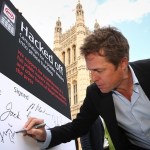
It is a peculiar alliance, when you think of it, which wishes to bring to an end 300 years of press freedom in this country. The handsome actor Hugh Grant would rather the press didn’t find out about him being ‘noshed’, as I believe the term has it, by a prostitute on some Los Angeles freeway. I can understand that, even if I do not think he has the right to make that call, given the image he adopts to sell himself to the public. The absolutist metro liberal left, meanwhile, would have no doubt -whatsoever who was the victim in that particular scenario: the nosher, not the noshee.

Alexander Chancellor: Why was Bradley Manning ever allowed to join the army?

From our UK edition

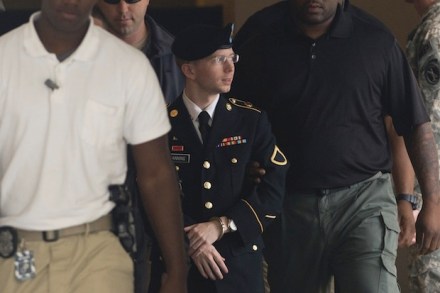
I have been puzzling about why the United States authorities ever thought that Bradley Manning, who was jailed last week for 35 years for leaking military secrets on an unprecedented scale, was a suitable person to join the army. His size alone might seem to be an impediment to effective military service, for he is only five feet, two inches tall and weights 105lbs (7.5 stone). But his stature, though tiny, nevertheless comes within the army’s prescribed limits. He would have had to be two inches shorter and a stone lighter to have been rejected on grounds of size or weight. (If he had weighed over ten stone, he would have been rejected as obese.