Journalism

Olivia Nuzzi and the return of ‘celebrity journalism’

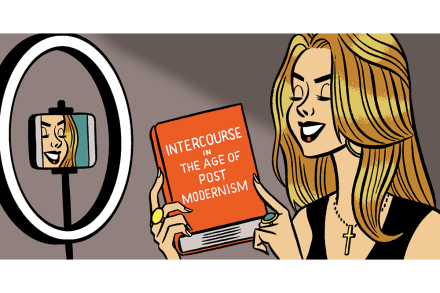
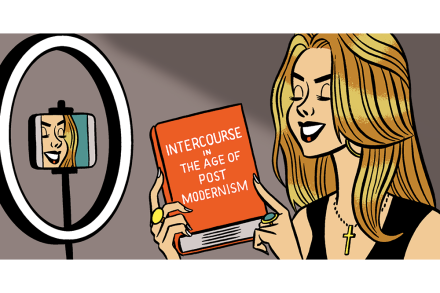
There are two competing ideas going around about “the old days” of journalism. In one, journalism was a sober public service, safeguarded by editors and ethics, untainted by the capital-A, capital-E Attention Economy. In the other, it was a racist, sexist boys’ club we managed to leave behind – even if only briefly, for long enough to support Teen Vogue’s politics vertical. (May they rest in peace.) The current pile-on concerning celebrity reporter Olivia Nuzzi, whose ex Ryan Lizza has revealed her affair with Robert F. Kennedy Jr., leans hard on the first fantasy. Once there were newsrooms; now there are “personal brands.” Once we had Walter Cronkite and Edward R. Murrow; now there is a woman in a Lana Del Rey cosplay Mustang with 1990s porn-star brows.

olivia nuzzi

Was the BBC’s Trump edit outrageously wrong?

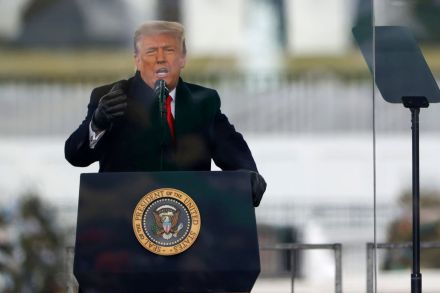
I should begin by making something clear. Splicing together two parts of a speech to give the impression they were one unbroken excerpt is a grave professional error, and would be viewed as such by any broadcaster in the business. The error would be egregious even if there were no suggestion it reinforced the accusation that Donald Trump was inciting riotous behavior, simply because what viewers thought they witnessed did not occur. There is no excusing what the BBC did to Donald Trump’s January 6, 2021 speech. Nobody in the senior ranks of the BBC is to blame for not knowing about this at the time; but once it did become known, an immediate and unconditional apology should have been made.

bbc

The battle for Anna Wintour’s Vogue empire

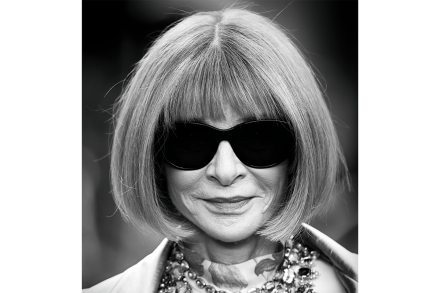
When Anna Wintour announced she was stepping down as editor-in-chief of Vogue in June, it appeared to be the end of the ice queen’s reign. Yet Wintour retained her large, chintzy corner office as well as her two other roles – as Condé Nast’s global chief content officer and Vogue’s global editorial director. If you looked closely, you might have seen a steely determination lurking behind her trademark sunglasses, the look of a generational editor intent on more power – and perhaps even revenge. The Condé Nast Union naively regarded Wintour’s move as that of a then 75-year-old drifting into quiet retirement, the old guard surrendering to youth.

De Blasio ‘imposter’ hoodwinks British paper

Of all the people to go as for Halloween, why would you choose Bill de Blasio, an undistinguished Mayor of New York and flame-out 2020 presidential candidate?  That’s a plausible explanation for the recent howler from the Times of London – Great Britain’s newspaper of record – whose veteran US correspondent Bevan Hurley quoted a man identifying himself as de Blasio on his misgivings about Zohran Mamdani. “While the ambition is admirable, the cost estimates – reportedly exceeding $7 billion annually – rest on optimistic assumptions... about eliminating waste and raising revenue through new taxes,” this total imposter told Mr. Hurley, with strange eloquence. “In my view, the math doesn’t hold up under scrutiny, and the political hurdles are substantial.

Bill de Blasio

Life in Chicago with ICE and the National Guard

Every day, Chicagoans outside the immediate areas where federal forces are deploying pick up fragments of what feels like an unfolding drama. Here’s a representative example: on the app NextDoor, the Chicago subreddit and in neighborhood Facebook groups, we watch cell-phone footage from Logan Square of smoke spreading through an intersection as a federal vehicle pulls away. Eventually, local outlets verify that a masked federal agent dropped canisters outside the Rico Fresh supermarket near Funston Elementary. It appears the air was filled with a chemical irritant, causing people to panic, and the vehicle departed.

national guard

On the front line of the tennis magazine wars

The issue appeared without fanfare at the 2017 US Open giftshop: a bright-red background offset an Impressionist yet unmistakable painting of Yannick Noah hitting a forehand, dreadlocks flaring. And with that, publisher Caitlin Thompson and editor-in-chief Dave Shaftel — an unlikely journalism pair who had met bonding over the poor state of tennis media — announced the launch of Racquet magazine, a journal that would explore the lifestyle, culture, history and zeitgeist behind modern tennis. In his first editor’s letter, Shaftel more or less laid out his and Thompson’s grand plans. “We don’t think of the game as a country club sport lumped in with golf and healthy only in the suburbs,” Shaftel wrote.

tennis

Welcome to the era of personality media

Several high-priced journalists have begun experimenting with selling themselves instead of a corporate media brand. Chris Cillizza and Mark Halperin have both started Substack ventures without having the branding back-up of CNN or Bloomberg. The pair follow in the footsteps of Megyn Kelly, who has been enormously successful in launching her own brand. Don Lemon has been confined to social media as well.Last year, Washington Post tech reporter Taylor Lorenz left corporate media behind to create her own outlet, although I would argue her audience and branding were separate from that of the Post.

CBS: from the Tiffany Network to the cheap discount bin

Once upon a time, in a land faraway, CBS was called the “Tiffany Network.” The network’s glittering jewel was its news division. This is the story of that division’s decline and fall, driven by partisan goals and leftist ideology. CBS News gained its fame in the 1940s, under the leadership of Edward R. Murrow, who not only painted a vivid word-picture of London during the Blitz, but also recruited the best broadcast journalists in the business. For decades, they formed the core of CBS News, first on radio and then on television. That tradition continued through the 1960s, when tens of millions of Americans turned to Walter Cronkite for an honest report of the day’s news. If the newscast included editorial comments, as it sometimes did, they were offered by Eric Sevareid.

CBS

Nellie Bowles critiques progressivism and the media that covers it

One of many fascinating things to be learned from Morning After the Revolution: Dispatches from the Wrong Side of History, by former New York Times correspondent Nellie Bowles, is the process by which someone gets canceled. I was of course familiar with the concept of cancel culture and figured it meant blackballing the wicked, but I’d never gotten a clear idea of how the thing was actually done. On the evidence of Bowles’s book, it means going on Twitter (OK, X) and posting derogatory tweets (X-pressions, whatever) about the offending party contemporaneously with others doing the same thing.

Bowles

The depressed press

There is a recurring type of incident that reflects the insularity of today’s media class: “Everyone was talking about it, but no one reported it.” There is no stronger indictment of contemporary media bias — it doesn’t arise just out of partisanship, nor out of opposition to reporting stories that displease our ruling class. It reaches the point of actively lying and covering up things any average American knows to be true. The most prominent recent example is found in the reaction to Special Counsel Robert Hur’s findings regarding Joe Biden’s hoarding of classified documents.

press fake news media consultancy journalism

Why the luxury life feels alien

My path to “media personality” (puke) and cultural commentator was not the usual one. I didn’t get a degree in Journalism or Broadcast Journalism or Communications. I didn’t go to Harvard or Columbia or Syracuse or Yale. In fact, I didn’t get a degree at all. This sets me apart from almost everyone in old-guard media — and were it not for new media and more importantly, social media, I would still probably be excluded by most of the establishment gatekeepers. Our mainstream media and late-night television rooms are dominated by people who went to Ivy League schools. The Harvard Lampoon guys. The Columbia School of Journalism kids.

luxury

Is Courier Newsroom really fighting fake news?

"We are not the Fox News of the left,” says Tara McGowan. “We are legitimate journalism.” We are sitting in the lobby bar of the Edition Hotel in Manhattan as McGowan tells me about Courier, the network of local-news outlets she founded in 2019 after a successful career in Democratic politics. Courier, in McGowan’s telling, “is a network of pro-democracy newsrooms across the country that reach passive news consumers where they are with good factual local news and reporting.” McGowan rejects allegations that Courier is a partisan political operation masquerading as a news outlet. Courier isn’t pro-Democratic Party, she says. It’s “pro-democracy.

courier

Washington Post reporter comes after citizen journalists

Most of the time, single posts on Twitter/X aren’t worth rebuking with an entire piece, but Washington Post media reporter Paul Farhi laid out an absolute banger this weekend when he lamented the idea of “citizen journalists” not being as professional, trained or equipped as he or his colleagues at major news outlets like the Post, New York Times or CNN. The idea that citizen journalists are not every bit as capable as journalists employed by these outlets (and others) is ridiculous and should be rebuffed.Farhi posted, “Someone invented the phrase ‘citizen journalism’ a few years ago to describe amateurs doing the work of pros. Yes, it occasionally works, but probably no more often than ‘citizen cop,’ ‘citizen attorney’ or ‘citizen soldier.

playbook

How Politico’s Playbook went from must-read to spam

Imagine one day you walk into your local watering hole and find out that all of your favorite bartenders have been hired away. In their place are new “cocktail specialists,” who are too busy flirting with one another to actually help customers. When they finally pour you a drink, they are awfully stingy with the booze. You briefly grieve over an overpriced vodka soda and then vow to never go back to that awful place. That’s more or less how I feel about Politico’s Playbook, the newsletter that was once the go-to morning read for Washingtonians. Reporters, lobbyists, government employees and politicians used to consume the daily newsletter before their first cup of coffee.

Nikole Hannah-Jones almost goes back to work

Nikole Hannah-Jones, author of the "1619 Project”, almost brought herself to lift a finger in defense of affirmative action — almost. She took to Twitter on Thursday to denounce the recent Supreme Court ruling striking down affirmative action. The anger was not strong enough, though, to make it worth picking up the pen. Hannah-Jones tweeted: “Was going to write an essay about it, but why even bother. (Also, Clarence Thomas is actually irrelevant here. So thanks but no thanks)” The Wall Street Journal’s new editor-in-chief has criticized the work ethic of the paper’s staff, but clearly the New York Times is not much better — Hannah-Jones wrote her last piece for the paper in February 2023, which itself was the first in two years.

europe nikole hannah-jones

‘Rent-a-pap’: inside the murky relationship between paparazzi and celebrities

The clamor of voices, the snapping of shutters, the dazing glare of bulb after bulb. A celebrity is whisked into a waiting car by a no-nonsense staffer, holding back the throng so they can make their escape. But just how easy is it to cause this scene? This week, I put on my most refined accent and dialed the number of a photo agency to find out.  “Hi, I’m a publicist and I have a new client looking to move from London to LA.” “What kind of client?” “She’s done a lot of reality TV and she’s a fashion influencer, mainly on TikTok. I’d prefer not to name her at this point.” “Ok. What are you looking for?” “I was — we were — hoping to create some buzz around the move, something that’ll get her into the papers.

paparazzi rent-a-pap

How VICE lost its cool

Last week I was at a writers' party in Miami, a city at the cutting edge of tech, finance, the creator economy and nightlife. Naturally the writers were talking about themselves. I asked someone what he would do if he didn’t have to worry about pageviews or proprietors or the other pressing concerns of the modern media. “Think VICE, when it was good,” he replied. To me, VICE when it was good is the girl’s bum on the fiction issue from 2008. It’s Michael Moynihan’s raspy voice reporting from South Korea. It’s the floppy hair of the one super-hot reporter I knew that smoked filterless roll-ups. VICE was where the cool kids at the back of the bus would grow up to write, the place that you would daydream about working for as a young reporter.

vice

Biden’s pre-written questions present a crisis of confidence

Joe Biden has held the fewest press conferences and interviews of any president since Ronald Reagan. And now we’ve learned that when he is allowed to take questions, they appear to be pre-selected, approved by White House staff and agreed to by reporters in the White House pool. Yesterday, while appearing alongside South Korean president Yoon Suk-yeol, Biden fielded a question from Courtney Subramanian of the Los Angeles Times. A photojournalist captured a notecard in Biden’s hand that showed an avatar of Subramanian, the words “Question 1” and a pre-written text of the question she asked the president.So how does a question from a White House reporter make it to the president of the United States’ hands before she even asks it?

The Katie Porter scandal everyone is ignoring

Katie Porter, darling of the liberal media, is having a rough couple of weeks. The California congresswoman has recently been accused of: firing an employee who allegedly gave her Covid; using racist language, and fostering a hostile workplace. These are explosive allegations to be levied against a high-profile Democrat, yet the general public would never have heard of any of them were it not for an anonymous Instagram account that did the job of the entire DC press corps. “Rep. Katie Porter fires staffer after both test positive for COVID,” Dear White Staffers posted last week, sharing Signal messages purporting to be from Porter’s now-former staffer where the congresswoman berated her employee. “Well you gave me Covid,” Porter’s messages read.

katie porter

Taylor Lorenz is a crybully

The Washington Post is one of America’s most revered news organizations. Once led by Katharine Graham, an era-defining media CEO, and edited by news legend Ben Bradlee, the Post is famous for the Watergate-era journalism of Bob Woodward and Carl Bernstein, which made it the nation’s political paper of record. Today, one of the Post’s most high-profile employees is an internet-culture reporter named Taylor Lorenz. Her involvement in numerous scandals involving reporting errors, frequent falsehoods, violations of journalistic norms and troubling online interactions call into question whether outlets like the Post can continue to function effectively as the Fourth Estate in the age of online clout-chasing and click-based news.

Lorenz