Jobs

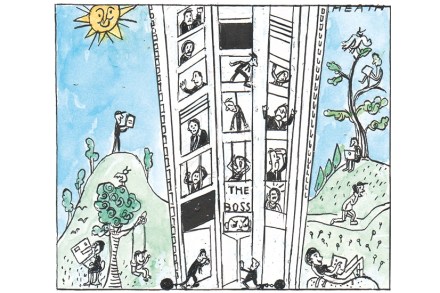
In the post-pandemic economy, the workers are the boss

From our UK edition

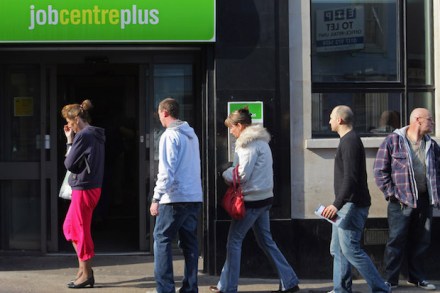
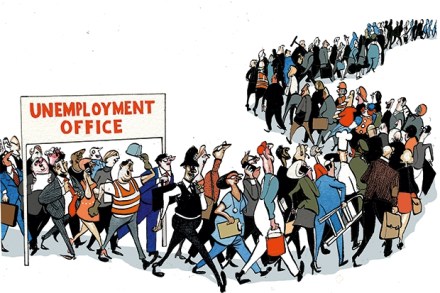
The world of coronomics continues to surprise us. Last summer forecasters warned of a wave of redundancies after the biggest economic crash in 300 years. Peak unemployment — spurred on by lockdowns — was expected to near 12 per cent, ushering in a new era of chronic financial pain and instability for millions of workers. But the Treasury’s furlough scheme has kept the headline figure down. Unemployment has hovered around 5 per cent, less than half the original prediction. The problem this summer isn’t mass unemployment but worker absenteeism. Job vacancies are now more than a third above pre-pandemic levels. There is no shortage of available work, only a shortage of those willing to do it. At the last count, 2.

The CV trick that guarantees you an interview

From our UK edition

Sometimes the opposite of a good idea is, as Niels Bohr said, another good idea. But the converse is also true. The opposite of a bad idea can easily be an even worse idea. Something like this seems to have happened with the expansion of British higher education. When I left university in 1988, if you wanted a reasonable first job, a degree from a Russell Group university was probably sufficient but not necessary. Now it seems to be necessary but not sufficient. The result is that a large number of perfectly capable but non-academic people are excluded from having a stab at many jobs, where for all we know they could be brilliant. But it has also led to the emergence of bizarre and wasteful forms of hyper-competitive behaviour among those who play the credentials game.

New day, same message: Biden again downplays jobs report

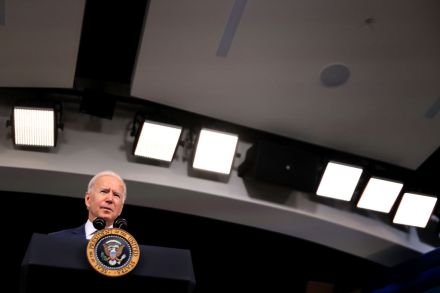
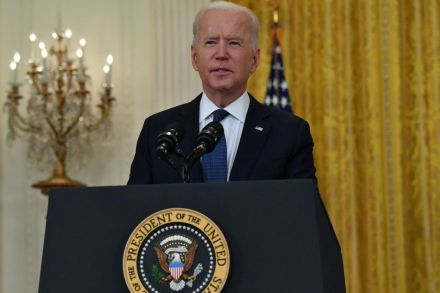
It wasn’t the exact same speech, but the words were familiar and the message was identical. President Biden addressed the disappointing April jobs report on Monday, just as he did on Friday. Economists had expected the economy to create as many as one million jobs in that month, but employers added just 266,000. Biden insists that everything will be all right. It takes time to recover from a once-in-a-century pandemic, he said, urging patience both days and no doubt sensing the political danger a slowing economy puts on his ambitious infrastructure package and other spending proposals. On Friday, the president asserted that his $1.9 trillion stimulus package was a long-term play: 'We never thought that after the first 50 or 60 days everything would be fine.

jobs

Is unemployment about to surge?

From our UK edition

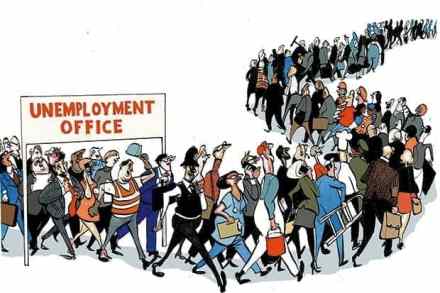
Despite experiencing the largest economic contraction in over 300 years, UK unemployment figures haven’t budged for months. The furlough scheme seems to have proved successful in shielding many jobs from getting the immediate axe, while those who were made redundant often didn’t appear in the official figures as they were not immediately looking for work. But today’s labour market overview from the ONS shows they have started to tick upward: unemployment is now at 4.1 per cent, 0.3 percentage points up from last year and 0.2 points up from the last quarter.  Breaking down the rate by age, it’s clear the young have suffered the most so far: unemployment for 16 to 24-year-olds is up 76,000 this year, now totalling over half a million.

Why unemployment figures haven’t budged

From our UK edition

Look past the headline statistics and you’ll see economic reality starting to infiltrate the labour market. Today’s employment figures from the Office for National Statistics mark very little movement from the previous quarter, with employment at 76.4 per cent (down 0.2 per cent on the previous quarter) and unemployment at 3.9 per cent (unchanged from the previous quarter, still hovering at a record-low level). Yet today also marks the biggest decrease in UK employment for a decade, since May 2009 in the wake of the financial crash. For many workers, being temporarily away from paid work is likely to become permanent How can this be?

Is the jobs cliff-edge fast approaching?

From our UK edition

As ‘Eat Out to Help Out’ kickstarts this month – giving customers 50 per cent off their meals (up to £10) at restaurants and pubs that have signed up to the scheme – the centrepiece of the Treasury’s Covid-19 policy package starts to wind down. From this month, employers will be asked to pay a small part of their employees’ wages: 5 per cent now, 10 per cent next month, and 20 per cent in October, before furlough officially comes to an end. A policy that was initially expected to have take-up from 10 per cent of businesses has become the crutch of more than one million businesses across the UK, as nearly ten million employees have been furloughed for some length of time over the past four months.

Why would anyone want to work from home?

From our UK edition

I’ve been having an office romance. Not with anyone in the office — but with the office itself. I’ve been going into the office every day during lockdown and I love everything about it: the bike ride from my Camden flat to work in Fitzrovia; the professional feeling that comes from being in a place dedicated to work; a chance to see more life than the limited activities that go on in your sitting room. I even like office furniture, the soft hum of the photocopier and the stationery box, with its neat cellophane packs of Post-it notes and extensive range of envelopes. But sadly, as an office-lover, I’m in a minority. The office, which has existed since the days of ancient Rome, is under threat. The Home Office has told its staff not to come back for a year.

The Spectator is growing – and hiring

From our UK edition

The Spectator is recruiting, which doesn’t happen often. Our sales have grown in a way that we did not expect during the Covid crisis which is why we are returning our furlough money to the government. Our growth has continued: a quarter of our current subscribers signed up in the past three months. Most have opted for the print magazine but the new subscribers also visit our website on a daily basis; most take our daily emails. They're after agenda-setting analysis that you simply would not find elsewhere, comment from the best writers in the country, the most informative bulletins and thought-provoking podcasts.

Portrait of the week: Sunak’s statement, shop closures and a hoo-ha over Boohoo

From our UK edition

Home Rishi Sunak, the Chancellor of the Exchequer, announced measures intended to stimulate the economy. Under a £111 million scheme, companies in England would be given £1,000 for each new work experience place they offered. Under a £2 billion scheme, householders would be given two-thirds of the cost of energy-saving work such as insulation, up to £5,000. The government made available £1.57 billion in emergency support for the arts and heritage sites; it was to go to institutions, not freelance performers. Among business failures and job losses, sandwich chain Pret A Manger was to close 30 of its 410 shops and lose 1,000 staff. Up to 5,000 jobs were to be cut at the Upper Crust sandwich chain and other cafés owned by the SSP Group. T.M.

The young are the most vulnerable to the Covid crash

From our UK edition

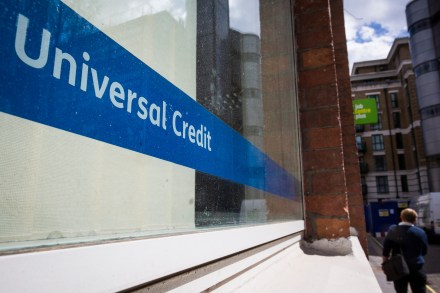
Coronavirus is deadlier for the old than the young. But for the young, it is economically devastating. A third of working 18- to 24-year-olds have lost work because of the pandemic. Between March and May, the number of those under 24 claiming universal credit doubled to almost half a million, and those who leave school or university this year can expect to earn less a decade from now than they otherwise would have done. During lockdown the young have, to a remarkable extent, accepted their lives being put on hold to protect their elders. Fairness dictates that steps must now be taken to prevent them from bearing the brunt of the coming recession. Without help, the young will be hit hard in the next few years.

Finally, we’re unboxing the teleporter

From our UK edition

This week’s Wiki Man may read a bit oddly. You see, I haven’t ‘written’ it at all; I’ve dictated it into a kind of dictaphone (an Olympus LS-P4, at £130, needlessly expensive for the purpose, but that’s how I roll) and then uploaded the audio file to an online transcription service called otter.ai. The reason I’m doing this is to find out how long it takes to write a Spectator article when you dictate it and get it transcribed online, compared with writing it on a keyboard like it’s 1940 or something. I’ll let you know the result at the end of this article. But I’m doing this because I don’t know the answer. It’s a worthwhile experiment — in an area where very little experimentation takes place.

Will Covid kill off the office?

From our UK edition

The most useless technology is the one you invent but fail to exploit. The Incas invented the wheel, but seem only to have used it on toys. Hero of Alexandria designed the first steam engine in the 1st century ad, but it was seen as a gimmick. The technological opportunity to escape from city-centre offices has been stuck in a similar limbo between invention and implementation. In the 1970s, Nasa engineer Jack Nilles envisaged ‘teleworking’ from local work centres. In 1984, the Times reported that tele-commuting was the ‘magical buzzword’ on the US microcomputing scene. In the 1990s, the UK had 200 ‘telecottages’: rural workspaces with computers, communications and social support.

Are Britain’s employment figures too good to be true?

From our UK edition

Lining up graphs of the UK’s growth figures last week and its employment figures this week, you would struggle to believe the data was from the same decade, let alone the same month. Despite the economy contracting by a quarter in March and April, unemployment figures haven’t budged: 3.9 per cent ending the month of April, unmoved from the quarter before, and more remarkably only up 0.1 per cent from the previous year.  The employment rate remains surprisingly high too: 76.4 per cent, down 0.1 per cent on the previous quarter. Despite the shuttering of the economy, employment and unemployment continue to hover at record highs and lows, like they did before the crisis began.

Can America’s 2.5 million jobs miracle be replicated in Britain?

From our UK edition

The US economy created 2.5 million jobs last month – the biggest monthly jobs gain since records began a century ago, albeit only a partial recovery from the 22 million jobs lost during lockdown. These figures have blown expectations out of the water. Economists were predicting yet more unemployment: the consensus was unemployment reaching 8.3 million, or 20 per cent in May, up from 14.7 per cent in April. Defying the odds, unemployment actually fell to 13 per cent, signalling an unexpectedly early start in the rebounding of the American economy. The biggest winners were workers in hospitality, who made up almost half of the new jobs, followed by construction.

Sunak’s coronavirus rescue package looks increasingly unsustainable

From our UK edition

The number of people claiming unemployment benefits in Britain rose by over 856,000 to 2.1 million in April, the first full month of the lockdown. Figures from the Office for National Statistics reveal that the number claiming benefits due to unemployment has increased by nearly 70 per cent. This marks an unbelievable u-turn from the start of the year, when UK employment figures were hovering at record highs. These figures do not include ‘the furlough effect’: those who are still counted as employed, paid by the Government to stay home and wait for the green light to return to work.

Dear politicians, life must go on

The worst day of my childhood was in 1995 when my father lost his job. He worked close by as a cook in a local restaurant, just a mile or two from our modest home in Cranston, Rhode Island. I recall what it felt like when he broke the news:  I felt my legs start to go under me. I still see him walking up the small hill that led to our home: his head down, his spirit crushed. I still see the look on his face, a man whose purpose had been taken away. My mother cried. We had to sell our house. Nothing would ever be the same. I suspect many American families know what I’m talking about. Nearly 30 million have lost their jobs in just six weeks alone. Millions more will follow.

life unemployment job

The unforeseen costs of Covid-19

From our UK edition

Assumptions made about the UK’s Covid-19 support packages are starting to unravel. When the Chancellor announced unprecedented spending to tackle the virus, he aimed to keep people in their jobs and mitigate an inevitable economic crash. But unemployment is soaring and the economy is contracting at a rapid pace, with growth figures set to plummet further than they did during the financial crash, and possibly even below that of the Great Depression. Despite the government's measures, the economic effects are being acutely felt – and the Treasury’s coronavirus policies may have spurred on some unwanted activity of another sort.

A booming economy makes Trump look wiser than his detractors

What delicious reading it makes going back over Paul Krugman’s missive in the New York Times on the morning after Donald Trump was elected in 2016. ‘Global recession with no end in sight...when are markets going to recover? A first pass answer is never...’ Those words should be carved into a façade somewhere in Wall Street and held up for ever after as an example of hubris of economic forecasters. In liberal circles nowadays there is always misery. The end of the world is always around the corner, where from economic calamity in the global capitalist system, climate change, rise of fascism, AI taking our jobs and creating mass unemployment, or whatever. But let’s get back to the real world for a moment.

donald trump booming economy

Britain is working

From our UK edition

At any other time, news that Honda intends to close its Swindon plant in two years’ time with the loss of 3,500 jobs would have been seen for what it is: a tragedy for those affected, their families and businesses it supports. But the story was used by both sides in the Brexit wars to prove their point. Certain Remainers saw it as proof of what leaving the EU will bring, while some Leavers were almost callous in the way they shrugged off the closure. When news like this is being exaggerated for effect, it’s hard to form a clear view of what’s going on. But through the fog, a pattern is discernible. The car-making industry is in great difficulties worldwide, as Ross Clark argued in our cover piece a fortnight ago.

Portrait of the week | 21 February 2019

From our UK edition

Home Seven MPs resigned from the Labour party and sat in the Commons (next to the DUP) as the Independent Group, or Tig. They were Luciana Berger, Ann Coffey, Mike Gapes, Chris Leslie, Gavin Shuker, Angela Smith and Chuka Umunna. The next day they were joined by Joan Ryan and the following one by three Tories, Anna Soubry, Sarah Wollaston and Heidi Allen. The Labour eight said they objected to anti-Semitism in the party, the security risk should Jeremy Corbyn become prime minister and Labour’s lukewarm attitude to a second referendum. Derek Hatton, who had been the deputy leader of the Militant-controlled council which set an illegal budget in Liverpool, was readmitted to the Labour party after 34 years.