Jesus

Woman to woman

From our UK edition

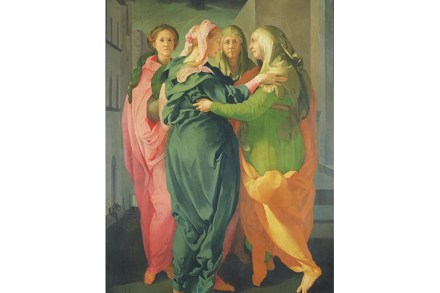
Bump to bump they stand: Mary and her cousin Elizabeth, both pregnant, both apple-cheeked and glowing as expectant mothers should be. It is a moment of shared joy. The whispered intimacy of ‘I’m pregnant!’ ‘Me, too!’ Joseph and Zacharias stand sheepish in the background, as men do on such occasions. Joseph has more reason than most to feel left out. The baby isn’t his in the conventional sense. Zacharias has the look of a man overtaken by events. After so many ‘barren’ years, here is Elizabeth, pregnant and beaming with the future John the Baptist.

Why it’s obvious that morality precedes religion

From our UK edition

At a beautiful church service recently I encountered again a Gospel parable that left me, again, torn between sympathy and doubt. You will recognise Matthew 25: 35-40, for its phrasing has entered the idiom: ‘I was hungry and you gave me food … sick and you visited me … in prison and you came to me … a stranger and you took me in … naked and you clothed me … ’ The story is of a king praising his subjects for these kindnesses to him. This puzzles them: ‘When did we see you hungry, and feed you … a stranger and take you in…’ (etc)? The king replies: ‘Inasmuch as you did it to one of the least of these, my brethren, you did it to me.

Tales of the unexpected | 12 April 2017

From our UK edition

It’s the oddest place to find a profound meditation on the death of Christ, but there it is on Radio 2 every year on the night of Good Friday, on the ‘light music’ station, and not on Radio 3 or Radio 4, where you might expect to find it. This year At the Foot of the Cross was sandwiched between Desmond Carrington — All Time Great and Sara Cox’s disco beats, the uncompromising reflections on the nature of belief adding a certain bite to the evening. Diane Louise Jordan and her host of guests at the Watford Colosseum (including the Bach Choir and the tenor Wynne Evans) created a sequence of words and music designed to encourage us to think about the grief of the disciples, the tyranny of Rome, the agony of Christ as he walked towards Golgotha.

Thinking of Israel

From our UK edition

‘Here is a story from the winter days of the end of 1959 and the beginning of 1960,’ announces the opening sentence of Amos Oz’s challenging, complex and strangely compelling new novel. The story itself is easily summarised. At its centre is Shmuel Ash, a rather woebegone young man who abandons his university studies in Jerusalem when his girlfriend leaves him and his father withdraws his financial support.

Flawed genius

From our UK edition

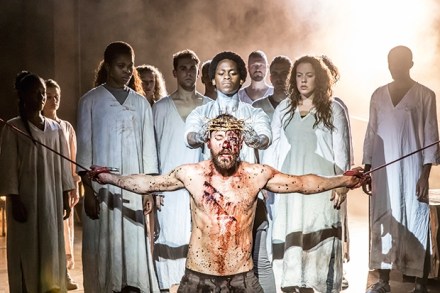
An inspired decision to stage Jesus Christ Superstar in a summer theatre in Regent’s Park. The action takes place outdoors, in balmy climes, so the atmosphere is ideal for Rice and Lloyd Webber’s finest show. The songbook bursts with melodic inventiveness, and the score blithely rips apart the conventions of musical theatre and remakes them afresh. Lloyd Webber finds two contemporary registers and switches between them constantly: first the eerie, unhinged menace of late-1960s heavy rock, and secondly the sweet, escapist loveliness of 1970s pop. The transitions from blunt savagery to pure sugar sometimes occur with gunshot abruptness, on a single note.

The holy sinner

From our UK edition

Many of the great faith narratives (the Holy Quran being a notable exception) are clumsy, rough-hewn things; makepiece amalgams of different texts from an abundance of sources that have been gradually hacked together over hundreds — sometimes even thousands — of years. Most have been found useful or resonant (spiritually and politically) at various stages in history, and some have been purposefully engineered (by individuals or institutions with agendas — their motives pure or otherwise). Eventually these fragments become embedded into a whole — a unity. A consensus is reached on what, fundamentally, works. This process is essentially pragmatic.

Ticket to ride

From our UK edition

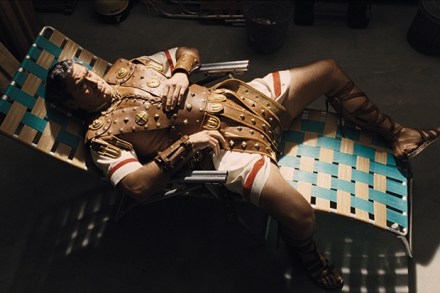
The latest film from the Coen brothers is a comedy set during the ‘golden age’ of Hollywood and in some respects it is utterly delicious. George Clooney wears what is effectively a leather miniskirt throughout, which may not be ‘age-appropriate’, as they say, but is wholly pleasing. (I was personally delighted, I must confess.) And Ralph Fiennes finally nails it comedically, which is a relief, as it’s been just so painful watching him try down the years. But the film is also troublesome, just as so many of the Coen films are troublesome. Why? Why this film, and what do they want us to take from it? Is it as inessential as it seems? The Coens always take you on a ride, you’re just never sure if you’re also being taken for a ride.

High life | 31 December 2015

From our UK edition

This is going to be one hell of a year, hell being the operative word. It will be the year the greatest Greek writer since Homer turns 80 (but we’ll keep quiet about that for the moment). Our world is so stuck in reverse that a woman who was stabbed in Miami during the Art Basel shindig, and was bleeding and begging for help, was mistaken for an artwork and ignored. The woman survived but will art? Conceptual art must be the biggest con since Bernie Madoff and then some. And speaking of con artists, I’ve never had any respect for Mark Zuckerberg, someone who is reputed to have copied the idea for Facebook from a couple of ex-classmates, and who now pledges the majority of his $45 billion fortune to charity thereby generating a public relations bonanza.

The question Christianity fails to answer: ‘Who is my neighbour?’

From our UK edition

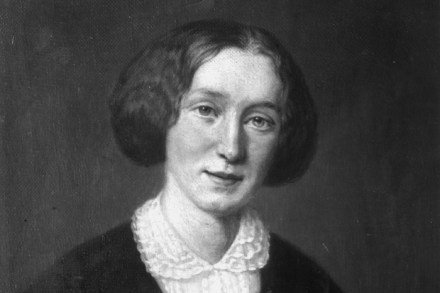
‘Fine old Christmas,’ wrote George Eliot, ‘with the snowy hair and ruddy face, had done his duty that year in the noblest fashion, and had set off his rich gifts of warmth and colour with all the heightening contrast of frost and snow.’ Thus opens the second chapter of Book II of The Mill on the Floss. I had found the passage when searching for a secular reading for my newspaper column’s readers at a carol service at St Bride’s church in Fleet Street a couple of nights ago. I knew at once I’d found what I wanted. Eliot had been my first port of call. You can be confident she will avoid religiosity yet never take refuge in mere jollity. She is never pat.

Why Jesus sometimes plays a very long game

From our UK edition

We closed the last page of a gruesome, thrilling picture book called The Day Louis Got Eaten and said our prayers. Our prayers are always the same. We ask Jesus to bless as many people known to us as we can remember, taking it in turns to name them. We aren’t sure what the range of consequences might be for someone if we ask Jesus to bless them, but we do it anyway, and the word has a pleasant, incantatory feel to it when repeated. It has been at least a fortnight since we last asked Jesus to bless our list because Grandad has been away. And as we went through the regulars, it occurred to us that a lot had happened to some of these names since we last asked Jesus to bless them, some of it, on the face of it, not so good.

Is this the greatest sculpted version of the Easter story? It’s certainly the strangest

From our UK edition

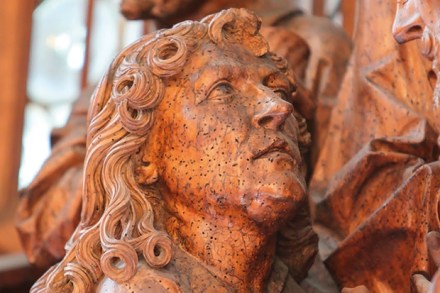
In April 1501, about the time Michelangelo was returning from Rome to Florence to compete for the commission to carve a giant marble David, a very different sculptor named Tilman Riemenschneider agreed to make an altarpiece in the small German town of Rothenburg ob der Tauber. Since then, things have not changed much in Rothenburg. Though battered during the war, it has been restored to postcard perfection (or rather turned into a perfect place for tourists to take selfies of themselves against a Disneyesque medieval background). And the Altar of the Holy Blood is still there, in the place for which it was made, at the west end of the church of St James or Jakobskirche. This is a sculpted version of the Easter story both great and strange.

For modern-day Assyrians their present is under attack from Isis, as is their past

From our UK edition

The historian Tom Holland tweeted this morning: ‘What ‪#ISIS are doing to the people & culture of ‪#Assyria is worthy of the Nazis. None of us can say we didn’t know.’ What #ISIS are doing to the people & culture of #Assyria is worthy of the Nazis. None of us can say we didn't know: http://t.co/Ndi02TeueK — Tom Holland (@holland_tom) February 27, 2015 He linked to a Washington Post article about how the Islamist group had kidnapped at least 200 Assyrian Christians from their homes in north-east Syria, and may well be preparing to murder them.

Nigel Farage: Bigger Than Jesus

From our UK edition

Ukip's commonwealth spokesperson Winston McKenzie - he of Carnival of Colour fame - is never far from controversy. It was only a matter of time before a devout Ukipper compared their hero Nigel Farage to a deity and we should have all guessed it would be Winston: ‘Jesus was one man. We are his army. Nigel Farage is one man and we are his army and that’s what it’s all about’ Happy Faragemas, everybody.

No one in the Bible has been as elaborately misrepresented as Mary Magdalene

From our UK edition

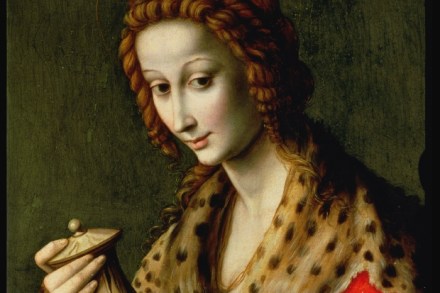
How would the real Mary Magdalene have reacted to her posthumous reputation? Not very kindly, one suspects. Our only historical source, the New Testament, does not even hint that she was a prostitute, and she’s unlikely to have been placated by Christians telling her: ‘It’s OK, we think you were a reformed whore.’ No one in the Bible has been so elaborately misrepresented. In addition to not being an ex-prostitute, Mary of Magdala was not Mary of Bethany, the sister of Martha and Lazarus, who anoints the feet of Jesus with ‘about a pint of pure nard, an expensive perfume’ and then wipes it up with her hair. Nor was she the ‘woman taken in adultery’, the one told to go and sin no more. Nor was she the wife of Jesus.

Spectator letters: On the Pope, Jesus and Mandy Rice-Davies

From our UK edition

Papal blessing Sir: In his excellent article on Pope Francis (‘Pope idol’, 11 January), Luke Coppen mentions the satirical rumour that the new pontiff had abolished sin. It could never be said, however, even in a spoof, that he has abolished the Devil, whom he has named and shamed on a number of occasions. What Coppen calls ‘the cockeyed lionisation of Francis’ is surely itself a trick of the Devil: so too the ‘older son problem’ — the disgruntlement of obedient Catholics at Francis’s embrace of sinful prodigal sons and daughters. Virtue is surely its own reward, and no one who has experienced grace hankers after the fleshpots of Egypt.

Rod Liddle: Try my new year resolution – ignore the internet

From our UK edition

At last, it has been scientifically proved that Jesus Christ is better than Muhammad. We’d always known that our lad with the beard and the holes in his hands was far superior to that arriviste Arabian chap who hung around in caves. But tell that to a Muslim and they become unaccountably frosty and defensive. Now, though, a couple of scientists have used algorithms and quantitative analysis to prove that Jesus Christ was the most significant and important human being ever to have lived, while poor old Muhammad managed to slink in at number four: Champions League spot, sure, but no cigar.