Jeremy corbyn

Obama’s failure is Putin’s opportunity

From our UK edition

[audioplayer src="http://rss.acast.com/viewfrom22/parisattacksaftermath/media.mp3" title="James Forsyth and Ben Judah discuss whether the West should work with Putin" startat=824] Listen [/audioplayer]The principal strategic objective in the war on terror has been a failure. Ever since 9/11, the aim has been to deny terrorists sanctuary. That, after all, is why the United States and Britain went into Afghanistan — troops were sent in only after the Taliban refused to hand over the al-Qaeda leadership and shut down the terrorist training camps. But now, a large terrorist enclave exists in the very heart of the Middle East. President Obama’s reaction to this massive strategic failure has been lack-lustre.

Jeremy Corbyn isn’t anti-war. He’s just anti-West

From our UK edition

[audioplayer src="http://rss.acast.com/viewfrom22/parisattacksaftermath/media.mp3" title="Nick Cohen and Freddy Gray discuss whether Jeremy Corbyn dislikes the West" startat=42] Listen [/audioplayer]Before the bodies in Paris’s restaurants were cold, Jeremy Corbyn’s Stop the War Coalition knew who the real villains were — and they were not the Islamists who massacred civilians. ‘Paris reaps whirlwind of western support for extremist violence in Middle East’ ran a headline on its site. The article went on to say that the consequence of the West’s ‘decades-long, bipartisan cultivation of religious extremism will certainly be more bloodshed, more repression and more violent intervention’.

David Cameron is starting to look like Jeremy Corbyn’s best friend at PMQs

From our UK edition

Jezza started PMQs with a bit of a wobble. As he got to his feet the applause from his Labour ‘friends’ sounded like the hoarse whooshings of a punctured beach ball. Corbyn nervously offered his sympathy to the Paris terror victims and expressed concern that the slaughter of 129 innocents might increase Islamophobia in Britain. The attacks, he said, ‘have nothing in common with the 2 million Muslims who live here.’ David Cameron agreed, partially. He drew a distinction between ‘the religion of peace’ (which is Islam, in case you were getting confused) and the ‘bile spouted’ by terrorist killers. But, he said, ‘it’s not good enough to say there’s no connection. They [terrorists] make the connection.

PMQs: Jeremy Corbyn’s views on security are only harming Labour

From our UK edition

One moment from PMQs today will stick in the mind for a long time. After Corbyn had asked his last question, Cameron declared ‘Hasn’t it come to something when the leader of the opposition thinks that the police, when confronted by a Kalashnikov-waving terrorist isn’t sure what the reaction should be?’ At that point, the Labour front bench just looked utterly dejected and beaten. They will soon have to decide how much longer they can let this farce continue for. If they do not act soon, then the damage done to the Labour party might be irreversible.

By opposing shoot-to-kill, Jeremy Corbyn has shown he is a serious politician

From our UK edition

There is nothing wrong with Jeremy Corbyn saying he 'isn't happy' with a shoot-to-kill policy. On the contrary, it shows once again that he is a man of principle. We may not agree with, or like, his principles -- but can we at least recognise that, unlike his opponents, he is not bending to the national mood? He is not willing to ditch his integrity in order to ease the public's fear and sate our lust for a violent response to terror. For Corbyn's haters on the Labour right, his position proves once again that he is not a 'serious' person. For one of his shadow cabinet, his position even makes him a 'f---ing disgrace' Why? Corbyn may well be right. It's certainly not disgraceful to oppose a policy of legal killing.

Theresa May: the Paris attacks ‘have nothing to do with Islam’

From our UK edition

On a day when Jeremy Corbyn has been making clear his concerns about both the government’s use of drones and any shoot-to-kill policy for terrorists on British streets, Theresa May’s statement on the Paris attacks was striking for the level of cross-party agreement. Andy Burnham paid generous tribute to the Home Secretary and pledged Labour’s support for her anti-terror crackdown. The only discordant note came on the question of police funding. Burnham aligned himself with Bernard Hogan-Howe’s warning that cuts of more than 10 percent to police funding would make it harder to keep the streets safe. May set out how the police here would ‘intensify’ their approach to big events in an attempt to prevent a Paris-style attack here.

Podcast special: the Paris attacks and what happens next

From our UK edition

How will Britain and Europe react to the terrorist attacks in Paris? In this View from 22 special podcast, The Spectator's Douglas Murray, James Forsyth and Isabel Hardman analyse what politicians have said and done in response to Friday's attacks and the plans being formulated in Westminster and Brussels. Are Jeremy Corbyn's views on military action going to cause a split with Labour MPs? What will David Cameron propose in response to the attacks? Does this spell the end of Schengen?

Nick Robinson tackles anti-Corbyn bias at the BBC

From our UK edition

During the summer over 50,000 people signed a petition accusing the BBC of showing bias against Jeremy Corbyn. One major grievance was that presenters regularly referred to the Labour leader as 'left wing'. While the corporation issued a statement at the time defending their coverage, it appears that even one of their own staff was left unhappy by their efforts. Step forward Nick Robinson. Over the weekend the BBC's former political editor confessed -- in an interview in the Sunday Times -- that he had written to several BBC colleagues over concerns that the corporation's political coverage is biased against Jeremy Corbyn. When asked by Lynn Barber whether he was 'shocked' by the way the BBC 'rubbish Jeremy Corbyn', Robinson replied 'yes': 'Yes.

Will the free speech lobby accept Jeremy Corbyn’s right to be a republican?

From our UK edition

On Wednesday night, Jeremy Corbyn brought to an end one of the most undignified sagas in recent politics, cobbling together a shuffled compromise on his induction into the Privy Council. The Privy Council, as we’ve been told so often now, is the body of senior politicians that is allowed to receive security briefings. Membership would have required Corbyn - the life-long republican -  to vow 'not to know or understand of any manner of thing to be attempted, done, or spoken against Her Majesty’s person, honour, crown, or dignity royal'. Did he kneel, bob, or grab the royal paw in an firm egalitarian handshake? Does it matter?

A ‘kinder politics’ falls flat on Question Time

From our UK edition

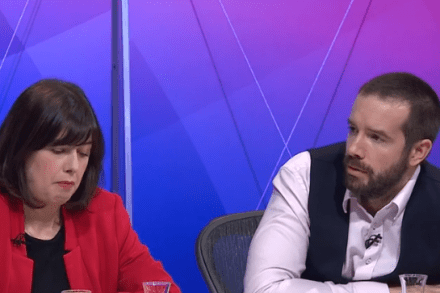
Last night's episode of Question Time saw David Dimbleby joined in Stoke-on-Trent by Sajid Javid, Lucy Powell, Ukip's Paul Nuttall, the Sun's managing editor Stig Abell and Paris Lees, the transgender rights activist. With Jeremy Corbyn the main topic on the agenda following the Sun's story this week claiming Corbyn failed to bow deeply enough at the Remembrance Sunday service at Whitehall, would Corbyn's supporters prove to all the merits of a new 'kinder' politics? At first, it looked like Corbyn's call to 'treat people with respect' and with no 'rudeness' may have been taken on board, as even Javid seemed keen to take part in the new regime.

Corbyn, Nero and the Bomb

From our UK edition

Chief of the Defence Staff Sir Nicholas Houghton is worried that Labour leader Jeremy Corbyn will never use the existing means of defence — Trident — to defend the country. Mr Corbyn is incandescent that a mere Chief of Defence Staff has the sheer effrontery to express a view on a matter that is (apparently) irrelevant to the defence of country but is purely political. One is reminded of the accession of Nero to Rome’s imperial throne in ad 54. According to the Roman historian Tacitus, it was dirty work by the controlling empress Agrippina that did for her husband Claudius, with the result that Nero, her son from an earlier marriage, was installed as emperor, aged 17. At that time there was trouble on Rome’s eastern frontier.

Portrait of the week | 12 November 2015

From our UK edition

Home David Cameron, the Prime Minister, outlined four changes he sought in Britain’s membership of the EU. He wanted to protect the single market for Britain and others outside the eurozone; to increase commercial competitiveness; to exempt Britain from an ‘ever closer union’; and to restrict EU migrants’ access to in-work benefits. Mr Cameron put the demands in a letter to Donald Tusk, the President of the European Council. David Lidington, the Europe minister, said that others in the EU could put forward ‘alternative proposals that deliver the same result’. In a speech to the Confederation of British Industry, Mr Cameron had said: ‘The argument isn’t whether Britain could survive outside the EU; of course it could.

The answer for sensible, moderate Labour folk is simple. Just leave

From our UK edition

What a useless shower the Labour party is right now. What a snivelling dance of fools. And I don’t just mean the new lot, under Jeremy Corbyn, although his ongoing decision to surround himself with a team of people who seem to have each been tasked, individually, with emphasising a different bad thing about him does take some beating. I mean the whole train set, radicals and moderates alike. This is a party, right now, reaping what it has sown, which is piety, tribalism and a sort of over-weening preachiness. And now, to mix my metaphors, it is getting bitten by all of them. Last week, Labour suspended a man called Andrew Fisher, who was, and remains, Jeremy Corbyn’s head of policy. It might sound odd, that ‘and remains’ bit, but don’t blame me.

Owen Jones gives Seumas Milne a run for his money

From our UK edition

As Seumas Milne attempts to settle in to his new job as Jeremy Corbyn's director of communications, the former Guardian columnist has got off to a rather shaky start. As well as making headlines himself over his controversial appointment, the negative press surrounding Corbyn has shown no sign of disappearing with a fresh storm recently emerging regarding Milne's colleague Andrew Fisher. Perhaps aware of his own shortcomings, Milne was even overheard outside a pub on Thursday asking the BBC's political editor Laura Kuenssberg for advice on how to do his job. Now, Corbyn's other original Guardian cheerleader Owen Jones has stepped in to offer Milne some advice of his own.

Is Jeremy Corbyn’s ‘New Politics’ beginning to flounder?

From our UK edition

Jeremy Corbyn has had enough of his shadow cabinet publicly opposing him. According to today’s Guardian, the Labour leader has given his frontbench team a dressing down over speaking out against him — in light of comments by the shadow defence secretary Maria Eagle on Trident last weekend: ‘According to several party sources, Corbyn made it clear that disputes must not be carried out so publicly in future, as he addressed his weekly shadow cabinet meeting. ‘The Labour leader also reminded his colleagues that media statements must be cleared through his office and asserted that there must be stronger collective responsibility.

Coffee Shots: the face of Labour is here to stay

From our UK edition

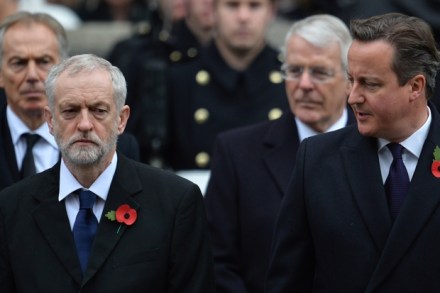
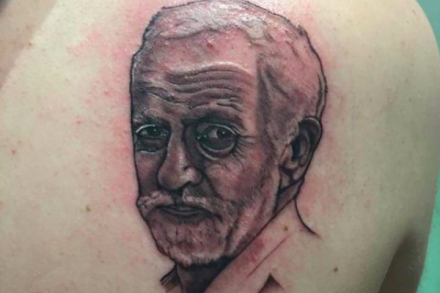
Although Jeremy Corbyn has faced criticism this week for failing to bow deeply enough at the Remembrance Day service in Whitehall, the left-wing messiah can at least count on the continuing support of his Corbynistas. In fact, one 18-year-old fan by the name of Kierran Horsfield has decided to do his own permanent tribute to the Labour leader, with an inking of Corbyn's face on his shoulder: https://twitter.com/_megoll/status/663815056967254016 Still, Mr S suspects Corbyn shouldn't take his popularity among fans as an indication of where he will stand in the polls -- after all, one woman did get a tattoo of Nigel Farage: https://twitter.

Will Jeremy Corbyn benefit from a vicious press?

From our UK edition

In last week’s Spectator,  Rod Liddle reported that his Tory-supporting wife is beginning to feel sorry for Jeremy Corbyn. ‘You lot want to watch it. I’m beginning to feel sorry for the bloke. The sympathy votes will be stacking up,’ Mrs Liddle informed her husband. At first, you might wonder what there is to feel sympathetic about. In his short tenure as leader so far, Corbyn has used his ‘huge mandate’ to put a stamp on Labour — allowing it to descend into public infighting over muddled policy positions, as well as riling his own MPs with an assortment of controversial appointments. But after this weekend’s 'row' about whether Corbyn bowed low enough at the Remembrance Sunday ceremony, I think Mrs Liddle has a point.