Jeremy corbyn

Labour’s moderates are stuck until they can solve their membership problem

From our UK edition

We are still not entirely sure when the Labour leadership contest will end, but in these dusty days of recess, it is certainly keeping everyone nicely busy. Today Owen Smith received a boost from trade union GMB, which decided to endorse his bid to take over from Jeremy Corbyn. Its members voted 60-40 to endorse Smith, and General Secretary Tim Roache said ‘GMB members cannot afford for Labour to be talking to itself in a bubble for the next five years while the Tories run riot through out rights at work, our public services and our communities’. This drew yet another combative - and slightly curious - response from Team Corbyn after yesterday’s conspiracy theories fun.

Corbyn ally wins Labour’s Liverpool mayoral nomination

From our UK edition

Labour has opted for Steve Rotheram to be their candidate in Liverpool's mayoral election. It's a big boost for Jeremy Corbyn, as Rotheram has been fiercely loyal to the Labour leader since Corbyn made him his PPS - essentially his right-hand man in Westminster - last September. He's stuck by Corbyn along the way, and Rotheram suggested after winning the vote amongst Labour members that it could well have helped him defeat current mayor Joe Anderson and Luciana Berger, amongst others, in today's vote: 'When we phoned people I think what potentially did have an impact was this underused and rare commodity in politics at the moment and that is loyalty.' Having won the Labour nomination, it now looks almost certain Rotheram will go the whole way and win the mayoral contest next May.

Labour members win court case on leadership contest

From our UK edition

Isabel Hardman and Lara Prendergast discuss what's next for Labour: Could Labour hold its autumn conference without a confirmed leader? The party’s QC is to appeal this morning’s High Court decision that it cannot have a six month freeze date for members voting in the leadership contest, and this could delay the contest between Jeremy Corbyn and Owen Smith. Five new Labour members won their case against the party’s application of a six month freeze on eligibility to vote. If the election is delayed, and Labour has no leader in the autumn, which is when political parties and leaders traditionally fire up their grassroots and show how strong their authority is, then the party will appear weaker than ever.

Must Corbyn win?

From our UK edition

Thoughtful writing about the Corbyn phenomenon is not just impossible to find, it is impossible to imagine. Admirers live in a land of make believe as closed to the rest of the world as North Korea. They barely know how to explain themselves to outsiders because they cannot imagine any honourable reason for outsiders disagreeing with them. Disputes with 'Jeremy'  must be the result of ideological contamination – you have become or, perhaps secretly always have been, a 'Tory' or 'Blairite' – financial corruption  – you have sold out – or racial corruption – you are a 'Zionist'. My colleague Janice Turner of the Times posted a copy of a leaflet Corbyn supporters are handing out in constituency meetings. They have an answer to every charge against him.

Boring Corbyn has got it all wrong on personality politics

From our UK edition

Brits sometimes think that 'personality politics' is a bad thing. Jeremy Corbyn has certainly suggested as much; just before he won the Labour leadership last September, he dismissed the concept as juvenile and egoistic. Instead, he said: 'We are not doing celebrity, personality or abusive politics – this is about hope.' But although Corbyn has stuck to that belief, he's wrong - and a big part of his problem is not realising that. While some say the idea of personality politics is an American import, in reality Brits have been doing it for decades. Take Harold Wilson’s advisers planting hecklers at TV hustings so the Labour leader could deploy his best put-down lines. That was in 1964.

Will Labour finally stop sweeping anti-Semitism under the carpet?

From our UK edition

In February, the co-chair of the Oxford University Labour Club, Alex Chalmers, resigned after having publicly accused the Club of harbouring and articulating rank prejudice against Jews and other minority groups. Mr Chalmers – who is not Jewish – declared that a 'large proportion' of Club members had 'some kind of problem with Jews'. He also suggested that individual members of the Club’s executive had employed offensive language 'with casual abandon', and that some had gone so far as to voice support for Hamas, the terrorist organisation that currently controls Gaza and which is proud to be governed by a charter that calls upon its followers to murder Jewish people. These were grave charges.

Owen Smith looks to 1945 to inspire Labour

From our UK edition

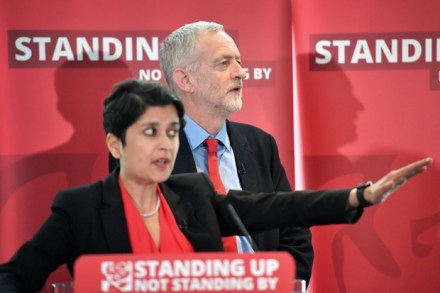
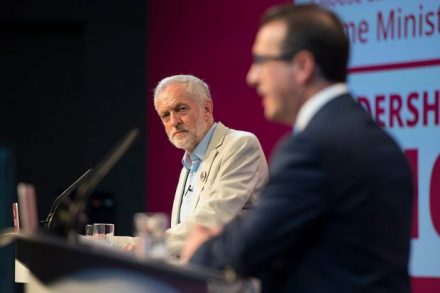
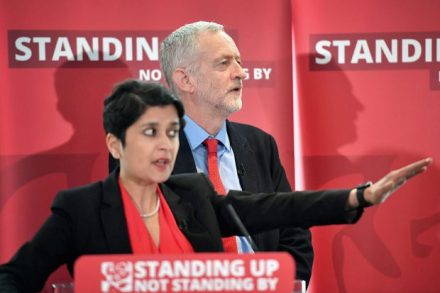
Jeremy Corbyn and Owen Smith have faced off in their first hustings of what has already proved to be a bitter leadership campaign. That disunity and turmoil was on display on stage in Cardiff last night. The Labour leader hit back at Smith's dig about the 'fractured' state of the party by saying it was hard to preach about unity when Smith and others had 'resigned from the shadow cabinet'. This was business as usual then. So whilst Corbyn and Smith made it clear they will never see eye to eye, what did they have to say on what they actually stand for? Whilst their clashes on stage only reveal the divisions we already know about, their closing pitches were somewhat more informative in boiling down why they think Labour members should back them. Owen Smith's buzzword was 'crisis'.

Corbyn’s gong for Chakrabarti is his biggest own goal yet

From our UK edition

It is beginning to look like a bit of a trend this year: the Conservatives get themselves into a tight spot, only for Labour to trump them quickly. Just as the Tories seemed to be descending into a bitter leadership crisis on the weekend after the referendum, half the shadow cabinet resigned. Now, just as David Cameron was being mauled from all quarters over the cronies in his resignation honours list (including from the presumably not soon-to-be Lord Hilton), Jeremy Corbyn has directed attention to himself by ennobling Shami Chakrabarti, formerly of human rights group Liberty. The appointment is embarrassing three times over. Firstly, because he said last year: 'Labour will certainly not nominate new peers for the Lords, which risks undermining its legitimacy'.

Labour’s problems go far beyond Jeremy Corbyn

From our UK edition

Owen Smith takes on Jeremy Corbyn in the first Labour leadership hustings this evening. The moderates are desperately hoping that these head to heads can change enough minds among the Labour electorate to give Smith a chance of beating Corbyn, hence their eagerness to have them televised and the Corbynite desire to keep them off air. But as I argue in the magazine this week, Labour’s problems go far beyond Jeremy Corbyn. He is a symptom of what ails the party, not the sole cause of it. Even if he announced tonight that he was off to spend more time on his allotment, Labour would still have big, existential questions to resolve. One obvious problem Labour has to sort is, what is its economic policy?

Can Labour be trusted with Britain’s security when it can’t manage its own?

From our UK edition

During the Blair years the security guards at Labour party conferences had a reputation for over-zealous intervention – remember the sight of octogenarian Walter Wolfgang being manhandled out of his seat and ejected from the chamber for daring to heckle Jack Straw over the Iraq War? Appropriately enough, under Corbyn, Labour’s conference security has the opposite problem – it seems to have been unilaterally-disarmed. As Guido Fawkes reveals this morning there is a serious possibility that this year’s event, scheduled to take place in Liverpool next month, will have to be cancelled owing to the party’s inability to organise security for the event. The problem goes back to last year when the party’s grandees high-mindedly decided to boycott G4S.

Who can lead Labour?

From our UK edition

Westminster prefers to concentrate on one drama at a time. That is why the old rule of thumb was that only one party leader could be under pressure at any given moment. Recent events have upended that convention. The Brexit vote precipitated leadership crises for more than one party. But the spectacle of the Tory leadership election has rather overshadowed the fact that Labour is having its own leadership contest. The contest between Jeremy Corbyn and Owen Smith, the party’s former work and pensions spokesman, will run all summer. In Labour circles, Corbyn is regarded as the clear favourite. Once again, the hard left appears to have succeeded in getting far more people to sign up to Labour’s registered supporter scheme than the so-called moderates have.

Old is the new young, which is great news for idlers like me

From our UK edition

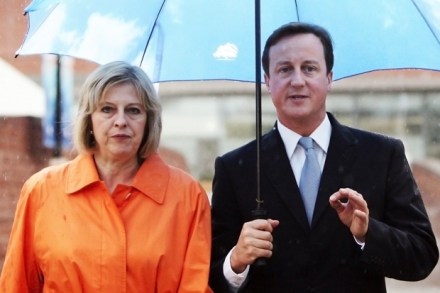
While many have seen Theresa May’s accession to Prime Minister as striking a blow for feminism, she has also struck a mighty blow for indolence. With George Osborne and David Cameron pushed towards the exit, those of us in our mid-30’s who are still at the thinking-about-doing-something-at-some-point stage of our lives can rest easy a while longer. This has always been a difficult age. I’ve had to come to terms with the fact that I will never be a rockstar, given that I am well past the maximum age for the 27 club, (at my age Keith Richards was firmly in the Swiss blood transfusion clinic). I also know that even some of life’s greatest proponents of slacking are already well ahead of me.

Theresa May’s Labour land grab starts today

From our UK edition

Whilst Labour tangle themselves up in civil war, the Prime Minister is making a move for the party's economic territory. On her first day in Downing Street, Theresa May said her Government would stick up for everyone, not only the 'privileged few'. Today, she'll start work making good on that promise when she chairs the first meeting of her Cabinet committee on the economy and industrial strategy. So what does that all mean? It's obvious the sentiment suggests an attempt to beat Labour at its own game. From the politician who coined the description of the Tories as the 'nasty party', May is doing her best to show the Conservatives are the party of both compassion and competency.

Corbyn’s shadow puppets

From our UK edition

Wrapped in his fantasy world of a Labour party ruling the country in accordance with the diktats of those of its members who support him, Jeremy Corbyn reminds one of Plato’s image of humans trapped in a cave, able only to see the wall in front of them. Behind them, at the opposite end of the cave, is a fire, and in front of that, a puppet show. The shadows of those puppets, cavorting on the wall in front of him, are man’s reality. And Corbyn’s. His MPs are right to want a party connected to the real world, but is a leadership battle the right way to go about it? The contest should be a purely rhetorical one, though Corbyn’s followers will not hesitate to use force instead.

Big boost for Jeremy Corbyn after court victory

From our UK edition

The Labour donor Michael Foster has lost his High Court case attempt to force Jeremy Corbyn to get 51 nominations from MPs and MEPs to be a candidate in the Labour leadership race. The Judge upheld the Labour National Executive Committee’s decision that Corbyn, as the incumbent, should automatically appear on the ballot. Today is a significant victory for Corbyn. If he had to get parliamentary nominations to appear on the ballot paper, he would have struggled badly to do so. Indeed, he might well have lost by default. But now, Corbyn can get on with his leadership campaign. Corbyn goes into this campaign as the firm favourite to win. Owen Smith is clearly trying to tack left in an attempt to eat away at Corbyn’s left-wing support.

Enemies of history

From our UK edition

At the start of the 21st century, no one felt the need to reach for studies of ‘third-period’ communism to understand British and American politics. By 2016, I would say that they have become essential. Admittedly, connoisseurs of the communist movement’s crimes have always thought that 1928 was a vintage year. The Soviet Union had decided that the first period after the glorious Russian revolution of 1917 had been succeeded by a second period, when the West fought back. But now, comrades, yes, now in the historic year of 1928, Stalin had ruled that we were entering a ‘third period’ when capitalism would die in its final crisis. As the Wall Street crash was only months away, this was not as fanciful as it seemed.

Sarah Champion unresigns and returns to Labour frontbench

From our UK edition

Sarah Champion, the Labour MP for Rotherham, was one of the Labour frontbenchers who resigned in an attempt to force Jeremy Corbyn to quit as Labour leader. But today, she has asked for —and been given — her job back. https://twitter.com/SarahChampionMP/status/748175455409344512 Now, Champion was just a frontbencher, not a full member of the shadow Cabinet. But her un-resignation is another straw in the wind suggesting that things are moving in Corbyn’s favour. Champion’s willingness to return to the front bench suggests that she’s resigned to Corbyn winning when the results are announced in September. It also enables Corbyn to say that by allowing her to come back, he has shown that he wants to bring the party back together again.

Len McCluskey warns that the security services might be trying to sabotage Jeremy Corbyn

From our UK edition

The Labour leadership election has become even more bizarre today. Len McCluskey, the leader of Unite the Union and a key Corbyn backer, has given a Guardian interview in which he suggest that the ugly behaviour of Corbyn supporters online is actually the work of the security services. He tells Decca Aitkenhead: “Do people believe for one second that the security forces are not involved in dark practices? Decca, I have been around long enough … the type of stuff that we ultimately find out about, under the 30-year rule.” When Aitkenhead challenges him on this, McCluskey continues: “Well, I tell you what, anybody who thinks that that isn’t happening doesn’t live in the same world that I live in.

The NHS would be crippled without big pharma

From our UK edition

Like Owen Smith, I have an interest to declare when discussing Pfizer.   Somewhere on my bookshelf I have a Pfizer physics prize – a school prize funded by the US pharmaceutical giant which at the time had a research facility nearby. Later, Pfizer helped fund an extension to the school which, appropriately enough given its best-known product, rose to twice the height of the existing science block. I don’t, then, share the view of Jeremy Corbyn who seems to see Pfizer as part of an evil empire trying to undermine the NHS. Rather I see it as a company which, while it gets into the odd scrape with regulators, has some sort of social conscience and which has helped fund and produce drugs which are relied-upon by millions of NHS patients a day.

What matters in Labour’s leadership contest is what works

From our UK edition

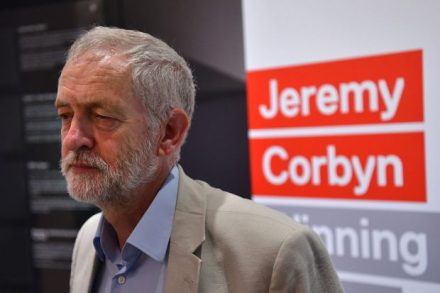
Jeremy Corbyn’s attempt to strike a contrast between his beliefs and those of his Labour leadership rival Owen Smith would have rather big implications or medical research in this country. The Labour leader told the launch of his campaign to hold on to his job that pharmaceutical companies like Pfizer shouldn’t take on medical research: ‘I hope Owen will fully agree with me that our NHS should be free at the point of use, should be run by publicly employed workers working for the NHS not for private contractors, and medical research shouldn’t be farmed out to big pharmaceutical companies like Pfizer and others but should be funded through the Medical Research Council.