Jeremy corbyn

Shouldn’t Labour’s ‘gender pay audit’ begin at home?

From our UK edition

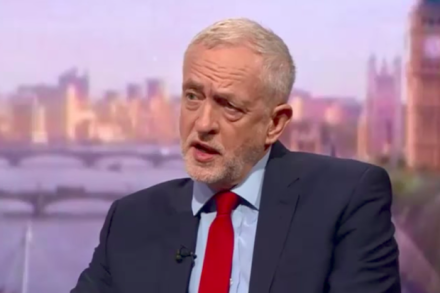
This weekend, Jeremy Corbyn was full of beans during an appearance on the Andrew Marr show. As well as frank comments on immigration and student debt, the Labour leader found time to turn his ire on the BBC over the gender pay gap. Discussing the disclosure that two thirds of the corporation's highest earners are men, Corbyn said the Beeb needs to 'look very hard at itself' – adding that a Labour government would insist on a pay audit of every organisation. https://www.youtube.com/watch?v=HL1pvY_Tbmc Strong words indeed. But is Corbyn just repeating empty platitudes? This time last year, Corbyn made a similar pledge.

Sunday shows round-up: Jeremy Cobyn tries to explain away his student debt troubles

From our UK edition

Jeremy Corbyn - I did not make a commitment to write off student debt This morning Jeremy Corbyn became the last interviewee on the Andrew Marr Show  before the party conference season begins in September. With a potential general election on the cards at any time, there was much to discuss. In particular, Marr chose to delve a little deeper into Corbyn's plans for alleviating student debt after the Labour leader declared he planned to 'deal with it' shortly before Britain went to the polls in June: Marr: A lot of people in this country are burdened by high levels of debt because of the student loans they've had to take out, and you said shortly before the election 'I will deal with it'. What did you mean by 'I will deal with it'?

What will Jeremy Corbyn do next?

From our UK edition

The Labour party has a troubling recess ahead of it. Many of its members just won’t know what to do with themselves. This is because for the first time in two years, there is no leadership contest. Those who had eschewed beach holidays in favour of spending their summer recess in windowless rooms listening to contenders for the top job fight over who would really, really nationalise the railways now have nothing to do. Even before Labour lost the election unexpectedly well, few anticipated an immediate challenge to Jeremy Corbyn.

Jeremy Corbyn still can’t find Theresa May’s jugular

From our UK edition

Given how miserable things are for Theresa May at the moment, with her Cabinet behaving like children, her backbenchers urging her to use the authority she doesn’t have to tell those ministers off, and a policy free-for-all caused by having no majority, today’s final PMQs before the summer should have been extremely painful for the Prime Minister. But while Jeremy Corbyn has arguably been a key factor in this whole miserable situation coming about for May, he is still quite handy when it comes to helping her survive what should be deeply miserable sessions in the Commons.

Let’s keep up the Moggmentum | 16 July 2017

From our UK edition

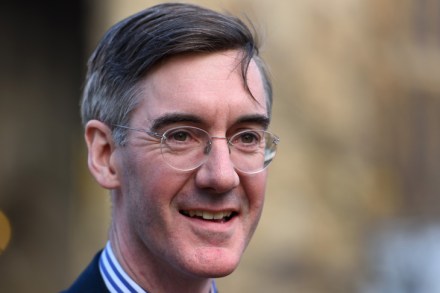
‘We need to talk about why the internet is falling in love with Jacob Rees-Mogg, because it’s not OK,’ warns a recent post on the Corbynista website The Canary. Its anxiety is not misplaced. Polite, eloquent, witty, well-informed, coherent, principled — Jacob Rees-Mogg is the antithesis of almost every-thing the Labour party stands for under its current populist leadership. And far from putting off voters, it seems to be a winning formula. Even sections of the elusive and generally very left-wing youth vote appear to be warming to the idea that our next prime minister shouldn’t be (alleged) man-of-the-people Corbyn but yet another plummy, Old Etonian millionaire… This ought to make no sense at all.

What’s Labour going to do with the middle classes?

From our UK edition

Be fair. Theresa May’s plan actually half-worked. No, there was a plan. I know the consensus now seems to be that the entire election was motivated by little more a succession of senior Tories saying ‘Gosh yes, everybody loves you!’ to the Prime Minister while Fiona Hill and Nick Timothy stood behind her chair, slapping truncheons into their palms. Only that’s not how it was. Once, there was philosophy here. There was a plan to cut loose the liberal, urban, Remainiac middle classes, and draw in a new working-class Tory vote instead. And, like I said, it half-worked. As in, the working classes might not have got the message that the Tories were now a party for them, but the urban middle classes surely got the glaring hint that it now was not for them.

Jeremy Corbyn is Britain’s first truly post-modern politician

From our UK edition

Does Labour want to leave the Single Market? Maybes aye, maybes naw, as we used to say in North Britain. Corbyn isn't saying. It might be one of the biggest questions of public policy of this decade, but the man who now has at least a non-trivial chance of being PM one day isn't saying where he stands on it. This matters. Of course, we think we know what he intends on the single market. We think he is hostile to it and regards it as a wicked capitalist plot. We think he also inclines towards leaving because he wants to keep inside the remaining chunk of the old Labour working-class vote that is persuaded by the Ukip argument that the single market means free movement which means immigrants.   But we don't know because Corbyn isn't saying.

Labour moderates should learn from the mistakes of Trump’s reluctant cheerleaders

From our UK edition

Demagogues have had a good run of late but the tide may be turning. Geert Wilders and Marine Le Pen failed to pull off widely predicted electoral coups, while the Austrian far-right fell short in presidential elections. The SNP can no longer rouse a rabble like it once did and Ukip, out-Kipped by Labour and the Tories, is now an irrelevance. But none is as dramatic as the stalling of the Donald Trump bandwagon, which could yet come off its wheels. The President faces allegations of colluding with the Russians during the 2016 election. Springing into action, his son Donald Trump Jr. tweeted out campaign emails in an effort to refute the charges. In fact, the correspondence confirmed that Trump Jr. had met with a Russian lawyer offering dirt on Hillary Clinton.

High life | 13 July 2017

From our UK edition

I was going through my paces in Hyde Park, sweating out the booze, raising the heartbeat with short wind sprints, keeping my mind off the weekend’s debauchery and the ensuing Karamazovian hangover. I sat down on a bench, took off my sweaty polo shirt, opened the Daily Telegraph, and took in some rays. A police officer approached me — but with a smile. ‘Are you by any chance Taki?’ he said. ‘Guilty as charged, constable, but this time I’m clean.’ He smiled broadly and asked if he might sit down. Well, Constable Hackworth turned out to be straight out of The Blue Lamp. A Spectator reader, he somehow recognised my 80-year-old countenance and complimented me on my training.

Let’s keep up the Moggmentum

From our UK edition

‘We need to talk about why the internet is falling in love with Jacob Rees-Mogg, because it’s not OK,’ warns a recent post on the Corbynista website The Canary. Its anxiety is not misplaced. Polite, eloquent, witty, well-informed, coherent, principled — Jacob Rees-Mogg is the antithesis of almost every-thing the Labour party stands for under its current populist leadership. And far from putting off voters, it seems to be a winning formula. Even sections of the elusive and generally very left-wing youth vote appear to be warming to the idea that our next prime minister shouldn’t be (alleged) man-of-the-people Corbyn but yet another plummy, Old Etonian millionaire… This ought to make no sense at all.

Emily Thornberry succeeds where Corbyn fails at PMQs

From our UK edition

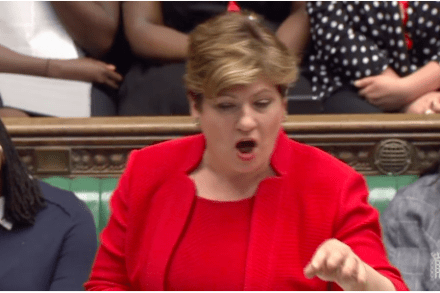
Today’s Prime Minister’s Questions could have been memorable purely for the novelty of Emily Thornberry deploying a tremendous amount of sass in her questions to Damian Green as the pair stood in for Jeremy Corbyn and Theresa May. But it was also memorable because as well as leaning across the despatch box and delivering one-liners in comedy voices, the Shadow Foreign Secretary also asked some good, searching questions about the government’s position on Brexit, particularly on what would happen practically if there was no deal.

Did Jeremy Corbyn really save the Labour party in Scotland?

From our UK edition

If a line is repeated often enough it becomes true. Or true enough, anyway. This, at any rate, is one of the axiomatic rules of modern politics. He who controls the ballyhooed “narrative” owns the truth. Which is why the interpretation of any given event swiftly becomes almost as important as the actual event itself. So up-pops Matt Zarb-Cousin, formerly Jeremy Corbyn’s spokesman and now one of his more charming outriders on social media, to claim that it was Jezzah what has saved the Labour party in Scotland. As he puts it, “Corbyn’s supporters have long argued that returning Labour to its socialist roots would be necessary if the party was to ever regain support in Scotland.” Well, up to a point Lord Spart.

Why do gay lefties hate Tories but ignore Corbyn’s ugly record?

From our UK edition

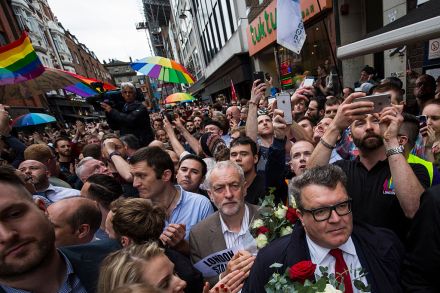
Gay lefties have hated gay Tories ever since learning of their existence. The concept baffles them, like pro-life women or alcohol-free wine. Those with long memories are aware of the Conservative Party's ugly record on gay equality. This is the party of Section 28, of differential consent laws, of fretting about children 'being taught that they have an inalienable right to be gay'. But gay Tories, having largely rehabilitated their party and with many of the major gay rights battles settled favourably, hoped the rainbow flag might finally have space for a stripe of blue.

Damian Green calls for a new ‘grown-up way of doing politics’. Will it work?

From our UK edition

Even before the election delivered a hammer blow to the Tories, their ‘strong and stable’ mantra was coming back to bite. Now, their warning of a Labour-led ‘coalition of chaos’ is also rearing its head once again. Fresh from wrapping up their deal with the DUP, the Government is calling on the opposition to come together on Brexit and lend a helping hand. Theresa May will say the other parties should offer up their ideas and be prepared to ‘debate and discuss’ with the Government - not only on leaving the EU but on a host of other areas of policy as well. Damian Green used his Today interview this morning to make it clear that this offer isn’t just reserved for those on the Labour benches.

Jeremy Corbyn plays it safe in Hastings

From our UK edition

With a recent YouGov poll giving Labour a six-point-lead over the Conservatives, it's little wonder that Jeremy Corbyn is keen to pitch his party as a government-in-waiting. In this vein, the Labour leader has been visiting Tory marginals on weekends. On Saturday, Corbyn was in Hastings & Rye, where the Home Secretary clung onto her seat by the smallest of margins in the snap election: 'Once a 'safe Tory seat', now a marginal, we will win Hastings & Rye at the next election.' https://twitter.com/jeremycorbyn/status/883279441941725185 But was Hastings & Rye really a 'safe Tory seat' until the Corbynistas arrived on the scene?

Age need not weary them

From our UK edition

Prime Minister May is aged 60, the Labour cult-personality Jeremy Corbyn 68, and putative Lib-Dem leader Sir Vince Cable 74. All too old? The biographer and philosopher Plutarch (2nd century ad) wrote an essay entitled ‘Whether the Older Man Should Serve in Government’, and came to the view that he should — on certain conditions. First, he said, there was no greater honour (and therefore, to an ancient Greek, no greater reward) than serving both the community and the state in a legal and democratic government. If one had been doing that all one’s life, it was disgraceful to abandon it, allowing one’s hard-earned standing to wither away in favour of household affairs, money-making and self-indulgence.

Everyone in Labour is pretending to get along. It won’t last

From our UK edition

Since Jeremy Corbyn’s surprisingly good election defeat, his MPs who previously plotted to get rid of him have been queuing up to pledge their allegiance to the Labour leader. They have been doing this partly because they did make some rather dire predictions about the impossibility of holding their own seats, or indeed of Labour surviving at all with Corbyn at the helm, and partly because most of them are under pressure from the Corbynites in their local party to apologise and show loyalty from now on. Luciana Berger’s local party is demanding an official apology from her to Corbyn for her previous criticisms of his leadership – something she has thus far steered away from offering.

A reply to a young Corbynista

From our UK edition

Dear Sebastian, Thank you for your reply to my letter. Your words are a reality check. I have spent decades closely following economics and politics in various parts of the world and reading a lot of history. You, as you say, are not particularly political. You have pursued your career, played in a rock band and done really well. But the result of our different paths is that we think about politics in a different way. I have to admit that your way is probably more typical than mine. The thing that strikes me, above all, about your letter is how much weight you put upon the personality of individual politicians. You write about whether or not they are consistent and dedicated to the good of the country. You are interested in their aspirations and feelings.

Corbyn can be beaten – here’s how

From our UK edition

The Tory party is suffering from an intellectual crisis of confidence. Before 8 June, its collective view was that Jeremy Corbyn was simply too left-wing to be a serious candidate for the prime ministership in modern Britain. He hadn’t learnt the lessons of Labour’s defeats in the 1980s, and while he might excite a noisy 35 per cent of the electorate, thought the Tories, he’d never be able to put together a general election-winning coalition. Corbyn, however, came closer to victory than any Tory had expected. His Labour party got 40 per cent of the vote and took seats off the Tories. Not one of them had seen it coming and, a month on, they are still trying to come to terms with what happened.