Jeremy corbyn

What are Jeremy Corbyn and Michel Barnier up to?

From our UK edition

The Commons Select Committee on Culture, Media and Sport recently investigated claims of Russian interference in the UK electoral process. The committee might soon be forced to go one further and investigate EU interference in our political system.  How remarkable that today’s ‘legally-binding’ document from Michel Barnier, which tries to keep Northern Ireland in a customs union with the EU comes just 48 hours after Jeremy Corbyn made a speech changing Labour’s policy in order to commit the UK as a whole to remain within the customs union. I am not party to any conversations Jeremy Corbyn might have had with Michel Barnier or his team, but the Labour leader couldn’t have done better to create the impression of collusion between the two.

Labour’s slow running-down of the media

From our UK edition

Yesterday, after Jeremy Corbyn's speech on Brexit, he moved on from press questions about the substance of his policy change to seeking non-media questions. It was presumably to show that Labour is more interested in the real questions of real people rather than the biased agenda of the press. That real question ended up being 'please will you hurry up and be our Prime Minister?' Corbynites would argue that even a question as pointless as this is better than the mocking tone that journalists take as they try to claim, on the basis of whispered gossip, that this is a result of some kind of Shadow Cabinet falling out. Why not focus on the real issues, they argue. But the problem is that politicians are the least able to gauge what a legitimate press question is.

Corbynites are right: bin bullies must be stopped

From our UK edition

It is another case of Corbynite militants overthrowing a moderate Labour politician. Or so I thought when I read this morning that Warren Morgan, leader of Brighton and Hove Council, has been driven out by the left of his party – he will step down as leader in May and not stand again as a councillor when his term expires in 2019. It has similarities to what happened to Claire Kober, former Labour leader of Haringey council, who recently resigned claiming ‘bullying’ by Jeremy Corbyn supporters. But then I recalled the last time I read the names ‘Haringey’ and  ‘Brighton and Hove’ in the same story.

The BBC’s coverage of Ben Bradley’s apology to Corbyn is fascinating

From our UK edition

The story about Jeremy Corbyn’s contacts with a member of Czech intelligence in the 1980s has not been treated with great seriousness by our national broadcaster.  At first the BBC deigned not to run the story.  Then they treated it like some kind of joke.  For instance, given a chance to question Corbyn over his past record the BBC journalist Steph McGovern last week bowled Corbyn the humorous soft-ball ‘A final question: are you a Czech spy?’  A question which gave much opportunity for laughter and a firm ‘No’ from Corbyn, who now insists (as he does whenever he is caught in similar situations) that he was in fact discussing ‘peace’ with his agent of Czech intelligence.

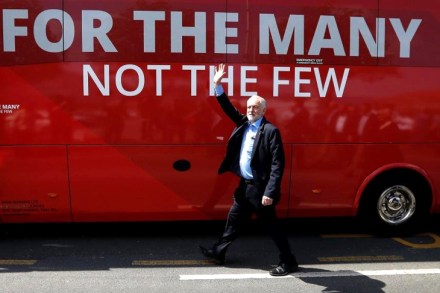
Labour is no longer ‘for the many’

From our UK edition

Jeremy Corbyn’s speech today in which he confirmed that a Labour government would keep Britain in a Customs Union with the EU was about so much more than trade. It was about the future of the Labour party itself. It sent a clear message about what, and more importantly who, Labour is for these days. It confirmed that Labour has finally made its choice between which of its two, quite conflictual support bases it will represent in public life: the better-off ones, the middle-class ones, the Southern ones. This is what Labour’s cosying up to the idea of a Customs Union — which is a betrayal of Brexit, whatever Labourites say to the contrary — really tells us.

Tory Remainers dial down the rhetoric

From our UK edition

Can Jeremy Corbyn's big Brexit speech be classed as a success? It really depends on who you think it was aimed at. Unsurprisingly the softening of Labour's Brexit stance has been welcomed by the party's Remain-backing membership. On top of that, the Labour leader managed to please big business – for a change. Corbyn's announcement that Labour would back the UK staying in 'a' customs union with the EU post-Brexit has been praised by the Institute of Directiors while the CBI say the policy would 'put jobs and living standards first'. However, sceptics argue that the target audience for the speech was actually the Conservative party.

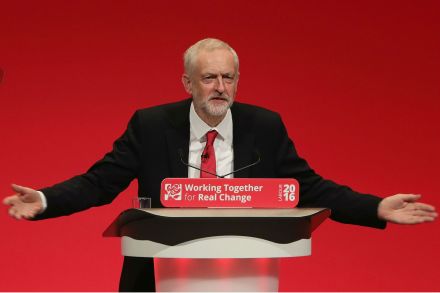
Full text: Jeremy Corbyn’s Brexit speech | 26 February 2018

From our UK edition

It’s great to be speaking here in Coventry, which has long been at the core of Britain’s industrial heartland and is now set to be our next city of culture. Next month, the government will embark on the second and most crucial phase of negotiations to leave the European Union to set the terms of Britain’s relationship with the EU for the long-term. We are now 20 months on from the referendum that voted to leave and a year on from the triggering of Article 50. But the country is still in the dark about what this divided Conservative government actually wants out of Brexit. They can’t agree amongst themselves about what their priorities are or what future they want for Britain after Brexit. They’ve got no shortage of soundbites and slogans of course.

Jeremy Corbyn’s criticism of the customs union

From our UK edition

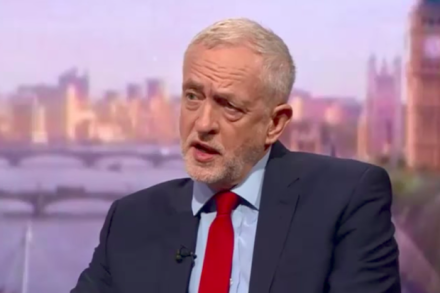
The Labour shadow cabinet have been out in full force on the airwaves this morning dropping heavy hints that Jeremy Corbyn will use a speech tomorrow to announce that his party backs the UK remaining in 'a' customs union  post-Brexit – which would mean the UK would be unable to strike its own free trade deals. Speaking on the Andrew Marr show, the shadow Brexit secretary said Labour's front bench was 'unanimous' in its backing for striking a new deal with the EU after Brexit that would see the UK leave the customs union but then negotiate a treaty that will 'do the work of the customs union'. Only Corbyn hasn't always been so keen on 'the work of the customs union'.

Czech mate: Tory vice-chair’s grovelling apology to Corbyn

From our UK edition

Oh dear. When the Sun reported this month that Jeremy Corbyn met with a Czech spy – posing as a diplomat – during the cold war, the story appeared to raise serious questions over the Labour leader's judgment. A spokesman for the Labour leader admitted he had met a diplomat, but said Corbyn had never knowingly talked to a spy. However, things took a turn for the obscure when former Czech intelligence officer Jan Sarkocy claimed that he met Corbyn and recruited him as an intelligence asset – a claim Labour dismissed as a 'ridiculous smear'. This denial wasn't enough to stop some Tories going on the offensive. Tory vice-chair Ben Bradley tweeted that Corbyn had 'sold British secrets to communist spies'.

The Tories should run a mile from the Corbyn spy story

From our UK edition

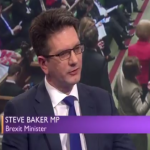
It's fair to say that the Conservatives' attempts to use the allegations about Jeremy Corbyn's links with a Czechoslovakian spy have had mixed results. The high point came when Theresa May managed to produce a joke about blank cheques and Czechs at this week's Prime Minister's Questions, and everything else has been competing to be the low point, from Steve Baker's deeply awful interview on the Daily Politics, to Ben Bradley receiving a letter from Corbyn's lawyers. Perhaps there could have been a slightly less ham-fisted way of engaging with the story. Or perhaps it would be better for the Tory party's dignity, if nothing else, if it left these claims well alone.

Does Seumas Milne hold Brexit’s fate in his hands?

From our UK edition

Could Britain remain in the Customs Union after Brexit? That is the question of the moment, the issue that currently troubles a lot of people in politics and government. It raises another question: who will decide whether we do indeed remain in the Customs Union? Here’s an interesting answer being given, in whispers, around Westminster and Whitehall: Seumas Milne. The theory goes like this: the Tories are split on the CU, so Labour’s position on it will be decisive. If Jeremy Corbyn brings Labour in behind the pro-CU Tories (and the SNP) then there is a comfortable majority for staying in, no matter what either Theresa May, or the DUP might have to say about it. Hence there is a huge interest in Labour’s position, in Brussels and Whitehall and elsewhere.

The terror of Corbynism

From our UK edition

This week, the Corbynistas bared their teeth. They gave us an insight into the mob-like authoritarianism that lurks behind the facade of their ‘kind’ politics. They insisted Jeremy Corbyn wasn’t a spy for the Stalinists while at the same time exposing their Stalinist tendencies. ‘How dare you lump us in with Stalinists?’, they cried, while in the next breath making manic-eyed videos threatening the press and forming online mobs to punish those who criticise their Dear Leader. The irony has been dark. For the first time, I feel fearful of Corbynism.

Does John Bercow think politics is illegal?

From our UK edition

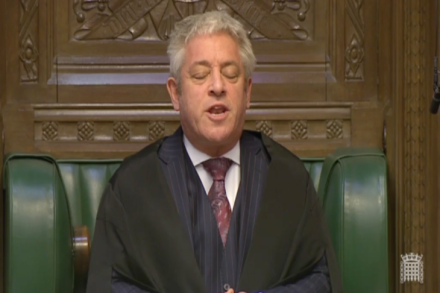
Bit of a rum PMQs today. Jeremy Corbyn, who has always loathed the EU and now pretends to admire it, asked May about Brexit. May, who has always admired the EU and now pretends to loathe it, fobbed him off with glib sound-bites. ‘Take back control of our borders,’ ‘protect workers’ rights,’ and so on. Corbyn asked a long question about the Government’s ‘desired outcome’. He got a four-word answer: ‘A bespoke economic partnership.’ Mr Speaker decided that he should be the star-turn today. Perhaps he sought to wow a posse of French MPs who were witnessing the bun-fight from the gallery. Quelling an early outbreak of shouting, the Speaker got down from his high chair and delivered one his longest ever speeches. ‘Please!

Steve Baker’s disastrous Daily Politics interview

From our UK edition

Brexit minister Steve Baker has his colleagues to thank for his disastrous turn on the Daily Politics. Tory ministers have been piling in to the Corbyn Czech spy row, but it’s fair to say that some may have taken things a little too far. The Labour leader has been accused of having ‘betrayed’ his country, while another Tory MP even compared Jeremy Corbyn to Kim Philby. It was left to Baker to explain his fellow Tory MPs’ choice of words, when he was taken to task by Andrew Neil. Asked six times to explain how Corbyn had betrayed his country, Baker failed to answer each time: AN: Do you think Mr Corbyn has in any way betrayed his country? SB: I have got no evidence for any of that so I won’t make any (comment) AN: So why do your colleagues?

Watch: Theresa May’s Czech spy gag

From our UK edition

The Jeremy Corbyn Czech spy story is something of an open goal for the Tories. It was no surprise then that Theresa May used the ongoing row to make a gag at the Labour leader's expense at PMQs. During an exchange on Brexit, the PM told Corbyn: 'Normally he stands up every week and asks me to sign a blank cheque. I know he likes Czechs but...' Corbyn responded by pretending to yawn. Mr S isn't surprised that he is growing tired of this story...

Jeremy Corbyn’s ‘change is coming’ warning to the press is chilling

From our UK edition

What a convenient inconvenience the row about Jeremy Corbyn's links with a Czechoslovakian agent is for the Labour leader. While the allegations that he was an informant during the Cold War may well be the 'nonsense' that he claims they are (they certainly don't seem to correlate with anything released at the end of that period), the way a number of newspapers have covered them has given him an opportunity to launch an attack on the press. In what tabloids might term a 'bizarre video rant', Corbyn said the newspapers had 'gone a bit James Bond' with these 'smears', before warning the 'media barons' that 'change is coming'.

Stop flattering Corbynistas | 20 February 2018

From our UK edition

Dear right-wing people, please stop the red scares. Please give the Cold War lingo a rest. Please remember it is not the 1950s anymore and that there’s about as much chance of Kevin Spacey taking the title role in a biopic of Jesus Christ as there is of Commies coming to power in Britain. Please stop referring to Jeremy Corbyn as if he were some Trotskyite firebrand, when in truth his drab politics is closer to Milibandism than Marxism (the Ed variety, that is, not the Ralph variety). You’re embarrassing yourselves with this pinko panic. Even worse, you are unwittingly flattering the Corbynista crew by indulging their teenage fantasies about being red and edgy. Stop. This Corbyn-and-the-Czech story has got to be the lamest red scare of recent times.

The middle class is Labour’s fickle friend

From our UK edition

Labour is a movement of organised sentimentality. Its default sound is a coo. Its default gesture a hug. For generations the party has wrapped itself in fuzzy feelings. You only have to hear the applause for councillors who have served the party since Clement Attlee’s day to understand the part cloying, part inspiring, solidarity that sustains it. They may have lost many of the battles they fought. Their victories may have brought unintended consequences they neither wanted nor understood. But they remain good people with fine motives – just like the rest of us. Even when history has proved them wrong, the world would have been a better place and humanity a nobler species, if it had proved them right.

Did Jeremy Corbyn bring down the Iron Curtain?

From our UK edition

There are two competing theories about how the Soviet Union collapsed. One holds that Ronald Reagan's moral leadership against communism and bolstering of US defences weakened Moscow's will and buried them economically. The other contends that Mikhail Gorbachev's domestic reforms and wise diplomacy brought down the Iron Curtain in spite of the cowboy in the White House. We can now add a third hypothesis: Jeremy Corbyn did it. If the claims of a former Czechoslovakian agent are to be believed, the Labour leader was a paid informant for the secret police. That would certainly explain the devastating collapse of state socialism. Even the mighty Warsaw Pact could not have withstood the support of Jeremy Corbyn.

The latest Labour bullying row highlights the moderates’ dilemma

From our UK edition

Although it's the Conservatives nowadays who are best known for in-fighting, this weekend we were offered a reminder of the divisions in Labour. At a meeting of the National Policy Forum (NPF), a row broke out between the Momentum contingent and the moderates. The subject of the row was – once again – Ann Black, the veteran activist who was ousted as chair of the Disputes Panel last month (and replaced with Corbyn favourite Christine Shawcroft) after the Corbynistas won a majority on the National Executive Committee. Black was expected to defeat union representative Andi Fox to be elected as chair of the policy forum, which sets Labour policy for future general elections. However, it appears Jeremy Corbyn’s allies had other ideas.