Japan

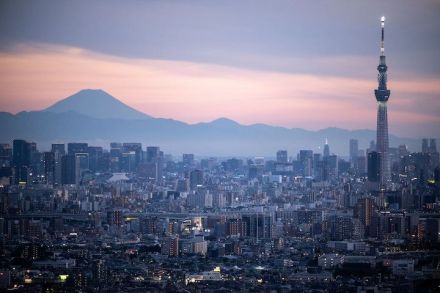
What Japanese cities can teach us about architecture

From our UK edition

There are three things that occur to you when you travel the length of Japan: that kimonos are surprisingly good for any occasion; that the country’s reputation for cruelty may partly derive from breakfasts comprising tea porridge and prawn soufflé; and that the hordes of camera-wielding Japanese tourists taking thousands of snaps – a comic trope in the 1980s, at least – were really just ahead of their time and the rest of us are only now catching up thanks to our iPhones.

The wonder of the marine world is in serious danger

From our UK edition

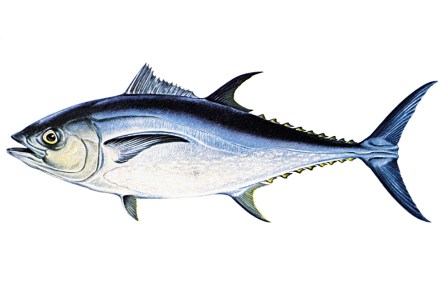
Streamlined, musclebound, warm-blooded and with fins that retract into body slots like a switchblade so it can attain swimming speeds of more than 40 mph, the Atlantic Bluefin Tuna is a wonder of the marine world – the Clan Chief of the Scombridae, that can weigh up to 1,500 lb. It has long been prized by sport fishermen, from Charlie Chaplin to the dentist-turned-bestseller Zane Grey, and there is nothing tentative about a tunny strike. In 1927, after a four-hour battle with one eight-foot giant, Grey wrote: ‘If it were possible for a man to fall in love with a fish, that was what happened to me. I hung over him, spellbound and incredulous.’ ‘If it were possible for a man to fall in love with a fish, that’s what happened to me.

Spooky, classy dystopian sci-fi: Apple TV+’s Silo reviewed

From our UK edition

Back once more to our favourite unhappy place: the dystopian future. And yet again it seems that the authorities have been lying to us about the true nature of reality. This time – in Silo – the lie concerns the nature of the world outside the enormous silo in which our heroes and about 10,000 other survivors have been hiding for the past 100-odd years since some nameless apocalypse. Is it really as dangerous as the Powers That Be say? Or is this an illusion, maintained over a century of relentless official propaganda, designed to keep the enclosed populace frightened and in check? Silo began life in 2011 as a self-published short story by Hugh Howey – called Wool, not Silo – which he put out through Amazon’s Kindle Direct.

How to spend 48 hours in Hiroshima

From our UK edition

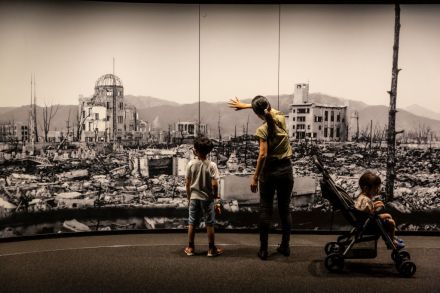
Tourism is well and truly back in Japan, with packed flights and full hotels during the popular sakura (cherry blossom) season last month. And from today, all eyes will be on Hiroshima as it hosts the 49th G7 summit – an event that Japan’s Prime Minister Fumio Kishida has promised will showcase the ‘charms of our country’. So what can visitors expect from the city best known as where the world’s first atomic bomb was used in warfare in 1945? While Tokyo will no doubt be top of the to-do list for anyone on a flying visit to Japan, during a recent tour of the country it was western Honshu, where Hiroshima is located, that charmed us the most.

Letter from Taiwan: life in the shadow of ‘The Bully’

From our UK edition

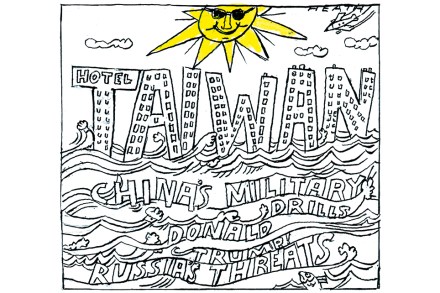
The Grand Hotel sits on the outskirts of Taipei, at the edge of Yangmingshan national park. Overlooking the city, the 14-storey building is designed like a Chinese palace. It was built in the 1950s to host dignitaries when Taiwan was under authoritarian rule. Today it operates as a five-star hotel and is open to tours from the public. Photos of foreign leaders and celebrities who have visited are displayed on the walls: Bill Clinton in 1979; Elizabeth Taylor the same year; Nelson Mandela in 1993. If this were any other hotel, you’d think it was simply boasting about its clientele. But there is something far more poignant about this display – it is proof that Taiwan has been recognised informally over the years through the act of important people showing up.

Deeply moving but bleak: Plan 75 reviewed

From our UK edition

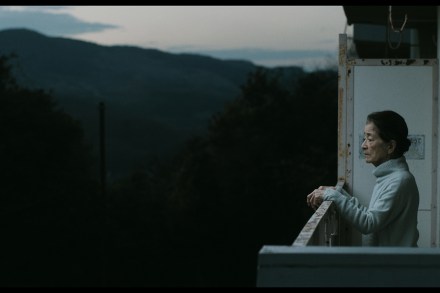
Plan 75 is a dystopian Japanese drama about a government-sponsored euthanasia programme introduced to address Japan’s ageing society. Aged 75 or over? Agree to die and we’ll give you $1,000 to spend as you like in your last days! With a collective funeral thrown in for free! Actually, it’s not sold aggressively like that, as this is an understated film. But, despite the hopeful ending, it is so sad and bleak that if you didn’t feel minded to take $1,000 before, you may feel like taking it afterwards. You could spend it on a spa break and a deluxe sushi platter, which is one of the options, if that takes your fancy. Aged 75 or over? Agree to die and we’ll give you $1,000 to spend as you like in your last days!

Japan’s role in the making of modern China

From our UK edition

49 min listen

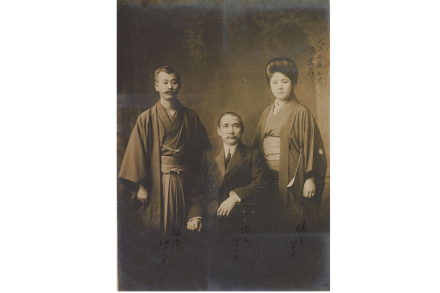
Just before Christmas, it was reported that the billionaire Jack Ma had moved to Tokyo after getting into trouble with the Chinese authorities. If he's still living there, he'd be one of several well known Chinese who seems to have made Japan their home after run ins with Beijing. In so doing, they’re following in the footsteps of those who came over a century ago – other Chinese exiles who holed out in Japan because of a hostile political environment back home. This episode is all about how important it was that Japan served as a safe haven for these exiles – both reformers and revolutionaries – at the turn of the 20th century. That would later contribute to the establishment of a Chinese national identity and even the creation of the Chinese republic itself.

Another grim reminder of Japan’s violent politics

From our UK edition

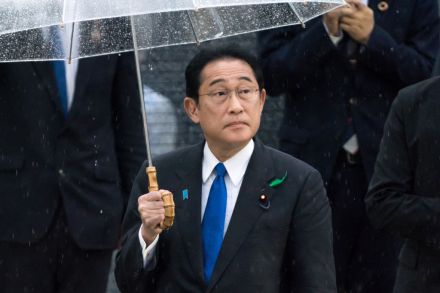
Has Japanese Prime Minister Fumio Kishida just survived an assassination attempt? Kishida was evacuated from the site of a stump speech in the fishing port of Sakizaki in Wakayama western Japan after what appeared to be a pipe bomb was thrown in his direction. No one was injured but people fled in terror after the attack, which occurred at around 11:25 AM shortly before the PM was due to speak. A man was wrestled to the ground clearly holding a cylindrical metal object identical to the one thrown at Kishida before being arrested and taken away.  That’s as much as we know for now. It is not clear yet whether the ‘explosive’ was capable of killing anyone.

Washington’s yes-men in Japan

It was nighttime in Davos, 8:31 on January 18 to be exact. Japanese journalist Ganaha Masako had been standing out in the cold for three hours near the entrance to a building which, she had heard, was being used as a venue for a World Economic Forum event that evening. Ganaha had picked up on some additional chatter. Klaus Schwab, the head of the WEF, was rumored to be inside. It was a long shot, but Ganaha wanted to ask Schwab some questions about globalism. And then, suddenly, Schwab appeared. Fleshy cheeks jiggling slightly as he shuffled along the snow-dusted sidewalk, he stepped cautiously out of the WEF event forum with a few handlers. Ganaha pointed her camera at Schwab and asked him for an interview. He ignored her and kept shuffling along.

Is Japan doomed?

From our UK edition

Japan is heading for trouble, the country's prime minster Fumio Kishida has suggested. ‘Our country is on the brink of being unable to maintain the functions of society,’ he said in a speech earlier this week. Japan’s birth rate, the average number of children a woman will have, is too low, and still falling. It’s 1.3, and needs to be 2.1 to keep the population stable. With every year that passes, there are hundreds of thousands fewer Japanese people.  Economics is mostly to blame. Once, there was a secure and predictable life was for the average Japanese person. The men would toil away at a big company in return for the assurance of lifetime employment.

Japanese food is overrated

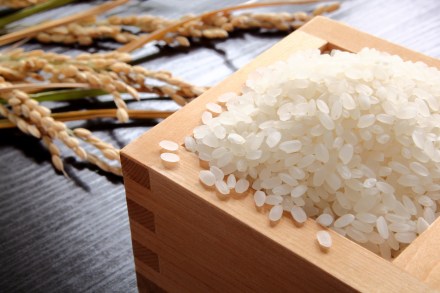
After twenty-three years in Japan, I have concluded that the much-lauded, worshipped even, cuisine is overrated. And I am getting a little tired of being told how awe-inspiringly wonderful Japanese food is, often by people whose only experience is high-end sushi or designer tempura in a showpiece Tribeca eatery, a world away from the standard fare available on the backstreets of Shibuya. Part of the problem is that much of what delights the Japanese about their food is unrelated to its actual taste.

Japanese

Japan’s defense revolution

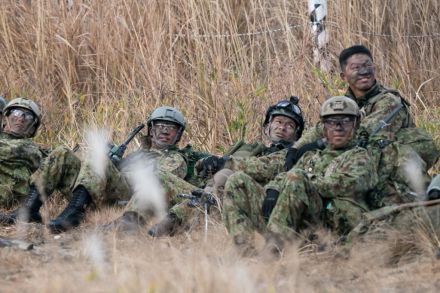
You don’t need to be an Asia specialist to recognize that China is undergoing a significant military modernization campaign. China’s leader, Xi Jinping, and the Chinese Communist Party are seeking to transform the People’s Liberation Army (PLA) into a world-class military by 2049, and complete the development of the military platforms, capabilities, enablers, and amphibious weapons systems necessary for a potential Taiwan contingency by 2027. Beijing’s defense budget rose by 139 percent between 2010 and 2020.

Why did North Korea fire a missile over Japan?

From our UK edition

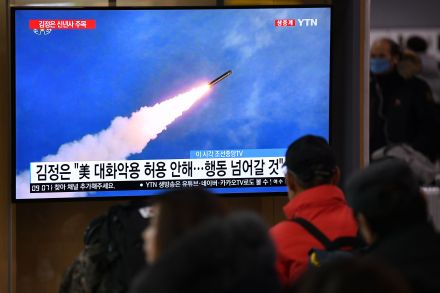
It was a new dawn, a new day, and a new North Korean missile test. The land of the morning calm – as South Korea is affectionately-nicknamed – awoke to the launch of the fifth North Korean ballistic missile in ten days. Over the past ten months, the international community has become accustomed to a growing number of North Korean missile launches, of an increasingly diverse range of missiles. Kim Jong-un’s determination for North Korea to become a nuclear state, and be recognised as such is only heightening. Russia and China are now more reticent than ever to side with the West and support sanctions on North Korea Last night’s launch was of a Hwasong-12 intermediate-range ballistic missile.

The anger behind Shinzo Abe’s state funeral

From our UK edition

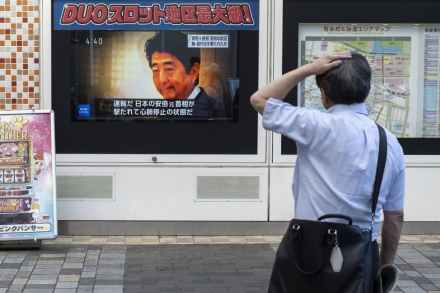
Tokyo While not quite on the scale of Her Majesty’s service, Tuesday's state funeral of Japan’s longest serving PM Shinzo Abe, gunned down while campaigning on the streets of Nara in July, will be an extravagant affair. The ceremony will take place at the Nippon Budokan in central Tokyo with approximately 6,000 attendees including the US Vice President Kamala Harris, Indian prime minister Narendra Modi, and Australian PM Anthony Albanese. Theresa May will represent the UK. It will cost 1.6 billion yen (10.5 million pounds). The event has become mired in controversy. Many in Japan are fiercely opposed to the decision, made by current PM Fumio Kishida, to grant a state funeral to Abe, allegedly to placate his party’s right-wing.

My lunch with the Queen

From our UK edition

None of this would have happened had I accepted my neighbour’s invitation to dine with a Swiss billionaire banker, or bb. (Sorry, Real life.) He’s an old friend, the bb, and untypically Swiss. He boozes, schnoofs, and chases women, or Afabs, as the absurd youth of today call them. Booze, alas, now goes to my head, and as the song says, it lingers like a haunting refrain for at least a couple of days. I had kick boxing early the next day so I chose to watch the 1949 classic, Sands of Iwo Jima, and snub the Swiss bb. The film was made in 1949 and stars the greatest of them all, John Wayne, luckily no longer with us to see what his beloved America has turned into.

Japan’s cult of safetyism

From our UK edition

The Japanese government has launched an initiative to encourage young people to drink more alcohol. Yes, really. The national tax agency’s ‘Sake Viva’ campaign is an appeal for ideas to get youngsters boozing after taxes on alcohol products, which accounted for 5 per cent of total revenue back in the hard-drinking 1980s, fell to just 1.7 per cent in 2020. So, at a time of economic hardship, Japan’s youth are being asked to do their patriotic duty and get hammered. The falloff in social drinking is being attributed in part to the pandemic. Japan didn’t have a full-blown lockdown imposed from above, but the more subtle bottom-up lockdown that demonised anyone frequenting bars and restaurants worked pretty well.

Japan’s nuclear renaissance

From our UK edition

Japan is reversing its avowedly anti-nuclear stance, restarting idled plants and looking to develop a new generation of reactors, announced Prime Minister Fumio Kishida on Wednesday. This major policy shift from the world’s third biggest economic power underlines both the seriousness of the global energy crisis and points to the most likely way ahead. This announcement would have seemed unimaginable a decade ago in the wake of the Fukushima nuclear disaster, which saw the plant flooded and led to three separate hydrogen explosions. Then prime minister Naoto ordered those living within a 12-mile radius of the plant to be evacuated as the Fukushima area was designated a contaminated wasteland.

The myth that Hiroshima was necessary

If you think the falsehoods spilling out of Ukraine about casualties and atrocities are shocking, meet the greatest lie of modern history. August 6 marks the seventy-seventh anniversary of the nuclear destruction of Hiroshima and death of some 140,000 non-combatants. Yet the only nation in history to employ a weapon of mass destruction on an epic scale, against an undefended civilian population, shrugs off the significance of an act of immorality. Beyond the destruction lies the myth of the atomic bombings, the post-war creation of a mass memory of things that did not happen. This myth has become the underpinning of American policy ever since, and carries forward the horrors of Hiroshima as generations pass.

Baby bust: China’s looming demographic disaster

From our UK edition

This week, the world is gripped by the risk of conflict between the US and China. The People’s Liberation Army has fired live missiles into the Taiwan Strait in retaliation for US House Speaker Nancy Pelosi’s visit to Taipei and those who fear that China vs America is the next world war see Taiwan as a flashpoint. Some analysts imagine a repeat of the Cold War: two countries, two rival political systems, vying for world economic supremacy. China’s dominance is inexorably linked to the size of its population. It has long been the world’s most populous country. A technologically advanced society, with a great army of young workers and soldiers, is inevitably a power to be reckoned with.

Is Biden giving Brittney Griner special treatment?

The rule is simple: abroad, Americans are subject to the host country's laws and legal system, whether that be Great Britain or Russia. The Bill of Rights does not follow Americans to foreign countries, nor will the US government intervene with the host country on their behalf. Try and bring some weed into Japan, and if you're caught, you're looking at years behind bars. No matter if it's a small amount for personal use back home. In Japan, anything over about an ounce means you intended to sell it, and the punishment is accordingly lengthy. I should know: I spent seven years in Japan visiting American prisoners as part of my State Department job. The top three reasons for their arrests were drugs, drugs, and drugs. Just like Brittney Griner.