Japan

Why are children in Guernsey extolling Islam to their parents?

From our UK edition

I have never been to the island of Guernsey. This is a large world and we have a finite amount of time on it and must make our decisions about where we visit based on necessarily limited information. We cannot know everything. I have never been to Japan, for example, because I do not wish to be crushed to death by a mass of jabbering humanity, nor take part in unpleasant sadomasochistic sex acts, nor watch people disembowelling themselves in order to affirm their masculinity. I realise that this is not all that Japan has to offer. There is also sushi, for example, and buttock-clenched politeness. I could get both of those things in Harrogate. So that’s Japan off my itinerary.

Portrait of the week | 18 February 2016

From our UK edition

Home David Cameron, the Prime Minister, spent time in Brussels before a meeting of the European Council to see what it would allow him to bring home for voters in a referendum on Britain’s membership of the European Union. The board of HSBC voted to keep its headquarters in Britain. Sir John Vickers, who headed the Independent Commission on Banking, said that Bank of England proposals for bank capital reserves were ‘less strong than what the ICB recommended’. The annual rate of inflation, measured by the Consumer Prices Index, rose to 0.3 per cent in January, compared with 0.2 per cent in December. Unemployment fell by 60,000 to 1.69 million. A dental nurse from Bradford who gave her friend a facelift was struck off the dental register.

The EU must change

From our UK edition

David Cameron’s attempt to renegotiate Britain’s EU membership has served as a powerful reminder of the case for leaving. The EU is designed in such a way that almost no sensible proposal can be passed. If one member state has a good idea, the other 27 members demand a price for approving it, or they demand concessions until it is completely watered down. If the leader of a country protests, the response is clear: What are you going to do? Walk away? You wouldn’t dare. The EU’s power-mongering has a cost. The euro has hideously distorted the economies of the member states that adopted it, and the abolition of so many border controls has worsened the immigration crisis — which, in much of Europe, has fostered a political crisis.

The big steal

From our UK edition

In recent weeks, North Korea allegedly developed a hydrogen bomb and hangover-free booze. This would be a worrying combination in any government not widely thought to have the force projection of an aggressively drunk toddler with a bag on its head. North Korea is often portrayed as a cartoon state — something sustained by Kim Jong-un’s propensity to execute rivals using anti-aircraft guns. Announcing the discovery of unicorns in 2012 didn’t help, though it was comparatively mild for a state media agency partial to statements like: ‘South Korean President Lee Myung-bak is a rat who should be struck with a retaliatory bolt of lightning.

Portrait of the week | 21 January 2016

From our UK edition

Home David Cameron, the Prime Minister, said that Muslim women must learn English, and that those who had entered on spousal visas would be told halfway through their five-year spousal settlement: ‘You can’t guarantee you can stay if you are not improving your language.’ He said that learning English had ‘a connection with combating extremism’. A heterosexual couple went to the High Court to claim the right to enter into a civil partnership. MI5, the security service, was rated as Britain’s most gay-friendly employer, following a survey by the organisation Stonewall. Mark Carney, the governor of the Bank of England, said: ‘Now is not the time to raise interest rates.

The rise and fall of Sony

From our UK edition

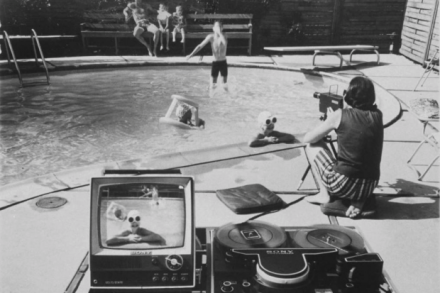
Here is a Japanese fairy tale for Christmas. An allegory of insight, opportunism and a fall from favour. It is 1945. Japan is devastated and disgraced, but two bright young men, Akio Morita and Masaru Ibuka, the first a salesman, the second an engineer, have a plan to turn toxic ashes into precious metal. They have discovered a curious typewritten document published by the Civil Information and Education division of the US Occupation Forces. It is called ‘999 Uses for a Tape-Recorder’. In those days, people needed to be told these things. Inspired, they form a company called TTK and Ibuka writes in its Purposes of Incorporation that it will make ‘imaginative use of technology ...to help restore national culture’.

The ten best home video releases of 2015

From our UK edition

‘Tis the season for end-of-year lists. Here is mine. It’s for the ten best home video releases of 2015; which is to say, the ten best DVDs or Blu-rays released in Britain this year. I’m leaving out releases from abroad, even though that means leaving out some of my favourites, so as to spare your wallets. All of these can be bought without import fees or much delay. There are other caveats and restrictions. The biggest is that, despite trying my best, I cannot watch everything. There are some major releases that I haven’t got around to yet (including this Yoshida set, which I’m saving for the Christmas break). There are some that will be released between now and the actual end of the year (including this hi-def Chaplin collection).

Boris Johnson’s diary: Amid the China hype, remember Japan

From our UK edition

Frankly I don’t know why the British media made such a big fat fuss last week when I accidentally flattened a ten-year-old Japanese rugby player called Toki. He got to his feet. He smiled. Everyone applauded. That’s rugby, isn’t it? You get knocked down, you get up again. And yet I have to admit that I offered a silent prayer of thanks that I didn’t actually hurt the little guy. They aren’t making many kids like Toki these days; in fact they aren’t making enough kids at all. If you want proof of the rule that nobody knows anything, look up a 1988 bestseller called Yen! Japan’s New Financial Empire and its Threat to America.

Lionel Barber strengthens his ties with China

From our UK edition

Last night's state banquet saw Jeremy Corbyn join David Cameron, President Xi Jinping and Her Majesty to raise a glass to the beginning of a golden era of partnership between China and the United Kingdom. With Corbyn meeting the Chinese president earlier in the day to raise grievances regarding the country's human rights track record, his encounter with the president at the dinner appeared to be a civil one.

Exclusive: Boris declares that Japan is relaxed about Britain leaving the EU

From our UK edition

Boris Johnson has recently returned from a tour of Japan. His diary of the trip appears in this week's issue of The Spectator: Frankly I don’t know why the British media made such a big fat fuss last week when I accidentally flattened a ten-year-old Japanese rugby player called Toki. He got to his feet. He smiled. Everyone applauded. That’s rugby, isn’t it? You get knocked down, you get up again. And yet I have to admit that I offered a silent prayer of thanks that I didn’t actually hurt the little guy. They aren’t making many kids like Toki these days; in fact they aren’t making enough kids at all. If you want proof of the rule that nobody knows anything, look up a 1988 bestseller called Yen!

What is it about Bill Viola’s films that reduce grown-ups to tears?

From our UK edition

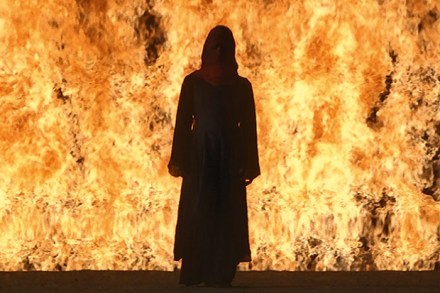
Even the most down-to-earth people get emotional about Bill Viola’s videos. Clare Lilley of Yorkshire Sculpture Park (YSP) seems close to tears as she takes me round his new show. Lilley is the show’s curator. She’s usually so matter-of-fact, but when she talks about Viola her eyes light up. When she took her two teenage daughters to his studio in Los Angeles, she tells me, they both cried when they saw his films. I like to think I’m made of sterner stuff, but when she leaves me in the Sculpture Park’s Underground Gallery, where Viola is on show, after a few minutes in there on my own I’m blubbing like a baby. What is it about Bill Viola that makes grown men (and women) weep?

Boris Johnson’s history of violence

From our UK edition

Oh dear. With Boris Johnson needing to mount a political comeback pretty soon in order to have any hope of stopping George Osborne's bid to be the next Conservative leader, the Mayor of London could do with some good PR. So unfortunately an incident that occurred on his trip to Japan is unlikely to prove helpful. Johnson was filmed knocking over a 10-year-old Japanese schoolboy during a 'friendly game' of rugby. With the boy, who is called Toki Sekiguchi, saying that he only felt a little pain,  Mr S suspects he may have got off lightly given Boris Johnson's history of violence. 2. Last year during a charity football match, Johnson took down a nine-year-old as he went in for the ball with an over-enthusiastic tackle. https://vine.co/v/Oq6JqQqqdgr 3.

The polyphonous Babel of global music

From our UK edition

‘Following custom, when the Siamese conquered the Khmer they carried off much of the population, including most of their musicians, to be resettled in what is now Thailand.’ The history of music isn’t a story of chords and scores, instruments or their players. Music’s story is one of wars, invasions and revolutions, religion, monarchy and nationhood. Whether you look at the histories of Africa or Iran, Europe or Uzbekistan, the narratives are the same: colourful, bloody, complicated. Music is not an aesthetic response, an artistic translation of life; music and musicians are society itself. It’s a principle that acts as the guiding thread through the labyrinth of traditions and terminologies that make up The Other Classical Musics.

Cheer up: we’re robust enough to withstand a shock from China

From our UK edition

Home from the hot Aegean, huddled by the fire as rain ruins the bank holiday weekend, I’m thinking: what gloom has descended since I’ve been away — and doesn’t it call for a round-up of cheerful news? So here goes. The UK economy grew by 0.7 per cent in the second quarter and a respectable 2.6 per cent over the past year. US growth has been revised sharply higher to 3.7 per cent, scotching our claim to be the fastest growing western economy, but George Osborne can still say convincingly that ‘we’re motoring ahead’ — and weak first-quarter performance can be seen as a blip rather than the revelation of doom it was declared to be by Ed (‘Where is he now?’) Balls. Tax receipts are rising at an annual rate of 4.

Letters | 20 August 2015

From our UK edition

The morality of the A bomb Sir: In questioning whether we should celebrate VJ Day (Diary, 15 August), A.N. Wilson is confusing ‘why’ with ‘how’. The debate on the rights or wrongs of the nuclear attack will continue probably until long after the grandchildren of the last survivors have passed on. What should not be forgotten is the necessity to defeat the cruel, expansionist, militaristic regime that arose in Japan between the wars. Something happened to Japan during that period. The treatment of Allied prisoners of war and the atrocities in China during the second world war are well documented. What is less well known is the Japanese treatment of prisoners of war during the first world war.

Should we have celebrated VJ Day?

From our UK edition

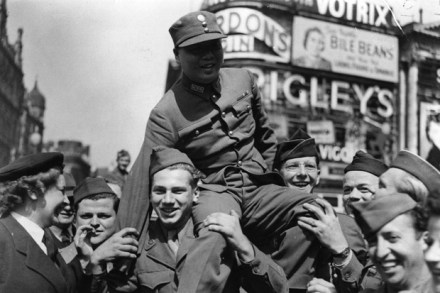
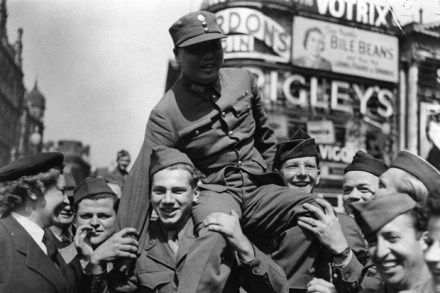
Should we have celebrated VJ Day? Hearing the hieratic tones of the Emperor Hirohito on Radio 4 the other day, announcing the unthinkable — the surrender of the great imperial power to the secular, gas-guzzling, unheeding West — seemed like a profanity. So much came to an end with that surrender that it is not possible to celebrate it, particularly since the method chosen to defeat Japan was nuclear-fuelled genocide, not once — which would have been unforgiveable enough — but twice.

Diary – 13 August 2015

From our UK edition

Should we have celebrated VJ Day? Hearing the hieratic tones of the Emperor Hirohito on Radio 4 the other day, announcing the unthinkable — the surrender of the great imperial power to the secular, gas-guzzling, unheeding West — seemed like a profanity. So much came to an end with that surrender that it is not possible to celebrate it, particularly since the method chosen to defeat Japan was nuclear-fuelled genocide, not once — which would have been unforgiveable enough — but twice.

The clock that stopped: the victory of nuclear arms and defeat of nuclear power

From our UK edition

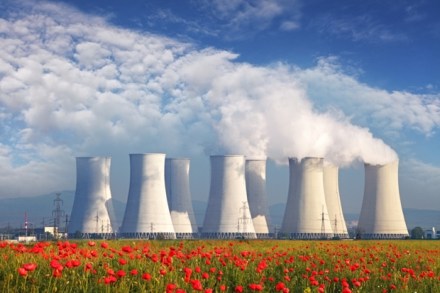
‘I visited the black marble obelisk which marks the epicentre of the explosion, and I saw the plain domestic wall-clock retrieved intact from the rubble with its bent hands recording the precise time of day when the city was obliterated: 11.02 a.m. I was glad to be alone, because I could not have spoken.’ Published here 20 years ago, that was my memory of Nagasaki, the target on 9 August 1945 of the second and last nuclear weapon ever deployed. The subsequent seven decades of non-use of nuclear arms — deterred by that most chilling of threats, ‘mutually assured destruction’ — is one of the miracles of modern history, given the unsafe hands in which much of the materiel was held.

Do Nikkei and the FT really share the same journalistic values?

From our UK edition

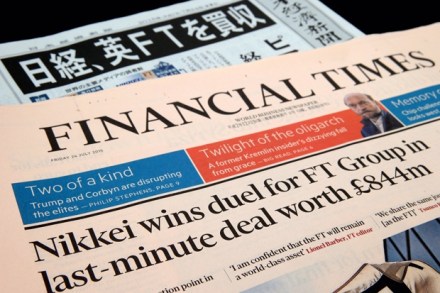
It’s nearly 30 years since I worked in Japan, but I still have a few words of the language and a certain idea of how the place worked. The role of the business press, for example, was to trumpet export successes of Japanese corporations, and not to report shenanigans in which securities firms boosted prices of selected shares by pushing them to housewife investors, to generate campaign funds for favoured politicians. So I’m curious how the Financial Times will fare under its new owner Nikkei, the very Japanese media group that has paid £844 million to acquire the world’s most prestigious business title. Has the culture changed since my day?

The real theatre of war

From our UK edition

The history of ‘great events’, Voltaire wrote, is ‘hardly more than the history of crimes’. Physically, the war in Asia was the second world war’s greatest event. The Asian theatre, much of it water, was seven times larger than the European theatre. America’s mobilisation was the most complex in history, Japan’s crimes among the most sadistic. Metaphysically, the atomic consummation altered our relationship to our habitat. Yet only three comprehensive, single-volume accounts of the war in Asia have appeared — until now the most recent being Ronald Spector’s Eagle Against the Sun in 1985.