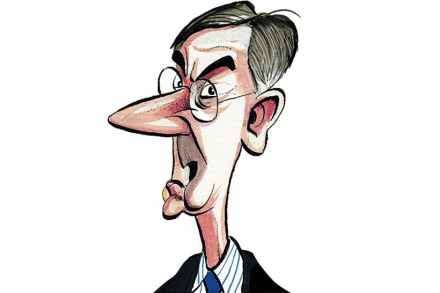
Jacob rees-mogg

At home with Jacob Rees-Mogg

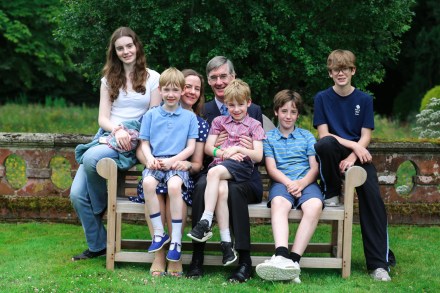
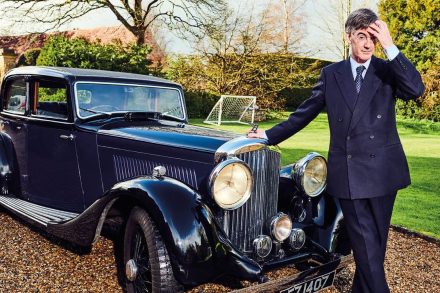
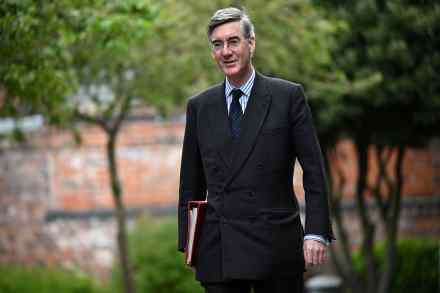
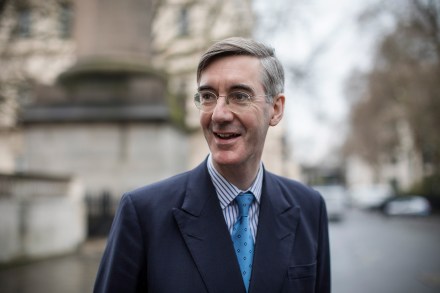
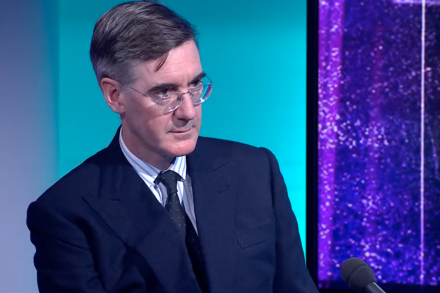
Before I arrived at Gournay Court, Jacob Rees-Mogg’s seventeenth-century home in Somerset, I’d missed the main event. Beforehand, I’d asked the Conservative Member of Parliament to lean in to whatever our photographer asked — and somehow, before I turned up an hour late, she managed to get him in a nearby field feeding sheep from the palm of his hand. He didn’t seem to mind. In fact, there were only a few times he said no to our increasingly deranged demands. Once was after we asked him to get up on the humongous dining room table, spread his legs and act natural. “Well, I couldn’t possibly do that,” he replied. When you drive up to Gournay Court, you encounter what I can only describe as the quintessential British upper class. Think afternoon tea at the Savoy.

Rees-mogg

Brexit, Trump’s wall, and the cynical inertia of the political class

I had lunch yesterday with a friend from London who brought grim tidings from Albion. Like me, he is an advocate of national sovereignty. He thinks the people of the United Kingdom ought to be allowed to govern themselves. So he, again like me, is an advocate for Brexit. He had no idea what was going to happen with Brexit. Yesterday was a busy day. I also chatted with friends about the crisis at our southern border. All honest people acknowledge that there is a crisis, that thousands upon thousands of people, most without English and without skills, are pouring over the border.

cynical inertia

The anti-Brexit movement has one big advantage: their opponents are in disarray

It may seem odd that a cabal of politicians, celebrities and millionaires can successfully present themselves as a great democratic force and seek to overturn Brexit, Britain's vote to leave the European Union. But the people behind the People’s Vote have one big advantage: their opponents are in disarray. Vote Leave ceased campaigning after the referendum. Its organisers felt they had accomplished their mission, and the Conservative government could be trusted to execute Britain’s withdrawal from the European Union. Boris Johnson now describes that decision as an ‘absolutely fatal’ mistake. As foreign secretary, Johnson admitted to dinner guests earlier this summer that ‘some of us were seduced by high office in government’.

people's vote anti-brexit peoples vote