Istanbul

Desperate straits

From our UK edition

 Istanbul Shops in a rundown neighbourhood sell fake life jackets to refugees planning to brave the Aegean Sea. Last year, nearly 4,000 refugees died trying to make this journey. ‘But what am I to do?’ says Erkan, a shopkeeper, as he pushes me out of his shop. ‘I tell them they are fake but the poor souls continue to buy them. The genuine ones don’t sell so well.’ We’re in the suburb of Aksaray, the makeshift centre of the smuggling trade in the city. Here the language is Arabic and the restaurants are Syrian. A town square serves as a hub for migration brokers. This is where dreams are sold. Each night, hordes of Syrians fill the area, their lives on their backs, preparing for the dangerous journey ahead.

On the money

From our UK edition

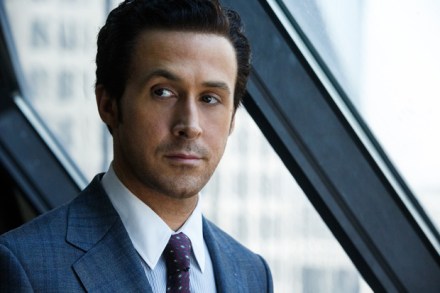
The Big Short is a drama about the American financial collapse of 2008. It talks you through sub-prime mortgages, tranches, credit-default swaps, mortgage-backed securities, collateralized debt obligations ...and, yes, I just bored myself to tears typing that list. I had to prop my eyes open with matchsticks typing that list. I would even propose that I was more bored typing that list than I’ve ever been in my whole life, which is saying something, as I saw Monuments Men. And, previously, I would have proposed that there is no way you could ever make any of the above fascinating or compelling or sexy, let alone scathingly funny. But The Big Short is fascinating, sexy, compelling and scathingly funny. It’s a miracle.

Comics’ trip

From our UK edition

Who says British television lacks imagination? You might have thought, for example, that every possible combination of comedian and travel programme had been exhausted long ago. After all, it’s now 26 years since Michael Palin set the trend by following in Phileas Fogg’s footsteps (sort of). In more recent times, we’ve had Stephen Fry going round America in a London taxi, Billy Connolly going round Australia on a Harley-Davidson trike and — perhaps drawing the short straw — Ade Edmondson going round Britain in a caravan. There’s also been Paul Merton in India, Sue Perkins in China, Sean Lock and Jon Richardson in the Deep South and... well, you get the idea.

Bish bash Bosphorus: Elif Shafak’s saga of love and death in Istanbul is crammed with incident on every page

From our UK edition

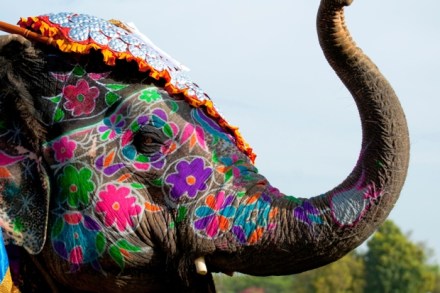
If you like to curl up by the fire with a proper, old-fashioned, saga-style tale about a boy and his elephant in Istanbul in the 1500s, The Architect’s Apprentice might be suitable for you. My heart sank slightly when the review copy arrived: a 452-page brick by an Orange-Prize-shortlisted Turkish author and ‘global speaker’ who ‘blends western and eastern methods of storytelling’ and has 1.6 million Twitter followers. But I resolved to get caught up in the novel and did.You have to suspend all need for irony and modernity and latch on to Jahan, the Indian boy who is the central character. As a child Jahan stows away on the evil Captain Gareth’s ship in order to stay with Chota, his beloved white elephant who nearly dies on the journey.

The Spectator at war: Russia and Constantinople

From our UK edition

From The Spectator, 14 November 1914: The Spectator for the last twenty years has urged that the Russians are the appropriate successors of the Turks at Constantinople. Russia is by far the greatest of the Black Sea Powers, and she ought to be given the key to her own back door— the possession of the Bosphorus and the Dardanelles being conditioned, of course, by the guarantee of free access to the Black Sea for the shipping of other Powers, on the lines that govern the Suez Canal and the Panama Canal. We do not doubt for a moment that Russia will be perfectly willing to make such an agreement. That Russia must be given a stretch of territory which will enable her to reach Constantinople by land is obvious.

A Colder War, by Charles Cumming – review

From our UK edition

The title of Charles Cumming’s seventh novel is both a nod to the comfortable polarities of Cold War and also a reminder that our modern world is in some ways even chillier and less stable than the one it replaced. Once again, the central character is Thomas Kell, the MI6 agent who was trying to claw his way back from unmerited disgrace in Cumming’s previous novel, A Foreign Country. Even now, Kell is still on unpaid leave — which, though tiresome for him, is convenient for Amelia, the current ‘C’. They are old colleagues and, up to a point, friends, and she knows him for what he is: a fine intelligence officer caught between his own demons and the shifting, often ruthless expedients of his job.

Diary – 20 June 2013

From our UK edition

The calendar of British summer events often involves a master class in surviving a deluge cheerfully, and recent years have tested that cheer almost to destruction. On Saturday it was the turn of the annual summer fair in Highgate, north London, home to Kate Moss and the grave of Karl Marx. The thin whisper of sun in the morning led many people to trundle hopefully to the square in straw hats and sandals, which proved a strategic error. The rain began as I was eating jerk chicken, watching the Whitethorn Ladies’ Morris Dancing group from Harrow doing their stuff on the central stage.

Turkey’s agony – how Erdogan turned a peaceful protest into a violent nightmare

From our UK edition

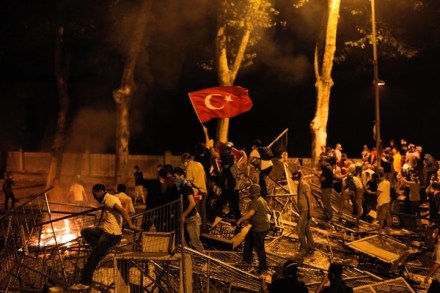
  Istanbul By now, everyone has heard of the brutal suppression of protests all over Turkey, which began with a peaceful sit-in in Istanbul to protect a hapless apology for a park from demolition. Right by the city’s unofficial centre, Taksim Square, Gezi Park had been slated to become yet another one of the ruling AKP’s signature Ottoman-cum-Disneyland construction projects. It was hardly much of a park, by London standards, but it was one of the last remaining places in the area with a few trees and a bit of room to stroll around. The protesters found the idea of losing that tiny refuge from Istanbul’s urban chaos unbearable.

What’s eating Turkey

From our UK edition

  Ankara ‘Islam, politics, economics — choose two’ is a great line, said by one of my Turkish students, and it would make a good exam question. Tayyip (the name means ‘very clean’ in Arabic — cf. ritual washing) Erdogan (meaning ‘strong hawk’, a Turkish nationalist reference) came to power in 2002 with a very good press. This was to be what the world wanted — a Muslim version of German or Italian Christian Democracy — and for years he gave it that. The rival parties destroyed themselves in silly bickering and corruption, and Erdogan’s party was very successful, with reforms in health and housing that improved the lives of ordinary Turks no end.

Why Greece isn’t recovering: the view from a cruise ship

From our UK edition

This column comes to you from the cruise ship Minerva in the Greek port of Piraeus. Why I’m aboard is a story for another day — and let me admit up front that, as financial-crisis reportage goes, observations provoked by a Homeric vista of islands and cocktails on the poop deck are unlikely to match Newsnight’s Paul Mason choking through tear gas outside a burning Athens bank. But still there are parables to be trawled from the placid Aegean waters. As the anti-austerity bandwagon gathers momentum, the Greeks seem to be in deep denial about the other element of the recovery equation.