Istanbul

What Istanbul gave me

Why do novelists set their stories in cities or landscapes which seem to haunt them? Not the places of their childhood – an obvious choice – or places they’ve researched because those places are intellectually attractive. The places they can’t avoid in their own subconscious. I’m often asked this question because the places I write about are considered exotic. But to me, it’s the reverse. I write about a city long after I’ve lived there and left it, having never had any intention to write about it at all. Such was the case, for me, with Istanbul. I moved there in 2011 after 20 years in New York. It came about by chance. My mother died that year and I came back to Brighton to attend the service.
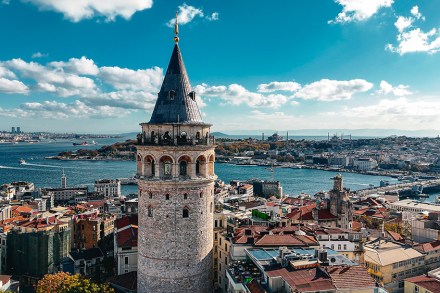
Istanbul, the city of Ottoman opulence (and hair transplants)

From our UK edition

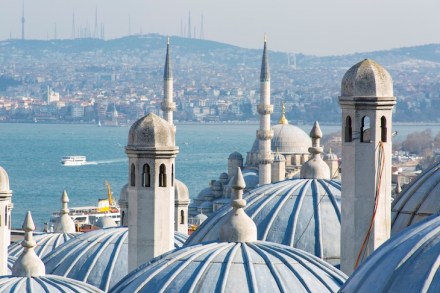
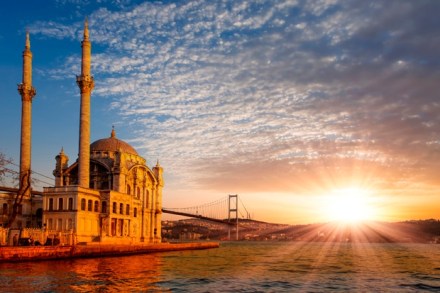
It’s the largest city in Europe, spans two continents, has been the capital of three mighty empires – Roman, Byzantine and Ottoman – and is visited each year by some 20 million tourists. These days – and I’m only guessing here based on the scores of battered, bloodied and bandaged scalps I spotted – it’s also the hair transplant capital of the world. Little wonder so many choose to come here for their cosmetic ‘enhancements’ (or ‘maimings’ depending on your view): if there’s one city that understands reinvention, it’s this one. I’m talking, of course, of Istanbul where continents and cultures, Christianity and Islam collide. To my shame, I’d never been before but, crikey, I loved it.

The secret to exploring Istanbul

Two weeks before Covid began to hit Europe, I stood in the Basilica Cistern beneath Istanbul, steadily getting dripped on. Built during the reign of the Emperor Justinian I in 532, just before another deadly pandemic — the plague of Justinian — the cistern lies beneath Istanbul’s tourist hotspot, and despite it being damp, dark and having stands of 007 merchandise at its entrance and exit, it is one of the most enchanting places in a city that has captivated its visitors for over a thousand years. "If the Earth were a single state," Napoleon once pronounced, "Istanbul would be its capital," and upon visiting you begin to understand why.

istanbul

The secret to exploring Istanbul

From our UK edition

Two weeks before Covid began to hit Europe, I stood in the Basilica Cistern beneath Istanbul, steadily getting dripped on. Built during the reign of the Emperor Justinian I in 532, just before another deadly pandemic – the plague of Justinian – the cistern lies beneath Istanbul’s tourist hotspot, and despite it being damp, dark and having stands of 007 merchandise at its entrance and exit, it is one of the most enchanting places in a city that has captivated its visitors for over a thousand years. 'If the Earth were a single state,' Napoleon once pronounced, 'Istanbul would be its capital,’ and upon visiting you begin to understand why.

Walking to Byzantium

I decided to walk from Athens to Byzantium — Constantinople, the medieval Queen of Cities, lately Istanbul. I had a little red tent and a vision of noble penury that evoked the ghosts of Cyriaco of Ancona (d. 1452) and Paddy Leigh Fermor (d. 2011). My girlfriend said she'd join me later. The lines that now smudge my map look more like the flight of a woozy bluebottle than the traces of a man with a plan. My earliest memories of the trek are melancholy.

Byzantium

The joy of the Proms

From our UK edition

Summer nights, hot and humid, mean just one thing — it’s Proms season again. Sore feet, sweaty armpits, queuing outside the ladies loos, home on the Underground with a head and heart buzzing with Bruckner or Bacharach, Handel or Honegger. Just as special is the nightly feast on Radio 3 — a live concert, guaranteed every evening, and on top of that specially commissioned talks and literary events to get us thinking. On Sunday afternoon, in between the Mozart and Schumann performed by Bernard Haitink and the Chamber Orchestra of Europe (COE) at the Royal Albert Hall, Sarah Walker took us inside the working life of an orchestra. What does it take to create the particular sound of an ensemble of individual players? How important is the conductor?

Petronella Wyatt: My food fights with Boris

From our UK edition

I have been in Istanbul, partly to research a French-born collateral ancestor of mine, Aimée Dubucq, who, according to legend, was captured by Corsairs in 1778 and presented to the Sultan of Turkey as a gift. Known in captivity as Naksh, or ‘The Beautiful One’, she was 19 when she was taken by boat to Seraglio Point, where stands the Topkapi Palace, the most exquisite and imposing royal residence in the world. The chief black eunuch, Son Altesse Noir, inspected every new arrival to the Harem, and he would have escorted Aimée through its kiosks, pavilions and gardens of splashing fountains, past the sound of parakeets squawking and, less happily, the cries of miscreants in the dungeons. Not even Turkish scholars know what really happened in the Harem.

The sunset of secular Turkey

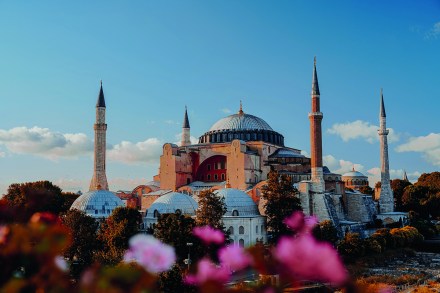
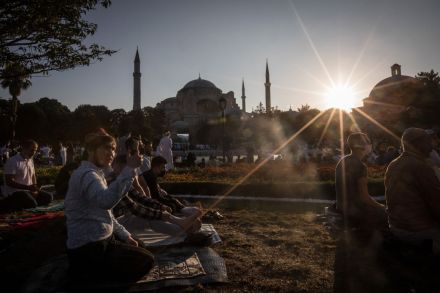
Christians around the world have been outraged by Turkey’s decision to convert the Hagia Sophia cathedral into a mosque. This astonishing architectural masterpiece was completed in 537 and is considered one of the Orthodox church’s holy sites. (The cathedral was, for 57 years after the crusades, a Roman Catholic church.) With the Ottoman conquest of Constantinople in 1453, minarets were added, and it was converted into a mosque. In 1934, the secular leader of Turkey attempted to end the religious division over the building and turned it into a museum.The reader should notice that I place the responsibility for Hagia Sophia’s conversion on the nation of Turkey, not on President Erdogan.

turkey

Farewell, Tequila Leila

From our UK edition

Elif Shafak once described Istanbul as a set of matryoshka dolls: a place where anything was possible. As with much of her previous work, that city plays a significant and shape-shifting role in this her 11th novel, where the Bosphorus, ‘waking from its turquoise sleep, yawned with force’ one November morning in 1990. It is ‘life at full blast’ — and yet the story’s beginning also marks an ending. A woman named Leila has just died, inside a wheelie bin on the outskirts of town. ‘Can’t you see, you moron?’ says the ringleader of the adolescent boys who discover her body. ‘She’s a whore.

The sea, the sea

From our UK edition

Walking into Fingal’s Cave, after scrambling across the rocks to reach it from the landing stage where the boat from Mull arrives, is a strangely emotional experience. It’s not just the extraordinary landscape, the precise, almost unnatural shaping of the hexagonal basalt columns that rise up high above you, the screeching of gulls and roaring of the sea as it enters and leaves the cave. That’s enough to provoke a sense of wonder. But there’s also so much history attached to the place since it was discovered by the Romantics and became the epitome of the sentimental landscape, awesome in scale, and also quite frightening.

Istanbul Notebook

From our UK edition

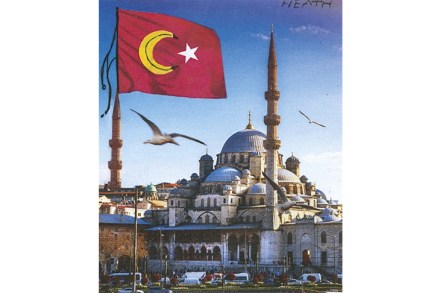
‘It’s official. Turkey is a banana republic!’ My friend Mustapha, a serial entrepreneur, sends me a flurry of doom-laden WhatsApp messages on hearing the news that Istanbul’s mayoral election is being re-run. One of them is a cartoon of President Recep Tayyip Erdogan standing in front of the national flag, crescent turned into a banana. In March, his ruling AKP lost Istanbul, the engine of what remains of the Turkish economy, together with Izmir and Ankara. It was a historic breakthrough for the opposition CHP and its victorious mayoral candidate Ekrem Imamoglu. But it was also a massive threat to Erdogan, a former mayor of Istanbul, who hasn’t lost an election since 1994. He alleged dirty tricks and leant on the election authority to order a re-run.

Well of sorrows

From our UK edition

The Red-haired Woman is shorter than Orhan Pamuk’s best-known novels, and is, in comparison, pared down, written with deliberate simplicity — ostensibly by a narrator who knows that he is not a writer, but only a building contractor. Polyphonic narratives are replaced by a powerful, engaging clarity. This simplicity is the novel’s greatest strength, yet at certain points seems as if it might become a weakness. Part one, which takes up the first half of the book, is superbly concentrated. It describes one summer in 1986 in the life of Cem, a middle-class 16-year-old boy who takes on a summer job 30 miles outside Istanbul to earn money before cramming for university entrance exams.

Throw in the towel

From our UK edition

Spas are supposed to be relaxing. You pad around in a regulation robe and too-big slippers. Everything is beautifully soft, crisply white, low lit. There are loungers for flopping and glasses of tea —pale yellow and herbal, not builder’s. Towels are everywhere. It’s rehydrating, restful, rejuvenating. Music tinkles in the background; occasionally a cymbal resounds. The treatment list has huge promise. You will emerge looking glorious or at least a shinier — hopefully slimmer — version of yourself. Medical spas go further still. Your liver will be grateful, your skin more youthful, your lumps and bumps smoothed, your outlook revolutionised. Ten years ago, spas were thought to be a bit peculiar.

Conning the connoisseurs

From our UK edition

Rogues’ Gallery describes itself as a history of art and its dealers, and Philip Hook, who has worked at the top of Sotheby’s for decades, is well versed in his subject. Sadly for the prurient, this is not an exposé of the excesses of the market from one of its high priests; and Hook says that where possible he has avoided writing about the living. It is hard not to feel a bit disappointed. For an alarming moment in the introduction, it seemed as if he was preparing to write an academic treatise about how dealers influence art and taste.

Light in the East

From our UK edition

Christopher de Bellaigue, a journalist who has spent much of his working life in the Middle East, has grown tired of people throwing up their hands in horror at Isis, Erdogan and Islamic terror, and declaring that the region is backward and in need of a thorough western-style reformation. As he argues in this timely book, the Islamic world has been coming to terms with modernity in its own often turbulent way for more than two centuries. And we’d better understand it, because it’s an interesting story, and often a positive one — the way vast crowds streamed onto the streets of Cairo, Istanbul and Tehran in demonstrations against authoritarian rule over the past decade, for example. Western-style participatory democracy remains the dream of the man and woman in the souk.

In the company of queens

From our UK edition

Steven Runciman, the historian of Byzantium, is a puzzling figure. He was an outrageous snob, once remarking that he would have enjoyed being the widower of a Spanish duchess, which would have made him a dowager duke in Castile. He particularly relished the company of queens (of the female variety), and he took the Queen Mother out to lunch once a year at the Athenaeum. But as Minoo Dinshaw shows in this richly original life, the snobbery was a subtle pose. Runciman was a tease who liked to play games with people, and he made a career out of being enigmatic. His family were wealthy shipbuilders in Northumberland. His parents were both dedicated public servants — his father was a minister in the last Liberal governments.

Sleepless by the strait

From our UK edition

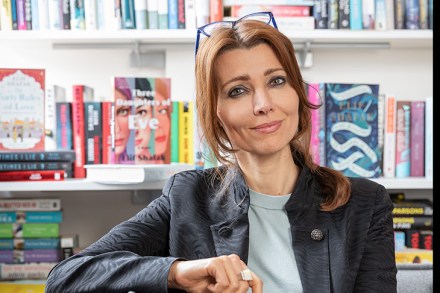
In my novel Three Daughters of Eve, a well educated housewife with kids looks at her motherland, Turkey, and thinks: ‘They are not that different. My own life and this land of unfulfilled potentials.’ I wrote this novel in English first. It was then translated into Turkish by a professional translator, after which I rewrote it with my own rhythm and vocabulary. It’s a bit crazy, this constant commute between English and Turkish. There are things I find much easier to express in English — e.g. humour, irony, satire — and others I find easier to say in Turkish — melancholy, loss. The book is published in Turkey this summer before being published in the UK in winter. So I fly from London, where I live, to Turkey for a week long book tour.

Portrait of the week | 30 June 2016

From our UK edition

Home David Cameron, standing in the middle of Downing Street with his wife Samantha alone near him, announced his resignation as prime minister after the United Kingdom voted to leave the European Union by 17,410,742 votes (51.9 per cent) to 16,141,241 (48.1), with a turnout of 72.2 per cent. The result surprised the government. Mr Cameron said he’d stay on until a new Conservative party leader and prime minister could be chosen, before the party conference in October. In Scotland, 62 per cent of the vote was to remain and in London 59.9 per cent. The area with the highest Leave percentage was Boston, Lincolnshire, with 75.6, and the highest Remain percentage was in Lambeth, with 78.6 (apart from Gibraltar, which recorded 95.9 per cent in favour of remaining).

Why the latest attack in Istanbul feels so much closer to home

From our UK edition

'Too close to home,' is how most of my friends and colleagues in Istanbul described the attack at the city's main airport. I feel the same. I fly in or out of Ataturk International airport a few times every month for work. I know its entrances and exits, the security barriers and shops, like the back of my hand. So when I saw the videos which emerged of the blast soon after, it's like seeing the street I live on being blown up.  But I've been trying to work out why this attack feels more personal. Why it seems to have touched a nerve for me and so many other expats. After all, the bombs which killed 15 in the Sultanahmet tourist area and on the main drag, Istiklal, earlier this year are physically far closer to my home.  Both caused fear but were soon shrugged off.

Istanbul’s European side is seeing its freedom eroded away

From our UK edition

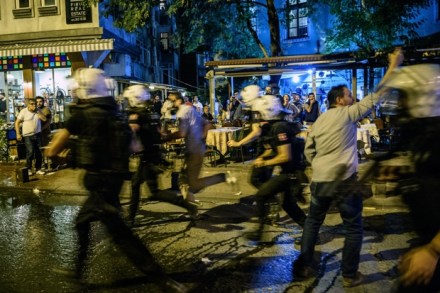
It was meant to be a relatively quiet event. A few fans gathering to take part in a global listening party in support of the new album by Radiohead, A Moon Shaped Pool. Instead what happened last Friday - and what followed over the weekend - has drawn attention to the changing nature of Istanbul. For centuries this Turkish city has been a melting pot of cultures. Two continents living side by side, separated only by the Bosphorus strait. It’s not unusual for Istanbulian’s to have breakfast on the European side, lunch on the Asian side, only to pop back to Europe for a night cap. And to the untrained eye this city is as cosmopolitan and free as any European capital.