Israel

Did Bibi miscalculate?

In her new memoirs, 107 Days, Kamala Harris recounts that in July 2024 she had an important meeting about Israel and the Gaza Strip. Harris, who was running for the presidency, hoped to show that she could pressure Israeli prime minister Benjamin Netanyahu into reaching a ceasefire with Hamas. “Netanyahu’s hooded gaze and disengaged demeanors,” she writes, “made it clear to me that he was running out the clock." His only goal was a temporary ceasefire and to undermine the Biden administration. “He wanted Trump in the seat opposite him,” Harris recalls. “Not Joe, not me. Netanyahu wanted the guy who would acquiesce to his every extreme proposal for the future of Gaza’s inhabitants and add his own plan for a land grab by his developer cronies.

Netanyahu

The celebrity guide to selective outrage

In the West, outrage has become performance art. It’s not about real causes, but about carefully branded ones that play well in pastel Instagram carousels. Climate change? Of course. A vague plea for “justice”? Naturally. A curated “Free Palestine” hashtag? Absolutely. But when it comes to standing with their peers in the Middle East – singers, actors, writers who are literally jailed or executed for their art – the voices vanish. This isn’t about Israel. The point is larger: why do so many Western artists reserve their outrage for one convenient villain while ignoring regimes that jail, torture and kill their peers? Syria’s Christians and Druze are being ethnically cleansed. Yemen is enduring a famine.

Billie Eilish

Trump has boxed in Netanyahu and Hamas

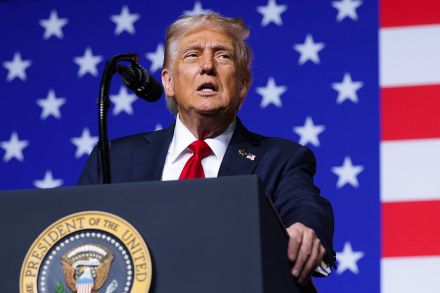
Hamas did not wait long to accede to Donald Trump’s 20-point Gaza peace plan – or at least accept it with conditions. It didn’t really have a choice. The same can be said for Israeli prime minister Benjamin Netanyahu who was forced to accept a deal that he never wanted in the first place. Give credit where it’s due: Trump boxed in both Netanyahu and Hamas. For Trump, the pending agreement is a big accomplishment. It may not win him a Nobel but the aim is noble. With his usual flair for the dramatic, Trump responded to Hamas’ offer to release the remaining hostages by declaring, “I believe they are ready for a lasting PEACE.” He stated that “the bombing of Gaza must stop immediately.

Donald Trump

Do Jews have a future in Britain? 

I was on my way to synagogue yesterday when I got news that was surprising and unsurprising at the same time. That there had been an attack at a Manchester synagogue on Yom Kippur was a shock, but only the location and the timing. The fact that terror had struck our community felt like the confirmation of our worst fears – and something that was grimly predictable.  For as long as I can remember, Jewish life in the UK has been closely guarded and protected. My childhood synagogue in the leafy London suburb of Surbiton was behind locked gates with security guards posted outside when anyone was in the building. My Jewish newspaper office today has similar protections and an address we’re told must never be made public.

Do Palestinians want Hamas gone?

From our UK edition

Discussion of Donald Trump’s peace proposal for Gaza revolves around one question: who is for it and who is against it? Israel is for it, though mostly because it is backed into a corner and has no choice. The Arab states are for it, which is to be expected since they wrote it. The European Union is for it, which is to be expected since the Arabs are for it. Palestinian Islamic Jihad and the Houthis are against it, and Hamas is expected to be too. I don’t know what the UK government has said and, in concert with the rest of the world, I don’t really care. This is all helpful to know, but there’s a more important question, the answer to which will decide the fate of Trump’s framework in the long run: has anyone asked the Palestinians?

Trump pitches Gaza peace plan

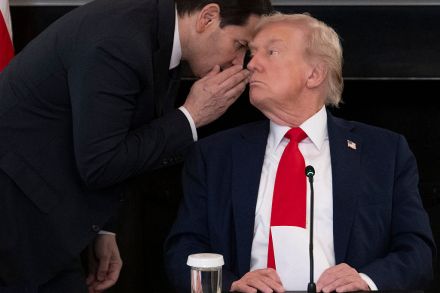
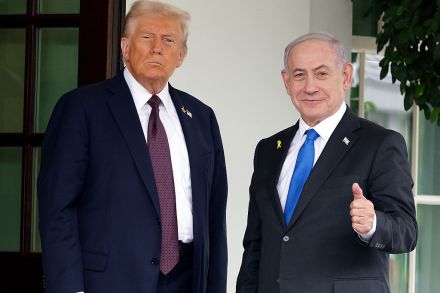
Donald Trump is perhaps one of the world’s most gifted salesman. But as he was speaking at the White House with Israeli Prime Minister Benjamin Netanyahu today, even he had trouble selling his 20-point peace plan to end the war in Gaza. This wasn’t for a lack of trying. “Today is an historic day for peace,” Trump told the assembled press corps. Calling today "a beautiful day, potentially one of the great days ever in civilization,” Trump went on to outline in broad strokes his diplomatic initiative, which aimed to thread the needle between Netanyahu’s vocal objections to a Palestinian state and the Arab world’s demand that any plan put forth provide the Palestinians in Gaza and the West Bank with an opportunity to take control of their own future.

Donald Trump

Keir Starmer’s Palestine doesn’t exist

From our UK edition

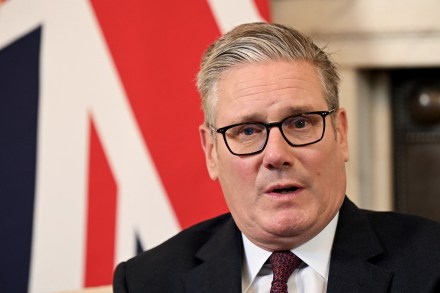
King Cnut is misremembered as a deluded fool who tried to subdue the sea. In fact, he was a wise and pious man who wished to demonstrate to his subjects the limitations of regal power. ‘You and the land on which my throne is standing are subject to me,’ Cnut admonished the tide. ‘No one has ever defied my royal commands and gone unpunished.’ When the waters began splashing at his feet, the monarch turned to the crowd and proclaimed: ‘Let all the world know that the power of kings is a vain and trifling thing.’ There was, Cnut said, only one true sovereign: ‘That King whose commands heaven, earth and sea obey, according to eternal laws’. Keir Starmer is no Cnut.

Should Britain recognise Palestine?

From our UK edition

17 min listen

The government is expected to press ahead with recognition of Palestinian statehood, before a formal declaration at the United Nations. Prime Minister Keir Starmer set out plans earlier this year to recognise Palestine – but what does this actually mean? And what does the move actually achieve; is it driven by principle, by politics – or by pressure from within his own party? Michael Stephens of RUSI and Gabriel Pogrund of the Sunday Times join James Heale to assess the significance of this shift. They discuss the backlash from countries like the US, the unease within Labour ranks and the growing tension between domestic politics and Britain’s standing with allies in the Middle East.

Doha attack was a blast from the past

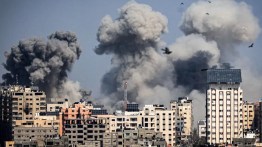
Israel’s audacious strike against the leaders of the Hamas terrorist organization in Qatar exemplifies the Jewish state’s new security doctrine – one of boldness and risk-readiness. The Hamas massacre on October 7, 2023, was a watershed moment that reset security calculations in Israel in a significant way. The results are Iran’s proxy network defanged, and a Tehran shaken after its own 12-Day War with Israel. Many observers believe that Israel’s strikes in Qatar risk unraveling the Abraham Accords and undermining U.S. interests. But as past episodes have demonstrated, there is likely to be immediate outrage followed by a reversion to the status quo.

Doha

Israel is right to strike Hamas’s leaders in Qatar

From our UK edition

When the government of Qatar condemned the Israeli airstrike in Doha as a ‘cowardly’ act, it revealed less about the operation itself than about the priorities of the state voicing the charge. In reality, the strike was an extraordinary and unprecedented move: Israel launched a precision airstrike inside Qatari territory targeting senior Hamas leadership, aiming to eliminate figures at the apex of the group’s external political and financial hierarchy. It was a direct and deliberate attack on the masterminds behind terrorism, carried out by Israeli fighter aircraft with exceptional range and accuracy. The operation marked a bold assertion of Israeli extraterritorial power and strategic doctrine.

Queers for Palestine burst Pride

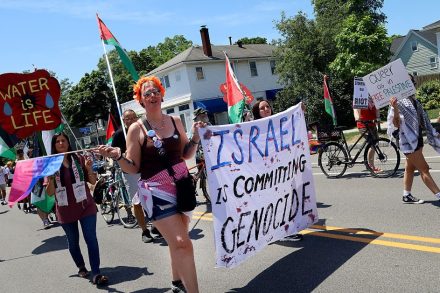
The annual Ottawa Pride rally was cancelled on Sunday after the group, Queers for Palestine, blocked the parade, owing to the refusal of the organizers, Capital Pride, to agree to the demands of “pro-Palestine” activists. Among the demands was for Capital Pride to back a complete boycott of Israel, and for Ottawa Mayor Mark Sutcliffe to apologize for not attending last year’s parade, which was described by Jewish groups as more a ‘protest against Israel’ than a rally for LGBT rights.

Queers for Palestine

Israel risks rewarding Hamas’s kidnapping

From our UK edition

What weapon is stronger than F-16s, drones, targeted strikes, disciplined and war-hardened ground troops, and even nuclear weapons? Hostages. Despite its formidable armed forces and weapons capabilities, in the long and bitter struggle between Israel and its enemies, no tool of war has proven more effective in bending the will of the Jewish state than the abduction of its own citizens. Missiles can be intercepted, tanks can be destroyed, but a single captive Israeli can paralyse decision-making at the highest levels of government, as we are seeing today. From the earliest wars, prisoner exchanges followed the conventions of armed conflict. After 1948 and again in 1967, soldiers were exchanged for soldiers in relatively balanced numbers. But over time, the symmetry vanished.

My battle to buy pierogi might end up in court

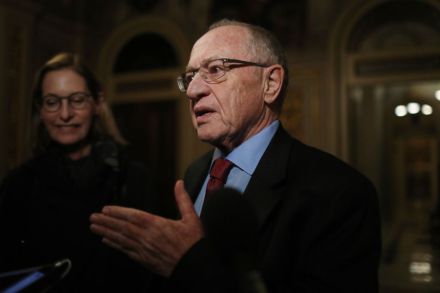
I have been going to the farmers market in Martha’s Vineyard for nearly half a century. I buy corn, tomatoes and homemade products. Until last week every vendor at the market treated me with respect and loved to have my business. I spent about $100,000 on farm and home products over the years, so I was shocked when one vendor refused to sell me their pierogi. It turns out that this particular vendor, Krem Miskevich, doesn’t approve of Zionism – that is support for Israel’s right to exist as the nation-state of the Jewish people. To be a Zionist does not require agreement with Israel’s policies or actions – just its right to be. I strongly believe in Zionism. It is an essential aspect of my religion.

Alan Dershowitz

Trump starts Christmas now

There’s no small irony in the fact that Texas Democratic state legislators, fleeing a congressional redistricting attempt by Texas’s Republican majority, have sought shelter in Illinois. They’re acting like political refugees in what is, in fact, the most gerrymandered state in the country. Look at Illinois District 13, which snakes up from the Missouri border nearly to the gates of Indiana, bisecting the state (and District 15) like Illinois’s small intestine. Chicago is a very populous city, but the state has carved up its Congressional districts like a turducken, giving us as many (D-Chicagos) as humanly possible. The Illinois Democratic machine has had an outsized influence on American politics, much less Illinois politics, for decades.

President Trump tracks Santa in 2018 (Getty)

Ann Coulter: On immigration, Trump 2.0 and the Epstein Files

Ann Coulter, an American author, lawyer and conservative media pundit, joined Freddy Gray on the Americano podcast last Friday to discuss why she backs the UK's Reform party, why she supports Trump in his second term, what's really going on with the Epstein files and more. Here are some highlights from their conversation. Why don’t politicians follow through on illegal immigration promises? Ann Coulter: Americans have been voting not to give illegals benefits, to deport them, to make sure they can't vote, for now almost half a century, and the politicians will never give it to us. That was what was so striking about Boris Johnson and Donald Trump. Oh my gosh, they really seemed to mean it.

Freddy Gray and Ann Coulter

The internet doesn’t know what a Nazi is

Two things happened online in the past week or so, both online, both quite mad. First was the spread of a podcast clip – hosted by “men’s health” influencer Myron Gains – featuring a rainbow coalition of Gen-Z Americans discussing whether Germany’s 1930s Jews had done something to make the Nazis hate them. They reimagined Hitler as someone who simply had to perpetrate a genocide because the Jews deserved it. The second event was an American Eagle jeans advertisement starring Sydney Sweeney. One of these moments caused a meltdown about the rise of Nazism, and it wasn’t the podcast.

Nazi Germany (Getty)

A chat with the Princess of Iran

The Princess of Iran is casual over email. Noor Pahlavi, the 33-year-old eldest daughter of Iran’s Crown Prince in exile, Reza Pahlavi, is American-born, a potential heir to the Iranian throne and ready for regime change in the Middle East. “Hi it’s been a crazy couple of weeks,” she wrote me a few days after the US plopped some 400,000 pounds of bombs on the Islamic Republic’s nuclear sites. That same week, Reza began to appear across Western media, calling for rebellion within Iran and support from without: “This is our Berlin Wall moment.” Reza is the son of the last Shah of Iran. His family has become a symbol of a Persian, pre-Islamist Iran, and Reza casts himself as the transitory figure to lead the country into a more liberal post-regime future.

Letters: The case for recognising Palestine

From our UK edition

State of emergency Sir: As someone who spent time undertaking research in Israel and Egypt, living for almost a year on Kibbutz Re’im, one of the communities attacked on 7 October 2023, I find myself in agreement with much of the description in your leading article ‘State of denial’ (26 July) – but not the conclusions. Many of us are aware that Israeli intelligence knew what was being planned for 7 October, but did nothing to prevent it. Why? The horrors that have happened since have played into the hands of Benjamin Netanyahu and his supporters as they seek to create a Greater Israel, with no room left for a Palestinian state. Hence the need for recognition now, while there is still some territory left.

Portrait of the week: Recognition for Palestine, victory for the Lionesses and no name for Corbyn’s party

From our UK edition

Home Britain will recognise Palestinian statehood in September, Sir Keir Starmer, the Prime Minister, announced, ‘unless the Israeli government takes substantive steps to end the appalling situation in Gaza, reaches a ceasefire, makes clear there will be no annexation in the West Bank, and commits to a long-term peace process that delivers a two-state solution’. He had convened a cabinet meeting to discuss Gaza, although parliament was in recess, a few days after a meeting by telephone with Germany and France. President Emmanuel Macron had said that France would recognise a Palestinian state in September. Some 255 MPs, 147 of them Labour, had signed a letter to Sir Keir calling for the recognition.

What the media doesn’t tell us about Gaza

From our UK edition

Sir Keir Starmer’s apparent justification for threatening to recognise a Palestinian state by September is pictures. ‘I think people are revolted at what they are seeing on their screen,’ he said on Monday. On Tuesday, he spoke of ‘starving babies, children too weak to stand, images that will stay with us for a lifetime’. Pictures, however grim, seem a weak basis for a massive constitutional change. Sir Keir is also assuming that the pictures in question are ‘true’. Yet pictures, precisely because of their emotional impact, often undergo less editorial scrutiny than words and are frequently reproduced by other media unchecked.