Israel

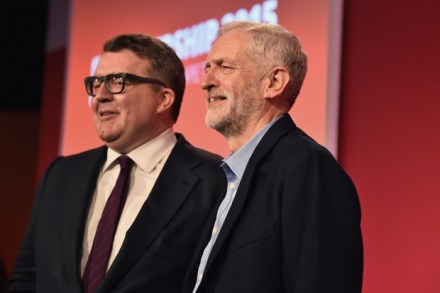
Will Labour convict me of thought crime?

From our UK edition

I got an email this week, from a chap called Harry, which began as follows: ‘I am writing to inform you that I will be carrying out the investigation on behalf of the Labour party into the circumstances that resulted in your suspension from the party.’ Harry went on to say that he will be ‘conducting interviews with witnesses’ and added: ‘I will also need a time when you are available for an interview.’ This last presumably as an afterthought: I suppose we need to hear from him. Anyway, at this interview (to be conducted in London, natch) I am allowed to bring along a ‘silent witness’ —someone who is not permitted to intervene on my behalf but can sit beside me with a consolatory expression on their face and perhaps hold my hand.
Are there any Jews who still support Labour?

From our UK edition

Many years ago, sometime in the last century (how worldly I feel writing that!) I was at the launch party for the dear dead Modern Review mark II and feeling mildly appalled by the whole flimsy thing when a young man introduced himself to me as Nick Cohen and told me he’d be writing for us. ‘O, a Cohen!’ I exclaimed happily, all innocence. ‘Just what this magazine needs - a clever Jew!’ Did I ever get a mouthful! ‘I’m not a Jew - my family rejected Judaism decades ago…never been so insulted…’ ‘But your name is the name of Moses’ brother - Aaron!’ I pointed out. ‘How can you not be a Jew? That’s like being called Taffy Jones-Thomas and not being Welsh!

It will take more than Labour’s ‘inquiry’ to deal with the left’s anti-Semitism problem

From our UK edition

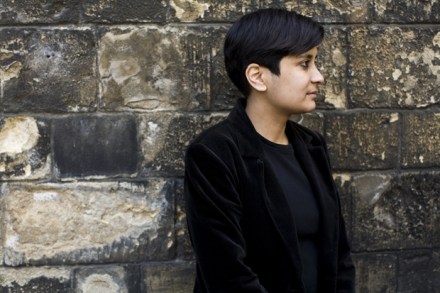
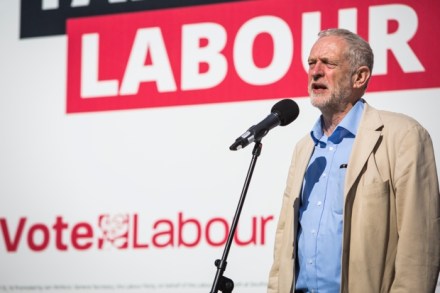
Anyone concerned about anti-Semitism in the Labour Party should welcome the appointment of Shami Chakrabarti, the former head of Liberty, to lead an internal inquiry into the matter, but it’s a little late in the day to be addressing this issue. And will the inquiry’s terms of reference allow her to investigate the leader of the party? The Jewish Chronicle drew attention to Jeremy Corbyn’s links to a rogues gallery of “Holocaust deniers, terrorists and some outright anti-Semites” back in August of last year. Among other dubious acts, Corbyn donated money to an organisation run by Paul Eisen, a self-confessed Holocaust denier who boasts of links to the Labour leader dating back 15 years.

Today in audio: Ken’s day to forget

From our UK edition

Ken Livingstone has been suspended by the Labour party after plonking himself firmly at the centre of the anti-Semitism row by once again stepping in to defend Naz Shah. The former London mayor said the Labour MP's remarks were 'over-the-top but they were not anti-Semitic'. During his interview with Vanessa Feltz, he added: 'Let's remember when Hitler won his election in 1932, his policy then was that Jews should be moved to Israel. He was supporting Zionism and this was before he went mad and ended up killing six million Jews.' Next up for Ken was the Daily Politics show, in which he tried again to defend his remarks. Ken told Andrew Neil: 'I've seen nothing to suggest to me that she is anti-Semitic. In 47 years in the party, I have never heard anyone say anything anti-Semitic.

Hostage to misfortune

From our UK edition

Nordic noir is passé. Now we have Israeli noir. Waking Lions is a mordant thriller written by a clinical psychologist who knows how the mind is tortured by deception, infidelity, obfuscation, suspicion and sex. Eitan Green is a neurosurgeon who, exhilaratedly driving his SUV at speed on the desert tracks outside Beersheba, runs down an Eritrean refugee. As he looks at the body with its cracked skull, he thinks that since ‘he can’t save this man, at least he’d try to save himself’. From that point, Ayelet Gundar-Goshen’s omniscient narrator involves us in a web of lies, guilt, evasion, seduction and moral equivocation. The incident is registered officially as a hit-and-run case. Eitan’s wife, Liat, happens to be a senior police officer.

Israel notebook

From our UK edition

Portugal, Spain, Italy, Greece, Croatia, Morocco: if I had picked anywhere else on the Mediterranean for a family holiday, at least anywhere that’s not convulsed by civil war, I don’t think anyone would have noticed. But when I told friends that we were taking our children to Israel on vacation, I got some odd looks. Was there a special reason, someone wanted to know. Were we in search of political insight, asked another. Perhaps one of us was interested in finding his or her Jewish roots, an acquaintance suggested. Perhaps one of us was ‘searching’, spiritually speaking, and would like to walk in the steps of Jesus. Nobody seemed able to believe that we just…went to Israel, on Wizzair, in search of winter sunshine. But that wasn’t the end of it.

George Weidenfeld was one of the great advocates for high European culture

From our UK edition

I am far abroad at the moment but have just learnt the sad news from home of the death of George (Lord) Weidenfeld, at the age of 96. As a publisher, philanthropist, convener, guru and friend he was one of the most extraordinary people in 20th and 21st-century Britain. Born in Vienna in 1919, he fled the Nazis and came to the UK in the 1930s where he was housed and looked after by a Christian family. Throughout the extraordinary life and career that followed he constantly acted on the gratitude he felt towards the country and people that had taken him in. Only last year he set up a fund to help save Christian children from the fighting in Syria.

If you believe the internet, I was the Israeli army’s answer to Jason Bourne

From our UK edition

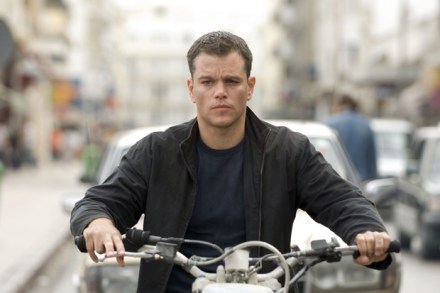
One of the strangest and, in a weird way, best things to have happened to me in the past year was the emergence of a firm conviction among a quite large collection of internet weirdos that I spent my youth fighting for an elite unit of the Israeli army. It started after a boozy pre-Christmas lunch almost exactly a year ago, when a woman tweeted me. I vaguely recalled that she had tweeted me before, probably about Jews or bankers or Palestine or Dolphin Square or Jimmy Savile, all of which I get quite a lot and normally ignore. This time, though, she had a question. She wanted to know about my Twitter profile picture, and whether the olive-green shirt I’m wearing in it was my uniform from my time in the IDF. This amused me.

Jeremy Corbyn is the political version of a creationist

From our UK edition

When Jeremy Corbyn says it is better to bring people to trial than to shoot them, he is right. So one might feel a little sorry for him as the critics attack his reaction to the Paris events. But in fact the critics are correct, for the wrong reason. It is not Mr Corbyn’s concern for restraint and due process which are the problem. It is the question of where his sympathies really lie, of what story he thinks all these things tell. Every single time that a terrorist act is committed (unless, of course, it be a right-wing one, like that of Anders Breivik), Mr Corbyn locates the ill as deriving from the behaviour of the West, especially the United States and Britain (and, where relevant, Israel).

Will Jeremy Corbyn condemn Gerald Kaufman’s comments about ‘Jewish money’ influencing the Tories?

From our UK edition

Sir Gerald Kaufman is Jewish, which he seems to use as an excuse to make claims that would, ordinarily, be denounced as anti-Semitic. He has made this a trademark of his career but on Tuesday night, Sir Gerald - now Father of the House of Commons - outdid himself. In an extraordinary speech he allegedly discussed the influence of 'Jewish money' over the Conservative party. He also claimed that, according to an email he had received, 'half' of the Palestinian knife attacks in Israel over recent weeks have been 'fabricated' as an excuse to execute Palestinians, and that the small-circulation weekly newspaper The Jewish Chronicle has biased the Conservatives.

Israel’s ‘neutral’ position towards Syria has created some strange bedfellows

From our UK edition

Over the weekend an Israeli-Arab flew from his home in the Jewish state on a paraglider, evading Israel's formidable air defences to land smack bang in the middle of the Golan Heights. Despite a search by the IDF so intense it provoked a flurry of tweets stating that an Israeli invasion of Syria was underway, he disappeared. No doubt he was hidden by one or other of the assorted jihadist groups based there, predominant among whom is the Al-Qaeda offshoot Al-Nusra Front. They long since booted out the UN peace-keeping mission in the No-Man's Land part of the territory and, to the delight of binocular-wielding day-trippers, have for the past two years been battling Syrian regime forces within a few miles of Israeli border.

Who knows where the violence in the West Bank might lead – but it could well take Abbas with it

From our UK edition

In recent days the situation in Jerusalem and the West Bank has been unravelling. For some years now, fighting between Israelis and Palestinians has tended to come in the form of intermittent clashes in and around Gaza. Rocket warfare, Israeli airstrikes and subterranean tunnel attacks have become a familiar part of the latest chapter of this now century long confrontation. In the last couple of weeks, however, the focus of tensions has shifted from Hamas controlled Gaza to the West Bank, where the major Palestinian population centres are under the security control of the somewhat more moderate Fatah. The violence that we are seeing now is taking the form of roadside shootings, stabbings, rock throwing attacks and rioting.

The Vicar of Baghdad – ‘Israel is the most intelligent country in the world’

From our UK edition

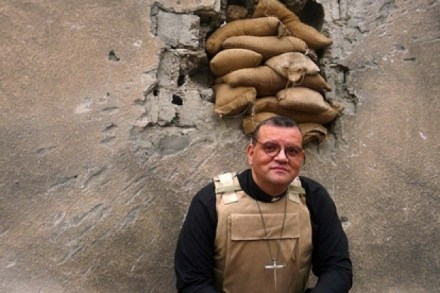
'We weren’t even at opposite ends of the table. Because he was in the eyes, and I was fighting over my own bit of space to keep the patient alive.' If you’re surprised to learn that Canon Andrew White used to work alongside Bashar al-Assad in the same London operating theatre, then you clearly haven’t met White – perhaps better known as the Vicar of Baghdad. Once you have, nothing about him will surprise you. A tall, bearish, immediately likeable man, his enthusiasm is contagious, whether it’s for vanilla ice cream, or intercession in war zones.

A hero of our time

From our UK edition

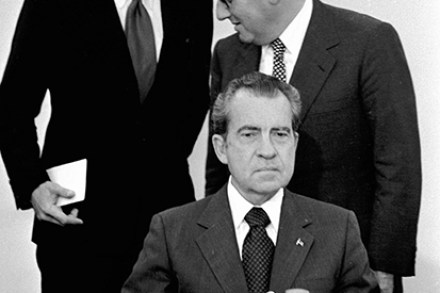
I have met Dr Kissinger, properly, only three times. First, in Cairo, in 1980, when, as a junior diplomat escorting Edward Heath, I had to secure for an almost desperate former British prime minister a meeting with the former US secretary of state, also in town. Once with Kissinger, Heath promptly subsided into a deep slumber. I had the alarming experience of trying to keep the conversation going. The other occasions were more recent, but almost as scary. My hostess at the ‘secret’ (but much publicised) transatlantic talkfests which Kissinger (92 this year) still attends twice summoned me to sit beside the great man at dinner. On each occasion I felt like the luckless passenger in the Economist’s vintage television commercial.

Welcome to the era of conspiracy-theory politics

From our UK edition

Who argues that a 'shadow state' controls Britain? That a gang of faraway, faceless suits 'orchestrate public life from the shadows', from their 'yachts in the Mediterranean'? Who thinks people in 'the shadows', who always remain 'hidden', exercise a 'poisonous, secretive influence on public life'? A spotty sixth-former who spends way too much time on the internet, perhaps? Or maybe one of those cranky guys who hangs out in the discussion threads of David Icke's website, convinced that lizards in suits run the world? Actually it's Tom Watson, new deputy leader of the Labour Party.

Drone assassination is addictive. Is Britain now hooked?

From our UK edition

With the drone killing in Syria of Reyaad Khan and Ruhul Amin, Britain joins an exclusive club. Only Israel and the United States publicly admit to carrying out targeted killings – assassinations – away from the hot battlefield. Yet as both of these nations have already found, a single killing today can lead to a conveyor belt of death further on. The challenge for the UK is whether it can do things differently. Israel targeted and killed hundreds of alleged militants in the West Bank and Gaza during the Second Intifada using snipers, booby-traps and drones. Indeed it was Israel which coined the term ‘targeted killing’ – a more palatable euphemism for state-sanctioned hits. Tel Aviv had always clandestinely assassinated its enemies.

Martian moves

From our UK edition

Every August when London dims, Edinburgh calls, promising nothing less than ‘the greats of the arts’ at the International Festival. As if this beautiful, haunting city wasn’t enough enticement, I always pack high expectations for the EdFest, which in the past has delivered some staggeringly good international dance events that commercially biased London could not entertain. Though in recent years things have gone off a bit, this year the ‘great’ box was ticked several times. Israel Galván’s mesmerisingly extraterrestrial flamenco dancing has been seen in London before.

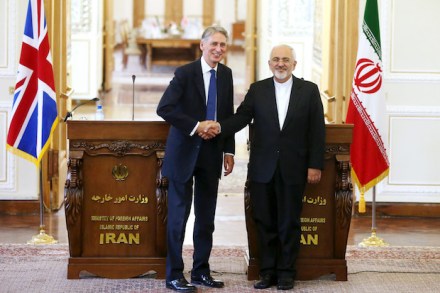
Philip Hammond: we are not ‘blind’ to Iran’s faults

From our UK edition

Philip Hammond is the first Foreign Secretary to visit Iran in over a decade as he returned to reopen the Britain’s embassy in Tehran yesterday. But what has prompted this change in government policy? On the Today programme, Hammond explained that Britain needs the influence of a ‘very important country’ in the region to help with the fight against the Islamic State: 'We’re trying to develop cordial relations with what is a very important country in a volatile and difficult region. We’ve had a difficult history between Britain and Iran but following the nuclear deal and after a couple of years in which relationships have been getting steadily better, we want to try and move to the next phase.

Chekhov by numbers

From our UK edition

Chekhov so dominates 19th-century Russian drama that Turgenev doesn’t get much of a look-in. His best known play, A Month in the Country, was written before Chekhov was born but Patrick Marber’s adaptation, with its new nickname, feels like Chekhov scripted by a Chekhov app. Turgenev’s characters, his atmosphere and his scenarios feel entirely familiar but they lack the tragicomic gestures that give Chekhov his unique appeal. There are no fluffed murders or dodged duelling challenges. No one tries and fails to blow his brains out. We’re on a rural estate where a group of crumbling, damaged sophisticates pootle around falling in love with each other. Every affair is doomed.

Barometer | 23 July 2015

From our UK edition

Gesture politics A royal home movie from 1933 apparently showed the future Queen, aged seven, and her mother giving a Nazi salute. Like the Swastika, the stiff-armed salute was not invented by the Nazis. In this case they took it from the Mussolini and his Fascists, who thought it came from ancient Rome. Three Roman soldiers are shown making such a gesture in Jacques-Louis David’s 1784 painting ‘Oath of the Horatii’.But the US beat both Nazi Germany and Fascist Italy by using the gesture to accompany the pledge of allegiance. Hitler himself claimed the salute was one of peace, saying it meant ‘Look! I am holding no weapon.