Israel

Donald Trump’s presidency lurches from embarrassment to disaster

From our UK edition

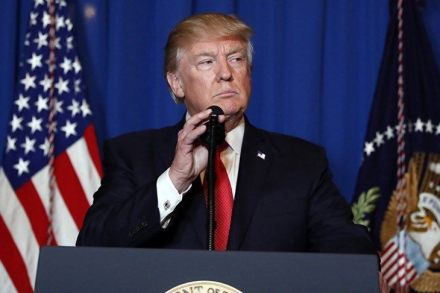
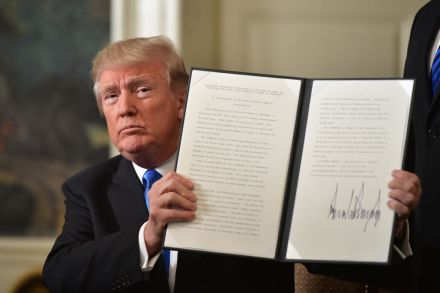
Here we go again. Donald Trump decertified the Iran nuclear deal in October. Now, in another audacious foray into Middle East diplomacy, Trump is waving goodbye to the waiver about moving the American embassy in Tel Aviv to Jerusalem. It appears that the former real estate mogul will embark upon one last construction project. If he couldn’t build in Moscow, why not give Jerusalem a go? Overnight, an international Nimby crowd has formed to decry the move. The Palestinians are announcing that it’s the 'kiss of death' to any negotiations about a two-state solution. The Saudis have voiced their firm opposition. Theresa May thinks that 'The status of Jerusalem should be determined in a negotiated settlement between the Israelis and the Palestinians.

Trump’s Jerusalem decision may extinguish hope in the Middle East

From our UK edition

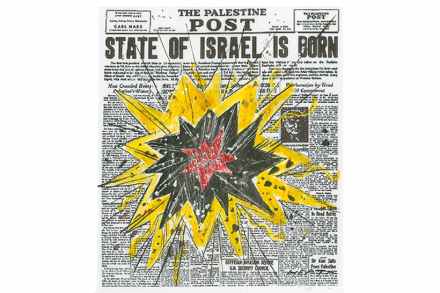
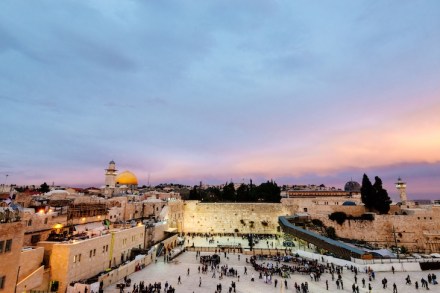
Let’s face it, Jerusalem is politically, diplomatically and religiously special. It is important to the faith traditions of Judaism, Christianity and Islam. And it is important to the political aspirations of Israelis and Palestinians.  Generations of diplomats have kicked the issue of the status of Jerusalem into the long grass, deciding it to be so intractable it could only be dealt with at the very end of the peace process when all other problems were resolved. In November 1947, the United Nations agreed to divide Palestine into two states, one Arab, one Jewish, and designated Jerusalem as 'corpus separatum', an internationally administered separate territory. That plan did not last long.

Donald Trump gives Israel a Hanukkah present to remember

From our UK edition

It’s Hanukkah next week, and President Donald J Trump has decided to give the state of Israel a big present. He will today recognise Jerusalem as Israel’s capital, and it is understood that America will shortly move its embassy from Tel Aviv to the Holy City.  This is something that Israeli diplomats have long hoped for but did not think possible before President Trump entered the White House this year. His kindness will go down very well with most Israelis and supporters of Israel. However, the Arab world sees it as a deep affront.  Jared Kushner, the president’s 36 year old son-in-law, himself an Orthodox Jew, has been handling Middle Eastern talks for his wife’s father’s administration.

Israel is becoming ever more part of the Arab Middle East

From our UK edition

This month, I attended the spectacular centenary dinner for the Balfour Declaration at Lancaster House, with descendants of many of its creators: Lloyd Georges, the photographer Christopher Sykes, grandson of Sir Mark Sykes. The dinner was hosted and organised by Jacob Rothschild and Roderick Balfour, who entered with the prime ministers of Israel and Britain. Jeremy Corbyn refused to attend but sent deputy Tom Watson and shadow foreign secretary Emily Thornberry. In his speech, Benjamin Netanyahu claimed imminent developments in the peace process; no one was convinced but he was surely hinting at the potential of the new relationship between Israel and Saudi Arabia.

The Spectator Podcast: Desert storm

From our UK edition

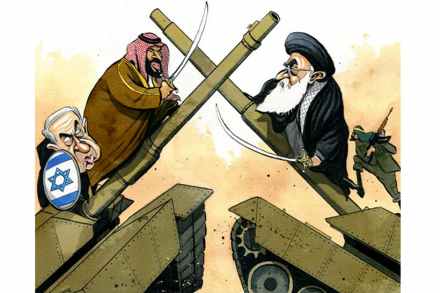
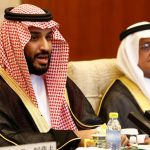
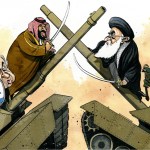
On this week’s episode, we turn our attention to the Middle East and the unlikely alliance of Saudi Arabia and Israel as they stare down a common enemy. We also consider whether the old adage ‘the night is always darkest just before the dawn’ holds for Theresa May, and wondering why there hasn’t been a great musical about British history. Last week saw a massive anti-corruption push in Saudi Arabia oust a number of princes. The putsch was initiated by Crown Prince Muhammed Bin Salman, and in this week’s magazine cover story John R. Bradley looks at how the young prince has attempted to align his country with Israeli interests in order to squeeze out a mutual antagonist: Iran.

Salman’s Arabia

From our UK edition

There are two ways of seeing the extraordinary rise of Saudi Arabia’s Crown Prince: the blood-stained debut of a new dictator, or the long-overdue emergence of a reformer with the steel to take on the kingdom’s old guard. The British government is firmly in the second camp. Mohammad bin Salman is just 32 years old, and his effective seizure of power means he defines the kingdom for a generation. He’s seen in Whitehall as a history maker, whose ruthless impatience might not only liberalise his country but create an alliance with Israel that could change the region. Minsters talk about MbS (as he’s known in Whitehall) with admiration and awe. He recently laid on a trade fair, and the British delegation was amazed to hear a band playing upon arrival at the airport.

Desert storm

From our UK edition

Until last weekend, the Ritz-Carlton in Riyadh’s exclusive Diplomatic Quarter was colloquially known as the Princes’ Hotel. It was a luxurious retreat from the heat, where royals could engage in the kind of wheeling and dealing with the global business elite that had made them millionaires on the back of the 1970s oil boom. No deal could be brokered without paying a bribe to at least one prince. Last Saturday that era of boundless opportunity and total impunity came to a dramatic end. The VIP guests were booted out, the front doors were shuttered, and heavily armed security forces took up positions around the perimeter. A Saudi who lives nearby sent me a message about what he thought was an unfolding terrorist incident.

The problem with Britain’s guilt about Balfour

From our UK edition

Britain's unease about the 100th anniversary of the Balfour Declaration, our imperial pronouncement that we 'view with favour the establishment in Palestine of a national home for the Jewish people, and will use [our] best endeavours to facilitate the achievement of this object’, is not hard to spot. Boris Johnson lauds Balfour as 'indispensable to the creation of a great nation' before rueing that its 'vital caveat...to safeguard other communities - has not been fully realised'. His shadow number, Emily Thornberry, said: 'I don’t think we celebrate the Balfour declaration. But I think we have to mark it because it was a turning point in the history of that area and the most important way of marking it is to recognise Palestine.

The left’s sinister disdain for Israel betrays their movement’s pro-Zionist origins

From our UK edition

In the beginning, the Guardian was a friend of the Jews. Or rather, those Jews who believed that after millennia of persecution in exile, they deserved the right to live freely in their ancestral homeland. The overwhelming majority, in other words. The Zionists. The Labour party liked them, too. Three months before the Balfour Declaration, Britain’s key declaration of support for Jewish national aspirations – the centenary of which will be marked next month – Labour compiled a memorandum of policy priorities.

Highly charged territory

From our UK edition

I first heard of this tragicomic spy romp around Israel and Palestine when Julian Barnes sang its praises in the Guardian a few months ago, having been ‘lucky to see an advance proof’. Lucky? Well, he and Nathan Englander do share an agent, who perhaps noticed that Dinner at the Centre of the Earth just happens to take its epigraph from a novel by, er, Julian Barnes. That’s showbiz, I guess; and in any case, a spot of sly boosterism rather suits this mixed-up tale of cloaked allegiances, which never quite supplies the facts you need to grasp what’s going on — at least not during the globe-trotting, time-toggling fug of the novel’s opening half.

Wandering Jews

From our UK edition

Simon Schama is an international treasure. Whether on screen or in print, he is all energy, enthusiasm, dramatic gestures, emotional intensity. He clutches his readers in a tiger-like grip, then chews them up with relish until they are almost helpless with mirth or emotional exhaustion. If the first volume of his trilogy on the history of the Jews had something of the quality of Cecil B. DeMille’s The Ten Commandments, this second, carrying the saga forward from 1492 to 1900, is no less of a Technicolor blockbuster. Here too we have a cast of zillions with all kinds of special effects. Composed of a dazzling succession of tableaux with linking intermezzi, this book resembles a medieval pageant.

‘Where is he?’: No-show Corbyn heckled at Israeli fringe event

From our UK edition

This year's Labour conference has been largely overshadowed by a row about anti-Semitism. At a Labour Friends of Israel event on the final night of the party’s conference, Jeremy Corbyn had a perfect opportunity to send a message of support to worried Jewish Labour members. Instead, he didn’t show up. Labour MP Joan Ryan, who was chairing the event, said she was 'disappointed' Corbyn didn’t come. Some in the crowd were not happy either at the Labour leader's decision to stay away, with cries of 'Where is he?' and 'Why is he not here?

Speech therapy

From our UK edition

Oslo opened in the spring of 2016 at a modest venue in New York. It moved to Broadway and this imported version has arrived at the National on its way to a prebooked run at the Harold Pinter Theatre. It’s bound to be a hit because it’s good fun, it gives a knotty political theme a thorough examination, and it’s aimed squarely at the ignorant. In the early 1990s Norwegian diplomats set up ‘back-channel’ talks between the PLO and Israel. The play follows that process and it treats geopolitics like a flat-share comedy. The bickering partners are hauled in by the lordly Norwegians and forced to hammer out their differences around the table. Play-goers need have no prior knowledge of Israel and its fraught relationship with the Palestinians.

Britain has an anti-Semitism problem. Here are the numbers that prove it

From our UK edition

A new report on anti-Semitism in Britain makes uncomfortable reading all round. The study, a joint enterprise by the Community Security Trust and the Institute for Jewish Policy Research, is an in-depth exploration of anti-Jewish attitudes, the role of animus towards Israel, and the prevalence of prejudice in 2017. It is a sober analysis and the researchers tend towards restraint – sometimes a little too much restraint – in drawing conclusions from their data. It is this very interpretive modesty that makes the findings all the more concerning.

Iran’s growing influence points to a bleak future for the Middle East

From our UK edition

After six years of fierce fighting and with hundreds of thousands dead, the Syrian civil war finally appears to be settling down. The country is now divided into various pockets of influence, with Turkish-backed rebels in the north, US-backed Kurdish forces and their allies in the east and the Syrian regime and its Iranian-backed militias in the centre and the capital, Damascus. This now gives Iran, with the influence it already has in Lebanon and Iraq, a sphere of authority stretching from Tehran to the Mediterranean Sea. The spread of Iranian influence in the region is largely a result of the country's ability to capitalise on the tumultuous recent history of the Middle East.

Iran is our natural ally

From our UK edition

The Saudi town of Awamiya — like so many countless cities across Iraq, Syria and Yemen that are witnessing an unleashing of the ancient hatred of Sunni for Shia — now exists in name only. Last month, days before an assault on its Shia inhabitants by the Saudi regime, the UN designated it a place of unique cultural and religious significance. But under the guise of fighting Iran-backed terror cells, the Saudis then subjected Awamiya’s entire civilian population to the indiscriminate use of fighter jets, rocket-propelled grenades, snipers, heavy artillery, armoured assault vehicles and cold-blooded executions. More than a dozen Shia, including a three-year-old boy, were killed. Hundreds of young men were rounded up.

Mysticism and metamorphosis

From our UK edition

‘I frankly hate Descartes,’ states a character in Nicole Krauss’s new novel, Forest Dark: ‘The more he talks about following a straight line out of the forest, the more appealing it sounds to me to get lost in that forest …’ Like the author, this character is called Nicole, lives in Brooklyn, and is a writer and mother. Struggling with her work and her marriage, life is indeed a ‘forest dark’, and we follow her through the tangle of it.

Combating 21st-century terror: what Europe can learn from Israel

From our UK edition

Spain, Finland, Russia: in the space of a few days, Europe is reminded, yet again, that terrorism – like the virus it is – kills brutally, indiscriminately and, critically, transnationally. On Thursday, August 17, a van rammed into crowds of people in Barcelona’s Las Ramblas boulevard – a hub of tourism and social life. Thirteen were killed with dozens more injured. The atrocity was followed by a knife attack the very next day in the Finnish city of Turku, which killed two people and injured eight. Another knife attack, this time in the Siberian city of Surgut on the 19 August, injured eight. Islamic State has claimed responsibly for all the attacks. In a democratic society based on liberal values it is impossible to stop every madman that wishes us harm.

The good Palestinian

From our UK edition

Shubbak, meaning ‘window’ in Arabic, is a biennial festival taking place in various venues across London. The brochure reads like an A to Z of human misery. All the tired phrases from the Middle East’s history lurch up and poke the onlooker in the eye: ‘revolution’, ‘dystopia’, ‘cries of pain’, ‘ruins’, ‘waking nightmare’. The agony is leavened with slivers of earnest pretention. Corbeaux is a ballet designed for Marrakesh railway station by dancers who ‘take possession of public spaces’. Ten women with hankies over their hairdos move in ‘geometric alchemical arrangements’ making ‘piercing sounds and extraordinary cries’.

Unesco has enacted a grim piece of historical revisionism against Israel

From our UK edition

Until its liberation in the Six-Day War, Jews were not allowed to climb beyond the seventh step outside Ma'arat HaMachpelah, the Cave of the Patriarchs. Despite being built on land purchased by Abraham almost 4000 years ago, despite being the burial place of the patriarchs and matriachs of Judaism, despite the stone walls around the location being erected under King Herod, successive Arab and Islamic occupiers forbad Jews access to their second holiest site. Unesco has kicked Jews back down the steps. The UN body nominally responsible for promoting peace through culture has voted to designate Ma'arat HaMachpelah a Palestinian heritage site. It is a grim act of historical revisionism, an effort to negate the millennia-old Jewish connections to the tomb and the surrounding land.