Israel

Is the worst yet to come in the Middle East?

From our UK edition

Beirut We can’t say yet if the latest fighting between Israel and Hamas is the start of ‘the big one’, a new Palestinian intifada, or uprising. That possibility was raised by the grandest of Middle East commentators, Thomas Friedman, in the New York Times. Friedman is sometimes mocked for his prognostications. A ‘Friedman’ is defined as six months because of his repeated statements that the ‘next six months’ would be critical for the US in Iraq, the light at the end of the tunnel visible only then. He also praised the ‘new ideas’ of Saudi Arabia’s ruler, Mohammed bin Salman, before it turned out that one of those new ideas was to dismember his critics with a bonesaw.

TikTok intifada: the role of new media in old conflicts

From our UK edition

In Israel last month, a video on the social media platform TikTok encouraged users to film themselves assaulting Orthodox Jews. That video became a spark that ignited outrage across the country. A band of Jewish extremists, Lehava, organised a march in response. They clashed with Arab groups at Damascus Gate. In a situation that was already a tinderbox, things escalated from there. Why did it happen? Why would any ordinary person get pleasure from assault? ‘There is a competition for likes and views,’ a 15-year-old victim told an Israeli news organisation. ‘A video of an Arab slapping an ultra-Orthodox man will get you both.’ A violent riot set off by teenage longing for likes. Welcome to the TikTokisation of global politics.

Portrait of the week: Indian variant goes up, Santander goes down and pubs reopen

From our UK edition

Home The government made noises about having to delay the lifting of coronavirus restrictions on 21 June in some parts on account of the Indian variant, which appeared more transmissible. ‘The race between our vaccine programme and the virus may be about to become a great deal tighter,’ Boris Johnson, the Prime Minister, said on television. The gap between first and second coronavirus vaccinations would be cut from 12 weeks to eight for over-fifties and the clinically vulnerable. The army was sent to help with testing in Bolton and Blackburn. By the beginning of the week, 37 per cent of the adult population had received both doses of coronavirus vaccination; 60 per cent the first dose.

What’s the real reason so many people hate Israel?

From our UK edition

Did you know that for the past three weeks Turkey has been engaged in a military assault on Iraqi Kurdistan? It’s been brutal. The Turks, who have one of the most powerful military forces on Earth, have used F-16s, F-4 Terminators and other terrifying hi-tech weaponry to pummel Kurdish positions in northern Iraq. Families have fled their homes in terror. Livelihoods have been destroyed.  ‘Every day, every night… we are being bombed. Our lands are being destroyed. We cannot grow our crops’, says a Kurdish farmer.  It’s unclear how many people have died. According to Turkey, dozens of Kurdish people, mostly militants, apparently, have been killed or captured.

Hamas, not Israel, is to blame for the latest bloodshed

From our UK edition

I was born in the Jordanian-occupied Old City in Jerusalem and lived in a UN refugee camp from 1966 until 1999. During the First Intifada, I worked for B’Tselem, the Israeli Information Centre for Human Rights in the Occupied Territories, and in 1996 I founded the Jerusalem-based Palestinian Human Rights Monitoring group. With my background in Palestinian campaigning and as a resident of East Jerusalem today, you might assume that I am against Israel’s current military actions. But this could not be further from the truth. The blame for this month’s bloodshed lies solely at the feet of Hamas. Those who wish to divert attention from Hamas’s war crimes would like to blame the latest conflict on a complicated legal dispute in the Sheikh Jarrah neighbourhood.

British cops shouldn’t support Palestine – or Israel

From our UK edition

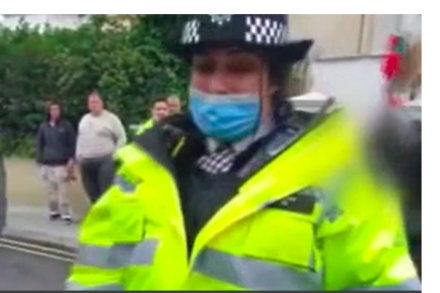
Picture the scene. A female police officer — hi-viz police jacket, regulation black hat, facemask slipping from her nose — punches the air, proclaiming: ‘free, free Palestine!’ Her words are met with cheers from the crowd at the anti-Israel rally in central London that she was supposed to be policing. Actually, you don’t have to bother picturing the scene. Just watch the video clip below to see a perfect symbol of the toxic blend of state authoritarianism and hard-left politics that is creeping across British institutions today. After I posted the video on Twitter, the Metropolitan Police said it was ‘reviewing the footage’ and would provide an update ‘shortly’. One wonders how long the investigation will take.

Bibi is back

From our UK edition

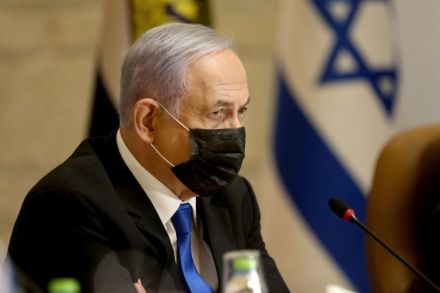
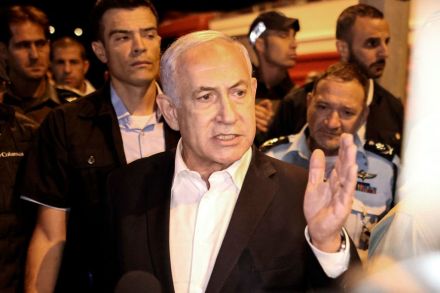
Is Benjamin Netanyahu’s time up? A fortnight ago, it seemed so. Netanyahu’s mandate for forming a coalition expired. The opportunity was handed instead to Yair Lapid, leader of Israel’s second largest political party Yesh Atid. Many dissatisfied Israelis started to hope: after four inconclusive elections, there was finally a chance to oust Netanyahu. But then hostilities broke out between Israel and Hamas, and reports of Netanyahu’s political death appear to be greatly exaggerated. In the weeks before this latest Israeli-Palestinian conflict, there was talk that Israel's new government would be made up of an eclectic coalition that would include parties on the left, right and centre, as well as an Arab-Israeli party.

associated press

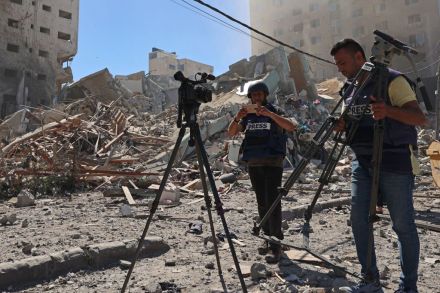
The decline and fall of the Associated Press

Once, long ago, in a land far away, the best journalists tried to stand aloof from the stories they reported. The idea was simple and powerful. If journalists tried to be neutral and kept their reporting separate from their opinions, analysis, and speculation, then the public would believe them. Those days are long gone — and the media’s credibility is gone with them. Journalists and media organizations are now smack in the middle of many stories they cover, in part because they want to be. They want to spin them, to set ‘the Narrative’. Imbued with this new mission, many journalists have become partisan protagonists.

Barristers should stay out of the Israeli-Palestine conflict

From our UK edition

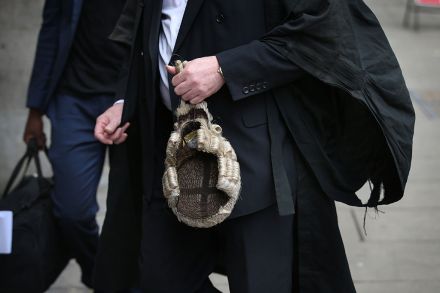
The world of barristers had something of a minor civil war at the weekend. The cause? The lesser known ‘Bar Human Rights Committee of England & Wales’ (BHRC), decided to weigh in on the Israeli-Palestine conflict. In a letter to the Foreign Secretary, Dominic Raab, the BHRC called on 'the UK Government to urge Israel, its friend and ally, to cease all violations of its obligations and responsibilities as an occupying power immediately, including its assault on Gaza'. It said: 'We urge the Government to issue a statement of unambiguous support for an independent investigation into alleged war crimes in the occupied Palestinian territory by the ICC' Who needs or wants a bunch of wig-wearers popping in?

Hamas’s rockets are killing Palestinians too

From our UK edition

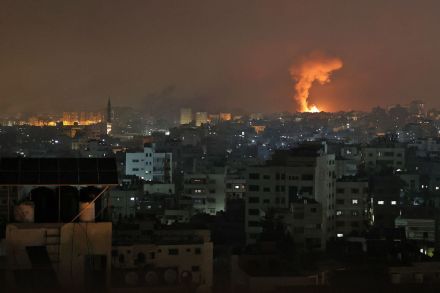
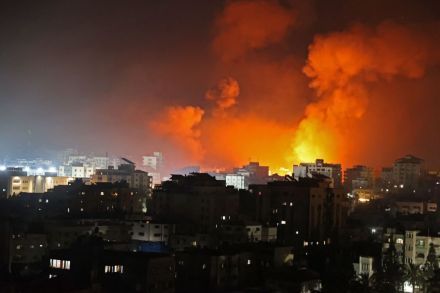
Israel’s military action in Gaza is widely reported daily across the world. Images of hundreds of rockets lighting up the skies over Israeli cities and of the rubble of destroyed buildings in the Gaza Strip are once again part of the daily cycle of print and broadcast news. But most reports are thin on details of Israel’s military activities. What exactly are their aims? How are they pursuing them? And how much success are they having? Often Israel’s military activities seem baffling to the wider world. The country’s reluctance to give a detailed, running-commentary on every strike frustrates journalists and citizens, who then assume the worst of motives for these unexplained acts.

Netanyahu’s toxic legacy

From our UK edition

A week ago Israel was about to have a new government supported by right-wing, left-wing, centrist and Arab parties which was to concentrate on a 'civilian agenda' and 'reconciliation'. Five days of internecine violence shattered that illusion. It’s still Netanyahu’s Israel. I’ve yet to see real evidence Netanyahu somehow engineered these dual crises in Gaza and between Jews and Arabs in Israel but it’s a direct result of his policies. He inherited in 2009 the previous government policies of blockading Gaza but in 12 years did nothing to change it.

Inside Israel’s Iron Dome

From our UK edition

A dramatic photo from the Gaza strip taken in the early hours of Friday morning looks like something out of a Marvel film. On the right, rockets fly from Gaza. The gentle trajectory of their parabolic curves shouldn’t fool anyone: these are unguided explosives travelling at hundreds of miles an hour towards an Israeli town. On the left, each one snaking a unique, winding path, interceptors from Israel’s Iron Dome anti-rocket system shoot up to meet the missiles. In 2001, when Hamas started firing rockets from Gaza into Israel (and, at that time, the still-extant Israeli settlements in Gaza), the terrorist organisation introduced a new weapon that would change the strategic picture of the Israeli-Palestinian conflict.

Revealed: How Israel tricked Hamas

From our UK edition

I received a message from a trusted contact in Israel yesterday telling me that no ground offensive was planned in Gaza. This was despite the fact that heavy armour and infantry reservists were massing on the border. I decided to hold the story and break it in the morning. Within hours, however, the official Israeli army Twitter account had suggested to the world that ground troops had gone into action. ‘IDF (Israel Defence Force) air and ground troops are currently attacking in the Gaza Strip,’ it said. Nobody noted the careful ambiguity. Within minutes, the news had spread across the world. ‘Israel goes in,’ screamed the MailOnline, the world’s biggest newspaper website.

Democrats for Hamas

The truly multiracial coalition in the US these days isn’t the Democratic party. It’s the anti-Semitic mass movement that takes to the streets of blue-state cities every time Israel defends itself against terrorism. Israel will no doubt survive the latest barrage of disapproval from people with a bottomless supply of personal pronouns and malicious memes. But this is a problem for American Jews today — and it will be all of America’s problem tomorrow, because the overrunning of the public square by anti-Jewish cranks and conspiracy theorists is a perennial warning sign of social breakdown. Spend a few minutes in the open sewer that is social media, and you are left in no doubt. The Democratic left has become thoroughly ‘Corbynized’, overtaken by the hard left.

hamas

How politics ruined Instagram

Someday, we’ll count them like fallen soldiers: the online platforms that began by promising to be different, an escape from the grind of endless internet flame wars, and ended up like all the others, captured by memeified outrage. The trajectory is always the same. Tumblr, originally a home for cheeky fanblogs with titles like ‘fuckyeahsharks!’, was overtaken in a few short years by the ‘Your Fave Is Problematic’ brand of outrage archaeology. Facebook started as a place to collect your photos, share updates about your lunch and platonically ‘poke’ your friends, only to devolve into a wasteland abandoned by virtually everyone except a bunch of angry boomers battling over whether or not Hillary Clinton does, in fact, eat babies. Twitter...

instagram

Don’t compare Israel to Hamas

From our UK edition

No, not this time, Boris. The Prime Minister’s ‘both sides’ response to the terrorist attacks on Israel underscores how Western political elites — left, right and centre — lose all critical reasoning when it comes to one tiny strip of land in the Middle East. Israel is under assault from Hamas, the Islamist mafia that runs Gaza like 19th-century Sicily. This follows tensions over the policing of holy sites during Ramadan; a spate of violent street incidents between Israelis and Palestinians; marching and incitement by the Israeli far-right; Palestinian rioting in Jerusalem; and Arab-Israeli rioting outside the capital.

The battle the Israeli Defense Force can’t win

From our UK edition

The hostilities between Israel and Gaza caught Netanyahu’s government by surprise. What started as a local demonstration by Palestinians against ongoing efforts to evict them quickly escalated into violent clashes with a heavy-handed Israeli police. Hamas then demanded Israel remove its forces from the area, including the nearby Al-Aqsa mosque, or face reprisals. When they didn’t, the terror group retaliated by firing rockets into Jerusalem. This was on Monday. By Wednesday there had been fierce exchanges of fire between both sides. Hamas fired over 1,500 rockets towards Israeli cities and towns. Despite Israel’s impressive Iron Dome anti-missile system and widely available shelters, over 200 Israelis have been injured and seven killed.

Palestinians in Jerusalem live in a strange limbo

From our UK edition

Jerusalem Thomas Friedman has a lot to answer for. The New York Times’s oracle has ruined, through overuse in his columns, the best source of local knowledge for journalists: the cab driver. No other hack can now quote his driver for fear of colleagues’ ridicule. Which is a pity, because the cab drivers in Jerusalem are those rare creatures who not only regularly cross between the three deeply divided cities — Zionist Jerusalem, ultra-Orthodox Jerusalem and Palestinian Jerusalem — but also converse freely with the denizens of all three.

Portrait of the week: Scotland votes, Queen speaks and Israel-Palestine crisis escalates

From our UK edition

Home A new complexion of British politics was revealed by the capture of Hartlepool by Jill Mortimer for the Conservatives in a by-election, with 15,529 to the Labour candidate’s 8,589. Since its formation in 1974, the constituency had been Labour. Sir Keir Starmer, the Labour leader, said his party had ‘lost the trust of working people, particularly in places like Hartlepool’. The Conservative Ben Houchen was re-elected as mayor of the Tees Valley with 72.8 per cent of the vote. Of 143 English council seats, the Conservatives now control 63, 13 more than before, with 2,345 councillors; Labour lost control of eight councils to end up with 44, and 1,345 councillors. Sir Keir then made a botch of a shadow cabinet shuffle.

Israel’s worrying descent into violence

From our UK edition

I didn’t hear the boom on Monday night. I didn’t hear the siren either, due to some loud renovations. Sitting at my desk in the bomb shelter in my flat that doubles as a home office, I found out we were under rocket attack by reading about it on Twitter. With the blast door and inch-thick steel window plate closed, I waited for the all-clear. A few minutes later, minor damage was reported to a house just outside Jerusalem, hit by shrapnel from a rocket that flew 40 miles from Gaza. Others were intercepted by the Iron Dome anti-rocket system. A dramatic end to Jerusalem Day, when Israel celebrates the reunification of the city under Israeli rule in 1967.