Israel

Exclusive: the New York Times stole my story

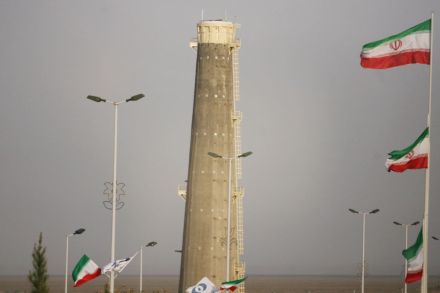
Question: When is a New York Times exclusive not a New York Times exclusive? Answer: On Sunday, when America’s paper of record stole my scoop. It sounds bizarre, but it’s true. Last February, I revealed top-secret details of the killing of the Iranian nuclear scientist Mohsen Fakhrizadeh in the pages of London’s Jewish Chronicle, the world’s oldest Jewish newspaper. Among the revelations — given to me by impeccable sources that I know well — were that the top Tehran official had been killed by Mossad using a remote-controlled gun that weighed one ton and had been smuggled into Iran piece by piece over several months.

new york times

How Harvard went woke

On January 1, 1993, I arrived at Harvard to take up a newly endowed professorship in Yiddish literature. It seemed preposterous: me at Harvard, Yiddish at Harvard. The university had never figured in my aspirations. My impressions of the university had been formed mostly from what I knew of its program in Jewish studies, which was jokingly referred to as ‘the Yeshiva on the Charles’ because of its emphasis on Talmudic and medieval sources. Its almost exclusively male Department of Near Eastern Languages and Civilizations felt obliged to appoint a female. My gender played an even more prominent part in the deliberations of the Department of Comparative Literature where I was to hold a joint appointment.

ruth wisse harvard

How China drove a wedge between America and Israel

From our UK edition

Two weeks ago, CIA director William Burns – who has rather a lot on his plate just now – had a quiet word in the Israeli prime minister’s ear about Chinese investment in the Jewish state. It was the latest and most urgent of America’s attempts to prevent Israel from slipping further towards the Beijing dragon’s maw, an issue which has increasingly threatened to drive a wedge between the two allies. It’s no secret that in recent years, Uncle Sam has found himself asleep at the wheel while China has been pushing ahead in the global race. Four decades of pursuing a policy of friendship towards Beijing had simply opened the door to exploitation.

Why Israel is rolling out a third Covid jab

From our UK edition

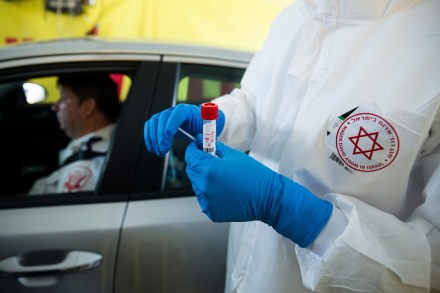
Israel has today become the first country in the world to offer a third Covid-19 booster vaccine on a large scale. Prime Minister Naftali Bennett announced that Israel will vaccinate all people over the age of 60 again, with the new Israeli President, Isaac Herzog, and his wife, the first people to receive their third shot on Friday morning. Legitimate concerns led to the decision: the number of new Covid cases in Israel has been rapidly increasing, including among the vaccinated – although to a much lesser degree compared with those who have not been vaccinated. There were 2,143 confirmed cases on Thursday, with 286 hospitalisations.

Why Israel must win over its Arab population

From our UK edition

Which Middle Eastern country offers the best life for Arabs? The answer, as they say, might surprise you. Take any measure you like – democratic representation, women’s rights, lack of corruption, freedom of speech, the protection of sexual minorities – and it is clear that Israel comes out on top. I remember covering an Isis gun attack on the Reina nightclub in Istanbul in 2017. An Arab-Israeli woman, 19-year-old Lian Zaher Nasser, was one of 39 people who lost their lives in the atrocity. The attentiveness of the Israeli diplomatic service to her family was striking, and equal to anything I’ve seen elsewhere. Years later, a senior Israeli intelligence source told me of his abiding sense of guilt in failing to prevent the attack.

Who cares what Ben & Jerry’s think about Israel-Palestine?

From our UK edition

When you think of the Israel-Palestine conflict, ice cream doesn’t usually come up. But that may be about to change. Ben & Jerry’s has finally broken its silence, announcing yesterday that it will ‘end sales of our ice cream in the occupied Palestinian territory’. Perhaps in the years ahead we’ll come to see this depriving Israeli settlers of Caramel Chew Chew and Truffle Kerfuffle as some kind of tipping point. We won’t, of course, because that’s ridiculous. As is a Vermont-based over-priced ice-cream brand weighing in on far-flung conflicts. But that seems to be where we’re at now – with corporate America in general and with Ben & Jerry’s in particular.

Why Israel is rolling-out third vaccine doses

From our UK edition

It’s time to think about your third Covid vaccine dose. That might sound like a premature suggestion when many people are still waiting for their second dose, and millions have not even received one. But Israel has just become the first place in the world to start giving a third, booster dose of the vaccine, and we should watch carefully to see if we can do the same. There is growing concern that those who received the vaccine earliest in Israel could be the ones who are currently getting infected with the delta variant. Might that indicate their immunity has dropped to a lower level, and that the vaccine’s efficacy wears off over time? Experts working with the Israeli health ministry suggest it is too early to draw such conclusions.

Who really needs a third Pfizer shot?

Do Americans need a third booster shot of the Pfizer vaccine? The question is the subject of a remarkable row between the drugs company and the government — the former of which is putting together an application for emergency use authorization for a third dose and the latter of which has so far proved unwilling to sanction it. The Department of Health and Human Services issued a statement after a meeting on Monday saying: ‘At this time fully-vaccinated Americans do not need a booster shot.’ For its own part, Pfizer cites evidence from Israel which, thanks to a deal with Pfizer, was able to get ahead in its vaccination program in return for the country effectively being used as a giant human laboratory.

third shot pfizer

What can Britain learn from Israel on ending lockdown?

From our UK edition

Israel has been the world’s whole-country experiment to establish how, and how fast, Covid vaccination can return life to normal (as much as life is ever normal in a country where there is constant tension over the rights and future of Palestinians). I am in Jerusalem, trying to understand the implications for stability in Israel and peace in the Middle East of a new government where prime minister Naftali Bennett is opposed to any kind of Palestinian state, and the alternate PM Yair Lapid passionately believes a two-state solution is the only answer.

What’s the real reason Israel’s vaccines were rejected by Palestinians?

From our UK edition

Sipping an iced coffee in a Tel Aviv café this week, it felt like it was 2018 again. Nobody wears a face mask, tables are close together and there’s no hand gel in sight. Very few people one meets even talk about Covid-19. Though a tiny increase in the occurrence of the Indian variant has been noted in recent days, Israel is rightly proud of its vaccination and mass immunity success. It is therefore surprising that Israel’s offer to advance over one million Pfizer vaccines to the Palestinians has been rejected by the Palestinian Authority only hours after they initially accepted the deal. Many countries are still grappling with the ethical dilemma of when to offer their own supply of vaccines abroad to help others; few are expecting such offers to be rejected.

Can Naftali Bennett’s anti-Bibi coalition survive?

From our UK edition

Sunday saw a watershed moment in Israeli politics: Bibi Netanyahu was removed from power after 12 years, and his government replaced by an eclectic coalition headed by Naftali Bennett and Yair Lapid, both of whom will serve as Prime Minister under a rotation agreement, starting with Bennett. It may be that one of Bibi’s greatest achievements was bringing together politicians with little in common but the belief that it was time for Bibi to go. Anyone watching the vote to approve the new government would have been on the edge of their seat: the new government was approved by a single vote (passed 60 to 59).

The era of Bibi is over

From our UK edition

Israel's new government is a daring, possibly doomed but nonetheless fascinating experiment. Headed by tech millionaire turned nationalist figurehead Naftali Bennett and TV journalist turned voice of centrism Yair Lapid, Jerusalem’s 36th government is an ideological hydra.  Bennett’s right-wing national-religious Yamina party is joined by the secular liberals of Lapid’s Yesh Atid, along with Kahol Lavan moderates, Labor social democrats, Meretz socialists, and the Likud breakaway faction Tikva Hadasha, plus Yisrael Beiteinu’s secular right-wingers and Ra’am’s Islamic conservatives.

The war Israel is losing against Hamas

From our UK edition

The Gaza conflict is bloody, brutal, and genuinely heartbreaking, but it is also perfunctory. This is a fight in which the military battle is predetermined: Hamas cannot win, and Israel cannot lose. What happens in between is almost balletic in its endless predictability. Hamas fires rockets, Israel fires back; Hamas targets Israeli cities; Israel bombs buildings in which Hamas hides and stores weapons. So what’s the point? Well, apart from Hamas needing to show strength – and Israel needing to, in the words of its security experts, 'mow the grass' by periodically degrading Hamas’ military capabilities – there is a wider battle raging. This fight isn't about missiles or rockets but about narratives; to fight you need a reason.

The progressive imperialism of Keir Starmer’s Palestine policy

From our UK edition

There are two ways to look at Sir Keir Starmer’s call for the Prime Minister ‘to press for a renewed international agreement to finally recognise the State of Palestine’ at the G7 summit. The first is cynical: that the intended audience was not the government benches or the international community, but the voters of Batley and Spen, currently weighing up whether to elect another Labour MP in next month’s by-election. At the 2011 census, almost one in five residents were Muslim and knowing what we know about how progressives view religious and ethnic minorities, it is not a stretch to assume Sir Keir was merely electioneering.

Why I love Israeli TV

From our UK edition

Tragically it wasn’t my turn to review when Channel 5’s groundbreaking Anne Boleyn came out so you’ll never find out what my totally unpredictable critique might have said. As you know, I have previously been mad for all things Israeli and one of my plans had been to go there with my brother Dick and make a fun documentary where we train with the IDF, practise in one of those urban-warfare shooting ranges, learn krav maga, eat lots of Ottolenghi-type food, wallow in the Dead Sea, etc. But I’m afraid I’ve rather gone off Netanyahu’s vax tyranny and just can’t root for Israel in the way I once did. Still, this doesn’t seem to have put me off its TV shows, yet.

How China won over the Middle East

From our UK edition

In April, Chinese Foreign Minister Wang Yi embarked on a six-nation Middle Eastern tour to Saudi Arabia, Turkey, Iran, the United Arab Emirates, Bahrain and Oman. ‘Belt and Road’ cooperation, economic development and the Covid pandemic were the topics of discussion. The treatment of China’s Muslim Uighur population in detention camps, which some in the West have described as genocidal, didn’t come up. Both China and Saudi Arabia cleave to the belief that internal affairs are nobody else’s business — or at least as long as there are overriding economic interests at stake. Compare the silence of Muslim countries on the Uighur issue with the loud faux anger when the Danish newspaper Jyllands--Posten published caricatures of the Prophet Mohammed in 2005.

Israel’s PR problems have nothing to do with PR

Following the US setback during the Tet Offensive in Vietnam in 1968, Walter Cronkite, the mythical CBS News television broadcaster, was sent to Southeast Asia to report on the military intervention there. After Cronkite proclaimed in his broadcast that the US lost the war in Vietnam and that it was time to bring the boys back home, then President Lyndon B. Johnson told his advisors, 'If I lost Cronkite, I lost Middle America.' Urban legend or not, it reflected the way I imagined the role of the American media to be when I had served as a press officer at the Israeli Consulate in New York about a decade or so after Cronkite aired that broadcast from Vietnam.

israel

The problem with the New York Times’ Gaza coverage

From our UK edition

While war raged between Israel and Gaza, the New York Times published a powerful montage of 64 minors said to have been killed in the conflict so far. Under its famous motto ‘All the news that’s fit to print’, and with the headline ‘They Were Just Children’, America’s paper of record informed us that ‘they had wanted to be doctors, artists and leaders’, and invited us to read their stories. It was impossible to look at those innocent faces without feeling deeply distressed.

Naftali Bennett, the millionaire poised to be Israel’s next prime minister

From our UK edition

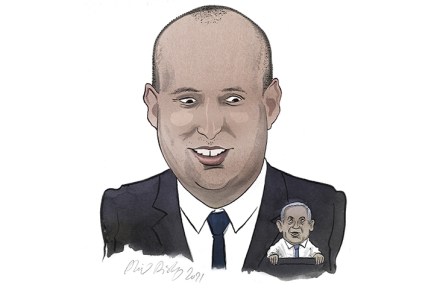
Jerusalem In April 2019, Naftali Bennett received an unpleasant surprise. As the votes were counted in Israel’s general election, it became clear that his New Right party had not passed the 3.25 per cent electoral threshold needed to stay in Israel’s parliament, the Knesset. Bennett had lost his seat, his new party had failed and his political career looked like it was over. Two years, three more elections and a global pandemic later, Bennett is on the verge of ending Benjamin Netanyahu’s 12-year rule. Barring a spectacular reversal, he is about to become Israel’s prime minister. He has found himself in the right place at the right time, heading (though not necessarily leading) an eclectic coalition of parties from the left, right and centre.

The problem with Palestine’s showbiz supporters

From our UK edition

One of the many reasons I hate wokers is because they indulge so shamelessly in what Bebel coined ‘the socialism of fools’ – anti-Semitism – under the convenient cover of sticking up for the Palestinians. Pretty much all socialism is for fools these days and as we see the Tories ditch misogyny, racism and austerity (Chancellor Sunak ‘Soak the rich!’ – Sir Keir Starmer ‘No!’) we have seen anti-Semitism cross the floor too. This is not the sniggering Jew-hatred of the smug Surrey golf club; this is where the pampered and resentful spawn of the bourgeoise get down to the rapper Wiley, MBE, he of the profoundly inclusive tweets like ‘Jews would do anything to ruin a black man’s life’.