Islam

Where Warsi is right and wrong

From our UK edition

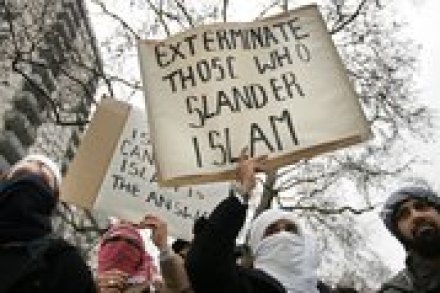
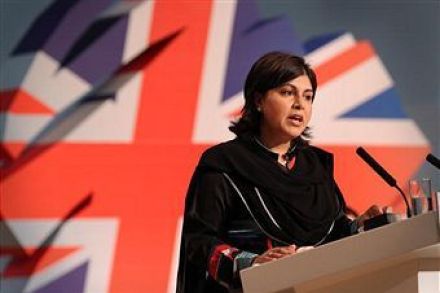
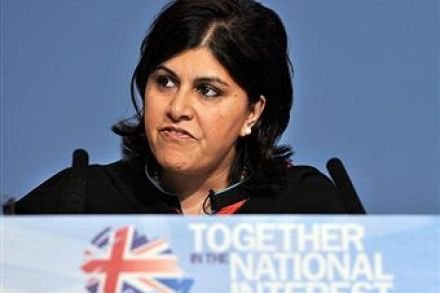
As ever, the headlines are more sensational than the speech, but marginally so in this case. Baroness Warsi has asserted that Islamophobia is rife and socially acceptable in Britain. It is a peculiarly crass statement for an ordinary politician to have made, but, then again, the gabbing Baroness is a very ordinary politician. Some of her speech is sensible, even unanswerable. She attacks the media and the arts for ‘the patronising, superficial way faith is discussed in certain quarters.’ Questioning faith is the natural and welcome adjunct of a free society, but specific criticism is morphing into general hostility.

Freedom in the desert

From our UK edition

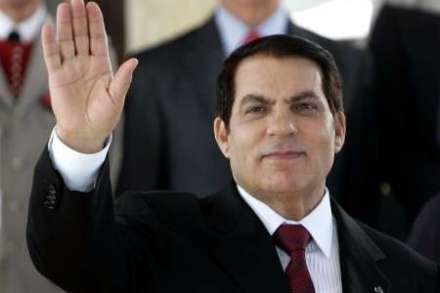
When in power, authoritarian regimes can look immovable - even when, in hindsight, they turn out to have been brittle. This seems to have been the case with Zine el-Abidine Ben Ali's Tunisian regime. Weeks ago, nobody would have believed that the Tunisian strongman, who has held power for more than 23 years, could have been chased from office so quickly. A diplomat friend who served in Tunis marvelled at the dictatorship, where information was so restricted that he depended on information from colleagues stationed elsewhere in the region. Ben Ali's rule was apparently total; the opposition was comprehensively suppressed and the population had little scope for expression or assembly.

Winning the argument

From our UK edition

Whenever I worry that my instinct for pluralism and debate is drawing me to listen to siren voices, I am reminded of the idiocy of the authoritarian alternative. This week I had the honour of being singled out by the Islamist fellow-travellers of iEngage after I dared to write that such a sectarian organisation should never have been considered to act as the secretariat for the new All-Party Parliamentary Group on Islamophobia. The full letter from the head of iEngage, Mohammed Asif, is available on the organisation’s website.

The ultimate Jewish conspiracy theory

From our UK edition

This has to be the ultimate Jewish conspiracy theory story. Why have the Wikileaks disclosures been so soft on Israel? Here is Tariq Shahid from the Palestine Think Tank. I’m hoping it’s a spoof but here’s my favourite section: “Browse through all the news sources available on the latest Wikileaks revelation, and try to find even only one revelation that actually damages Israel, even though so many of the revealed documents are directly or indirectly connected to Middle East politics, and to a large extent to Israeli affairs. Did you find any document among them that either creates difficulties for the government of the Zionist entity, or even slightly embarrasses it?

The strange case of Turkey, Islamic history and V.S. Naipaul

From our UK edition

Nobel laureate V.S. Naipaul has pulled out of the European Writers’ Parliament in Istanbul, following pressure from Turkish writers who felt ‘uneasy’ about comments he had made about Islam in 2001. Naipaul compared Islam to colonialism, arguing that both had had ‘a calamitous effect on converted peoples. To be converted you have to destroy your past, destroy your history. You have to stamp on it, you have to say 'my ancestral culture does not exist, it doesn't matter.’ Naipaul’s comments concern the factual context of Islam’s expansion between the 7th and 17th centuries, hence the comparison with colonialism.

How to prevent schools from being hijacked by extremists

From our UK edition

The coalition plan to let parents, teachers and voluntary groups set up schools and be paid by the state for every pupil they educate has the potential to transform education for the better in this country. But this policy also requires the government to prevent these freedoms from being abused by extremist groups who want to teach hate. The revelations on tomorrow night’s Panorama about weekend schools that use Saudi textbooks that ask pupils to list the “reprehensible"  qualities of Jews and teach the Protocols of Zion as fact are  a reminder of how serious this threat is.

Neo-isolationism is NATO’s greatest enemy

From our UK edition

As NATO leaders gather for a key summit in Lisbon, expect the newspapers to be full of the usual “why bother” commentary. NATO, they will argue, was founded for a different age and is not relevant for dealing with today’s threats – from cyber-attacks to nuclear non-proliferation. It is even struggling to deal with older threats, such as the Taliban insurgency. Most Europeans do not seem to mind. They feel safer than at any time before and worry predominantly about post-material threats, not conventional attack, as a think tank report showed recently. As a result, Europeans are set to spend less on defence. Germany expert Hans Kundnani has an excellent piece on Berlin’s anti-militarism over on ECFR’s new blog.

The importance of teaching British values in schools

From our UK edition

One of the websites that the young Muslim woman, Roshonara Choudhry who stabbed Stephen Timms MP mentioned in her police interview was RevolutionMuslim, which now appears to have been taken down. Charles Moore turns his attention to the site in his column today: 'After Choudhry’s conviction, I had a look at RevolutionMuslim. It has put up a list of all MPs who voted for the Iraq war, details of their surgeries and even a link to a supermarket website where you can buy knives. I watched its video, in which a young man praised Choudhry for “taking the matter into her own hands”, and attacked Muslims who collaborate with the infidel. A similar-looking young man featured in press pictures of demonstrators outside the Old Bailey.

The growing case for libel reform

From our UK edition

Policy Exchange’s work on Islamism has been some of the most important undertaken by a think-tank in recent years. It has influenced and bolstered the thinking of brave politicians in both the last government and the current one. That’s why it is so important that Policy Exchange came off best in the libel case brought against it by North London Central mosque. The case is now over and the mosque has made, what Policy Exchange calls, ‘a substantial contribution’ towards the think tank’s costs. Policy Exchange has stated that it never meant to suggest that extremist literature was sold or distributed on the mosque’s grounds with the consent of the trustees or staff of the mosque.

In international politics, the pursuit of stability is not enough

From our UK edition

One of the biggest challenges facing the post-Iraq generation of foreign policy decision-makers, like William Hague and Hillary Clinton, is to balance the pursuit of overseas stability with promotion of the dynamic and sometimes de-stabilising forces that build countries' long-term stability and make economic and political progress possible. This may sound like an academic question but it is a very real change- and not just because the SDSR has made the task of building overseas stability a key government objective.   Take Iraq. After having lost an admirably violence-free and largely fair election, it looks likely that Iraqi Prime Minister Nouri al-Maliki will cling to power and the voter-winner, Ayad Allawi, will be denied a role in government.

Beware Yeminitis 

From our UK edition

Yesterday saw an outbreak of Yeminitis, with Westminster focused on Osama Bin Laden’s ancestral home after the foiled bomb plot. To CoffeeHouse readers, this will come as no surprise. Last year, the Spectator prophesised that Yemen would be the “sleeper issue” of 2010. And so it has proved. But what have successive British governments been doing since the threat began to grow? UK policy towards Yemen is an exemplary case of cross-government cooperation. Rarely do the FCO, DFID and the MoD collaborate as closely as they do over Yemen. Alan Duncan, now a Minister for International Development, has taken a personal interest in the country, flying to Sana'a earlier in the year and drawing on his network in the Gulf to engage Yemen’s leadership.

In defence of Control Orders

From our UK edition

David Cameron currently thinks the coalition is heading for a ‘f***ing car crash’ on Control Orders. While the Home Secretary Teresa May is now convinced of their necessity, many Liberal Democrats and some Conservatives disagree. Everyone would prefer potential terrorists be prosecuted, but sensitive counter-terrorism evidence cannot always be used in a criminal court. In addition, the European Convention on Human Rights decrees that terror threats cannot be deported to states where they could be tortured. Hoping to circumvent these problems, the previous government attempted detention without trial. When this was struck out in the courts, Control Orders were the best viable option left.

Confronting terror at home

From our UK edition

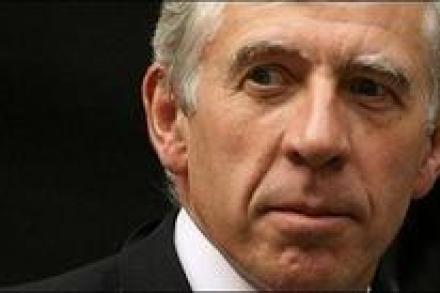
As Julian Glover notes, Jack Straw let the cat out of the bag. ‘Never, ever, downplay the possible consequences,’ he says. The coverage of the recent bomb plot has largely ignored that it was foiled. That, by any definition, is a success, a vindication of our security services. Independent inspector Lord Carlile is right that improvements can be made to the bomb detection apparatus in airports and targeting security at the source of a threat – i.e. packages from the Yemen rather than package holidays. The previous government would have used this plot to introduce another wave of invasive legislation – never, ever, downplay the possible consequences to justify I.D. cards, deeper control orders and further suspension of Habeas Corpus.

The Islamic Republic of Tower Hamlets

From our UK edition

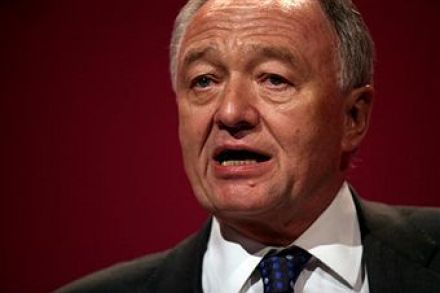
Andrew Gilligan explains why Lutfur Rahman’s victory in Tower Hamlets is a potentially alarming development. Obviously, this is a humiliation for Ed Miliband. The victory of a de-selected Labour councillor is bad enough, but what does he say about Ken Livingstone’s involvement in Rahman’s campaign? Widening those imploring eyes, offering an apologetic shrug and saying "Ken will be Ken" probably won’t cut the mustard this time. Perversely, Livingstone might benefit from Rahman’s victory, as it has allowed him to resuscitate his ‘Red Ken the insurgent’ pose – and you can’t get much more cynically subversive than this latest stunt.

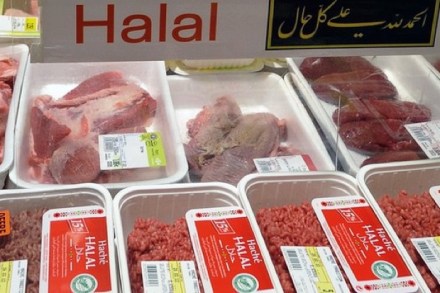
I refuse to buy meat from supermarkets until they ban halal slaughter

From our UK edition

There is a view, prevalent among a sizeable minority of people in this country, and particularly within the angry, fat and drunk white underclass, that one day very soon the green flag of Islam will fly above Westminster and Britain will have become a Muslim country, by stealth. This is the snarled and yet resigned reaction to every inflammatory news story printed in the popular press about Muslim-only swimming nights at local leisure centres, or councils banning Christmas, or teachers upbraided for talking about Jesus Christ in school and so on.

Labour caves to divisive Livingstone

From our UK edition

If I was a member of the Labour party I would be feeling pretty uneasy this afternoon as news of Ken Livingstone's victory in the mayoral candidates battle sinks in. There is a cold reality about cuddly uncle Ken which deserves serious examination: he is a ruthless political operative who will sell out everyone, including his own party, to win. But Ken is not just a divisive figure, he was also a sinister Mayor, presiding over an wildly dysfunctional London Development Agency, controlling policy for London through a cabal of advisers calling themselves 'Socialist Action' and getting chummy with divisive and radical islamists including Yusuf al-Qaradawi.

Andrew Mitchell: the answer to global terrorism

From our UK edition

Al Shabaab and al Qeada are brothers in arms – Somalia is a hothouse for terror. Jonathan Evans, director general of MI5, has openly expressed his view that it is ‘just a matter of time’ until Somalia and the Yemen export terrorism to Britain’s streets. That striking statement contains one oversight: they do already. Umar Farouk Abdulmutallab, the Christmas Day bomber, was trained in the Yemen and two of the 7/7 bombers were Somali. How to eradicate this threat? The legacies of Iraq and financial retrenchment have made armed intervention an absolute last resort. Counter-terrorism is essential, but well targeted aid is the easiest remedy for chaos. In a speech yesterday, Andrew Mitchell described why aid should be directed to benighted regions.

The coalition’s inept EU referendum lock

From our UK edition

At least this government is honest. ‘There will be,’ Europe Minister David Lidington says, ‘no referendum on the transfer of competence or power from the UK to the EU during this Parliament’. The government will ensure that there are no more EU power transfer treaties; but, as Douglas Carswell, Tim Montgomerie, and Bill Cash all note, the Lisbon Treaty is self-ratifying. The EU has already picked the coalition’s lock and garnered new powers for itself – notably the extension of the EU arrest warrant. The EU could be an economic superblock with the muscle to influence the globe strategically and culturally. But its current political operation is unnecessary and deplorably un-democratic.

Burning the Koran

From our UK edition

The US constitution cannot stop Pastor Terry Jones from burning 100 Korans to mark the 9th anniversary of 11 September, and neither should it – the right to free speech is absolute when within the law. But free speech comes with responsibilities. Just as it is unwise to build, with provocative intent, a mosque near the site of Ground Zero, so too for a Christian minister to burn the Koran as a publicity stunt. Such mindlessness is grossly offensive to the peace abiding majority, and it also furthers endanger US and Allied troops abroad and the population at home by inciting contemptible extremism. Common sense and the tenets of Christian faith aside, Jones should desist and be tolerant.