Islam

Devastating Attack on Amnesty International

From our UK edition

Gita Sahgal has launched a very powerful attack on Amnesty International on the Open Democracy website on the occasion of the publication of AI's Annual Report.  Here is the nub if her argument, which is devastating to Amnesty's reputation: "In his reports to the International Executive Committee circulated for ‘transparency’, the Interim Secretary General Claudio Cordone, has airbrushed out any mention of the  concerns that I forced Amnesty International to face when I went public with my complaint that the organisation has sanitized the reputation of Moazzam Begg, a former Guanatamo detainee. They have treated him as a human rights advocate, although he champions Anwar al Awlaki and al Timmimi.

Blood relatives

From our UK edition

The last time I saw Benazir Bhutto was at Oxford, over champagne outside the Examination Schools, when she inquired piercingly of a subfusc linguist, ‘Racine? What is Racine?’ Older and richer than most undergraduates, and as a Harvard graduate presumably better educated, she was already world famous, and was obviously not at Oxford to learn about classical tragedy. The last time I saw Benazir Bhutto was at Oxford, over champagne outside the Examination Schools, when she inquired piercingly of a subfusc linguist, ‘Racine? What is Racine?’ Older and richer than most undergraduates, and as a Harvard graduate presumably better educated, she was already world famous, and was obviously not at Oxford to learn about classical tragedy.

Crying in the wilderness

From our UK edition

For 30 years Alastair Crooke was ostensibly a British diplomat working in Northern Ireland, South Africa, Columbia and Pakistan. Ten years ago he became Middle East adviser to Javier Solana, playing an important role in negotiating ceasefires between Israel and Hamas, as well as helping to end the siege of the Church of the Nativity in Bethlehem in May 2002. In the summer of that year an Israeli newspaper named Crooke as an agent for the Secret Intelligence Service, and shortly after he was recalled to London. It has been reported that his sympathy with the Palestine cause caused embarrassment to Tony Blair’s government.

A grim reminder of the Islamist threat?

From our UK edition

Yesterday's attempted car-bombing in Times Square doesn't really tell us anything beyond that there are sociapaths willing to blow people up, and that sometimes luck – rather than judgement – foils their bloody plans.  But, given the Pakistani Taliban's claim that they were responsible for the attempt, it does serve as a grim reminder of the poison seeping out of that region.   The question now, and for the next few months, is whether the West will somehow become more engaged inside Pakistan.  It's notable how British ministers have increasingly namechecked the country when justifying our presence in Afghanistan – but, still, it seems that the Taliban and other Islamist groups have strengthened their foothold there.

No earthly good

From our UK edition

Peter Hitchens writes a stern column most weeks in the Mail on Sunday. It expresses disdain not only for today’s politicians but also for those of us who vote for them. The weekly Hitchens can leave even his fellow right-wingers feeling demoralised. He argues that David Cameron’s Tories are no better than Gordon Brown’s clowns. Anyone who swallows campaign promises from Wesmtinster’s stinking fraudsters — a plague on all their second houses — is, in his view, a fool. Hitchens is brave and clever. He writes fluently, with the eye of a shrewd reporter. The best newspaper columnists have always been contrarians, but surely few have been so consistently against everybody with such Old Testament hotness.

The new AfPak strategy in action – decapitation, reintegration and reconciliation (DRR)

From our UK edition

It’s not quite the “we got him” moment, as when US soldiers unearthed the fugitive Iraqi dictator. But the capture of Mullah Abdul Ghani Baradar, a top militant commander who is said to be second in command to elusive Afghan Taliban chief Mullah Mohhamad Omar, may be even more significant. By the time Saddam Hussein had been caught, the US was fighting a different enemy, though the Pentagon leadership had not realised yet. Baradar, who was in charge of the insurgency’s day-to-day operations on behalf of the so-called Quetta Shura, the Taliban’s leadership council, is very much today’s enemy - and his seizure should not be underestimated.

The rebirth of history

From our UK edition

We have Francis Fukuyama writing a cover piece for us this week, revisiting his 'End of History' thesis. When he first published it, in 1989, he anticipated what was to become a consensus shared by many, including myself: that autocracy was on the way out. Communism had failed, and was being supplanted by the free society (aka the free market). Capitalism was creating wealth and liberty, and from Minsk to Gdansk people wanted it. Eastern Europe was managing a transition brilliantly. Fukuyama¹s thesis seemed to sum up an incredible spirit of optimism. Perhaps this optimism turned to hubris. After 9/11 Tony Blair and George Bush wanted to accelerate history, and bring democracy to countries which just needed to get rid of their dictatorships.

Gita Sahgal: A Statement

From our UK edition

Gita Sahgal has now published a statement following her suspension from Amnesty International. I have seen it at Stroppyblog, but please circulate it as widely as possible. Gita has been an active member of Women Against Fundamentalism for many years. Perhaps the publicity around this case will allow their voices to be heard. Amnesty International and Cageprisoners Statement by Gita Sahgal 7 February 2010 This morning the Sunday Times published an article about Amnesty International’s association with groups that support the Taliban and promote Islamic Right ideas. In that article, I was quoted as raising concerns about Amnesty’s very high profile associations with Guantanamo-detainee Moazzam Begg.

Amnesty International, Moazzam Begg and the Bravery of Gita Sahgal

From our UK edition

It is not often that my cynical jaw drops open at a story in the papers. But the piece on page 13 of the Sunday Times provoked just such a reaction. Congratulations to Richard Kerbaj for blowing the lid on Amnesty International's relationship with former Guantanamo detainee Moazzam Begg and his organisation Cage Prisoners, who act as apologists for Islamist totalitarianism. Gita Sahgal, the head of the gender unit at Amnesty International's international secretariat has been campaigning on women's issues for decades. She is rightly sick of the lazy alliance between some in the human rights world and radical Islamists.

Talking to the Taliban | 29 January 2010

From our UK edition

After the London conference, it is clear that “talking to the Taliban” will become part of the strategy in Afghanistan. But the conference left a number of important questions about what this means in practice unanswered. Talking to the Taliban is not a new idea. Even though he expelled a British and Irish diplomat for holding secret talks with Taliban in December 2007, President Karzai has become an advocate for such negotiations over the last two years. In the Spring of 2009, Saudi Arabia hosted tentative negotiations between Karzai’s representatives and former Taliban, with links to the current movement. But the idea now has a head of steam behind it.

The burka is a symbol of division, but it should not be banned

From our UK edition

On the face of it, Nigel Farage is right: “There is nothing extreme or radical or ridiculous” about banning the burka. It is a manifestation of many British Muslims’ indifference to society; it is an expression of wilful separation and a symbol of a nation riven with cultural division. In the sphere of private behaviour becoming political, the burka engenders intolerance – reactionary Islam’s intolerance of liberal democracy and vice versa. In this atmosphere, writers and politicians of all hues have drawn the same conclusion and there is capital to be extracted (perhaps cynically) by taking the seemingly sensible decision to ban the burka. To do so would be misguided as well as intolerant.

The government caves in to the Muslim Council of Britain

From our UK edition

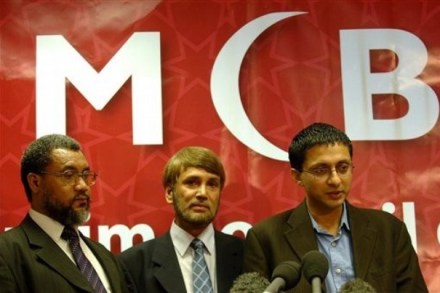
The government has caved in its dispute with the Muslim Council of Britain. The government broke off relations with the group over its deputy director-general Daud Abdullah signing the Istanbul Declaration. Indeed, Daud Abdullah even instigated legal action against the then Communities Secretary Hazel Blears over her statements about what the declaration called for. But now Stephen Pollard is reporting that the government is bringing the MCB back in. A DCLG spokesperson tells Pollard that an MCB commitment to examine “their internal processes and ensure that the personal actions of all members, including senior leaders, remain true to the organisation's agreed policies, avoiding a repeat of the issues which arose after one member signed the Istanbul Declaration...

Fighting terror with the National Security Council

From our UK edition

Since September 11, Britain has lost one war and is not winning another. But the question of why this is the case remains depressingly low down the agenda. There is remarkably little interest in why the “British army was defeated in the field in southern Iraq”, to quote Gordon Brown's and David Miliband’s favourite counter-insurgency expert, David Kilcullen. Today, the Tories launched their green paper on national security with speeches by Pauline Neville-Jones and David Cameron. The document is a mixed bag. But the Tories deserve credit for squarely facing up to the fact that Britain is now an “incubator of extremism and an exporter of terrorism”.

Islam4UK: the clue’s in the name

From our UK edition

Irony of ironies, proselytising liberal and convinced egalitarian, Anjem Choudary, told the Today programme that the banning of Islam4UK, al-Muhajiroun and their aliases is a ‘failure of democracy’. A further irony is that he is right, sort of. Alan Johnson's decision is understandable but incorrect; the surest way to silence these repugnant extremists and reactionaries is through equality and free debate, even though they hold those principles in contempt. The members of Islam4UK abuse freedom to peddle their reactionary ideals and disregard their duties towards society, but that is no reason to proscribe the group.

Oh dear, Gordon’s done it again

From our UK edition

The knicker-bomber must love this. Twice Gordon Brown has jumped on the bandwagon and bounced straight off on both occasions. Sky News reports that the UK did not pass vital information to the US, despite the claims of a Downing Street spokesman. Here’s the key section: 'During a briefing to journalists today, the Prime Minister's spokesman said: "There is no suggestion the UK passed intelligence to the US that they did not act on." But Sky's political correspondent Joey Jones said it had been an "awful" briefing. "He tried to clear things up but only succeeded in muddying the waters still further," Jones said. "After he read Downing Street's statement, the spokesman said there would be no further comment on intelligence issues.

Overcoming America’s intelligence woes

From our UK edition

The failed terrorist attack on a North West Airlines plane last month has reignited the debate about just what can be done to improve the performance of America’s intelligence agencies. Despite spending close to $100 billion since the attacks of 9/11 nine years ago, it has become clear in the aftermath of the failed attack that all the old problems that were identified after the attacks on the World Trade Center and the Pentagon still remain: Intelligence is not shared effectively and the analysis of available data remains weak. To the reformers inside the intelligence community, none of this is exactly news. As money poured in after 9/11 there was little thought about overall strategy.

Why profiling is essential

From our UK edition

It is a truth, yet to be universally acknowledged, that the overwhelming majority of global terrorism is committed by radical Muslims. However, the Guardian reports that Whitehall has reached that conclusion and passenger profiling is “in the mix” of the latest airport security review. Thank God, sense prevails at last. The previous airport review, conducted in the aftermath of the liquid bomb plot, decided against profiling. What followed was a fatuous politically correct concoction. Even pilots’ toothpaste was examined; one pilot commented: “If I want to kill everyone (on board) I don’t faff around with plastic explosives, I point the nose at the ground”. Such determined absurdity should be behind us.

The “sleeper issue” of 2010: Yemen

From our UK edition

As Melanie Phillips says in her article for this week's issue of the magazine, the case of Umar Farouk Abdulmutallab highlights the role of other, less frequently discussed, countries in Islamist terror. One such country is Yemen, where Abdulmutallab is thought to have trained at an Al Qaeda camp. The US believes there may be a few hundred al Qaeda fighters in Yemen, centered on a group of key network leaders who are operating a number of camps.   Yemen has slowly been getting more international attention. A few weeks ago I was meant to go on Al Jazeera, but my appearance was cancelled at the last minute because, I was told, of other “breaking news”. Curious, I turned on BBC and searched the internet to find out what the headline-grabbing story could be.

The failures of American intelligence

From our UK edition

The terrorist attacks on 9/11 succeeded because US intelligence failed to bring the various pieces of information together to prevent them. The attempted terrorist attack on a North West Airlines plane headed for Detroit almost succeeded because US intelligence failed to bring different pieces of information together that would have prevented the bomber getting on the plane. Between 2001 and today, the US has spent around $40 billion on counter terrorist improvements and even more on trying to improve intelligence. And yet, nothing much seems to have changed. In the current case, there was intelligence that the Yemen branch of Al Qaeda was using a ‘Nigerian’ as a bomber.

The NYT: The Detroit bomber was radicalised in London

From our UK edition

It is a depressing fact that the Detroit bomber appears to have been radicalised in London. Today, the New York Times takes an extensive look at the bomber’s radicalisation in London. As the paper, which is not prone to hyperbole, says: “Investigators are now, in fact, turning a sharper and retrospective eye to the passage in Mr. Abdulmutallab’s life that began immediately after his summer in Sana, Yemen, in 2005, when he enrolled as a $25,000-a-year mechanical engineering student at University College London. In recent days, officials in Washington and London have said they are focusing on the possibility that his London years, including his possible contacts with radical Muslim groups in Britain, were decisive in turning him toward Islamic extremism.