Islam

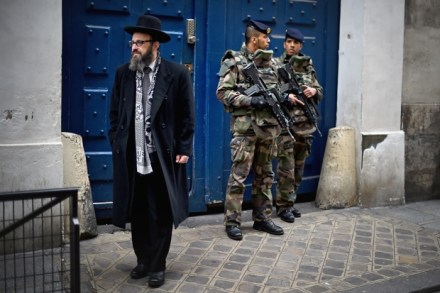
It’s not Netanyahu’s fault that Jews in Europe are afraid

From our UK edition

Have you seen the prices for houses in Israel? Astronomical, mate. You wouldn’t believe it. An arid and perpetually embattled country which everyone has recently decided to hate, and with a bloody great big wall topped with razor wire running through the middle of it — I’d have expected the cost of a nice four-bed would be comparable to what you’d pay in Rwanda, say, or Myanmar. Not a chance. Down south, in Eilat, it’s millions and millions and millions of quid, just to be oven-basted by the extremist sun and then eaten by a shark. It’s not much better in the nicer parts of Tel Aviv, either, such as Jaffa — more than a million pounds for 150 square metres of living space, without a view of the torpid Med.

The pen is only powerful when we defend it unconditionally

From our UK edition

It looks like this year’s Simon Hughes prize (awarded each year to the non-Muslim who does the weirdest impression of holding Islamic principle) must go to Lord Woolf. In a speech yesterday at the Oxford Centre for Islamic Studies the former Lord Chief Justice chose to explain why Muslim sensitivities should be especially respected.  He also used this pulpit to warn people in Britain not to exercise their rights as free citizens.  Here is an excerpt: ‘By now it must surely be appreciated that depicting the prophet in a derogatory way will cause grave offence among many Muslims and can lead to an explosive reaction with dreadful consequences.

Freedom of speech is a sacred British value (and those who disagree can hop it)

From our UK edition

In the aftermath of last month’s Paris atrocities there was a remarkable piece in one of Denmark’s leading papers signed by more than a dozen prominent Danish Muslims.  It said that France, like Denmark, is a country where there is freedom of speech and freedom of religion and that writers and cartoonists had every right, in such societies, to draw and cartoon whatever they wanted, including Islam’s prophet.  Muslims should get used to it. At the end of translating this article for me the Danish friend who showed it to me said something very important: ‘This has only happened because we’ve been having this argument in Denmark for nine years.

Why calling for an ‘Islamic Reformation’ is lazy and historically illiterate

From our UK edition

It’s been said for years now: Islam needs its reformation. Some centuries ago, Christianity ditched its theocratic impulse and affirmed modern political values — let Islam do likewise! Let its Luther, who is presumably sulking in the corner of some madrassa, come forward! Islam hath need of him! This sounds briskly no-nonsense, in its willingness to say that Islam has a problem that needs fixing, and open-minded about religion, in its assumption that religions can change and be compatible with secularism. But it’s actually lazy and historically illiterate. It involves a misreading of how Christianity relates to modernity. It implies that, once upon a time, Christianity was in conflict with healthy political values, but it learned to change its ways.

The price of Egypt’s economic recovery: police brutality, torture and a strangled press

From our UK edition

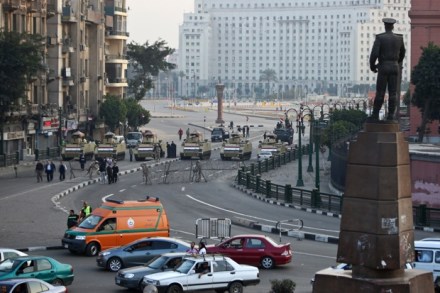
Cairo’s Tahrir Square is turfed and tarmacked. Traffic police bustle about, watched at a distance by the soldiers in their tanks. There are few signs that this used to be more than just an intersection. But four years ago this week, it was at the heart of a revolution. After 18 days of mass protests, Egypt’s longtime dictator Hosni Mubarak resigned and the square exploded. The uprising was meant to signal a new era of freedoms and dignity for the country’s 90-million strong population. But instead, the revolution has soured. Egypt’s first democratically elected president, Mohamed Morsi, managed only one divisive year in office before being overthrown by another strongman, Abdel Fattah al Sisi in July 2013.

Another day, another UKIP dog whistle. Fancy that!

From our UK edition

You will recall that when Talleyrand died, Metternich is supposed to have asked 'What did he mean by that?' Say this for Nigel Farage: he's no Talleyrand. Subtlety is not part of the UKIP genome. Take, for instance, a Kipper press release issued this afternoon. I confess I had not hitherto been aware of UKIP's alliance with the RSPCA and the British Veterinary Association. So it was good to discover that Mr Farage's party is calling for a 'ban on the non-stun slaughter' of animals. I wonder what they mean by that? Oh. You see: "We find the government response to this issue is [sic] weak, lazy and bordering on spineless.

Why does the battle for gay rights stop at the borders of Islam?

From our UK edition

You can tell when a battle has been won.  Read the Pink News or any other gay news site and you will see that there are almost no stories left to report.  A politician in Northern Ireland may be caught expressing an opinion on gay marriage which was the view of all mainstream UK political parties ten years ago.  There might be some gossip about various celebrities (so no different from any other newspapers).  But otherwise gay news sites are reduced to tentatively wondering if Transgender rights are the same as gay rights (the jury is out) and otherwise running mainstream politics stories which strangely favour the Lib Dems while expressing an inherited hostility towards the Tories and Ukip.  This is no tragedy.

If Al Jazeera English was truly fearless it would use the term ‘Islamist’

From our UK edition

Next year Al Jazeera English (AJE) will celebrate its 10th anniversary.  It was launched to great fanfare in 2006 luring across the brightest and best in the industry with a chequebook that compensated for ratings.  Refreshingly, it offered viewers both an alternate global perspective along with ‘fearless reporting’. To a large extent it has fulfilled these promises.  It reports from areas untouched by more western-centric channels, and its journalists haven’t flinched from what this might entail.  Despite the recent release of Peter Greste, two more remain imprisoned in Egypt where they have languished for more than 400 days. Yet there is more to fearless reporting than braving bullets or repressive governments.

Confusion, snobbery and Pegida – a letter from Dresden

From our UK edition

Sachsenschweine — Saxon pigs — said the graffiti as my train moved out of Berlin on its way to Dresden. Germany is not as monolithic as it can seem: not only do some of its ancient kingdoms continue a ghostly existence as states of the Federal Republic, but also their populations nurture historic rivalries, at least on the football pitches. But the new popular movement in Dresden — Pegida, or ‘Patriotic Europeans against the Islamisation of the West’, no less — has thrown into relief keener intra-German divisions: not only those between immigrants and ethnic Germans but also those between many German voters and the country’s mortally politically correct establishment.

Why is the V&A hiding a picture of Mohammed from its website?

From our UK edition

The V&A has recently decided to remove an historic image of the Prophet Mohammed from its website. The image remains in the collection and will be made available to scholars and researchers by appointment. I am not sure it is a very uplifting example, this censorship of the past, but they are certainly not alone in doing this.  Indeed over the last generation, a slow but efficient iconoclasm has been at work in Britain pruning images of the Prophet from published books, not just about the life of the Prophet but also illustrated surveys of Islamic Art.  It is extraordinary how successful this campaign has been, based not on any physical threat but on a deluge of orchestrated complaints by telephone and email.

Adolf Eichmann hoped his ‘Arab friends’ would continue his battle against the Jews

From our UK edition

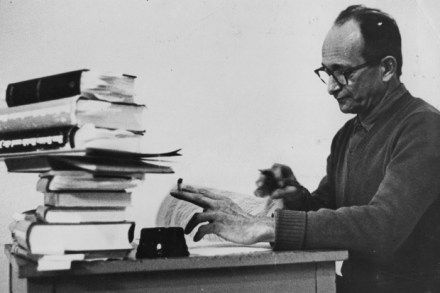
Over Christmas I finally got around to reading Eichmann Before Jerusalem by Bettina Stangneth.  I cannot recommend this book - newly translated from the German - highly enough.  It challenges and indeed changes nearly all received wisdom about the leading figure behind the genocide of European Jews during World War II. The title of course refers to Hannah Arendt’s omnipresent and over-praised account of Adolf Eichmann’s 1961 trial, Eichmann in Jerusalem: a report on the banality of evil.  I would say that Stangneth’s book not merely surpasses but actually buries Arendt’s account.  Not least in showing how Arendt was fooled by Eichmann’s role-play in the dock in Jerusalem.

I don’t want to live under Islamic blasphemy law. That doesn’t make me racist

From our UK edition

I have spent most of the last fortnight debating Islam and blasphemy and wanted to take the opportunity to put down a few unwritten thoughts. In the immediate aftermath of the Paris atrocities most of the people who thought the journalists and cartoonists in some sense ‘had it coming to them’ kept their heads down.  I encountered a few who did not, including Asghar Bukhari from the MPAC (Muslim Public Affairs Committee).  In the aftermath of the atrocity Asghar was immediately eager to smear the cartoonists and editors of Charlie Hebdo as racists.

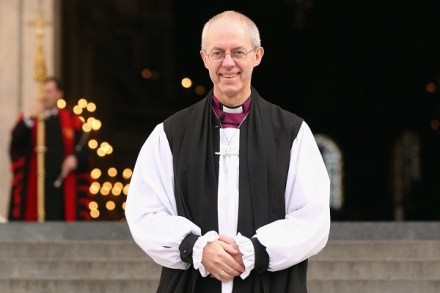
The Archbishop shows politicians a more honest way to answer the question

From our UK edition

After Islamist terrorist atrocities, political leaders often rush to say that the attacks had nothing to do with Islam. One can understand why they feel the need to do this but the problem is the terrorists clearly do think, however mistakenly, that they are acting in the name of Islam. But if any politician wants to know how to answer the question about the link between terrorism and Islam, they should look at these answers from the Archbishop of Canterbury Justin Welby in an interview with The New York Times: There are aspects of Islamic practice and tradition at the moment that involve them in violence, as there are, incidentally, in Christian practice.

French secularism is starting to feel the strain

From our UK edition

France is to institute something called a National Secularity Day, which will happen on 9th December every year, when French schools will remind pupils how to sing the national anthem, what the tricolor stands for and generally celebrate the values of the Republic. Odd, isn’t it, that this should sound so much like the reflexive, everyday practice in the United States, where flag veneration and the separation of church and state are hardwired into the consciousness of US children, without impinging at all on the extent of religious observance? Every French school will have to go through this Secularism observance day but it’s painfully apparent which community it’s directed at: France’s nearly 5 million Muslim community, amounting to, on paper, some 7.

Spectator letters: Islam and the roots of radicalism

From our UK edition

The roots of radicalism Sir: Qanta Ahmed is to be praised for her dissection of Islamism and her call for a reformation of Islam (‘Let there be light’, 17 January). That call has been muted for decades but is now growing louder, and it is right to promote Muslims who see a way forward out of their current predicament. But her view of an ‘authentic Islam’ that is untainted by Islamist interpretation is surprisingly naive. Islamists do not, in fact, distort classical Islam to the extent that Ahmed suggests. Offensive jihad is a doctrine in the Quran and was a practice of Mohammed. Harsh sharia laws pre‑date modern Islamism by many centuries.

Mohammed — in pictures

From our UK edition

Two months ago I was sitting beside the tomb of a descendant of the Prophet Mohammed, telling a story about the last week of the Prophet’s life. It was detailed enough to paint an imaginary portrait of him and included a mildly ribald joke from one of his wives, told to him on his deathbed when he was racked with fever. This kind of story often perplexes my rationalist friends back home. ‘Why can you describe the Prophet but not draw him?’ ‘Why can you make jokes but not draw cartoons?’ Where does this idea that it is forbidden to represent the Prophet come from? There is no line in the Koran that forbids it.

How Marine Le Pen is winning France’s gay vote

From our UK edition

A week before the attack on Charlie Hebdo, France’s leading gay magazine, Têtu, announced the winner of its annual beauty contest. His name was Matthieu Chartraire, and he was 22, doe-eyed and six-packed, with perfectly groomed hair, stubble and eyebrows. A pin-up in every way — until he started talking. To the anger of many of the magazine’s readers, the Adonis of 2015 turns out to be an outspoken supporter of the Front National. Têtu’s editor-in-chief, Yannick Barbe, refused to play censor. ‘It’s within his rights to vote for the FN even if we don’t share his beliefs,’ he said. ‘This is a beauty pageant, and our readers’ vote was only based on a single criterion!

It’s all kicking off in the Islamic world. Nothing at all to do with Islam, of course

From our UK edition

They have been burning churches and murdering Christians again in Niger. You’d think that they’d have more immediately pressing concerns than worrying about a cartoon, Niger regularly winning the award for being the worst country anywhere on God’s earth, and the poorest. But nope, it’s kill-a-kuffar time once more. Some 45 churches set alight and at least five people killed and 50 injured. Adherents of the Religion of Peace (© all UK politicians) included in their pyromania a Christian orphanage, which was thoughtful of them. There have also been massed rallies and protests and the usual effigy-burning business in the vast and dusty Islamic desert rat-holes next door, Mali and Algeria.

Why are the MCB complaining about Pickles’s letter to Mosques?

From our UK edition

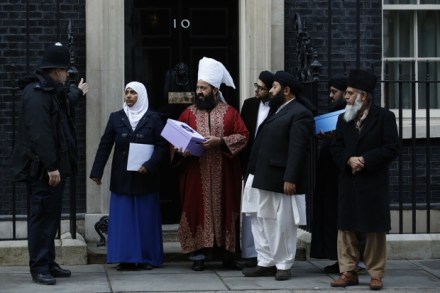
Eric Pickles’s letter to Mosques is pretty anodyne. It is hard to see how it could be objected to. But the Muslim Council of Britain is busy complaining about it. Its deputy secretary general Harun Khan is quoted in The Guardian saying, “Is Mr Pickles seriously suggesting, as do members of the far right, that Muslims and Islam are inherently apart from British society?” Now, if you read the letter it is very hard to argue that this is any way what Pickles is saying. He writes, ‘British values are Muslim values. Like all faiths, Islam and its message of peace and unity makes our country a better and stronger place, and Britain would be diminished without its strong Muslim communities.