Islam

Is it Islamophobic to record ‘Christianophobic’ hate crimes?

From our UK edition

A freedom-of-information request by Sikhs has turned up some curious statistics from the Metropolitan Police. They show that of the more than 400 ‘Islamophobic hate crimes’ recorded in the first half of last year, 28 per cent were not attacks on Muslims at all. They were either attacks on people thought to be Muslims (often Sikhs) or attacks classified as Islamophobic because of the absurd criteria (invented by the Macpherson Report on the death of Stephen Lawrence) which define such incidents as ‘any offence which is perceived to be Islamophobic by the victim or any other person’.

Hollande’s own emergency

From our UK edition

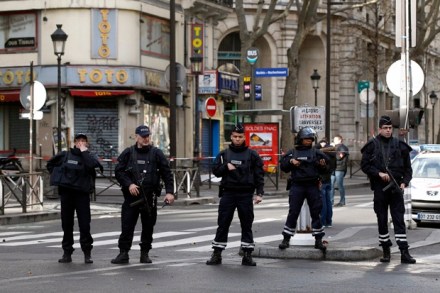
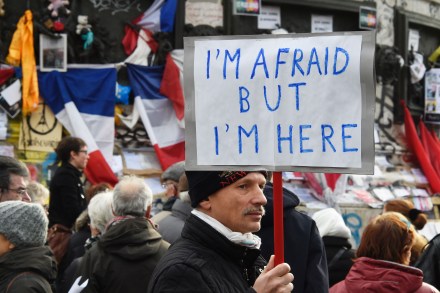
The terrorist attacks of 13 November have had an enduring effect on people living in Paris and France’s other big cities. Hotel bookings and restaurant reservations are down, and some people will no longer go out in the evening. There have been several other minor terrorist outrages across the country since November, and tension — prompted by repeated government warnings — remains high. The campaign for the 2017 presidential elections will start in July, but François Hollande’s popularity, which soared after the Charlie Hebdo attacks a year ago, has been sliding again. Hollande’s polls rose slightly after he declared a state of emergency on 14 November.

Turkey’s climate of fear

From our UK edition

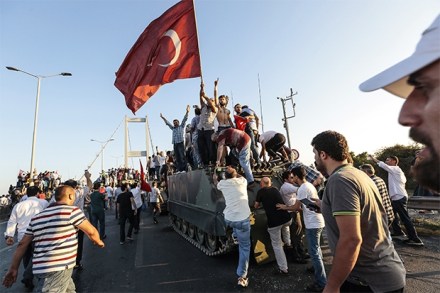
   Istanbul Few AK party supporters hanker after the Isis way of life: for many of them, it would be a death sentence Turkey is less and less a democracy, more and more a paranoid one-party state. If you don’t believe that, look at what happens to those who draw attention to the government’s failures and crimes. The editors of Cumhuriyet, a centre-left broadsheet, have been delivering their editorials from jail since November. A statement issued this month by the Izmir Society of Journalists claimed that 31 journalists were in prison while 234 were in legal limbo awaiting trial. Over the course of last year, they added, 15 television channels had been closed and 56 journalists refused accreditation.

The Islamic world has always had a chequered relationship with chess

From our UK edition

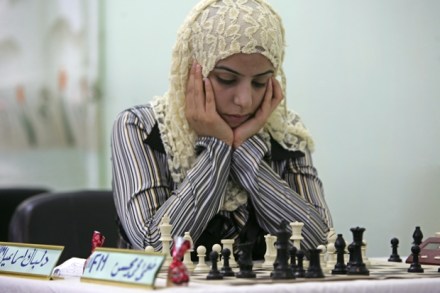
The news that the Grand Mufti of Saudi Arabia has issued a fatwa against the game of chess should come as no surprise. There has always been a chequered history of relations between Islamic clerics and practitioners of the world's most popular board game. Abdul-Aziz ibn Abdullah Al ash-Sheikh is the most powerful Sunni religious figure in Saudi Arabia and issued the fatwa while answering viewers' questions during his weekly television broadcast 'With his Eminence the Mufti'. The show was first broadcast in 2014, ‎but the Grand Mufti's censorious condemnation of chess, during which he compared it to the pre-Islamic Arab game of Maisir, has only this week achieved prominence. According to the Mufti, chess is 'haram'.

The Islamist Nazis and Corbyn’s wilful blindness

From our UK edition

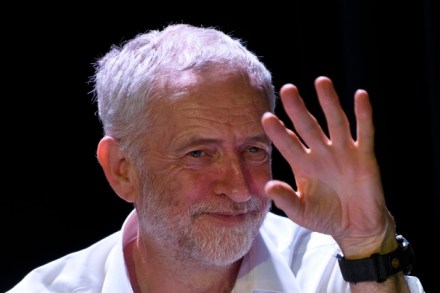
Many people watching Jeremy Corbyn’s interview on Marr last Sunday will have been shocked by his remarks about the need to begin a ‘dialogue’ with the leadership of the Islamic State. ‘I think there has to be some understanding of where their strong points are,’ he said. Afterwards, when these comments were widely reported, Corbyn’s supporters said they’d been taken out of context — the standard defence whenever he is criticised for saying something positive about Islamist terrorists, such as describing Hamas and Hezbollah as his ‘friends’ or the death of bin Laden as a ‘tragedy’. But there are only so many times this excuse can be used to explain these apparently supportive remarks.

George Weidenfeld was one of the great advocates for high European culture

From our UK edition

I am far abroad at the moment but have just learnt the sad news from home of the death of George (Lord) Weidenfeld, at the age of 96. As a publisher, philanthropist, convener, guru and friend he was one of the most extraordinary people in 20th and 21st-century Britain. Born in Vienna in 1919, he fled the Nazis and came to the UK in the 1930s where he was housed and looked after by a Christian family. Throughout the extraordinary life and career that followed he constantly acted on the gratitude he felt towards the country and people that had taken him in. Only last year he set up a fund to help save Christian children from the fighting in Syria.

Spot the difference: Trump wants to ban people; people want to ban Trump

From our UK edition

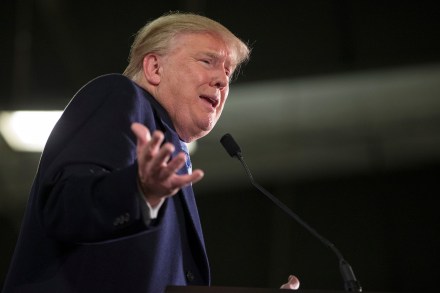
The shamelessly censorious MPs and petition-signers who want Donald Trump banned from Britain are basically saying: ‘Oh my God, he wants to ban people from entering America! This is so outrageous we must ban him from entering Britain.’ Can these people hear themselves? The thing they claim to find repulsive in Trump — that he fantasises about forcefielding his nation against people who have allegedly dodgy ideas (Muslims) — is the very thing they aspire to do. The Trumphobes share Trump's intolerance of funny-thinking foreigners. They denounce The Donald, but when it comes to being tolerant, open and not a mind-policing, border-enforcing irritant who shuns any outsider who thinks a bit differently, they fail just as spectacularly as he does.

France has become a religious battleground

From our UK edition

The new year has not started well for France. On the last day of 2015 - the most traumatic year for the French in decades because of the twin attacks in Paris - president Francois Hollande warned the nation in his traditional New Year's Eve address: 'France is not done with terrorism... these tragic events will remain for ever etched in our memories, they shall never disappear. But despite the tragedy, France has not given in. Despite the tears, the country has remained upright.' Hollande's warning was borne out within 24 hours. On the first day of 2016 a lone motorist - inspired by Islamic State - drove at a group of soldiers guarding a Mosque in Valence.

Hungary’s Prime Minister shares similar views to Donald Trump. Should he be banned too?

From our UK edition

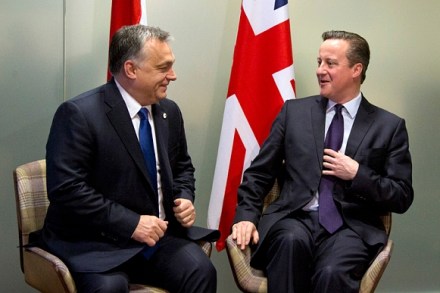
If you are going to try to put people beyond the pale on the grounds of what they have said it pays at least to be consistent. This week, left-wing MPs were cock a hoop at achieving the required number of signatures on a petition calling for Donald Trump to be banned from the UK for the matter to be debated in Parliament.  More than 560,000 signed, with the result that the issue will be discussed in Westminster Hall on 18 January. There was no visible protest, on the other hand, against David Cameron meeting Hungarian PM Viktor Orban in Budapest this week, no audible call for Mr Orban to be banned from making a return visit to the UK. There was even praise from liberals for Mr Orban’s strong words to David Cameron complaining about negative images of Hungarians in the UK.

There’s nothing courageous about Charlie Hebdo’s anniversary cover

From our UK edition

The new Charlie Hebdo cover is feeble. God with a machine-gun, looking over his shoulder, and the line ‘The Assassin is still at large’. It makes Richard Dawkins look nuanced. Religion is to blame? All religion? It feels dishonest, timid: a refusal to face the fact that it’s a particular form of religion that is the problem. In fact satire in general is pretty feeble, when it comes to religion and terrorism. Satire is good at attacking established power, and religious terrorism is obviously an intensely marginal thing – far more marginal than satire itself. There is a wider target: Islam in general, but in the West this too is more marginal than satire.

The West must defeat a far worse enemy than radical Islam

From our UK edition

The Monday after the massacre in Paris, I walk into a bank near the Place de la République to deposit a little over 1,000 euros into a friend's account. After a number of tut-tuts the transaction passes. 'Why all the fuss?' I ask, only to be informed of new laws being phased in that will prohibit cash transactions over 1,000 euros, with equivalents in Italy, Belgium and numerous other countries also being enacted. 'Soon, there won't be such a thing as cash!' When I question the logic behind such regulation, excitement turns to bewilderment. Didn't I see what happened on Friday?! 'C'est pour votre securité.' Ah yes. Of course. Such measures are there for all our safety.

Iran may have the upper hand in the Middle East’s power struggle

From our UK edition

It isn’t just Iran who have been angered by the execution of Shia cleric Nimr al-Nimr. Protests have erupted in Bahrain, Lebanon, Pakistan and Iraq, all places where the 1400-year-old Shia-Sunni divide remains a faultline. Iran’s reaction may seem uncompromising, with Ayatollah Khamenei tweeting: ‘The unjustly spilt blood of this martyr will have quick consequences’; but they have also sounded a note of caution. President Rouhani called for the arrest of the mob who stormed the Saudi embassy buildings. Perhaps he knows that, in the long run, Iran’s star is rising and the Saudis’ is falling.

High life | 31 December 2015

From our UK edition

This is going to be one hell of a year, hell being the operative word. It will be the year the greatest Greek writer since Homer turns 80 (but we’ll keep quiet about that for the moment). Our world is so stuck in reverse that a woman who was stabbed in Miami during the Art Basel shindig, and was bleeding and begging for help, was mistaken for an artwork and ignored. The woman survived but will art? Conceptual art must be the biggest con since Bernie Madoff and then some. And speaking of con artists, I’ve never had any respect for Mark Zuckerberg, someone who is reputed to have copied the idea for Facebook from a couple of ex-classmates, and who now pledges the majority of his $45 billion fortune to charity thereby generating a public relations bonanza.

Will politicians finally admit that the Paris attacks had something to do with Islam? | 31 December 2015

From our UK edition

Written after the Charlie Hebdo shooting in January and revised after the Paris attacks in November, Douglas Murray's piece on politicians' responses to Islamic terror attacks was The Spectator's third most read article of 2015: The West’s movement towards the truth is remarkably slow. We drag ourselves towards it painfully, inch by inch, after each bloody Islamist assault. In France, Britain, Germany, America and nearly every other country in the world it remains government policy to say that any and all attacks carried out in the name of Mohammed have ‘nothing to do with Islam’. It was said by George W. Bush after 9/11, Tony Blair after 7/7 and Tony Abbott after the Sydney attack last month.

The political wisdom of people who don’t even know what a circle is

From our UK edition

Why are liberals morons? I’m sure that this question has rattled around your mind before, perhaps when watching one of those fair and balanced debates between three ill-dressed but very liberal women that Newsnight puts on every evening, hosted by Kirsty Wark. You hear them tiptoeing through the -nether regions of some important political issue, carefully sidestepping the nub of the matter, obfuscating, denying the patently obvious even when it is staring them right in their smug faces, jabbering ineffectually about nothing in essence. How can these silly mares be this way, you may have asked yourself. How can they navigate their way through life on such slender mental resources?

Atheism may be fashionable, but most intelligent people believe in God

From our UK edition

Have we ever needed Christianity more than we do today? It’s a rhetorical question, for sure, because the loss of our faith and the inability to confront Islam have never been greater. When I was a little boy during the war, my mother assured me that if I believed in Jesus everything would be OK. This was during the Allied bombing on Tatoi, the military airfield near our country house where the Germans concentrated their anti-aircraft guns. My Fräulein, the Prussian lady who brought me up, was more practical. She handed me a beautiful carved knife that made me feel safer than my prayers ever did. Today, of course, 74 years later, my prayers are far more likely to give me peace of mind than a knife in my pocket. That’s the difference between being five and 79 years of age.

The Muslim Brotherhood review has left many questions unanswered

From our UK edition

The findings of the UK government’s review into the Muslim Brotherhood have finally been published.  Commissioned by the Prime Minister in April 2014, the full report will not be released. Although the review finds that the Muslim Brotherhood does not meet the threshold of violence which would see it proscribed in the UK, it described members of the Muslim Brotherhood as possible extremists. As such the government has listed a set of renewed actions, including visa bans, on individuals associated with the group and promises to keep the group’s activities under review in order to consider proscription at a future date.

We need Christianity more than ever in this Age of Atheists

From our UK edition

Have we ever needed Christianity more than we do today? It’s a rhetorical question, for sure, because the loss of our faith and the inability to confront Islam have never been greater. When I was a little boy during the war, my mother assured me that if I believed in Jesus everything would be OK. This was during the Allied bombing on Tatoi, the military airfield near our country house where the Germans concentrated their anti-aircraft guns. My Fräulein, the Prussian lady who brought me up, was more practical. She handed me a beautiful carved knife that made me feel safer than my prayers ever did. Today, of course, 74 years later, my prayers are far more likely to give me peace of mind than a knife in my pocket. That’s the difference between being five and 79 years of age.

How Marine Le Pen is winning over the Muslim vote

From our UK edition

'Shock' was the one-word headline on the front of Monday's Le Figaro. France was bracing itself for a swing to the right in Sunday's regional elections, but few imagined it would be quite as dramatic. Marine Le Pen's Front National (FN) polled nearly 30 per cent of the vote in the first round of voting, ahead of Nicolas Sarkozy's centre-right Les Républicains and the ruling Socialist Party, who trailed in third with 23 per cent. As it stands, the FN are on course to take control of six regions after Sunday's second round, although the predictions are they will triumph in no more than three due to tactical voting.

Hug, hold hands . . . then stampede to the right

From our UK edition

What a pleasure it was to see two socialist parties triumph in the most recent elections. First, Labour increased its share of the vote in Oldham — and then, last weekend, the Front National became France’s most popular party, securing almost 30 per cent in the first round of the country’s regional elections. Labour’s win was, I suspect, a bit of a false dawn. For a start, the party did an un-usual thing and fielded a sentient and likeable candidate, something which most of the time it successfully avoids doing. But even then, it was at least partly dependent upon Asian men hauling large sacks of votes from illiterate and non-English-speaking residents into the local post office.