Islam

The known wolf

From our UK edition

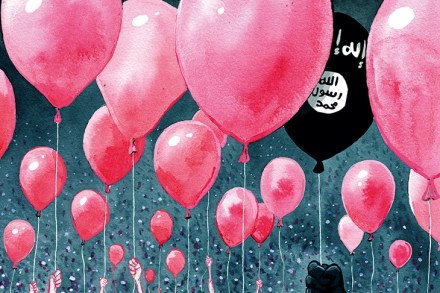
The meeting place of the two worlds could not have been more sharply defined. In Manchester Arena, thousands of young women had spent the night singing and dancing at a show in Ariana Grande’s Dangerous Woman tour. Songs such as the hit ‘Side To Side’ were performed: ‘Tonight I’m making deals with the devil/ And I know it’s gonna get me in trouble…/ Let them hoes know.’ Waiting for them in the foyer as they streamed out was Salman Ramadan Abedi, a 22-year-old whose Libyan parents settled in the UK after fleeing the Gaddafi regime. A man whose neighbours said he must have been radicalised in Manchester, ‘all those types’ having been driven out of Tripoli.
Tackling terror

From our UK edition

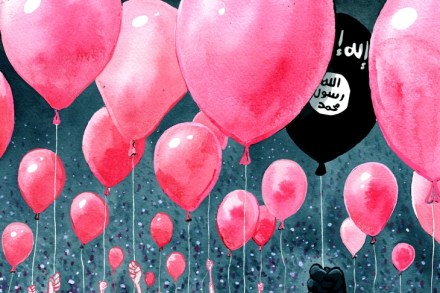
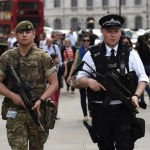
Until last week, it was thought that the jihadi threat was subsiding and the security services were increasingly able to disrupt any serious plot. The recent attacks involved knives or rented cars – deadly in the wrong hands but a far cry from the 7/7 attacks, or the seven-aircraft Heathrow aircraft bomb plot thwarted in 2006. Yet now, for the second time in our history, a suicide bomb attack has been perpetrated against the public. And this might show that things are getting worse. That as Isis is forced into retreat in Iraq and Syria, the jihadists are preparing to return to Britain with deadlier skills and tactics. While al-Qaeda focused on military and economic targets, Isis considers young girls at a pop concert to be ‘crusaders’.

Ukip’s tough talk on terror comes with a big risk

From our UK edition

Ukip's success in pursuing the Tories over Brexit will be remembered for a long time. Now, the party thinks it has a new bone of contention with which to go after the government: keeping Britain safe. In the wake of Monday’s night’s attack, Ukip wants to paint itself as the only party serious about rooting out Islamic fundamentalism and tackling terrorism. As if to make that point, while the Tory and Labour national campaigns remained suspended this morning, Ukip pressed ahead with its manifesto launch today. Nuttall came under pressure at the event over this decision, and was asked repeatedly whether he was trying to capitalise on the attack by focusing so squarely on the terror threat.

Why Islamists are obsessed with controlling young girls

From our UK edition

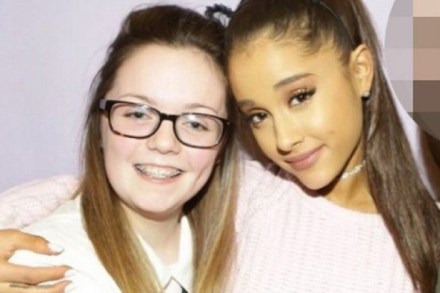
When the pictures of the dead came in, it was hard to take, even from a distance. There was Georgina Callander, 18, a bespectacled Ariana Grande ‘superfan’ who had tweeted that she was ‘so excited’ to go to the concert in Manchester Arena. There was Saffie Roussos, aged 8 and still at primary school, who went with her mother and older sister. There was Olivia Campbell, aged 15. I looked at their bright faces and thought of all the love their families had carefully decanted into them over the years, their wealth of possibility. Then on Monday night a suicide bomber smashed up all their futures in an instant. What an act of vandalism against humanity. What grubby blasphemy.

Islamists are very clear about what they want – we just aren’t listening

From our UK edition

The meeting place of the two worlds could not have been more sharply defined. In Manchester Arena, thousands of young women had spent the night singing and dancing at a show in Ariana Grande’s Dangerous Woman tour. Songs such as the hit ‘Side To Side’ were performed: ‘Tonight I’m making deals with the devil / And I know it’s gonna get me in ­trouble... / Let them hoes know.’ Waiting for them in the foyer as they streamed out was Salman Ramadan Abedi, a 22-year-old whose Libyan parents settled in the UK after fleeing the Gaddafi regime.  A man whose neighbours said they believed must have been radicalised in Manchester, ‘all those types’ having been driven out of Tripoli.

Police force

From our UK edition

I’ve often thought that a good idea for an authentic TV cop show would be to portray the police as neither dazzlingly brilliant (the traditional approach) nor horrifically corrupt (the traditionally subversive one) — but just a bit hopeless at solving crimes. There is, though, one thing that prevents the idea from being as original as I’d like: this is how the police already come across in many true-life dramas. Take, for instance, the harrowing and — given its high-profile scheduling — extremely brave Three Girls (BBC1, Tuesday to Thursday), which provided an unsparing and wholly believable account of the Rochdale child-grooming scandal.

A great awakening

From our UK edition

One afternoon in August 1978, Geoffrey Howe and Leon Brittan were flying from Beijing to Shanghai. They were on the last leg of what was for both of them the first of many official visits to China. Soon they would be ministers in Margaret Thatcher’s first government, but at the time they were still in opposition. As first secretary in the British embassy, I was accompanying them, and I told them that I had heard on the grapevine that Holy Trinity’s Anglican cathedral in Shanghai was in the process of being reopened after 12 years in which every place of worship in China had been closed, and every faith persecuted. ‘Roger, that cannot be right,’ Geoffrey Howe declared; ‘this is a communist country.

Britain’s loss of religious faith: how should we interpret shocking new statistics?

From our UK edition

Just 30 per cent of Britons feel that their religion or faith is important to them, according to the 2017 Ipsos MORI survey of global trends. That puts us at the bottom of the international table: only Swedes (29 per cent), Belgians (27 per cent) and the Japanese (22 per cent) are more secular than we are, according to this poll. The global average, meanwhile, is 53 per cent. Muslim Indonesia heads the list with 93 per cent. Christian America is on 68 per cent, despite a recent slump in church attendance. (I'm always a bit suspicious of what Americans tell pollsters about their faith.) Even Australia – hardly a nation that flaunts its piety – is on 42 per cent.

The Spectator’s Notes | 4 May 2017

From our UK edition

Guy Verhofstadt, the European Parliament’s main Brexit negotiator, tweeted on Monday: ‘Any #Brexit deal requires a strong & stable understanding of the complex issues involved. The clock is ticking — it’s time to get real.’ This was on the same day as media reports — allegedly leaked by associates of Jean-Claude Juncker, the European Commission president — criticised Theresa May for her naivety about Brexit talks at the dinner she gave Mr Juncker last week. These tactics are intended to affect our general election. By throwing Mrs May’s campaign slogan adjectives ‘strong and stable’ back in her face, Mr Verhofstadt was goading her at the decisive moment of her political career. So were the friends of Mr Juncker.

Islamism isn’t the only terror threat Germany is facing

From our UK edition

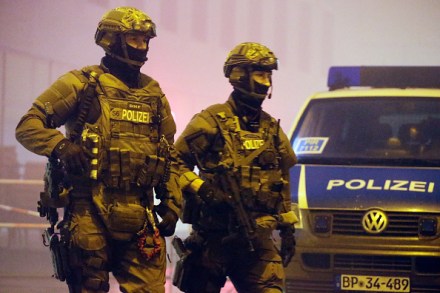
Since December, when Islamic terrorist Anis Amri drove a truck into a Berlin Christmas market, Germans have been waiting fearfully for the next Islamist attack. However right-wing terrorism is also a growing concern in Germany, and the latest case to come to light shows how this extremist movement may be evolving. Germany's Military Intelligence is currently investigating 275 cases of right-wing extremism, but surely none of them is quite so disconcerting as the peculiar case of Franco A. The investigation began in January, when a maintenance worker at Vienna Airport opened a toilet ventilation duct and found a pistol hidden inside it. The police attached an alarm to the air duct, in February a man set off the alarm, and was duly arrested.

Letters | 27 April 2017

From our UK edition

Aid is not the answer Bill Gates says he is a huge fan of capitalism and trade (Save Aid!, 22 April) but then spoils it by repeating the received wisdom about aid: ‘If you care at all about conditions in Africa – the population explosion, measles, polio — then don’t suggest there is a private-sector solution to these problems. It’s outrageous.’ No. It is not outrageous. A vigorous private sector is the only answer to African development. I have spent my life in Africa, working in 18 of its countries, usually deep in the bush. I have watched numerous aid programmes fail once the external funding is removed, and have spent much time thinking about and discussing why this should be so.

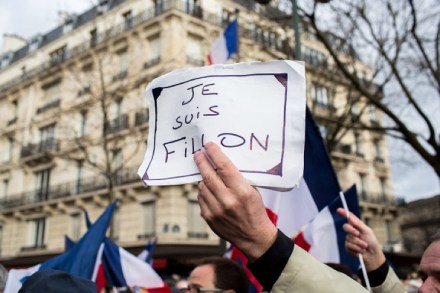
François Fillon is the anti-Islamist candidate – and an Islamist target

From our UK edition

The news on Tuesday that French security services have prevented another attack by Islamic extremists should come as no surprise given the proximity of the election. Nor should the fact that according to police sources the intended target was François Fillon. When police raided the apartments in Marseille of the two suspects, they reportedly discovered a submachine gun, two handguns, three kilograms of TATP explosives, which was used in the 2015 suicide attacks in Paris, and a newspaper photograph of Fillon. The Islamists loathe the conservative candidate, more than they do Marine Le Pen, despite the fact that she leads the National Front, a long-time foe of conservative Islam.

German football keeps calm and carries on

From our UK edition

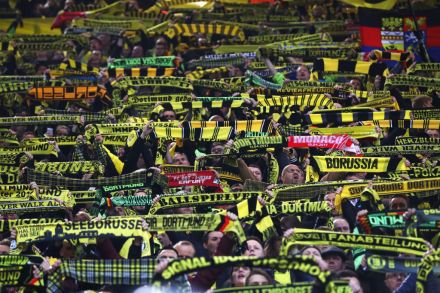
Germany lost a football match but won a moral victory last night, when Borussia Dortmund were defeated 3-2 at home by Monaco, in the first leg of the quarter finals of the Champions League. To restage a major fixture just 24 hours after a terrorist attack was a remarkable achievement. To restage it when the Dortmund team bus had come under direct attack, landing one of its players in hospital, was nothing short of incredible. Dortmund fans gave bed and board to stranded Monaco supporters, Monaco fans sang Dortmund songs in the stadium, and both teams gave it their all (every Dortmund player was given the option not to play, but all played regardless). A thrilling game was the best response, and the result was incidental. This was European sport at its finest.

The government machine can’t root out Islamism in prisons. Believe me, I know

From our UK edition

In response to the Westminster attack, a 100-strong new counter-extremism taskforce has been announced to deal with the terrorist threat in prisons. I’m taking some credit for this badly needed focus. In the autumn of 2015, the then Justice Secretary, Michael Gove, asked me to lead an independent review of the threat posed by Islamist extremism in prisons, the probation service and the youth justice system. I used to be a prison governor in what was known until just a few days ago as the National Offender Management Service, so I agreed on the understanding that I reported only to him and that I had his full support to go where the evidence led me, without interference from bureaucrats. To his credit, he agreed immediately. Gathering information was a complex task for a small team.

Are you scared to talk about your faith at work?

From our UK edition

Religious believers feel nervous about expressing their faith at work – either by wearing symbols or talking about religion. They're worried they'll be mocked by secular bullies. And employers aren't aware of the situation. Or don't care. That's the implication of a new ComRes report, which I'm discussing on this week's Holy Smoke with my new co-presenter Cristina Odone. As you'll hear, we don't agree. She thinks religion is becoming the love that dare not speak its name in the workplace. I think we're in danger of being dragged into a PC grievance culture. There are also some very sharp observations from Henry Dimbleby, co-founder of the Leon restaurant chain. Anyway, here's our argumentative podcast. Don't miss it – and subscribe on iTunes!

The Spectator’s Notes | 6 April 2017

From our UK edition

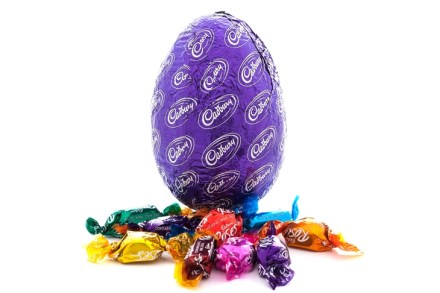
Cadbury and the National Trust stand accused of taking the Easter out of Easter eggs. The Trust’s ‘Easter Egg Trail’ is now renamed the ‘Cadbury Egg Hunt’. My little theory about the National Trust is that all its current woes result from the tyranny of success: it has become so attached to ever-growing membership (now more than four million) that everything is skewed to this and the original purposes are neglected. No doubt the substitution of the word ‘Easter’ by the word ‘Cadbury’ seemed a small price to pay for big sponsorship. This decision is a symptom of the Trust’s problem. But for the fate of Easter itself, one need not worry.

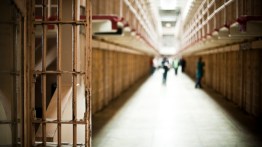
Inmates and Islamism

From our UK edition

In response to the Westminster attack, a 100-strong new counter-extremism taskforce has been announced to deal with the terrorist threat in prisons. I’m taking some credit for this badly needed focus. In the autumn of 2015, the then Justice Secretary, Michael Gove, asked me to lead an independent review of the threat posed by Islamist extremism in prisons, the probation service and the youth justice system. I used to be a prison governor in what was known until just a few days ago as the National Offender Management Service, so I agreed on the understanding that I reported only to him and that I had his full support to go where the evidence led me, without interference from bureaucrats. To his credit, he agreed immediately. Gathering information was a complex task for a small team.

The Spectator Podcast: Trump’s wars

From our UK edition

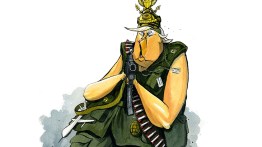
On this week's edition of The Spectator Podcast, we consider President Trump’s growing military ambitions, dissect the problem of radical Islam in our prisons, and judge what makes a perfect marmalade. First, this week's magazine cover depicts Donald Trump in full Kaiser Wilhelm II costume. The reason for that image is Andrew J. Bacevich's assertion that far from being a modern-day Hitler, a better analogue for the new American supremo is the last German emperor. The isolationist image that Trump cultivated during the campaign is beginning to melt away, leaving the possibility of war with North Korea, and even China. Professor Bacevich joins the podcast to discuss the complex military situation, along with General Sir Richard Barrons and Dr Heather Williams.

A meeting with Britain’s most hated man

From our UK edition

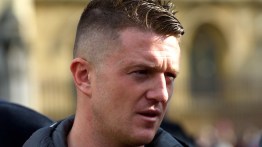
‘Christ, I would be shot for buying this if people knew,’ says an anonymous fan in the comments below Amazon’s unlikely bestseller Enemy of the State. Which sums up how I feel before meeting the book’s author, Tommy Robinson. What if he turns out to be not nearly as bad as his reputation as ‘Britain’s most hated man’? What if, as some familiar with him have warned, I turn out to like him and want to plead his cause, and end up being tainted as a far-right thug by association? We meet in a gastropub in a pretty Georgian market town.

Theresa May makes a stand against Saudi dress codes

From our UK edition

Well, Theresa May met half of the Foreign Office’s dress code for women in Saudi Arabia when she arrived there yesterday. Her coat was loose, you couldn’t take exception to her trousers, but it was the hair that was the great thing. She was bare-headed, just like Angela Merkel was when she turned up in the Kingdom. The vicar's daughter and the pastor's daughter have both made a stand, in a country where women normally have the equivalent of a bin liner to wear when it comes to fashion.  This kind of thing matters.  For a woman head of government to dress for a visit to the Kingdom pretty well just as she would have done anywhere goes right against the normal approach for important women going to Saudi.