Ireland

The Friel-bad factor

From our UK edition

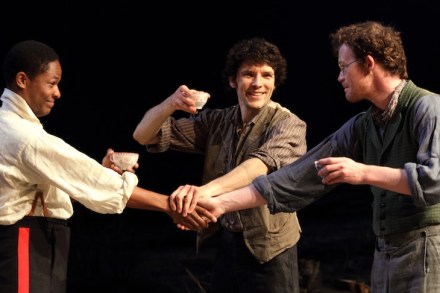
The National has made its largest stage available to one of the nation’s smallest talents. If Brian Friel had been born in Dorset rather than in Co. Tyrone he’d have enjoyed an unremarkable career writing episodes of The Archers with the odd stint on Emmer-dale. He’s a champion witterer whose plays lack suspense, pace, depth or spectacle. His characters are constantly and infuriatingly nice to each other. Occasionally they rise to mild irascibility, or a spot of vituperative teasing, but that’s about it. When he needs a crisis he turns to external sources, to destiny or to happenstance, and his plays often end with dreadful sufferings being visited on russet-faced, cheeky-chappy Irish folk by crool, crool fate. Translations at the Olivier is set in Co.

Social conservatism is dead

Just before Ireland voted overwhelmingly to end the country’s constitutional ban on abortion, Catholics in the fishing village of Clogherhead could be seen storming out of Sunday mass halfway through the service. Why? Their parish priest had come on too strong. He had not only ordered them how to vote but also supplied grisly details of an abortion procedure. Presumably some of them voted to repeal the eighth amendment. The ‘Yes’ campaign couldn’t have won its two-thirds majority without the support of practising Catholics. Very few of these, we can assume, were militantly pro-choice. Instead, they were reassured by promises that any future law would be limited in its impact — and determined to ignore a Catholic hierarchy contaminated by child abuse.

Life matters

From our UK edition

Predictably enough, there have been no calls this week for the Irish referendum on abortion to be re-run, no complaint from Ken Clarke about the ‘-tyranny of the majority’, no moaning that the campaign had been in any way unfair. Neither should there have been. The Irish people have made a fair and democratic choice and the result should be respected. Less respect seems to have been forthcoming, however, for the views of the Northern Irish on abortion. On the contrary, no sooner was the result from south of the border announced than the calls began for the government in Westminster to impose its will on Northern Ireland and liberalise the province’s abortion laws.

Why is Corbyn cosying up to Northern Ireland’s unionists?

From our UK edition

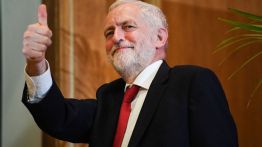
How serious are Jeremy Corbyn and the Corbynites about winning power? Deadly serious, if the remarkable tactical flexibility he displayed on his first official visit to Belfast as leader of the Labour Party is anything to go by. Corbyn took care to genuflect not just to nationalist idols such as Gerry Adams, Martin McGuinness and John Hume, but also to three Unionist big beasts – Arlene Foster, Ian Paisley Sr and David Trimble. The Labour leader has not suddenly become a “revisionist” in the affairs of Northern Ireland, which to this day remains one of his longest-lasting and deepest ideological commitments.

Papal surrender

Just before Ireland voted overwhelmingly to end the country’s constitutional ban on abortion, Catholics in the fishing village of Clogherhead could be seen storming out of Sunday mass halfway through the service. Why? Their parish priest had come on too strong. He had not only ordered them how to vote but also supplied grisly details of an abortion procedure. Presumably some of them voted to repeal the eighth amendment. The ‘Yes’ campaign couldn’t have won its two-thirds majority without the support of practising Catholics. Very few of these, we can assume, were militantly pro-choice. Instead, they were reassured by promises that any future law would be limited in its impact — and determined to ignore a Catholic hierarchy contaminated by child abuse.

Shami Chakrabarti can’t have it both ways on Northern Ireland

From our UK edition

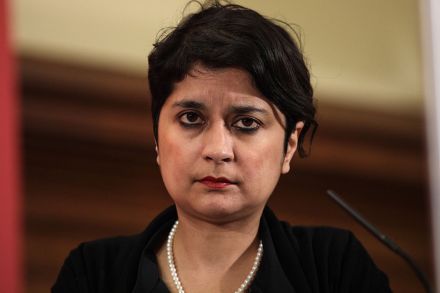
Never one to shy away from a platitude, the shadow attorney general, Shami Chakrabarti, has declared that the PM must reform abortion law in Northern Ireland on the basis that women there “have been let down by privileged women and men for too long” and that, so far as Theresa May is concerned, “the test of  feminists is whether they stick up for all women”. So far as this woman is concerned, I’ve been trying to work out the logic of these observations in terms of the abortion question and failing, so let’s just give up and cut to the chase.

Ireland’s referendum was nothing like the Brexit vote

From our UK edition

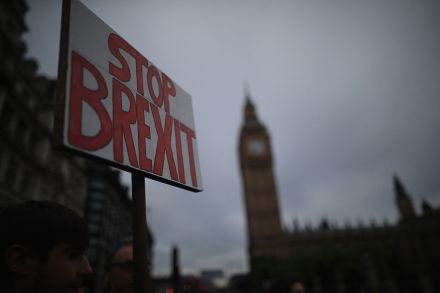
The wags of the right have been chuckling since the Irish electorate voted to legalise abortion. Ha, ha, ha, they cry, look at all those liberals. They deplore the Brexit referendum result and seek to have it overturned but are whooping with delight at the – wait for it – referendum result in Ireland. Here is Mark Littlewood of an Institute of Economic Affairs that is blocking its ears to the economic consequences of Brexit. https://twitter.com/MarkJLittlewood/status/1000363740603273216?ref_src=twsrc%5Etfw And here is Matthew Goodwin, an academic whose attention seeking has become so desperate, I should call the Daily Mail comment desk and beg it to put the poor chap out of his misery by giving him a fill-in column. https://twitter.

What really happened in Ireland’s abortion referendum

From our UK edition

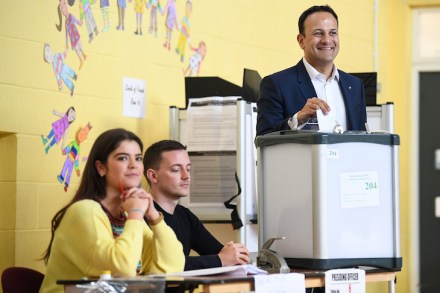
The Irish prime minister, Leo Varadkar, had declared that there would not be celebrations if and when the Yes side won in yesterday’s referendum on liberalising the abortion laws. But there’s a decidedly celebratory aspect to his side, now it turns out that nearly 70 per cent of voters voted for change. ‘Democracy in action,’ is what he now says. ‘It’s looking like we will make history.’ Or as Miriam Lord, the Irish Times’ sketchwriter, says with the unconcealed partisanship that characterised that paper’s approach to the poll, and incidentally channelling When Harry Met Sally: ‘Yes, Yes, Yes; a resounding, emphatic Yes. Suffocating old certainties, unrepresentative lobby groups and celibate clergy all swept aside.

The abortion referendum is Ireland’s Brexit moment

From our UK edition

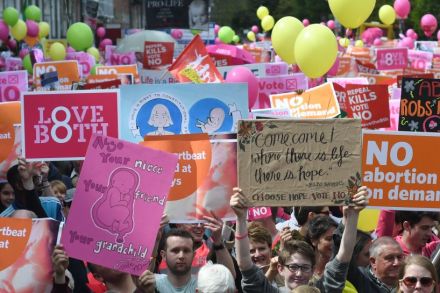
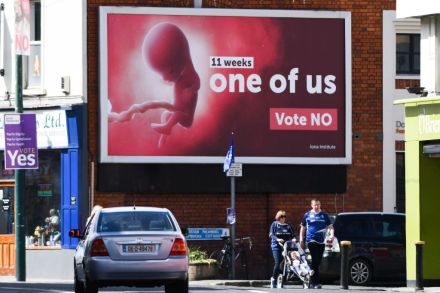
Is the abortion referendum going to be Ireland's Brexit moment? Despite the financial crisis, a clerical scandal and a vote on gay marriage, the country had managed to steer itself relatively harmoniously along. Yet just as the EU referendum brought to the surface deep tensions across Britain, this week's vote is in danger of doing the same to Ireland. From the outside, a decisive vote in favour of repealing the clause in Ireland's constitution that gives the unborn equal rights with the already born might have been just another chapter in Ireland's journey towards European secular modernity. But a fiercely-fought referendum battle has instead weaponised every single divide that was lurking latent in Irish society: rural versus urban, young versus old, rich against poor.

Changing Ireland’s abortion laws would be a backward step

It will, as one pro-life campaigner told me, take an act of God to swing the Irish referendum for the No side tomorrow. I’m all for referendums but this one has been so wildly unbalanced as to make the Brexit campaign look almost effete in its regard for impartiality and fair play. The polls suggest a win for the Yes side, on repealing the eighth amendment to the Irish constitution which protects the right to life of the unborn – something around the 44-32 per cent margin, according to the last Irish Times poll. It’s a big deal, abortion. But there is not one political party that represents the No side, other than a tiny outfit called Renua which doesn’t have a single MP. There is no newspaper that represents this quite hefty minority.

Ireland’s abortion vote and the wild west of online adverts

From our UK edition

It’s sometimes hard to know who’s really behind decisions at big tech firms. It could have been the PR team (‘we don’t want more negative press’), the policy team (‘the luddites in parliament want to regulate us’) or the engineers (‘we can’t stop it’). Whoever it was, a couple of weeks back both Google and Facebook announced measures to prevent foreign interference in tomorrow's Irish referendum on the eighth amendment, which effectively outlaws abortion. Facebook is only allowing organisations based in Ireland to run ads about the subject; Google’s gone one further and banned them all.   I suspect it was a rare instance of everyone agreeing.

Ireland’s abortion referendum and the fight for female equality

From our UK edition

Ahead of the abortion referendum in Ireland next week, there’s a newspaper advert doing the rounds on Twitter. Printed in the Irish Daily Star earlier this week, it reads: “Men protect lives. It is impossible to look away. As a parent, uncle, grandfather we have a bond that can never be broken. Vote No to abortion on demand” The implication appears to be that women are callous creatures who neither protect lives nor deserve protection. So men have to step in to do so. Next Friday, Irish voters will be asked if they want to repeal the eighth amendment, which gives unborn foetuses and pregnant women equal right to life. Since 2013, abortions have been allowed but only when the life of the mother is at risk.

Why should we give in to EU blackmail over the EU border?

From our UK edition

In deference to public exhaustion, I’ve largely avoided Brexit in this slot. But a columnist’s output ought rightly to echo what she shouts at the television news. Big picture, the UK may have made an utter Horlicks of its putative withdrawal from the European Union because Britain should never have come to the EU with a begging bowl in the first place. Walking out first and reverting coolly to WTO rules, the UK might have negotiated from a position of strength. You don’t slap a party in the face, only to implore that same party for special favours while his face is still smarting. Big surprise, the strategy has been unavailing. Hindsight aside, the biggest mistake the UK continues to make is to naively accept the EU’s opening construct.

The Spectator Podcast: Mayday!

From our UK edition

In this week’s podcast, we discuss Theresa May’s impossible situation - how can she get herself out of the bind created by the Brexiteers and the Remainers? We also discuss the hostile environment policy, and ask, will Ireland appeal its Eighth Amendment? First, Theresa May finds herself in a real dilemma. Her cabinet colleagues, the EU and her advisors are all pulling her in different directions over the question of the customs union. While Remainers argue that a ‘customs partnership’ is the only way to avoid a hard border in Northern Ireland, Brexiteers believe ‘max fac’ (a maximum facilitation agreement, which includes a technology based border in Ireland) is the only way forward.

Could Dublin’s preachy liberals save Ireland’s abortion ban?

From our UK edition

Could there be a Trump-style upset when the Irish vote next month on whether to repeal the country's ban on abortion? That's the question I discuss in the latest Holy Smoke podcast with my guest Tony Trowbridge, an Australian who became an Irish citizen when he was studying law at Trinity College, Dublin, in the 1970s. He's watched the country's transformation from something close to a Catholic theocracy into a society dominated by strident-but-smug media-savvy liberals. Irish political correctness is, if anything, even more preachy and joyless than the American variety. In that respect it's reminiscent of Irish Catholicism, which paradoxically used to have an almost Calvinist feel to it. No wonder the Church's moral authority evaporated so quickly when the abuse scandals surfaced.

The Spectator’s Notes | 12 April 2018

From our UK edition

The Good Friday Agreement (GFA), which celebrates its 20th anniversary this week, is not a peace, but a truce. This does not mean that it has no value. Most people in Northern Ireland wish to abide by its terms; it has helped them get on with normal life. But it does mean that difference, rather than being gradually dissolved, is institutionalised. You almost have to sign up to one side or the other. A friend sends me the diversity form of the Northern Ireland civil service which, as a candidate for the service, you must fill in. Unlike some such forms, it offers no ‘prefer not to say’ option. Each candidate must declare whether he or she has ‘a Protestant community background’ or a ‘Roman Catholic’ one or neither.

The Spectator’s Notes | 22 March 2018

From our UK edition

For almost as long as I can remember, Eurosceptic Tory MPs have been defined by the media as ‘head-bangers’. As a result, few notice that they scarcely bang their heads at all these days. The European Research Group (ERG), now led by Jacob Rees-Mogg, is surprisingly united, and makes most of its arguments blande suaviterque. The noise of craniums bashing themselves against Pugin panelling is much louder on the other side — Anna Soubry in the Commons, Andrew Adonis in the Lords. The Eurosceptic head-bangers are being particularly cautious about this week’s transition deal. Although they dislike most of it, they broadly accept the whips’ arguments that if the party can agree the transitional arrangements, Brexit is assured, and if not, not.

Brexiteers, you were warned about Ireland

From our UK edition

If you wished to get to an easy Brexit, well, this isn’t the starting point you’d choose. Once again, the Irish question complicates life for Theresa May’s government. Today’s EU proposals suggesting that, in the absence of a satisfactory deal of the kind proposed back in December, Northern Ireland should, essentially, remain within the EU customs union are both evidently unacceptable to the UK government and a reminder that this is still a negotiated process. What is put on the table today is not necessarily what will be on the table when it is over.  It is difficult to see how any UK government could agree to a 'solution' which, in many essentials, shifts the UK’s external frontier to somewhere in the middle of the Irish Sea.

Are the Brexit talks bordering on collapse?

From our UK edition

The question of the Irish border has almost collapsed the Brexit talks once, remember Mrs May’s first abortive December trip to Brussels, and it is threatening to do so again. A leaked copy of the EU’s proposed legal text of the phase one agreement that was finally reached in December says that if other options cannot be made to work Northern Ireland would be considered part of the customs territory of the EU. Given the UK’s plan is to leave the customs union, this would—in effect—create an internal economic border within the UK. It is doubtful whether this would be acceptable to any UK government, but it is particularly unacceptable to a British Prime Minister who relies on the support of the Democratic Unionist Party. So, what happens now?

Irish Herald’s headline fail

From our UK edition

Oh dear. We're only two months into 2018 and already the winner for 'headline fail of the year' appears to have been found. The Irish Herald today publishes a report on a man who 'lived' in a flat with his 'dead wife's body in a wardrobe for 48 hours'. Rather unfortunately the accompanying half page advert is for... discount wardrobes: https://twitter.com/Trickstersworld/status/965573039294468096 Mr S hopes that this wasn't advertising selling against the story...