Iraq

The war on Christians

From our UK edition

Imagine if correspondents in late 1944 had reported the Battle of the Bulge, but without explaining that it was a turning point in the second world war. Or what if finance reporters had told the story of the AIG meltdown in 2008 without adding that it raised questions about derivatives and sub-prime mortgages that could augur a vast financial implosion? Most people would say that journalists had failed to provide the proper context to understand the news. Yet that’s routinely what media outlets do when it comes to outbreaks of anti-Christian persecution around the world, which is why the global war on Christians remains the greatest story never told of the early 21st century.
Hitting Assad – and hitting him hard – is urgent and necessary

From our UK edition

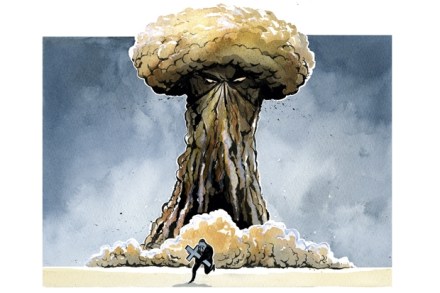
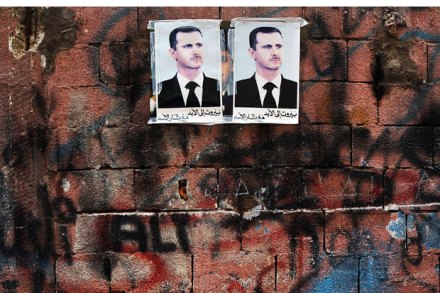
There has been lots of debate about our impending intervention in the Syrian conflict today. Many of my Coffee House colleagues have counselled against intervention, arguing against Danny Finkelstein’s piece in the Times yesterday. I’m in broad agreement with the general sentiment of the piece, but some of its subtexts need greater illumination. Leave aside Finkelstein’s argument about omission bias. For a moment, forget the ‘complexities’ of the conflict, imbibed as it is with sectarian differences, confessional rivalries, and great power posturing. Even the discussion of what should happen next in Syria can wait for another day. The use of chemical weapons against civilians is an affront to the very idea of civilisation itself.

Syria is not Iraq (but at least the Iraq War had a clear objective)

From our UK edition

A decade ago, I was sure that going to war in Iraq was the right thing to do. I persisted in that belief for a long time too, well beyond the point at which most supporters of the decision to remove Saddam Hussein from power had recanted their past enthusiasm. The link between 9/11 and Iraq was quite apparent. Not because (despite what some mistaken people insisted) Saddam had any involvement in the atrocity but because removing tyrants and dictators seemed the best way of spreading the pacifying forces of commerce and democracy that might, in time, render Islamist extremism and terrorism obsolete. Why Iraq? Because it was there and because it could be done. Besides, there was unfinished business. Not just from 1991 but from 1998 and Operation Desert Fox as well.

Dark Actors, by Robert Lewis – review

From our UK edition

No book about Dr David Kelly could start anywhere other than at the end. Kelly is found, dead, in a wood near his Oxfordshire home. A public inquiry, headed by Lord Hutton, concludes that Britain’s leading germ warfare expert has committed suicide. Those who question the procedure or the verdict are scorned as conspiracy theorists. Four years later, in response to a Freedom of Information Act request, the police reveal that there are ‘no fingerprints whatsoever’ on Kelly’s knife, on the tablet packets in his coat pocket or on the water bottle found nearby. This single stark fact — which was simply not mentioned at the public inquiry — seriously undermines the suicide verdict. There are countless other odd and perplexing aspects to the story.

Max Hastings, Mind-Reader

From our UK edition

Max Hastings is one of the foremost military historians in the English-speaking world. His multi-volume history of the Second World War is magnificent. Until recently, however, I had not known that he counted soothsaying among his many accomplishments. How else, however, to explain his article in today's Daily Mail in which the old boy outs himself as a first-class mind-reader. Hastings is responding to a presentation Alastair Campbell gave to an audience of PR types in Australia in which Mr Blair's communications wizard, perhaps rather too glibly, noted that Winston Churchill frequently and deliberately peddled untruths during the Second World War. And yet his reputation remains higher than that of poor old Tony!

Bring on the drones – the Supreme Court has changed the way we fight wars

From our UK edition

On the face of it, the Supreme Court’s decision to allow three suits to be brought against the Ministry of Defence is surprising, almost shocking. My colleague Alex Massie has castigated the judgment; but, while I don’t necessarily disagree with Alex’s sentiments, the judgment merits very close attention. It is a politically far-reaching decision. The Court was asked to consider whether British military personnel on active duty overseas are under the jurisdiction of the European Convention of Human Rights. If they are, then the British state has a duty to secure the human rights of its overseas personnel (specifically their right to life under article 2 of the Convention) as if they were at home. In short, is there some corner of a foreign field that is forever Europe?

The Supreme Court Mothballs the British Army

From our UK edition

The British Army may never go to war again. Not because it is under-resourced and over-stretched but because, as of today, it may no longer be able to afford casualties. That, at any rate, is one thought prompted by the Supreme Court's extraordinary - to my mind - ruling that dead soldiers' families can sue the ministry of Defence for damages. According to the Supreme Court justices, the MoD may have been negligent in its "duty of care" and, consequently, the families may sue the government for failing, apparently, to safeguard the human rights of soldiers killed in Iraq (and, presumably, elsewhere). The court dismissed the MoD's suggestion there might sensibly be "battlefield immunity". I cannot for the life of me understand why. (The whole judgement can be read here.

Ben Fountain interview: Lies are an affront to writers because lying is the corruption of language

From our UK edition

Ben Fountain's debut short story collection, Brief Encounters with Che Guevara, was published in America eighteen years after he left his job at a Dallas real estate law firm to become a writer. It would appear that it was well worth the wait, as it immediately met with praise, awarded both the PEN/Hemingway and Whiting Award. This success continued when his first novel, Billy Lynn's Long Halftime Walk, was published five years later. In the last six months alone, it has won two awards in America, including the prestigious National Book Critics Circle award, and nominated for a further two here in the UK.

A mass grave and a refugee camp for Syrians – Iraqi Kurdistan teaches that military intervention can work

From our UK edition

Two experiences stand out from my recent visit to the Kurdistan Region in Iraq: meeting refugees fleeing Syria at the Domiz refugee camp; and seeing a weeping son uncovering the body of his father, Mohammed Serspi, murdered by Saddam Hussein's regime in the 1980s. The first, a biblical tide of innocent humans cast out by a vicious dictator in 2013. The second is a single example from a multitude of evil which continues to wreak its effect decades on. The factor uniting these two experiences is Iraqi Kurdistan itself, whose very existence as a prosperous, free, secular place, and whose tragic history, shows just why dictators must be challenged. Whilst visiting the Domiz refugee camp, I shared David Cameron's pride in Britain's commitment to overseas aid.

The Chilcot Inquiry is a pointless endeavour. Tony Blair’s critics will never be satisfied.

From our UK edition

I never really saw the point of the Chilcot Inquiry and nothing that has happened in the years since it first sat has persuaded me I was wrong to think it liable to prove a waste of time, effort and money. Dear old Peter Oborne pops up in today's Telegraph to confirm the good sense of these suspicions. Chilcot, you see, is most unlikely to satisfy Tony Blair's critics, far less provide the "smoking gun" proving that the Iraq War was a stitched-up, born-again conspiracy promoted by George W Bush and eagerly, even slavishly, supported by Anthony Charles Lynton Blair. This is not an argument about truth. If Chilcot fails to deliver a report confirming the existence of this kind of plot then this will be taken as proof that plot really existed.

The Rehabilitation of George W Bush: A Sisyphean Task

From our UK edition

Freddy Gray is quite correct: the drive to rehabilitate George W Bush is suspicious. It is also a dog that won't hunt. It is true that recent opinion polls have reported that Dubya is more popular than when he left office but this is surely chiefly a consequence of the public forgetfulness. Returning to the spotlight can only be bad news for Bush's reputation. It will remind people why they were so pleased to be rid of him in the first place. Because, in the end, an administration bookended by the worst terrorist attack in American history and the gravest financial crisis since the Great Depression can't be spun as much of a success. It just can't. True, presidential reputations change over time.

Fobbit by David Abrams – review

From our UK edition

Fobbit, by David Abrams, is an attempt at describing a wartime tour from different perspectives, including soldiers and support personnel. Chapter by chapter our viewpoint rotates within this cast of characters.  Indeed, for every three infantrymen, five soldiers are required in forward deployed locations to cook, care for wounded, file paperwork, et cetera. Abrams himself performed such a support role as a public affairs officer deployed to Baghdad in 2005. Spending most of his time on Forward Operating Bases or FOBs, Abrams was one of many Fobbits, a kind of GWOT technocrat, fighting the war from behind a desk. Two characters feature in the narrative, the Fobbit Staff Sergeant Chance Gooding and the infantry captain Abe Shrinkle.

Zero Six Bravo proves that too much secrecy over Special Forces is a bad thing

From our UK edition

Zero Six Bravo tells of 60 Special Forces operators forced to remain silent in the face of accusations of ‘cowardice’ and ‘running away from the Iraqis’ in the 2003 war. In the face of such savage media criticism, and being branded as ‘incompetent cowards’ who ran an ‘operation cluster f___’ in Iraq, the men who served in this epic mission had no way to tell their own side of the story and clear their names. Why? For two main reasons. First, because the MOD operates a policy of ‘neither confirm nor deny’ anything regarding UK Special Forces. This extends to neither confirming nor denying the very existence of such elite units, let alone giving any details of operations.

The spy who went into the fold?

From our UK edition

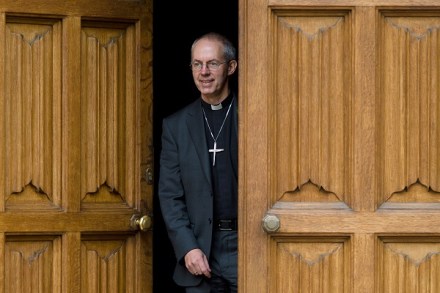
What are the Times trying to say about noted Spectator fan and new Archbishop of Canterbury Justin Welby? They have delved into his past. It turns out to have been rather eventful; but they’ve left unexplained the connections between the many interesting dots in Welby’s life. The Thunderer exposé reveals that Welby and his wife ‘volunteered as a young couple to brave the secret police of communist Europe by smuggling Bibles’, adding, intriguingly: ‘The newlyweds were provided with a camper van by the Dutch-based East European Bible Mission for their trips to Czechoslovakia and Romania. Secret compartments and a false floor hid the biblical contraband.

After Saddam

From our UK edition

‘The problem is why,’ said the health project officer of a British charity working in the marshlands of southern Iraq close to Basra. ‘No one answers why?’ He was talking to the BBC journalist Hugh Sykes about the state of Iraq, ten years after the fall of Saddam Hussein. He agreed that the Americans and British had done ‘a good job’ in getting rid of the dictator but said that this had changed nothing in Basra, whose economy had been destroyed by Saddam as he drained the marshes, turning a landscape that was vivid green into burnt ochre. We also heard from the farmers who in the hours after Saddam’s fall set out with a JCB to destroy the dams and redig the ditches to bring back the water.

The Iraq fury still burns, fuelled by unanswered questions

From our UK edition

I was fascinated to read the reaction to Nick Cohen’s article expressing his view that after 10 years he still believed the invasion of Iraq was the right thing to do. The heart of Nick’s argument is this: ‘I regret much: the disbanding of the Iraqi army; a de-Ba'athification programme that became a sectarian purge of Iraq's Sunnis; the torture of Abu Ghraib; and a failure to impose security that allowed murderous sectarian gangs to kill tens of thousands.For all that, I say, I would not restore the Ba'ath if I had the power to rewind history. To do so would be to betray people who wanted something better after 35 years of tyranny.

Craig Raine: Fiction is franker

From our UK edition

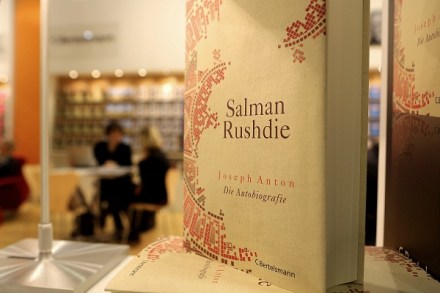
Issue 39 of Areté starts with the words “MEMOIR ISSUE” on the front cover. It is dedicated to writing which remembers its author. Hence we get essays on Proust; Art Spiegelman’s MAUS; Nabokov’s Speak, Memory; The Diving Bell and the Butterfly; Salman Rushdie’s 2012 memoir Joseph Anton; and a terrific account of the monomania of bored US soldiers in Iraq, by an ex-US airborne ranger, among others. Craig Raine – Areté’s founder and editor – disguises his editorial line artfully. On p42 Candia McWilliam asks the question: ‘What have biography and fiction to give one another?’ Questions like this occur throughout Areté.

15 February 2003: What Do They Want? Victory for Saddam

From our UK edition

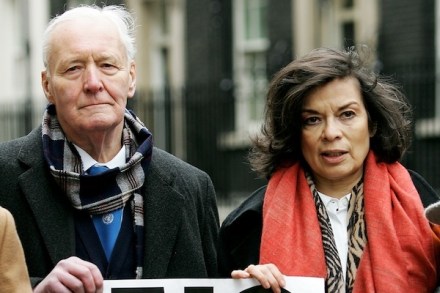
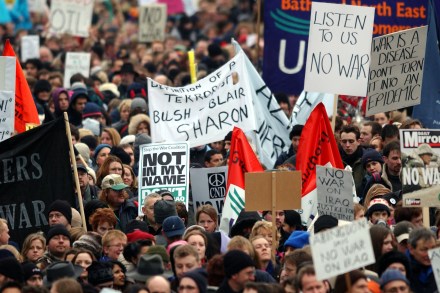
Ten years ago today, Lloyd Evans joined the anti-Iraq war march in London. Evans had an open mind about the war, until he joined the peace movement and met Bianca Jagger. Here is the piece in full from our archive. I'm bursting with excitement. I can hardly get the words down fast enough. There was an amazing occurrence in Hackney last week at a meeting of the Stop the War coalition. I swear this happened. A protester said something perceptive. You don't believe me? No, really, I was there. He was an old guy with white hair and a lovely crinkly face. 'The bigger the march,' he said ruefully. 'The bigger the insult when they ignore us.' I almost fell off my chair in astonishment. Nobody at the meeting disagreed. No one suggested a change of tactics. And none of that surprised me at all.

What if the stop the war protesters had got their way?

From our UK edition

It's the 10th anniversary of the Stop the War protest today, which led me to think about a point Christopher Hitchens once made: how the world would look if the 'stop the war' protests - in their various forms - had their way? Saddam Hussein would be lord and master of the annexed Kuwait, his terrorised citizens living in a country once described as a concentration camp above ground and a mass grave below it. The Kurds may not have held out against him, the Shi'ite south still brutally repressed. Slobodan Milosevic would be a European dictator, having made Bosnia part of a Greater Serbia and ethnically cleansed Kosovo. Afghanistan still would be run by the Taleban, with al-Qaeda as their guests.

The Iraq War’s Real Victims? Laurie Penny and the Narcissistic Left

From our UK edition

Don't take my word for it. Ask the redoubtable Ms Penny herself. Contemplating the "lesson" of the anti-war protests a decade ago, she writes: Tony Blair’s decision to take Britain into the Americans’ war in Iraq was an immediate, material calamity for millions of people in the Middle East. I’m writing here, though, about the effect of that decision on the generation in the west who were children then and are adults now. For us, the sense of betrayal was life-changing. We had thought that millions of people making their voices heard would be enough and we were wrong. Poor lambs. Of course there were millions of people around the world - including many in Britain - who would have been disappointed if Saddam Hussein had been permitted to remain in power.