Iraq

Welcome to the era of ISIS – and pop-up terror

From our UK edition

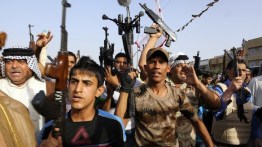
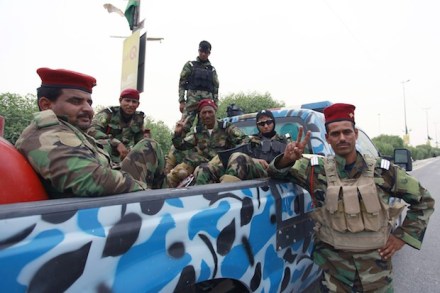
[audioplayer src="http://traffic.libsyn.com/spectator/TheViewFrom22_19_June_2014.mp3" title="Daveed Gartenstein-Ross and Freddy Gray discuss ISIS, Iraq and pop-up terrorism" startat=49] Listen [/audioplayer]Jihadist banners flying. Victorious extremists on camera slapping and then executing dehydrated and pleading Shia members of the Iraqi security forces. Dark reports of mass slaughter. City charters released in captured territory heralding the implementation of an extreme version of Islamic law. We’ve seen it all before, but it remains shocking — and the latest advance by the Islamic State of Iraq and al-Sham (ISIS) is arguably the most disturbing development in Iraq’s already horrifying recent history.
How the Westminster hawk became an endangered species

From our UK edition

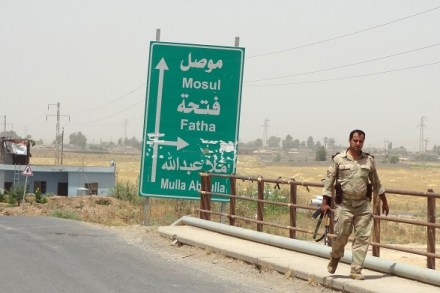
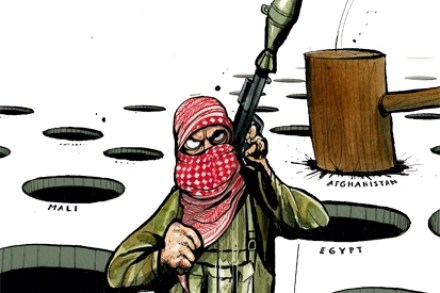
[audioplayer src="http://traffic.libsyn.com/spectator/TheViewFrom22_19_June_2014.mp3" title="James Forsyth and Isabel Hardman discuss the death of Westminster hawks" startat=726] Listen [/audioplayer]There is a slight whiff of the summer of 1914 to Westminster at the moment. The garden party season is in full swing and the chatter is all about who is up and who is down. In the Commons chamber itself, domestic political argument dominates. You would not know that a vicious sectarian war is raging in the Middle East. At the first Prime Minister’s Questions after the fall of Mosul to the terrorist group ISIS, no one asked David Cameron to explain the government’s policy on Iraq. The situation in Iraq is dire on both a humanitarian and a strategic level.

Please, Cameron – no moral grandstanding over Iraq

From our UK edition

If there’s a bright spot in the murky mess of Iraq, it’s that finally we have a war that it is impossible to paint in simple terms, as a battle of good against evil. This time, even our PM, the self-appointed heir to Blair, can’t grandstand about defeating ‘terror’ or protecting ‘innocent civilians’ because there’s terror and innocence on every side. He can’t pose as world policeman; stand side by side with Obama and say ‘we must not let this evil happen’, because clearly we already have. Take ISIS, the Islamist group once affiliated to al-Qa’eda who’ve become the world’s new public enemy number one. ISIS have captured parts of northeast Syria and Iraq, and have begun to eye up Baghdad.

The return of oil price anxiety is a timely reminder to get fracking

From our UK edition

‘Iraq turmoil sends crude oil prices to nine-month high’ is the sort of headline that used to send shivers down economists’ spines, especially if it appeared on the same page as ‘Europe faces gas shortage as Russia cuts Ukraine supply’. How worried should we be at the current turn of events in the energy world? Since Iraq’s new insurgency kicked off, the price of a barrel of Brent Crude has blipped from $105 to $115 — nothing to panic about — but the more pessimistic analysts are talking of a further $30 rise if Iraqi oil flows of 3.6 million barrels a day (representing about 4 per cent of global demand) are seriously disrupted.

Petraeus: America can’t serve as an air force for a Shi’ite militia

From our UK edition

If conservatives had an answer to Woodstock, it would resemble the Margaret Thatcher Conference on Liberty held today by the Centre for Policy Studies. The lineup is stellar, and I’ve been here all day. General David Petraeus is one of the many guests and was asked what he’d do about the rise of ISIS. Here’s what he said, 3:30 into the below clip: ‘If there is to be support for Iraq, it has to be support for a government of Iraq. That is; a government of all the people; and that is representative of and responsive to all elements of Iraq. President Obama has been quite clear on this: This cannot be the United States being the air force for Shia militias or a Shia on Sunni Arab fight. It has to be a fight of all of Iraq against extremists.

The Commons is finally talking about Iraq. Will anyone notice?

From our UK edition

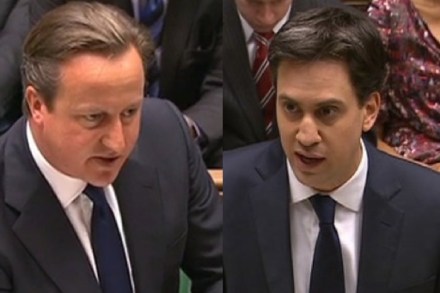
PMQs last week took place just hours after Mosul had fallen to ISIS. But despite this, not a single MP asked Cameron what the government's position on the situation in Iraq was. Today, though, Ed Miliband devoted all six questions to the topic. There was much consensus between Cameron and Miliband but one doubts that the governments in either Baghdad or Tehran will take much notice of what was said in the Chamber. Indeed, the Commons seemed oddly passive about the exchanges as if everyone was aware of the limits to Britain's ability to influence the situation. listen to ‘PMQs: Cameron and Miliband on Iraq’ on Audioboo One thing that remains striking is Cameron's conviction that a terrorist enclave in Iraq would be a direct threat to Britain.

Please David Cameron, no moral grandstanding over Iraq this time

From our UK edition

A preview of Mary Wakefield's column in this week's Spectator... If there’s a bright spot in the murky mess of Iraq, it’s that finally we have a war that it is impossible to paint in simple terms, as a battle of good against evil. This time, even our PM, the self-appointed heir to Blair, can’t grandstand about defeating ‘terror’ or protecting ‘innocent civilians’ because there’s terror and innocence on every side. He can’t pose as world policeman; stand side by side with Obama and say ‘we must not let this evil happen’, because clearly we already have. Take ISIS, the Islamist group once affiliated to al-Qa’eda who’ve become the world’s new public enemy number one.

The Middle East’s own 30 Years War has just begun

From our UK edition

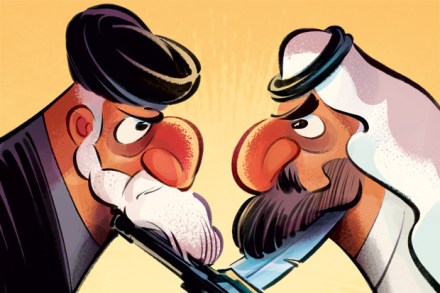
In January, Douglas Murray explained in The Spectator how relations in the Middle East were becoming increasingly tense. With northern Iraq now in turmoil, following the advance of Islamist militant group Isis, Douglas's insight seems prescient. Syria has fallen apart. Major cities in Iraq have fallen to al-Qa’eda. Egypt may have stabilised slightly after a counter-coup. But Lebanon is starting once again to fragment. Beneath all these facts — beneath all the explosions, exhortations and blood — certain themes are emerging. Some years ago, before the Arab ‘Spring’ ever sprung, I remember asking one top security official about the region. What, I wondered, was their single biggest fear?

Blair haunts foreign policy debate

From our UK edition

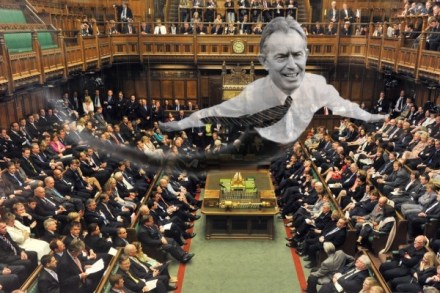
Whether or not the Iraq war was wise, it's fair to say that it is now unwise for Tony Blair to intervene in the ongoing foreign policy debate. The former Prime Minister was under fire last week as the country British and US forces invaded in 2003 was rent asunder by ISIS, and naturally the debate about whether these developments show the intervention was the wrong decision has put further pressure on Blair. He rarely needs much pressure to justify his actions, though: he gives the impression of a man who protests too much. In his column today, Boris Johnson makes quite clear that these protests do not come without a cost to the wider debate about intervention.

The new Iraq war

From our UK edition

[audioplayer src="http://traffic.libsyn.com/spectator/TheViewFrom22_12_June_2014_v4.mp3" title="Former solider Tom Tugendhat and Fraser Nelson discuss ISIS in Iraq" startat=1758] Listen [/audioplayer]Seven weeks ago, Barack Obama proclaimed that ‘it’s time to turn the page on more than a decade of war’. The people of Iraq do not have this option. They’ve seen, in Basra, Iran-backed militias take on and defeat the British military. They’ve seen highly effective jihadis, disowned by al-Qa’eda for their brutality, take control of a major city, Fallujah, just 40 miles from Baghdad. This week they have seen their second city, Mosul, fall to that same band of psychopaths.

Now that Iraq really is threatened by jihadists, should we intervene?

From our UK edition

The war on terror has gone not necessarily to our advantage. For the second time in a dozen years the land of Abraham has been invaded by a partly-British army, although this time it is composed not of regular soldiers but of bearded lunatics from Crawley. The Islamic State in Iraq and the Levant, an Islamist offshoot so extreme that even al-Qaeda thinks they’ve taken things a bit too far, now controls a huge swathe of Syria and Iraq, roughly in the region of 40,000 square miles, or 4.0 Wales on the International Wales Scale. That makes Sunnistan larger than an independent Scotland and with a great deal more oil. The failure of the Americans to nation-build was epitomised by the fact that a US-trained Iraqi army of 30,000 fled from just 800 ISIS militants in Mosul.

A brave man in Iraq needs your help

From our UK edition

Canon Andrew White is one of the bravest men you could ever meet. He is the Anglican vicar of St George’s Church in Baghdad and has continued his service in that country throughout its recent horrors. He has lost hundreds of members of his congregation but he has remained an extraordinary, humbling and hope-giving presence throughout recent years. But now, with ISIS having taken over Mosul and surrounding areas in recent hours, he says that things are worse than at any point in the last decade. This, Nineveh, is the heartland of Iraqi Christianity. In this heart-breaking call for help, Canon White writes: ‘Iraq is now in its worst crisis since the 2003 war.

Don’t mention the war: Iraq absent from PMQs

From our UK edition

If PMQs today was anything to go by, everything is so hunky-dory in Iraq that MPs needn't discuss it at all. No-one raised it. Afterwards, the Prime Minister's official spokesman was repeatedly asked whether the UK would provide assistance. He said the government's message focuses on the 'Iraqi government working with partners in the region, for example the Kurdistan regional government'. Asked to rule out providing military assistance to the country, the spokesman said 'that's not on the table'. At the same time, the Prime Minister was finally being asked about Iraq in the Commons as he addressed MPs on the G7 talks. He said:- 'What we have to deal now is with the situation today, where we've got an extremely serious situation in Mosul.

Does Boris Johnson really want to see Tony Blair tried for war crimes?

From our UK edition

What are we supposed to make of Boris Johnson? I mean, are we supposed to pay attention to what Boris actually says? Or is he permitted to play the game of politics by different rules? That is, the sort of stuff that applies to other politicians does not apply to Boris because the Mayor of London is a great entertainer and thus granted some kind of relief from the usual rules of responsibility. Just asking, you know. Consider his recent remarks about Tony Blair and the Iraq War. During an appearance on LBC last week, the Mayor appeared to endorse the fashionable daft idea that Mr Blair should be tried as a War Criminal. At the very least, Boris suggested, this is what Blair deserves.

Will David Cameron stand up for persecuted Christians?

From our UK edition

Last week, David Cameron surprised a number of people when, during a pre-Easter gathering at Downing Street, he spoke about religion. Not religion in general, the all-faiths-and-none diversity-speak of the political class, but his own Christian faith. James Forsyth writes about the implications in this week’s magazine. But what was most surprising was that the prime minister went further by saying that ‘our religion’ is the most persecuted in the world and that ‘I hope we can do more to raise the profile of the persecution of Christians’. He added: ‘We should stand up against the persecution of Christians and other religious groups wherever and whenever we can, and should be unashamed in doing so.’ This is quite a development.

Mortar fire, weddings, camels, the French revolution: all kind of things get in the way of cricket

From our UK edition

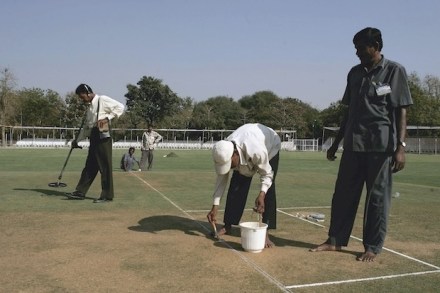
It isn’t just the elk, either. Also bringing proceedings to a halt in this wonderful anthology are camels (Bahrain), cows and donkeys (Botswana), unexploded landmines (Rwanda, silly mid-on), people learning to drive (East Timor), punch-ups (Bermuda), low cloud (Christmas Island, 300 metres above sea-level), mortars (Iraq, though not during the game held by coalition forces in the ballroom-sized anteroom of Saddam’s abandoned North Palace) and weddings (the ground on Ascension Island has a church inside its boundary). For the record, the elk (Finland) was twice the size of a horse. Even when play is possible, life can still be tricky.

The west has a choice: abandon Ukraine or punish Russia? It should choose the latter.

From our UK edition

An astonishing number of useless twits appear to think Russia's annexation of the Crimea is somehow not Vladimir Putin's fault. The poor Russia despot - no longer much too strong a term, by the way - is not responsible for his actions. He was provoked! Not simply by the Ukrainians, who should, it is implied, have known better, but by the west. It's our fault and Putin is simply acting logically and rationally. He has every right to reassert Russia's ancient prerogatives and if we hadn't penned him into a corner he wouldn't have needed to at all. Twaddle of course but the kind of stuff that's not hard to find. Plenty of people - by no means confined to those you would not expect to know better - appear to be swallowing this nonsense.

The enlightened king of Iraq

From our UK edition

‘King of Iraq’ has an odd ring even to those who know that Iraq was called Mesopotamia and was part of the Ottoman empire before falling into and out of the clutches of the British. Many people, including Iraqis, seem unaware that it was a monarchy until 1958. Some 45 years after its overthrow, members of Iraqi families that flourished in those royal days launched ambitious plans to restore the monarchy after Saddam Hussein’s demise. One of them was Ali A. Allawi, the author of this first major biography of Iraq’s founding father, King Faisal (r. 1921–1933).

Britain’s refusal to defend Christians in the Middle East is shameful

From our UK edition

I have an ebook published next Thursday, called The Silence of Our Friends, on the persecution of Christians in the Middle East and the apathy of the West about this tragic and historic event. (A link will appear at the top of this page next week – in the meantime please spread the word.) I say apathy, but lots of people are concerned, and in the past year and a half such books as Christianophobia, Persecuted and The Global War on Christians have tackled worldwide persecution; there has also been increasing awareness following violence in Syria and Egypt over the summer, and last month Baroness Warsi became the first minister to raise the subject.

The Leveson Test – separating the ‘Decent Left’ from ‘the Idiots’

From our UK edition

If the Leveson Inquiry does nothing else, then it has at least provided a useful guide to the British Left for those of us on the saliva-speckled wastelands of British conservatism. Political tribes are complex but occasionally one issue will neatly divide a movement into easily identifiable clans, of which press regulation is one. And on one side you have one part of the British Left, the liberal tradition that values the liberty of all as a starting principle, and on the other the radical tradition that sees press freedom as a way for the rich to monopolise power. We might call them 'The Decent Left' and 'The Idiots'; and while it’s not a clear-cut test, and there may be some Idiots against regulation and some Decents in favour, as a rule of thumb it works.