Iranian foreign policy

The winners and losers of the Iran ceasefire deal

The abrupt announcement of a two-week ceasefire in the war between the US, Israel and Iran resolves none of the issues which caused the conflict. Beyond an agreement to cease attacks, the arrangements that will hold during the two-week period appear themselves unclear. Each side in the last hours seemed to commit to different versions of the ceasefire in key areas. Iran remains an aggressive and dangerous power, with the ambition of expelling the US from the region, dominating the Gulf states and destroying Israel From Israel’s point of view, the bottom line is clear. The Iranian regime has been significantly weakened in its capacities in a number of key

ceasefire

The Gulf states have a big decision to make about Iran

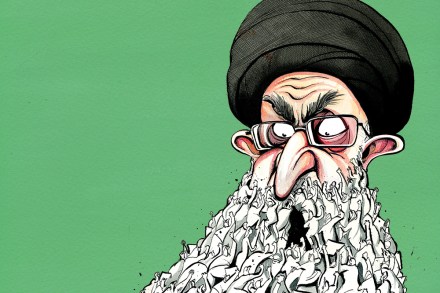
Iran threatened harsh retaliation in the wake of the American-Israeli attacks that killed the country’s supreme leader and many of its senior commanders. Its response consisted of a barrage of missiles aimed at Israel. So far, so predictable. Yet, at the same time, Tehran chose to direct its firepower at neighboring Gulf states, countries that have been encouraging diplomacy and warning against war. Iran’s actions are an object lesson in how to alienate your friends and neighbors. So far, they have continued to employ the rhetoric of de-escalation. But that’s untenable if Iran continues to target their territory The Iranians targeted Saudi Arabia, the United Arab Emirates, Qatar, Bahrain, Kuwait,

gulf

Chaos in Iran spells trouble for the Taliban

The US-Israeli attack on Iran presents an opportunity to get rid of the Taliban in Afghanistan. If there is a collapse of central authority in Iran, tens of thousands of Afghan former soldiers living in exile there could use the power vacuum to mobilize, return home and fight against the Taliban. There are several resistance groups who have advanced plans to fight but need a reliable haven outside the country to launch attacks inside Afghanistan. Iran, which has a 600-mile border with the country, could be the launchpad they need. This represents a unique opportunity for Afghanistan, as for the first time the country faces conflict on both sides. While

The rule of the Ayatollahs is broken. What happens now?

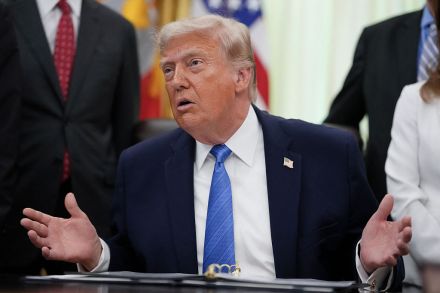
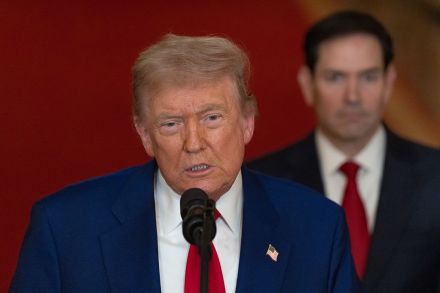
“Help is on the way,” promised Donald Trump to the people of Iran defying the Islamic Republic. In the same social media post, the President, characteristically light on detail, also urged Iranian protesters to take over the institutions of the Islamic Republic (presumably by force) and to keep a note of the names and numbers of their oppressors for retribution’s sake. Whatever these words presage – be it air strikes on Iranian Revolutionary Guard Corps (IRGC) and Basij facilities, or cyberattacks on Iran’s intelligence agencies, to blind the regime as the regime has blinded protesters by shutting down the internet – it remains to be seen if such an intervention

ayatollahs

How Trump can squeeze the Iranian regime

The Iranian people have shown true courage as they protest against the Islamic Republic. As the pressure mounts, some elements of Iran’s regime have been pushing to negotiate with the Trump administration – trying to create the impression they are ready to drink from the “poisoned chalice” as the Islamic Revolution’s founder Ruhollah Khomeini did to end the Iran-Iraq war in 1988. Saeed Laylaz, a reformist economist, told Euro News last week that, “I have information that Iranian political officials are ready for dialog with the other side.” More pragmatic figures within the Islamic Republic – namely Supreme National Security Council Secretary Ali Larijani, President Masoud Pezeshkian, Iranian Foreign Minister Abbas Araghchi

iranian

What Trump’s coup in Venezuela means for Iran

In a city awash with visual propaganda, one mural in Caracas is especially striking for the western visitor. In it, Jesus Christ stands alongside Imam Mahdi, a prophesied messianic figure who many Muslims believe will appear with Christ during the End Times to restore peace and justice to the world. There is only one Venezuelan – the late president Hugo Chávez – among the six smaller figures on the mural. Three are Iranian, including Qasem Soleimani, commander of the Islamic Revolutionary Guard Corps elite Quds Force, killed by a US airstrike in 2020. One is an Iraqi commander killed in the same strike, and the last is Lebanese, Imad Mughniyeh,

The keffiyeh crew’s curious silence on Iran

And just like that, the left loses interest in the Middle East. In 2025, they spoke of little else. They culturally appropriated Arab headwear, poncing about in China-made keffiyehs. They wrapped themselves in the Palestine colors. They frothed day and night about a “murderous regime” – you know who. And yet now, as a Middle Eastern people revolt against their genuinely repressive rulers, they’ve gone schtum. It is especially electrifying to see Iran’s young women once again raise a collective middle finger to their Islamist oppressors What is it about revolts in Iran that rankle the activist class? These people love to yap about “resistance” and “oppression.” Yet the minute

keffiyeh
iranian

Maduro’s fall could galvanize the Iranian opposition

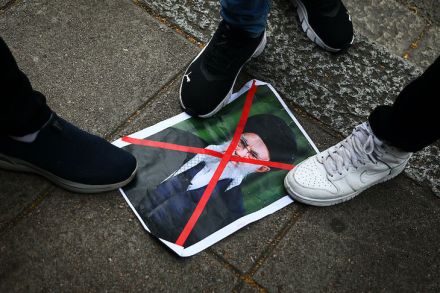
On the afternoon of December 28 in a Tehran electronics bazaar, shopkeepers (known as bazaaris) shuttered their shops and walked out, outraged at a planned gas price rise and crippled at the continuing slide in the value of the Iranian currency and the government’s powerlessness to shepherd Iran’s economy toward something better than corruption, unemployment and inflationary cycles. Tehran’s Grand Bazaar was quick to follow suit. A day or so later, several of Tehran’s most prestigious universities staged demonstrations. Smaller cities and towns have since taken up the baton of resistance, with government offices attacked and people openly calling for Khamenei’s death and the return of the Pahlavi dynasty, at