Iran

How Iran’s nuclear programme was delayed

From our UK edition

Iran’s nuclear programme is the most likely source of a major global conflict. So it is highly significant that the outgoing head of Mossad recently told the Israeli parliament that technical problems meant that Iran might not be able to make a bomb until 2015. These technical problems have, as a riveting piece in the New York Times explains, being caused by a computer virus. The stuxnet (correction) virus is in wide global circulation but it only kicks in when it spots the pattern that is used for centrifuges making highly-enriched uranium. When it does, it makes the centrifuges spin so fast that they destroy themselves. This virus appears to be a joint production of the Israeli, American and British secret services.

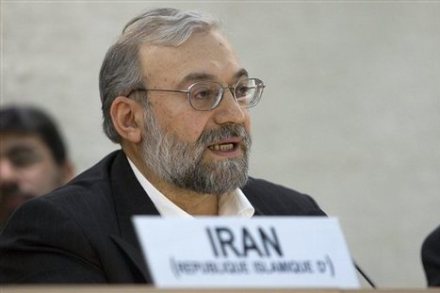
Laughing Mohammad Larijani, the Comical Ali of Iran

From our UK edition

In the week when the Iranian regime forced Sakineh Mohammadi Ashtiani to goulishly re-enact the murder of her husband on TV, it is worth reading Newsweek's interview with Mohammad Javad Larijani, a regime insider. His answers call to mind Comical Ali, whose delusional denials of the US advance in Iraq made everyone realise how detached from reality Saddam Hussein's regime really was. First on the matter of torture, routinely said by the UN, former prisoners and defectors to be used by Iranian officials: "Torture is forbidden by the Constitution. Any law officer who tortures civilians will meet a very harsh punishment." Of course, he admits, the Iranian system could "need refinements," but over-all it is full of checks and balances.

Chinese burns

From our UK edition

The latest cache of Wikileaks has done America no end of good. The Saudis urged the US to bomb Iran – a sign that the Arab world can make common cause with the States and Israel. It has also emerged that North Korea has sold the Iranians long range rockets – Moscow, Berlin and Istanbul are all within the Ayatollah’s range. But the most important revelation is that China has tired of North Korea’s lunatic machinations, recognising that the rogue state is an impediment to global and regional security. China is also convinced that the country will not survive Kim Jung-il’s death and favours a union of the two Koreas, provided the new state is pro-Chinese (could it be anything but?).

Julian Assange: the new face of anti-Americanism

From our UK edition

Like everyone else, I have poured over the latest cache of Wikileaks - the publication of which I find irresponsible and destructive. There are several pieces of information now in the public domain that will cause the US diplomatic embarrassment or worse may even help the regimes in Tehran, Pyongyang and Moscow. Just ask yourself a few questions. Will the West be safer if the Saudi leader cannot trust that a conversation he has with a US envoy will remain secret? Will that help or hinder Iran's nuclear prpgramme? Will US-German links be improved by the knowledge that US diplomats are sceptical of Angela Merkel's policies? Will that aid G20 coordination or hamper it?

The Wikileaks Cables

From our UK edition

So, the latest Wikileaks docu-dump is out. Full details here. Among the highlights from the initial reports: Bargaining to empty the Guantánamo Bay prison: When American diplomats pressed other countries to resettle detainees, they became reluctant players in a State Department version of “Let’s Make a Deal.” Slovenia was told to take a prisoner if it wanted to meet with President Obama, while the island nation of Kiribati was offered incentives worth millions of dollars to take in Chinese Muslim detainees, cables from diplomats recounted. The Americans, meanwhile, suggested that accepting more prisoners would be “a low-cost way for Belgium to attain prominence in Europe.

Stop blaming Israel alone

From our UK edition

Reading the British press - or even listening to some ministers - you would be forgiven for thinking that the only obstacle preventing Middle East peace is Israeli obstinacy and Benjamin Netanyahu's unwillingness to force his political allies - like Shas - to the negotiating table. But, as always, things are a bit more complicated than the newspaper headlines would suggest. From Israel's position, the region is looking increasingly hostile. Talk of a war in Lebanon with Hezbollah persists. In Syria, President Assad looks less interested in a rapprochement than he has done for years.

Neo-isolationism is NATO’s greatest enemy

From our UK edition

As NATO leaders gather for a key summit in Lisbon, expect the newspapers to be full of the usual “why bother” commentary. NATO, they will argue, was founded for a different age and is not relevant for dealing with today’s threats – from cyber-attacks to nuclear non-proliferation. It is even struggling to deal with older threats, such as the Taliban insurgency. Most Europeans do not seem to mind. They feel safer than at any time before and worry predominantly about post-material threats, not conventional attack, as a think tank report showed recently. As a result, Europeans are set to spend less on defence. Germany expert Hans Kundnani has an excellent piece on Berlin’s anti-militarism over on ECFR’s new blog.

Sir Christopher Meyer reviews George Bush’s memoirs

From our UK edition

Sir Christopher Meyer, the former British Ambassador to the United States, has reviewed George Bush's biography for the latest issue of The Spectator. We've pasted his entire review below, for readers of our Book Blog. Taking the long view, Christopher Meyer, The Spectator, 20 November 2010 While Tony Blair emerged from his memoirs as a chameleon of many colours, there is only one George W. Bush in Decision Points. The book reads like the man speaks. If it has been ghosted — and Bush gives thanks to a multitude of helpers — it has been done with consummate skill to preserve the authentic Bush voice. The result will be unexpected, even unwelcome, to many.

The new Iraq is beginning to look a lot like the old

From our UK edition

Nouri Maliki was last night appointed Iraqi prime minister after the country broke the world record for the slowest process of government formation. Eight months passed between the election and the formation, beating even previous Belgian records of procrastination. Hours after his appointment, however, members of al-Iraqiya, the main Sunni-backed alliance led by former Prime Minister Ayad Allawi, walked out of the Parliament. Their concern: Maliki's failure to do as he had promised and reinstate four Sunni leaders who had been banned for alleged ties to Saddam Hussein's Baath party.

In international politics, the pursuit of stability is not enough

From our UK edition

One of the biggest challenges facing the post-Iraq generation of foreign policy decision-makers, like William Hague and Hillary Clinton, is to balance the pursuit of overseas stability with promotion of the dynamic and sometimes de-stabilising forces that build countries' long-term stability and make economic and political progress possible. This may sound like an academic question but it is a very real change- and not just because the SDSR has made the task of building overseas stability a key government objective.   Take Iraq. After having lost an admirably violence-free and largely fair election, it looks likely that Iraqi Prime Minister Nouri al-Maliki will cling to power and the voter-winner, Ayad Allawi, will be denied a role in government.

The insidious fingers of Iran are all over Iraq

From our UK edition

Wikileaks is the story of the day. The Guardian has extensive coverage of unsubstantiated allegations made by unnamed Iraqis. That is not to prejudge the revelations, just to provide balance against the sensational headlines before proper investigations called for by the UN. In addition to the alleged atrocities and cover-ups, Wikileaks’ disclosures support what Blair and Bush said and maintain: Iran incited dissidence to exploit instability. In fact, it is still doing so, despite the Obama administration’s protests to the contrary. The New York Times has eviscerated Biden and Obama this morning.

Preparing for a Nuclear Iran

From our UK edition

That's the message of the US's forthcoming $60bn arms-deal with Saudi Arabia. Or so says David Rothkopf anyway: [T]he reason that the U.S. government -- that would not have done a deal like this in the years right after 9/11 -- is willing and even a little eager to move ahead with the deal now is that the War on Terror is being overtaken among top U.S. concerns by the advent of a nuclear Iran.  Now, you may quibble by pointing out that Iran does not yet have nuclear weapons. But this is a purely academic argument. This deal is the latest example of behavior suggesting that the nuclearization of Iran is all over but for the bomb building in the eyes of U.S. and regional strategists. [...

Officials: Better than 50 percent chance that Israel will strike Iran next year

From our UK edition

The Iran issue has dropped down the news agenda in recent months. But that doesn’t mean it has gone away. Even with the difficulties that Iran’s nuclear programme has faced, any decision on whether to try to use force to stop Iran becoming a nuclear-ready power will have to be taken in the next year or so as Jeffrey Goldberg’s brilliantly reported cover piece in the Atlantic reminds us. Goldberg writes, “I have interviewed roughly 40 current and past Israeli decision makers about a military strike, as well as many American and Arab officials. In most of these interviews, I have asked a simple question: what is the percentage chance that Israel will attack the Iranian nuclear program in the near future?

The debate begins in lively fashion

From our UK edition

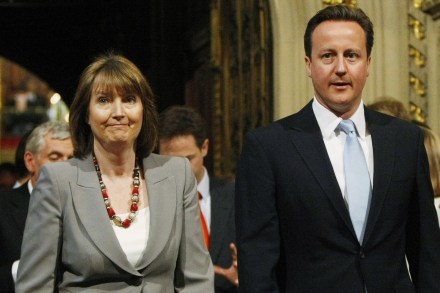
The initial exchanges of the Queen's Speech Debate have just come to a close – and, I must say, it was all rather jolly.  Harriet Harman came prepared with gag after gag about the Tories' "marriage" to the Liberal Democrats, while David Cameron had a few about Harman's actual marriage to Jack Dromey.  There was much laughter, good-natured jeering and cat-calling.  So – business as usual. Underneath it all, though, there was a substantive clash between the two sides.  In a spritely performance, Harman wisely avoided an "investments vs cuts" style attack, instead charging the coalition with not having a mandate for many of its political reforms.  Whereas Cameron accused Labour of not facing up to its fiscal legacy.

The Tories have their eyes on Iran

From our UK edition

You may not have expected anything less, but it's still encouraging to see the new government pay so much attention to Afghanistan. After David Cameron's meeting with Hamid Karzai last week, no less than three ministers have visited the country today: William Hague, Liam Fox and Andrew Mitchell. And Whitehall's number-crunchers are busy trying to find extra money for the mission. There's a sense, though, that all the attention actually represents an underlying shift in focus.

The G-men or the Granola Army

From our UK edition

In the last stretch of political campaigns, things tend to get ugly as the real cost of winning and losing becomes clear. This one is no different, with its suggestions of tactical voting and disagreements about tactical weapons. The latter has become particularly viscious with a former spymaster, an ex-general and a former CT chief calling into question the securty and defence policies Nick Clegg and the Liberal Democrats. In their defence, the Lib Dems have positioned their biggest weapon, Paddy Ashdown, who fired a volley against Richard Dearlove, the former head of MI6, saying that "things had changed since he supplied intelligence to Tony Blair about Iraq and WMD". Bull's eye! But who is right - Britain's G-men or the Granola Army?

Does Clegg go for a Love Actually moment?

From our UK edition

The foreign policy portion of tonight’s debate offers Nick Clegg several opportunities to bracket Labour and the Tories together. Both of them supported the war in Iraq, both won’t take the military option off the table when it comes to Iran and both believe in the centrality of the alliance with the US to UK foreign policy.   On this final point, it’ll be fascinating to see if Clegg launches a full-on assault on the view that the America alliance is the cornerstone of UK foreign policy.  He sketched out the arguments against thinking about the special relationship in a speech the other day and there’s no doubt he could score some populist points by accusing the other two parties of being overly deferential to Washington.

The Lib Dems’ Iran Gaffe

From our UK edition

It's a gaffe, of course, because it is both true and something you're not supposed to say. Be this as it may, it strikes me that while political professionals and grizzled foreign policy specialists may chunter about the Liberals' naivete and the rest of it, the general public will be less likely to complain that the party opposed to attacking Iran is the dangerous, mad party that can't be trusted. Both views, for sure, have some merit. And so do Brother Korski's questions: What would the Lib Dems do if negotiations fail? Negotiate some more? So what happens if the International Community agrees to military action? What would Nick Clegg do if diplomacy fails and Iran acquires a bomb, which it uses as a shield to protect Hezbollah, as the Shiite movement attacks Israel?

Nick Clegg and the 3 am phone call

From our UK edition

Compared to many CoffeeHousers, I don’t find the Liberal Democrat’s foreign policy positions as problematic. Nick Clegg is smart, internationalist and has – unlike David Cameron and Gordon Brown (and Tony Blair) – plenty of foreign policy pre-leadership experience. But looking through the Lib Dem manifesto, I came across its pledge on Iran, which is quite problematic for a party that is keen to shed its beardie-wierdie, peacenik image and whose leader may even end up running the Foreign Office. The manifesto says that, on the one hand, the Lib Dems support “action by the international community to stop Iran obtaining nuclear weapons.” But the party also makes clear that they “oppose military action against Iran.