Iran

An Israeli strike on Iran?

From our UK edition

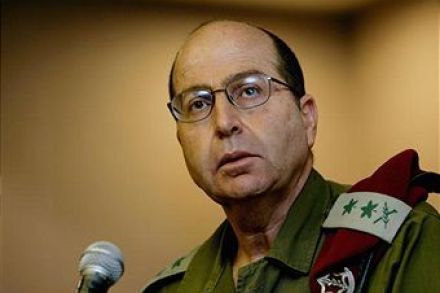
Will they or won’t they? Most political parlour games involve a question of this kind and the one about whether Israel will strike Iran – played out regularly in Washington, London and Paris – is no exception. The last couple of days have seen more sabre-rattling than before. Israeli Vice Premier Moshe Yaalon, who heads the Strategic Affairs Ministry, and is a former commander of the Israeli military, said all of Iran’s nuclear installations are vulnerable to military strikes while the US defence secretary was quoted as saying he thought Israel was likely to bomb Iran within months. They may or may not, but it is unlikely they will communicate through the voice of Leon Panetta or even in the pages of US newspapers.
Uncertainty reigns in Syria

From our UK edition

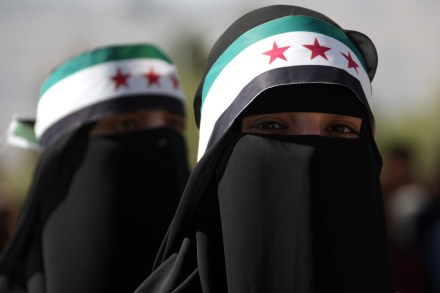
The Syrian situation is worsening by the day. Now the Arab League has pulled back its monitors in recognition of their failure to ease the violence. Foreign Secretary William Hague has said he is ‘deeply concerned,’ while the Gulf states are pushing for the whole mater to be referred to the UN Security Council. But the chances of a ceasefire and the start of a transition are low. The Russian government is growing tired of Bashar al-Assad but does not want to condone any kind of intervention, which they think is likely if the matter is referred to the UN Security Council. Russia still regrets backing the Libya resolution, believing they were hoodwinked by the West into allowing a military intervention against Muammar Gaddafi.

Would Iran block the Strait of Hormuz?

From our UK edition

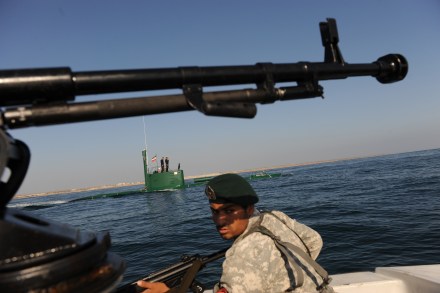
With the EU agreeing a new round of sanctions on Iran – outlawing European oil and gas purchases from Iran in six months, freezing Iran's Central Bank and banning trade in gold and other precious metals with any state-related bodies – tensions between Iran and the West are increasing. An Iranian MP has – again – warned that Iran will close the Strait of Hormuz and the US administration has – again – said that such an action will be countered. But what would happen if Iran carried out its threat? Iran has noteworthy littoral warfare capabilities, including mines, anti-ship cruise missiles, and land-based air defence.

Push off now, Press TV, and take your conspiracy theories with you

From our UK edition

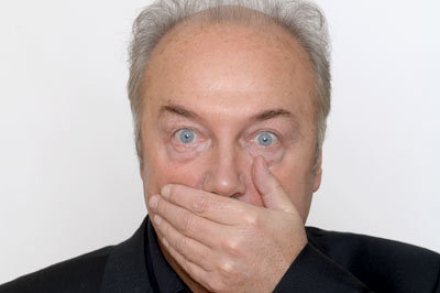
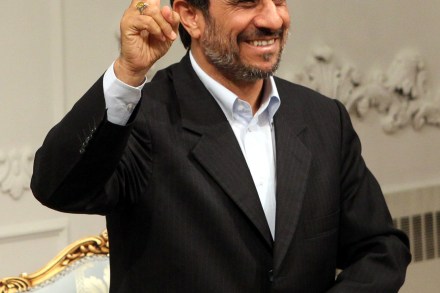
A week that began with an insane decision from the European Court of Human Rights has come to an end with a sensible decision from Ofcom. The Iranian government’s propaganda channel in London, Press TV, has just had its license to broadcast revoked. Insomniac Islamists will no longer be able to enjoy their weekly dose of programmes presented by the likes of Lauren Booth, Tariq Ramadan or Derek Conway. And of course they will now forever miss The Real Deal with George Galloway. On that show you could see such treats as Galloway interviewing ‘President’ Ahmadinejad.

Dire straits

From our UK edition

The situation in the Strait of Hormuz continues to intensify, with Defence Secretary Philip Hammond showing that, like his predecessor, he is not shy of pushing back when he gets a shove. Today he warned Iran that any attempt to block the straits, a key shipping lane, would be ‘illegal and unsuccessful’, and would be countered militarily if necessary.     In truth, any conflict over the straits would be very costly for both sides. Iran is likely to have the capacity to strike, in a shock-and-awe attack, at US and British bases in Kuwait, Bahrain and Oman. But this would be a dramatic escalation of events which would — Tehran must realise — see the leash come off Israel, and probably lead to an all-out aerial attack on Iran.

Goading in the Gulf

From our UK edition

The year has begun with Iran and the United States circling each other in the Straits of Hormuz; like two boxers before a bout, seeing who will strike first and working out where a blow could land. The immediate cause has been Iranian manoeuvres in the Arabian Gulf, and a visit to the area by the American aircraft carrier USS John C Stennis. Iran's army chief has said that his country will take action if a US aircraft carrier returns to the Gulf. Oil prices have shot up as a result. This could be the worst time to goad a Democratic president facing pressure from those Republicans currently trying ‘out hard’ each other in Iowa. Barack Obama has, throughout his tenure, tended to ignore bullyboy behaviour.

Will Israel bomb a near-nuclear Iran in 2012?

From our UK edition

An Israeli strike on Iran has to be the most over-predicted event of recent years. It was meant to happen last year. And the year before that. But now there are reasons why 2012 could, indeed, be the year when Israel will find it propitious to take overt military action against Iran's nuclear programme. (Everyone assumes that a range of covert activities, from assassinations to cyber attacks, are already ongoing). The Iranian government is moving closer to having the requisite capabilities, and can reasonably be expected to take the final steps towards nuclearisation.

Stopping Maliki’s coup

From our UK edition

The year is ending not with a successful US withdrawal from Iraq — as President Barack Obama claims — but with what amounts to a coup d'etat by the country's Shiite prime minister (and former ally of the US) Nouri al-Maliki. Less than 24 hours after the last US soldier left Iraq, the country's Sunni vice-president Tareq al-Hashemi was wanted on charges that he led death squads, in a case most observers think could reignite the sectarian slaughter of 2006-07. Violence in Iraq has subsided since 2006-07, when Sunni insurgents and Shiite militiamen killed thousands of civilians each month — but, without U.S. troops to act as a buffer, many Iraqis now fear a return to those days.

Worrying developments in the Middle East

From our UK edition

It’s been an eventful , if worrying afternoon in the Middle East. First, the initial Egyptian election results confirm the expectation that Islamist parties would dominate the first round of elections: they've taken more than 50 per cent of the vote. Douglas Murray wrote a Spectator cover story two weeks ago on how the Arab Spring is turning to winter; it is required reading. Events in Iran are much more disturbing, though. Iran claims to have shot down an US drone in the east of the country and added further threats about further retaliation for the incursion.

From the archives: The Great Communicator stumbles

From our UK edition

It's been 25 years since the Iran-Contra affair – the scandal about the US government selling arms to Iran and using the proceeds to fund the Nicaraguan rebels. It saw Ronald Reagan's approval rating drop from 67 per cent to 46 per cent, and fourteen memebers of his staff were indicted. In a piece that appeared in The Spectator exactly a quarter of a century ago, Christopher Hitchens explains how the Reagan administration was unable to contain the story. The end of the line, Christopher Hitchens, 29 November 1986 If you wish to understand the fire that has broken out in the Washington zoo, and penetrate beyond the mere lowing and baying of the trapped and wounded beasts, you must master three key concepts in the capital’s vernacular.

Iran lashes out

From our UK edition

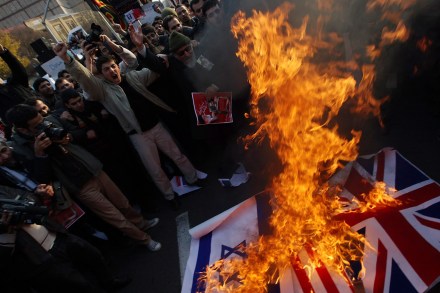
The pressure is piling up on Iran – from below, as people demand greater freedoms; from the region, where Iran is about to lose its one ally, Syria, to a popular revolt; and from the international community, which is tightening the economic sanctions in response to Tehran's illegal nuclear programme. So Iran is hitting out the only way it knows how – through the use of state-sanctioned and illegal violence. They hope to divert attention from the country's problems and internecine struggles, reheating old tropes about Britain as the 'Little Satan' and maintaining the decades-old decolonialisation rhetoric that all the problems of the region can be explained by outside interference.

From the archives: A nuclear Iran

From our UK edition

This week there were rumblings that war with Iran may be closer than most people thought. In a piece for the Spectator in 2004, Andrew Gilligan argued that even with a nuclear bomb, Iran would not be a threat to us: The case for not attacking Iran, Andrew Gilligan, 27 November 2004 Do the last few days remind you of anything, by any chance? Presidential heavy breathing about a ‘rogue’ Middle Eastern state; a supporting chorus of exiles with dramatic new claims; and a senior member of the US government bearing intelligence which turns out to be more spin than spine-chilling. Less than a month after the presidential election, the Bush White House has begun its campaign against Iran.

A collision course with Iran?

From our UK edition

Are we on the verge of war with Iran? The Guardian's frontpage today suggests we might well be. Here's a taster of the article: "Britain's armed forces are stepping up their contingency planning for potential military action against Iran amid mounting concern about Tehran's nuclear enrichment programme, the Guardian has learned. The Ministry of Defence believes the US may decide to fast-forward plans for targeted missile strikes at some key Iranian facilities. British officials say that if Washington presses ahead it will seek, and receive, UK military help for any mission, despite some deep reservations within the coalition government.

The coming world oil order

From our UK edition

Following on from Daniel’s post this morning about a more inward looking America, Daniel Yergin has a very interesting essay in the Washington Post about how the changing balance of the US’s energy supplies are going to change its geo-strategic priorities. Yergin makes the point that by 2020, Canada could be a bigger oil producer than Iran and Brazil could be producing more than half of what Saudi Arabia is currently pumping out. Put these developments together with increased domestic energy production in the States itself and the fact that China is on its way to overtaking the US as the world’s largest oil consumer, and the geo-politics of energy begins to look very different.

Gaddafi’s Warning to Other Dictators: Shoot First & Shoot Them All

From our UK edition

Now that Colonel Gaddafi is dead, there's a lot stuff flying about Twitter along the lines of Are you watching Mr Mugabe/Assad/Ahmadinejad? I'm sure they are. Few people are likely to mourn Gaddafi's death but one should not, I fear, suppose that his eclipse weakens other distatorial regimes or vastly emboldens their respective opposition movements. It would be grand if this were so but foolish to presume it must be. Indeed, one can plausibly argue that a quite different message has been sent by this Libyan uprising and that this message warns other ghastly regimes to crack down harder and faster to ensure that dissent is suppressed before it has time to build. In other words: Gaddafi's fate is certainly exemplary but it may actually work against reform.

Saudi and Iran at each others’ throats

From our UK edition

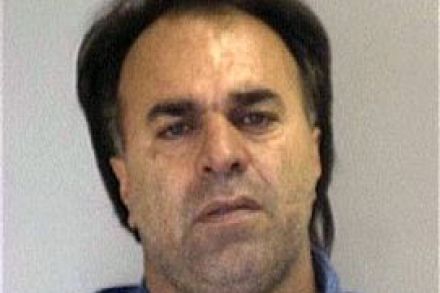
Yesterday — as Pete pointed out earlier — the Obama administration filed criminal charges against two individuals, Manssor Arbabsiar and Gholam Shakuri, claiming that they worked with Mexican criminals and for the Iranian government on orders to assassinate the Saudi ambassador to the United States. The plot has met with denials from Tehran, which “categorically and in the strongest terms condemn this shameful allegation.”     But, if true, the plot would only be the latest in a long-standing feud between Iran and Saudi Arabia. The struggle between Riyadh and Tehran has become the Middle East’s central conflict, overshadowing even the Israeli-Palestinian conflict.

Iran crosses a line

From our UK edition

A flurry of news yesterday evening, among it Slovakia's rejection of the euro bailout and even more ado about our Defence Secretary. But nothing nearly as striking as the alleged Iranian plot to murder the Saudi ambassador to Washington. Drugs, money, geopolitics, potential mass slaughter — this is a web of the most tangled and terrifying kind. And, according to US officials, it all leads back to Tehran. Assuming that that's the case, there can few more alarming reminders of the threat posed by Iran. Here is a regime that is bent on terror and destabilisation — and bent, also, on acquiring a nuclear weapon. Little wonder why politicians from Tony Blair to, yes, Liam Fox are waving red flags about the situation. But what will it all come to?

An Execution in Tehran

From our UK edition

Cranmer is right about this: It really is quite incredible. Last week, a convicted murderer, Troy Davis, was finally executed in the United States, and it seemed as though the entire British (and EU) Establishment arose to denounce the barbarism. Even Pope Benedict XVI appealed for clemency. Yet today, Iran is scheduled to hang a Christian pastor for 'apostasy', and the collective silence from our scurvy politicians, trappist churchmen and hypocritical media is positively deafening. Pastor Yousef Nadarkhani was found guilty two years ago of 'apostasy', even though he was never a practising Muslim. His guilt was determined because he 'has Muslim ancestry' (which is a kind of convenient catch-all in a place like Iran), and he was sentenced to death.

Tensions rise in the Middle East

From our UK edition

The escalating crisis in Gaza and Sinai is worrying. Egypt is to recall its ambassador to Israel after 3 security personnel were killed in confused scuffles after an Israeli bus was bombed near the Sinai border; the Israeli embassy in Cairo has also been the scene of ill-tempered demonstrations and vandalism. Israel denies responsibility for the three deaths. Meanwhile, the Egyptian army is also conducting operations against Islamist militants in the increasingly lawless Sinai desert. Finally, the Arab League has called an emergency meeting after Israel retaliated to 30 rocket attacks by launching stiff operations in Gaza.

Tim Pawlenty: Generic Republican

From our UK edition

Tim Pawlenty's Presidential campaign may be stranger than any of his rivals'. For some candidates - Gingrich, Cain - running for the Republican nomination is an outlet for excess egomania. For others - Johnson, Paul - it's an opportunity to raise issues and a style of conservatism that's notably unfashionable. Others - Bachmann, Palin, Huntsman - fly a standard for sectional interests within the broader conservative movement. And Romney, of course, is interested in winning. But Pawlenty? What's he about? Quite. There's no interesting reason for Pawlenty to run at all. His starting ambition appears to be the "Oh God, I suppose he'll have to do" candidate. His appeal - to abuse the word - lies in being the compromise candidate still standing once all the others have been rejected.