Iran

Iran’s strike exposes the danger of the Chagos handover

In a sharp escalation, Iran attempted to strike the joint UK-US base Diego Garcia with two intermediate-range ballistic missiles. Both failed: one broke apart in flight and the other was targeted by an SM-3 interceptor from an American warship. The base was left untouched. The significance, however, lies less in the failure than in the fact that the attempt was made at all, which has expanded the scope of the existing conflict zone beyond all expectations. Diego Garcia forms part of the Chagos Archipelago – sovereign British territory – and is one of the most critical platforms for American power projection anywhere on earth. It functions as an unsinkable aircraft

Iran and America’s new protection racket

“Whoever rules the waves rules the world” – Alfred Thayer Mahan. Would Donald Trump have attacked Iran on February 28 if the Supreme Court had not ruled against his tariffs on February 20? The two issues may seem unrelated. Yet, as a fascinating piece by Captain John Konrad has pointed out, a closer inspection of Trump’s international agenda reveals his administration’s intense focus on trade, energy and maritime control – and that might help explain the otherwise inexplicable folly of the situation in the Strait of Hormuz.  Trump is determined to bring about an American Golden Age. That involves controlling gas and oil, aggressively reducing China’s expanding control of shipping lanes, and

Strait of Hormuz
war powers

The outrageous cynicism of the Democrats on Iran

Given my longstanding disgust with America’s lawlessly interventionist and self-destructive foreign policy, I should be outraged by Donald Trump’s cavalier remarks justifying – and weirdly minimizing – his surprise attack against Iran in collaboration with Israel. After all, a president stupid enough to mock the new Supreme Leader as “damaged” and only “alive in some form” – while simultaneously urging sitting-duck oil tanker captains to “show some guts” by running the Iranian blockade of the Strait of Hormuz – is someone who logically should be rebuked in the firmest possible terms.    But this wildly unstable solipsist is very different from other politicians. Moreover, I can still find the President,

Iran isn’t Trump’s only ‘imminent threat’

President Trump thought it would be a cakewalk. Far from capitulating, his nemesis seems to be on the comeback trail. Gabbard acknowledged that there was no compelling evidence that Iran was seeking to reconstitute its nuclear program Federal Reserve Chairman Jerome Powell thus announced on Wednesday that unless a successor is confirmed by the Senate, he has “no intention of leaving.” The bad news keeps mounting for Trump. Inflation is ticking up, King Charles’ upcoming visit is starting to look rather iffy, the President’s gilded ballroom project looks as though it will be smacked down by a federal judge, and energy prices are rising precipitously. Indeed, a new sticker plastered on petrol stations shows Trump pointing his finger into the

Joe Kent

Joe Kent’s resignation was an act of political positioning

Reflecting on the resignation of Cyrus Vance, James Thomson, the American historian and journalist, wrote in the Washington Post that the former secretary of state “has done us all a great public service.” In doing so, Thomson argued, Vance gave “new life and spine to a somewhat rare and weak convention in our nation: resignation in protest of an issue of principle.” The year was 1980. Vance had resigned in protest over the Carter administration’s decision to authorize Operation Eagle Claw, the ill-fated mission to rescue American hostages held in Iran after the Islamic revolution. The mission ended ignominiously. President Carter pulled the plug after equipment failures and a deadly

Why Iran will hasten MAGA’s demise

Readers may disagree with the cover line of this issue. Pronouncing “the end of Trumpism” feels somewhat similar to declaring “the end of history” – a provocative, albeit less grandiose, statement that risks being mocked in the near future. We should start by saying we hope that we are wrong. Trumpism, as this magazine understands it, has been a boon to America. As Christopher Caldwell argues, the rise of Donald Trump was a healthy democratic response to a fetid political system. On many fronts, the Trump administration, now in its second and more dynamic term, has made great progress. It has fought illegal immigration with vigor. It has tackled the

Iran and the crisis in the European mind

The politics of the Iranian war feature an observable gap between interest and action for nearly all parties. The Americans possessed overwhelming casus belli versus Iran for nearly half a century, and did not act upon it until three weeks past. The Iranians possessed none against America for just as long, but exerted themselves with religious fanaticism to bring this war upon themselves. The Arab autocracies of the Persian-Gulf region find themselves under direct attack from the Iranians, but do not respond in kind. The Chinese observe a core strategic proxy and key commodities supplier taken off the chessboard – for the second time in under 90 days – and

Europe

Why is America always at war?

Sizable minorities on both the left and the right want America to intervene in fewer foreign conflicts and to exercise more restraint in foreign policy. In the 2006 midterm elections, antiwar voters contributed to the Republicans’ loss of both houses of Congress. They also helped defeat Hillary Clinton in the 2008 Democratic presidential primary contest and the Republican nominee, John McCain, at that year’s general election. While McCain styled himself a “maverick,” the label could be more accurately bestowed upon the anti-interventionist Republican Ron Paul, who shocked the GOP establishment by showing that an unstinting critic of the Iraq War could mount an insurgency within the party of George W.

Iran’s first gayatollah?

Something queer’s afoot in the Islamic Republic. As Mojtaba Khamenei was announced as Iran’s new Supreme Leader last week, reports emerged that his own father, the late ayatollah Ali Khamenei, didn’t want him to take power and even went as far as making this explicit in his will, according to the New York Post. Now, the Post reveals that his father’s qualms were over Mojtaba’s alleged sexual attraction to men.  When President Trump was briefed that Mojtaba may be gay, he “couldn’t contain his surprise and laughed aloud” while others in the room joined in his reaction, sources close to the intelligence community and the White House told the Post. It’s an odd turn of events when the repressive theocracy is the

How Iran could end the AI boom

While Americans anxiously watch the price of gasoline tick higher as the war in the Middle East squeezes the global oil supply, the conflict has highlighted another energy vulnerability that could prove just as costly: Taiwan’s dependency on foreign natural gas. At first blush, energy issues an ocean away seem peripheral to American interests. They are anything but. Though the effect on the American economy won’t be immediate, energy insecurity in Taiwan is a looming disaster. Qatar, the source of 30 percent of Taiwan’s natural gas, has been effectively bottled up The reason is that AI – in fact, virtually all modern computing – is highly reliant upon the steady

Semiconductors

What Signalgate tells us about Iran

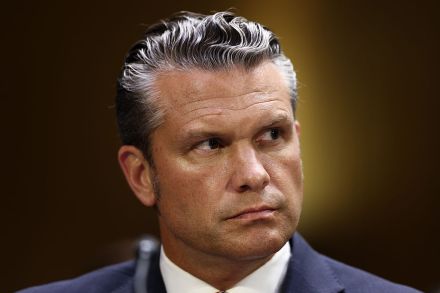
Remember Signalgate? It was quite the story, and worth revisiting now in light of Operation Epic Fury, the ongoing crisis in the Strait of Hormuz and its dire implications for the global economy.  In March last year, Donald Trump’s then National Security Advisor, Mike Waltz, somehow added Jeffrey Goldberg, the editor-in-chief of the Atlantic, to a Signal messaging group for senior government officials to discuss top secret military action against the Houthis in Yemen. The group included the Vice President J.D. Vance, Secretary of State Marco Rubio, Defense Secretary Pete Hegseth, Director of National Intelligence Tulsi Gabbard, White House Chief of Staff Susie Wiles and deputy chief of staff Stephen Miller,

hegseth signalgate walt

The right’s Israel fracture

As the joint American-Israeli military campaign in Iran continues, President Trump’s coalition is starting to exhibit some cracks. The war in Iran has emerged as a proxy battle over a broader, long-simmering conflict within the right about Israel. And the fight over Israel is, in some important ways, a proxy battle about Jews in general. Big picture, what we’re seeing now is that the traditional divisions on the right between paleoconservatives and neoconservatives, between hawks and doves, are being reshaped into a battle over Israel specifically. It’s a very difficult subject; this issue has become highly emotional and personal for those on both sides, and even in my world, it’s

‘We don’t know what’s going on or why we’re doing this’: how Trump’s Iran gamble backfired

“Donald Trump is a complicated person with simple ideas,” said Kellyanne Conway, the former White House senior counselor. “Way too many politicians are the exact opposite.” It’s a good way of understanding the 45th and 47th President and his extraordinary success. His turbulent personality causes mayhem, yet his political aims have remained constant, straightforward and popular. Decades ago, as a New York tycoon with a keen eye on international affairs, he identified three priorities for America: tackle the nation’s trade imbalances, force NATO allies to spend more on defense, and destroy terrorists. When it comes to realizing those simple ideas, however, his more complex attributes emerge. Trump believes in mixing

eu

Revealed: Keir Starmer’s new plan to get closer to the EU

A Labour MP, reflecting on the problems UK Prime Minister faces over the war in Iran, observed: “Keir got it right, but things keep going wrong.” His point was that Starmer kept Britain out of the Israeli-American air strikes, a position popular both with the parliamentary Labour party and the electorate, yet the impact of that conflict has laid bare three serious problems at the heart of the British state. First, there has been a fracturing of relations between Starmer and Britain’s defense chief, Air Chief Marshal Sir Richard Knighton. Second is the vulnerability of the economy to energy price shocks. Third is Ed Miliband’s net-zero crusade, which has put

gay press

Why is the ‘gay press’ so cowardly on Iran?

Sometimes the obvious is so obvious that people forget to state it. So let me observe one small footnote among recent obvious things. At the end of February, Donald Trump killed the Ayatollah Ali Khamenei and most of the senior leadership of the Islamic Revolutionary government in Iran. There are many things to be said against the Ayatollah and his friends. Since 1979 they have repressed the population of Iran and hurtled one of the great civilizations backward by a millennium. From the start of the revolution they have murdered their domestic opponents by the thousands. They have shot students in the head when they came out onto the streets

Revenge of the cheese-eating surrender monkeys

French President Emmanuel Macron’s approval rating rose by six points last week. It will likely continue to climb following his visit to the Charles de Gaulle aircraft carrier on Monday. The pride of the French navy recently arrived in the eastern Mediterranean to protect Cyprus, and Macron was in his element as he strode across the deck of the carrier. A photograph of the occasion appeared in the New York Times underneath the headline: “France Is Sending a Large Naval Force to the Middle East.” The last time there was a great conflagration in the Middle East, France was very much on the sidelines Macron was helicoptered onto the Charles

Trump has been caught flat-footed on Iran

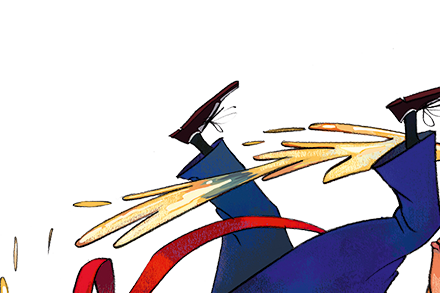
Donald Trump has become something of a sole man. His cabinet members and White House visitors report that the president has developed a penchant for handing out $145 Florsheim shoes in an effort to up their sartorial game. In his Life of Johnson, Boswell reported that Dr. Johnson recoiled at an “eleemosynary supply” of shoes as an impecunious student at Christ Church, Oxford and threw them away with indignation. Trump’s followers have no such freedom of action. “All the boys have them,” one official told the Wall Street Journal, which ran a picture of his administration leaders obediently lined up and wearing the same shiny black leather numbers. The war increasingly resembles a prolonged exercise in folie de

I spent 25 years fighting neocons. Then Trump became one

Like everyone, I’m glued to the news coming out of Iran. I’m experiencing some depression, as one might, upon realizing that much of what one has worked on for 25 years has suddenly gone up in smoke, destroyed when Donald Trump discovered he was pretty much a neocon after all. Like everyone else, I have no idea what will happen in Iran, whether Trump’s bombing and perhaps breaking apart a very unpopular regime will lead to something better, or just chaos, a failed state spitting out a cohort of embittered men. But one can’t help but acknowledge the American right really likes bombing foreign countries, despite what had seemed an

neocon

Will the war in Iran really weaken China?

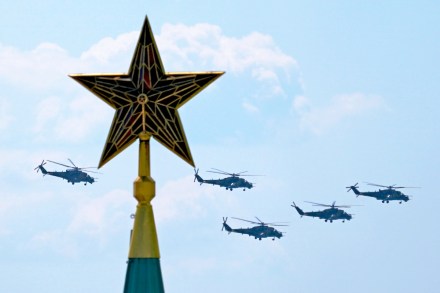
Analogies in international politics are tricky and easily abused, yet they remain irresistible because they can illuminate patterns that are otherwise hard to see. Consider the present moment.  Just as Ukraine has become a growing burden for Washington and its Western allies, Iran is now a strategic burden for Moscow and Beijing. The US, particularly under the Trump administration, appears to be placing less emphasis on supporting Ukraine. Something similar may be happening in reverse with Iran.  Moscow continues to provide Tehran with assistance – most notably intelligence on US military targets – but the broader pattern suggests caution rather than deep commitment. Beijing, despite its close ties with Iran,

China Iran