Investment

An investment opportunity: why the Chinese economy continues to defy its many doubters

From our UK edition

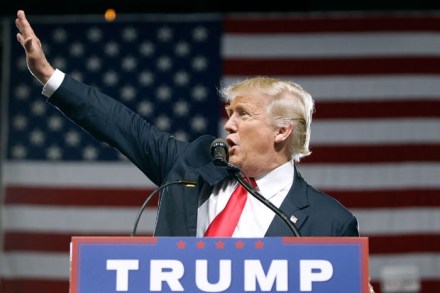
The Chinese New Year is almost upon us, and perhaps its animal for 2017 is timely in our current political climate. According to astrologers, the Rooster is cocky, opinionated and attention seeking - sound familiar? China, one of the powerhouse economies of the world, is entering an uncertain New Year now that Donald Trump rules the roost in Washington. For years it has been tipped to take over America as the biggest global economy. But now its fortunes (and indeed ours) hinge on whether President Trump’s hard-line protectionist agenda will ruffle feathers and ultimately lead to a trade war. The omens might not look terrific (to use one of the Donald’s favourite words).

It’s time industry got its act togther on financial jargon

From our UK edition

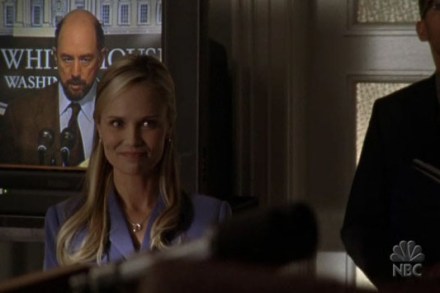
'I don't get excited when I hear EITC. Do you?' This is a line from the late, lamented West Wing. The acronym EITC refers to Earned Income Tax Credit, a refundable tax credit for low to moderate-income working people. One of the characters, Charlie, is trying to fight for it, only to be told by Annabeth that this won't be easy because it doesn't have a catchy name like 'Marriage Penalty' or 'Death Tax'. She's right. Who would understand EITC, let alone get behind it? It's the same on this side of the pond. Financial phrases like AER (Annual Equivalent Rate), DB (Defined Benefit) and OEICs (Open-Ended Investment Companies) don't exactly roll off the tongue, let alone lend themselves to easy interpretation.

Avoid the pitfalls of plonk and investing in fine wine will be something to cheer about

From our UK edition

If the ongoing Brexit saga (and, er, Trump's win today) is enough to make you turn to drink, well, maybe you should. Investors in fine wine have been the surprise winners of the Brexit fall out, with vintage wine the top investment class of 2016 so far. The London International Vintners Exchange (known as Liv-ex) is an exchange for investment-grade wine. Its benchmark index is the Liv-ex Fine Wine 100 which represents the price movement of 100 of the most sought-after fine wines for which there is a strong secondary market. Calculated monthly, the Liv-ex Fine Wine 100 is now up 22.3 per cent on the year-to-date, following 11 consecutive months of positive gains. The rise comes at a time when rock bottom interest rates mean other assets, such as bonds, are returning next to nothing.

Social investment is changing our economy

From our UK edition

Social investment is starting to transform the way that parts of our economy work. Social investments include loans and shares into organisations whose principal purpose is social. They have grown by around 20 per cent a year for the last five years, according to Big Society Capital, the organisation that helps social enterprises and charities to raise finance. It estimates there is now £1.5 billion invested into social-purpose organisations, £427 million of which was new investment last year alone. The market is set to get a huge boost from social impact tax relief (SITR), which some are calling the Government’s best kept secret.

A novel investment: why it pays to pay attention to the Man Booker Prize

From our UK edition

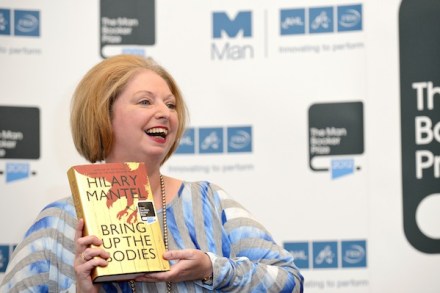
OK, I'll admit it. I don't like Margaret Atwood's writing. In some circles, this is akin to saying you're a devil worshipper who spends their weekends ensconced in a dungeon of pain with other ostracised members of the community. Yes, I know she's a multi-award winning author. Yes, I'm aware she has sold millions of books. But I thought The Blind Assassin - for which she won the Booker Prize - was one of the dullest novels I've ever had the misfortune to read. I was willing it to end, much in the same way that I longed for Anna Karenina to fling herself under that train and put both me and her out of our misery.

Money digest: Bad news for savers, good news for borrowers

From our UK edition

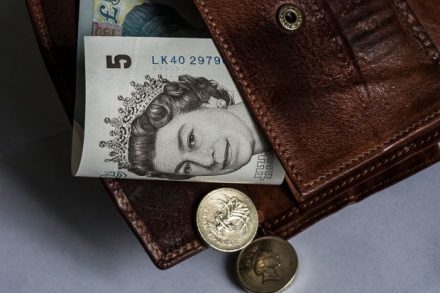
Savings accounts are disappearing rapidly as the expected cut to the base rate draws closer, says the Guardian. Moneyfacts, a data provider, found that 13 best buy savings deals were withdrawn in July – and have yet to be replaced. These include a three-year bond from Saga at 1.8 per cent and other deals from Virgin Money. The Post Office, too, has scrapped its top-paying three-year bond. Savers will be badly affected if the Bank of England cuts the base rate to 0.25 per cent as anticipated, the paper warns. On the other hand, borrowers are likely to do well. Moneyfacts found that mortgage rates have dropped to a new low of 2.48 per cent on an average two-year fixed rate deal – down from 2.68 per cent a year ago.

Business holds the antidote to acts of voter insanity on both sides of the Atlantic

From our UK edition

Good news: ‘My sources in the Gulf tell me they’re poised with big cash to buy into sterling, UK equities and property on any weakness,’ says an email from a reader who does business across the Middle East. Will the phenomenon I once called ‘the Curse of Qatar’ be the horse that pulls us out of the post-referendum quagmire and tramples the short-sellers? Might it even be strong enough to save the professional services firm, dependent on inward investors, whose owner told me he expects to make 50 of his 180 staff redundant if the vote goes the wrong way? We have flirted with what the Washington Post called ‘an act of economic insanity’.

Warning: top-performing funds are highly likely to contain tobacco

From our UK edition

Axa will no longer invest in the tobacco industry: the French insurance giant will sell €184 million of shares and gradually reduce its €1.6 billion bond holdings in the sector. No surprise, given Axa’s role as a health insurer and the oft-repeated statistic that smoking kills six million people a year; indeed, you might think any health-related investor would have taken the decision years ago. Except that cigarette-makers have been stellar stock market performers since the beginning of the century: British American Tobacco’s shares have multiplied in value a dozen times while paying rich dividends, and Imperial Tobacco (now Imperial Brands) has been almost as good.

Credit where it’s due to Tata, our greatest inward investor

From our UK edition

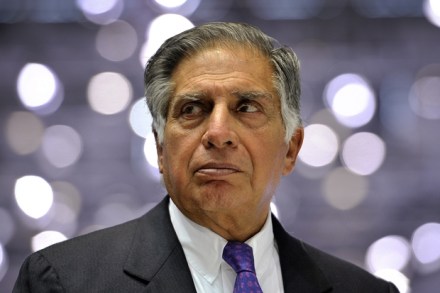
If asked to pick the UK’s inward investor of the century so far I would, without hesitation, name Ratan Tata, the anglophile former patriarch of the eponymous Indian conglomerate that bought Tetley the tea-maker for £271 million in 2000, Corus the Anglo-Dutch steel-maker for £6.2 billion in 2007, and Jaguar Land Rover — from Ford — for £1.3 billion in 2008.

Investment: Buy to lose

From our UK edition

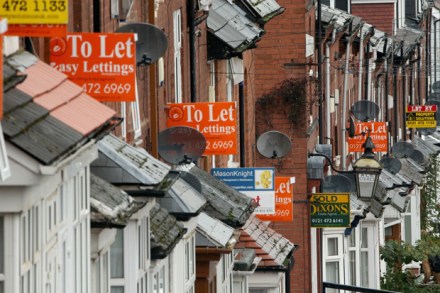
Take a quick look at the UK buy-to-let market and you might find it tough to understand exactly what it is that makes it so very popular. Dealing with tenants is difficult and boring. House prices have a horrible tendency to go down as well as up (Londoners — ask anyone living in the north of England about this). And rents have long been so low relative to prices that getting a worthwhile net yield is all but impossible after costs. Given this, you might wonder, why on earth would 14.5 per cent of all mortgage lending in the UK in the third quarter of last year have been to buy-to-let investors? Good question. The answer (as is the case with everything to do with modern money) is that it is all about leverage.

Investment: This dragon won’t bite

From our UK edition

At the risk of sounding like Neville Chamberlain, how bizarre that we should be panic-selling our stock-market investments in reaction to the news of a slight economic slowdown in a faraway country to which we export little and whose direct investments in our own economy created fewer than 5,000 new jobs last year. Throughout the mini-crash of 2016, it has become received wisdom that a Chinese slowdown is threatening the global economy, spreading contagion to every corner of the globe. The fear manifested itself in a 3.

Mr Bear is back: sit tight because he may be with us for a while

From our UK edition

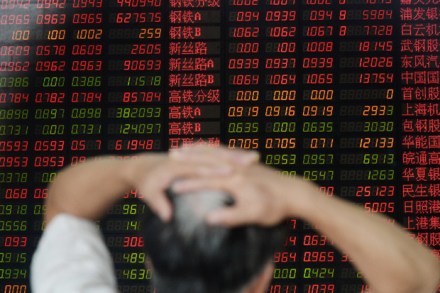
Like Leonardo DiCaprio in The Revenant, we’ve just been savaged by a bear but we’ll probably survive. Leading UK-listed stocks have fallen 20 per cent from last April’s peak after a six-year climb, and the FTSE100 chart has taken on a saw-toothed downward trajectory that suggests, to those who rely on such indicators, that there are further falls to come. The end of quantitative easing and the US Federal Reserve’s first interest-rate rise in almost a decade set the direction of travel. The sinking oil price, combined with worries about a global debt build-up, darkened the mood. Repeated bouts of mayhem on the Shanghai bourse, though little or nothing to do with western investors, have provided a news peg.

Through the roof

From our UK edition

When David Cameron said this week that he is worried his children would not be able to afford to buy their own homes, he struck on one of the greatest economic problems of his premiership. The old British promise is that if you work hard and make the right decisions, you can advance in life and own your own home. This is the ladder that most aspire to climb. But for an entire generation, even the hope of home ownership is slipping out of view. A huge number of young Britons cannot hope to have the kind of life their parents enjoyed. The Prime Minister must know he is on dangerous ground here. His own children, of course, will not have to worry — just as he did not have to worry.

Another banking review is pointless: just carry on naming, shaming and jailing

From our UK edition

Was the Financial Conduct Authority leaned on by the Chancellor to scrap its ‘review of banking culture’? Or did it decide pragmatically that its resources would be better devoted to pursuing individual cases of cheating and criminality? I suspect the answer is a bit of both. Acting FCA chief Tracey McDermott — a no-nonsense northerner and former litigation lawyer — is reputed to be just as tough as her predecessor Martin Wheatley, who was ousted by Osborne last year, apparently for being too much the turbulent priest. Tracey became a regulator because she was interested in seeing ‘if human behaviour could be improved’ — in particular, the behaviour of people who are not dishonest by nature but are swept along by the tide.

Sorry, but I can’t join in the China panic

From our UK edition

 MS Queen Victoria, 38°N 19°E I’ll do my best, but I’ve got to be honest: being surrounded by shining Ionian waters and convivial Spectator cruisers isn’t helping me channel the panic that has gripped global markets. So forgive me if this dispatch doesn’t have the apocalyptic tone you’re expecting. I’m as irritated as anyone that contagion from China’s share-gambling epidemic has knocked my modest interest in FTSE100 stocks back to where it stood in late 2012, but ask yourself: do you know anything about China or the global economy today that you didn’t know a month ago?

Barometer | 2 July 2015

From our UK edition

Bank job Should we buy shares in companies which print banknotes in expectation of one getting to print millions of drachma notes? — In May, according to the ECB, there were a total of 17.6bn euro notes in circulation. Given that Greece accounts for approximately 2.5% of the GDP of the eurozone, 441m of these were Greek, and might need replacing with drachma notes in the event the country leaves the euro. — However, there is already a good business in printing replacement euro notes. In May, 2.76bn notes were taken out of circulation and 2.88bn new ones were put into circulation.

Contagion of a different kind as Greece wriggles off the hook

From our UK edition

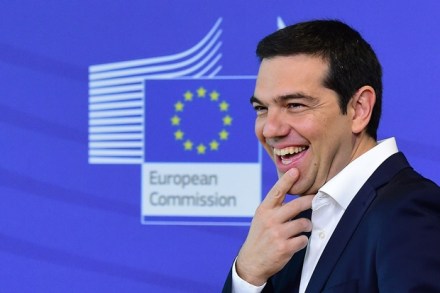
The clear winner in the Greek crisis is the author of The Little Book of Negotiating Clichés, whose royalties must have been pouring in as the clock ticked towards midnight while European leaders took positive steps back from the brink and found themselves speaking the same language, perhaps because they were reading from the same page. But assuming this predictable dance results in terms that Prime Minister Tsipras can persuade his comrades to accept before the IMF’s default deadline and the moment when the Greek banking system can no longer seek life-support from the European Central Bank — which is all still quite a big assumption — who will be the loser?

The surfer, the sailor and the horseman: prosperity is all about personal stories

From our UK edition

The tectonic plates of economic life rumble and shift. As ever, market watchers are obsessed by big themes — and the demand for predictions about them even though so many past predictions have turned out wrong. Right now, we’re gripped by the endgame for Greece, the timing of the first US rate rise, the future of energy prices given Opec’s decision to maintain output above demand, the slowing of Chinese industrial growth, and the unresolved destiny of the global debt bubble. Yet we also know that wealth creation is fundamentally a matter of individual risk and endeavour, often pursued in defiance of the adverse alignment of market forces.

The SNP land grab

From our UK edition

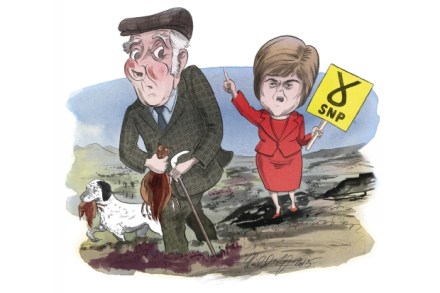
Just under 100 years ago the headline in the Oban Times read ‘American family buy lodge and estate on the Isle of Jura’. They were my grandparents, who, although by then British, had both been born in America. They bought our lodge from the Campbells of Jura, who had had the misfortune to lose their heirs one terrible morning in the trenches of the first world war. My grandparents were initially regarded with suspicion by the locals. Yet after investing in the estate, improving the crofters’ cottages, reroofing them from turf to slate, they became well liked within the community. They spent summers on Jura, and occasionally visited in winter. So did my father, my uncles and now my family — brothers, sisters, children, grandchildren and cousins.

Bet on a swift Grexit

From our UK edition

'Will Greece exit the eurozone in 2015?’ Paddy Power was pricing ‘yes’ at 3-to-1 on Tuesday, with 5-to-2 on another Greek general election within the year and 6-to-4 on the more cautious ‘Greece to adopt an official currency other than the euro by the end of 2017.’ I’m no betting man — as I reminded myself after backing a parade of point-to-point losers on Sunday — and I defer to our in-house speculator Freddy Gray, who will offer a wider guide to political bets worth having in the forthcoming Spectator Money (7 March).