Investing

The safest bets in Wall Street will be our downfall

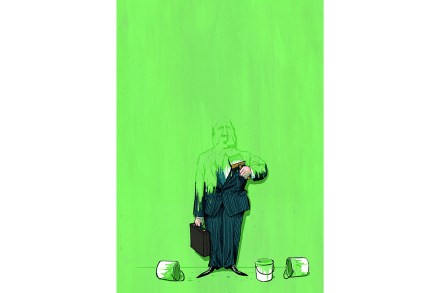
It’s not often that anyone — much less an academic — writes a book that launches a revolution, but that’s exactly what Burton Malkiel did in 1973 when the Princeton economist published a short, potent book called A Random Walk Down Wall Street. As of 2023, the book is in its thirteenth edition. Malkiel famously insisted that “a blindfolded monkey throwing darts at the stock listings could select a portfolio that would do just as well as one selected by the experts,” and then he spent his entire career doing his best to prove that hypothesis.
passive

Nassim Nicholas Taleb, the anti-confidence man

Dealing with the writer, statistician, Twitter warrior and self-described flâneur Nassim Nicholas Taleb is no simple matter. First there was the initial approach, months ago. I ventured to email him and ask for an interview despite his long-held and often-expressed low opinion of journalists. (Heuristic: those who make the biggest deal out of disliking the media care about it the most.) To my surprise, Taleb agreed to it almost immediately even though he “doesn’t do interviews.” Some logistical back and forth ensued. Then a twist: he would only agree to be interviewed if he wasn’t photographed. Why? Because in photos he is “made to look sickly and weak.

taleb

The great anti-ESG backlash

For more than thirty years, Scott Adams has captured the absurdity and humor of office life in his popular syndicated newspaper cartoon strip “Dilbert.” The title character, an oblong-headed, cubicle-dwelling everyman, is one of the most familiar cartoon characters in America, but last September he vanished from more than seventy newspapers. Shortly before Dilbert’s partial disappearance, his opinionated creator had set his sights on ESG. Adams’s views on the vogue for “Ethical, Social and Corporate Governance” investment strategies weren’t exactly difficult to discern. In one strip, for example, Dilbert asks, “What is this ‘ESG’ thing I keep hearing about?

esg woke

The nihilistic rise of ‘loss porn’

From our UK edition

It’s been a terrible few weeks for that guy you know. Bitcoin dropped to a ten-month low (apparently thanks to something called ‘stablecoins’), while $1 trillion has been wiped off the largest tech companies on the stock markets. ‘Retail investors’ – non-professionals with little more than an internet connection – are struggling. You might expect many of them to put their heads in their hands and log off. But that would be to misunderstand the nihilism of online culture. Losing is the same as winning, only better. The thing to do is to post evidence of your catastrophic losses.

BlackRock is right to abandon eco-activism

From our UK edition

Is this the end of climate activism from pension providers and other institutional investors? BlackRock, which manages $10 trillion in assets, has toned down its enthusiasm for blocking company boards that are not sufficiently committed to a carbon-free future. In January 2020, BlackRock’s CEO Larry Fink shook up the world of investment by writing an annual letter to the CEOs of companies in which he invests, warning them that in future BlackRock would take a more critical view of their climate change policies.

The Bitcoin delusion

From our UK edition

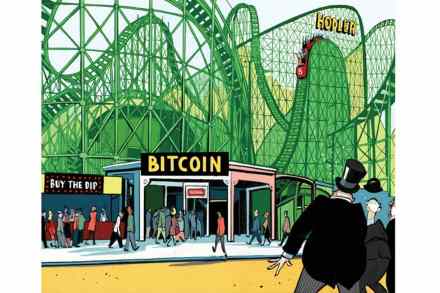
Cast your mind back a few years to last week – when there was much laughing and wailing at the collapse of Squid coin, a meme cryptocurrency launched to capitalise on the popular Netflix show. It had gone to market, had rocketed 23 million per cent in value to $28,000-odd a unit... and then plummeted to zero on Monday morning after the creators cashed out for real-world money. Yet like the battle-hardened protagonist of the show, amazingly, the currency is down but not out. Yesterday it was reported to have been the top gainer in the global crypto market, having rocketed more than 800 per cent in 24 hours to... $0.65. Not much consolation, I suppose, to those who bought the peak, but hope obviously springs eternal.

Crypto casino

When I was in high school, I worked at an ice rink in the winter and a swimming pool in the summer. My friends toiled at Target and gofered at golf courses, making minimum wage and spending it on gas and low-rise jeans from Abercrombie: it was 2008, after all. These days, gas may still cost $4 per gallon, but now the jeans are high-waisted and the teens are more ambitious. My youngest brother Ted is 18. He spent the summer before his first year in college working in a cheese shop, sweeping floors and straining ricotta: a classic summer job, tedious and stress-free. Yet some of his friends are taking a different route. Ted’s buddy Tom just cashed out $3,000 in bitcoin winnings to buy a weeklong Airbnb in Ocean City, Maryland for all his friends.

crypto

Why British firms keep getting bought out by foreign investors

From our UK edition

Sharks, vultures, asset-strippers: just a few of the names that have been applied to the likes of Parker Hannifin, the US company which is trying to take over UK aviation company Meggitt. It's the latest in a spate of takeover attempts of UK engineering firms by US competitors and private equity firms. An alternative name for them would be astute businesses which can see the value in companies that dopey British pension fund managers are unable to spot. If the takeover of UK firms is a problem or a scandal, British institutions are the real villains. They have bid down the values of these firms as they go chasing returns on US tech shares instead. Parker Hannifin has offered 800p a share for Meggitt.

Why I joined the online army taking on the hedge funds

From our UK edition

I spent most of last week drenched in sweat, launching a vicious assault on Wall Street hedge funds which cost them $20 billion. Along with thousands of other ‘degenerates’, I bought shares in GameStop, a struggling videogame shop whose value has recently soared by 2,000 per cent. Behind the surge is an online community called WallStreetBets, where bored young men gamble on barely researched stock tips and crack tasteless jokes. The community, which lives on the social media website Reddit, has a history of hilariously aggressive stock-market bets. In 2019, for example, a 19-year-old member made $700,000 and then lost it all again within two weeks. Last week WallStreetBets became global news.

Memes vs Wall Street: how Reddit took on US hedge funds

From our UK edition

What did you do this week? I spent it drenched in sweat, launching a vicious assault on Wall Street hedge funds which cost them $5 billion (£3.7 billion). And I didn’t even have to put my trousers on. Along with thousands of other degenerates, I bought shares in GameStop, a struggling US video game store whose value has soared by 2,000 per cent in the last four weeks. Behind the surge is a wild Reddit community called WallStreetBets, where bored young men gamble on barely researched stock tips and crack tasteless jokes. The community, whose tagline is ‘like 4chan found a Bloomberg terminal’, has a long and hilarious history of aggressive stock market bets leading to eye-watering gains and losses.